Most vegan pie crusts lose their shape for the same three reasons: the fat melts too fast, the dough got warm while you worked it, or it was stretched too thin going into the pan. If you fix those, a vegan pie crust that holds its shape is straightforward. Blend solid vegetable shortening with vegan butter for structure, use ice-cold water, chill the dough twice, and roll it 2 to 3 inches wider than your dish. From mixing to a baked shell, allow about 30 minutes of active time plus two chill stretches.
The egg-free part is not the hard part. What you lose with egg is the protein that sets the crust and binds it, so the fat has to do that job on its own. Give it the right melting point and it does.
Table of Contents
- What You Need
- How to Make Vegan Pie Crust That Holds Its Shape, Step by Step
- Step 1: Choose a Fat That Stays Solid
- Step 2: Mix the Dough Without Overworking It
- Step 3: Chill Before You Roll
- Step 4: Roll It Thin and Even
- Step 5: Fit, Dock, and Blind Bake
- Common Mistakes That Ruin the Shape
- Frequently Asked Questions
- Can I use vegan butter instead of shortening for this pie crust?
- Why does my vegan pie crust shrink in the oven?
- How do I keep pie crust from slumping in the pie plate?
- Do I need to blind bake the crust for a fruit pie?
- What should I do if my dough cracks while rolling?
- Conclusion
What You Need
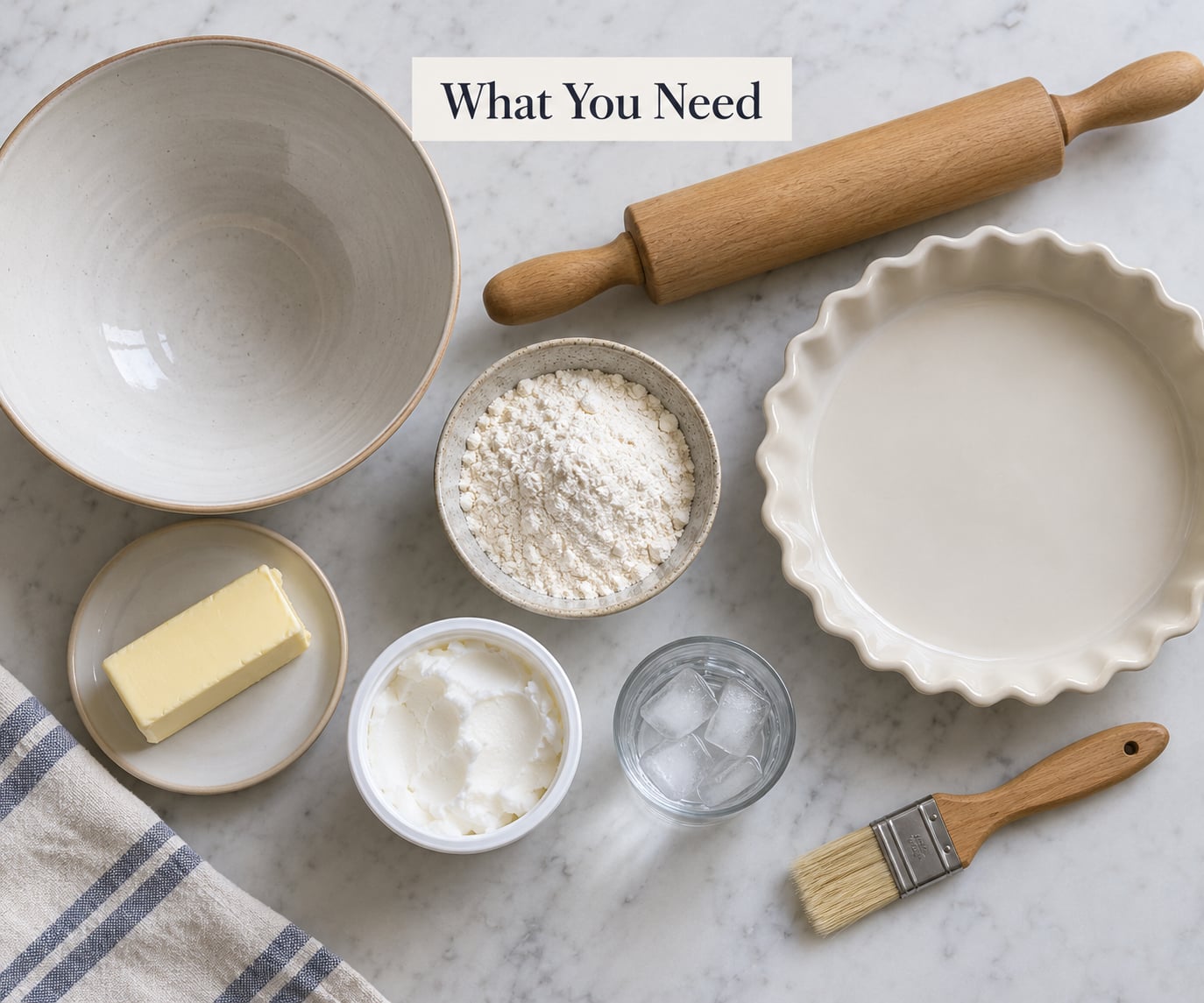
Four levers decide whether the shell keeps its form, and all four are about temperature and fat. Here is what goes into the bowl and why each item is there.
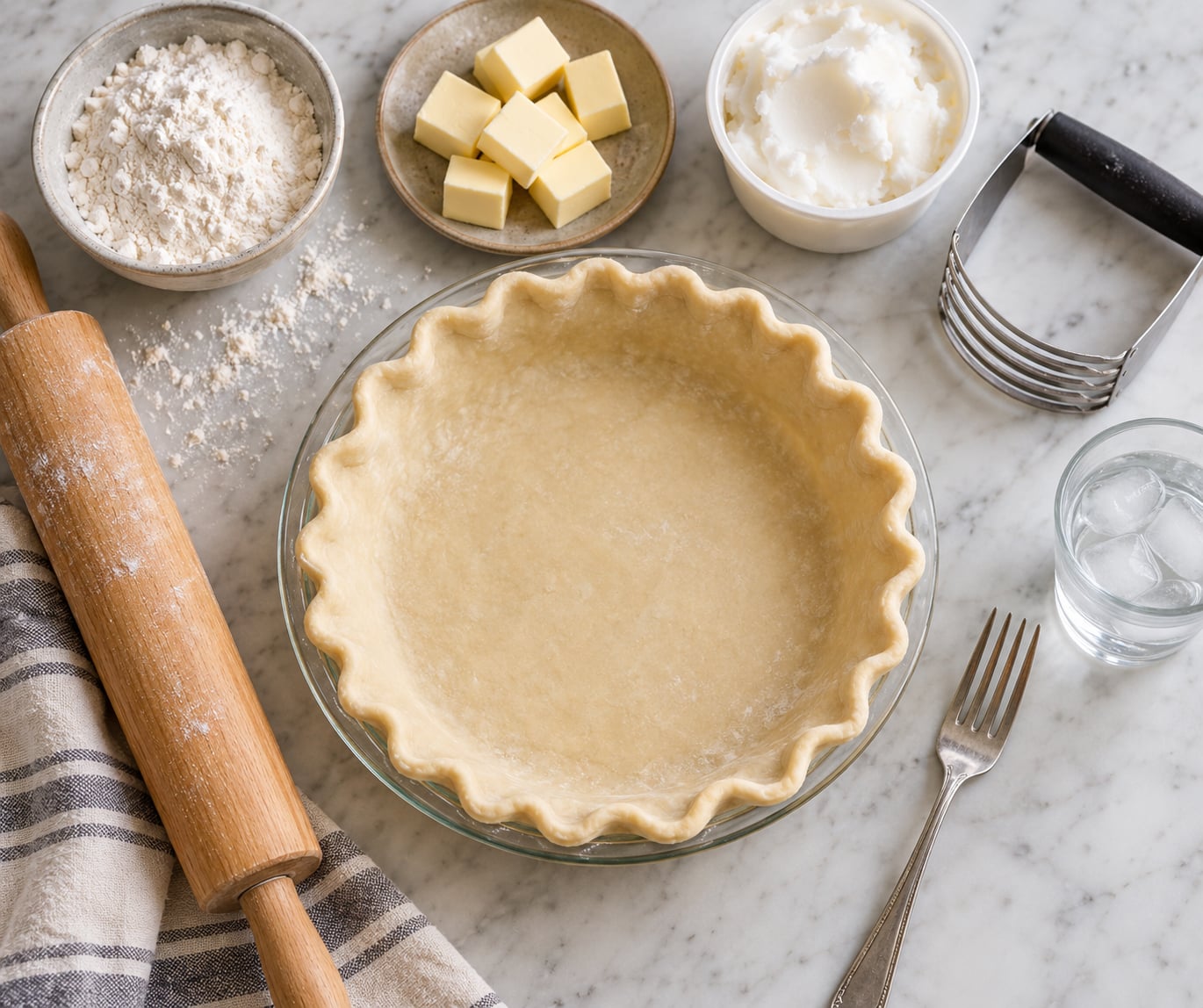
- All-purpose flour, 250 g (2 cups), spooned and leveled. Medium protein gives enough structure to hold a wall without turning tough. Pastry flour, which is lower protein, makes a tender crust that slumps more readily under a heavy wet filling.
- Non-hydrogenated vegetable shortening, 90 g (1/2 cup). This is your structure. Shortening stays solid well past the temperature where dairy butter softens, so the sides of the dish stay upright through the whole bake.
- Vegan butter in stick form, 60 g (1/4 cup), cold. Three parts shortening to two parts butter by weight is the balance point. More butter and the edges brown fast and lose definition; more shortening and the crust tastes flat and cracks instead of flaking.
- Fine salt, 6 g (1 teaspoon). Salt tightens the dough slightly and seasons the filling later.
- Ice-cold water, 60 to 75 ml (1/4 to 1/3 cup). Add it a spoonful at a time. Cold water hydrates the flour without warming the fat, and the liquid evaporates in the oven to lift layers apart.
A couple of notes on sourcing. Stick-form vegan butter matters because tub-style spreads carry more water, which softens the fat and blunts the flaking. For the fat, choose shortening that is not hydrogenated if you can find it, since hydrogenated fats leave an off taste after baking.
For equipment, you need little beyond a bowl, a pastry cutter or the back of a fork, a rolling pin, and a 9-inch glass or ceramic pie dish. A glass dish gives you the most even browning on the bottom, which helps you judge when the shell is actually set rather than guessing from the edge color. A metal pan conducts heat faster and usually needs a few minutes less.
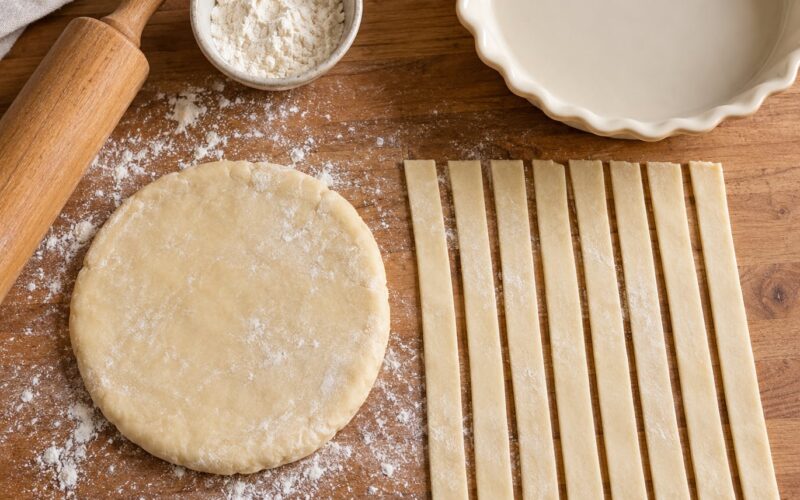
Rolling an extra crust for a lattice top or decorative cut-outs? Double the recipe rather than stretching the single disc. Dough that was rolled thin enough to cover two jobs is stretched thin enough to shrink in the oven.
How to Make Vegan Pie Crust That Holds Its Shape, Step by Step
Step 1: Choose a Fat That Stays Solid
Cut both fats into 1 cm cubes while they are still cold, then return them to the fridge while you measure the flour. If your kitchen is warm, put the bowl in the fridge too and work in short bursts. Cold fat is the whole game, because those pea-sized pieces are what separate into layers when they melt, and warm fat melts into the flour before the oven ever gets involved. You will know the fat is ready when the pieces hold their shape but smear easily under a fingertip.
Step 2: Mix the Dough Without Overworking It
Work the fat into the flour and salt with a pastry cutter until every piece is roughly pea-sized, then add the ice water one spoonful at a time. The dough is done the moment it clumps when you squeeze a handful; more water makes it gummy, less and it will crack later. Turn it out, press it into a flat disc about 4 cm thick, and wrap it. This step is also where the vegan version is hardest to eyeball, since there is no egg to make the texture obvious, so trust the squeeze test rather than how the dough looks.
Step 3: Chill Before You Roll
Refrigerate the wrapped disc for at least 1 hour, or overnight for the flakiest result. Thirty minutes is enough to firm the fat but not to relax the gluten, and that is why recipes disagree. An hour is the useful middle ground: the dough rolls without cracking and the fat still shatters into layers. It should come out of the fridge firm to the touch with no give in the center. If it feels soft, give it 20 more minutes rather than fighting it with extra flour, which is what makes a dough tough.
Step 4: Roll It Thin and Even
Flour the surface lightly and roll from the center outward, rotating a quarter turn every few passes. Aim for about 3 mm, roughly 1/8 inch, and stop to check the thickness at the rim rather than assuming it matches the center. If the dough springs back, patch the thin spots with scraps from the edges. A disc rolled 30 cm wide for a 23 cm dish leaves a generous overhang that you can fold under without stretching, which is the single best defense against sides that slump in the oven.
Step 5: Fit, Dock, and Blind Bake
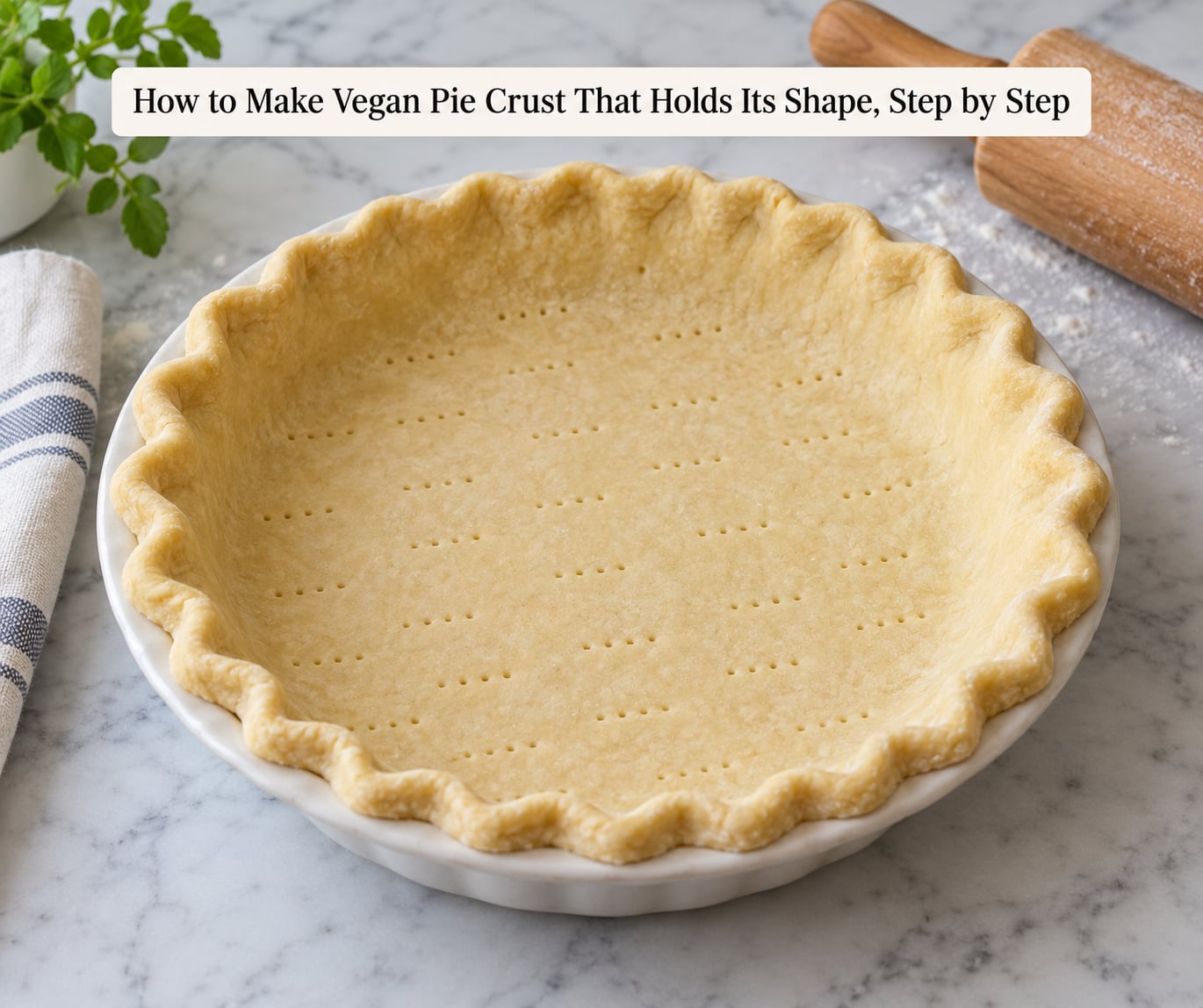
Drape the disc over the dish and let it hang rather than lowering it into place, then ease it down and press out any air pockets. Trim leaving about 1.5 cm of overhang, fold that under, and crimp. Chill the shaped shell in the fridge for 30 minutes before it goes near the oven, since cold dough relaxes instead of springing back into the dish.
Then dock the base all over with a fork so steam can escape and the crust cannot balloon. For a filled pie, line it with parchment, fill with pie weights or dried beans, and bake at 190°C (375°F) for 15 minutes. Remove the weights and bake another 10 to 15 minutes, until the base looks dry and pale gold and no longer translucent in the center. Cool it on a rack before adding filling.
For very juicy fillings such as apple, blackberry, or peach, brush the baked shell with aquafaba and let it set for five minutes before you fill it. That thin layer blocks juice from reaching the base and is the difference between a crisp bottom and a soft one.
Common Mistakes That Ruin the Shape
Nearly every bad pie crust looks like one of five things. Match what you see to the fix.
- It slumps down the sides of the dish. The dough was stretched going in, or it was too warm. Roll wider, ease the dough down instead of pulling it, and always take the 30-minute post-shaping chill.
- It shrinks in the oven. Usually an all-vegan-butter crust on a warm day, or a third chill that got skipped. Add shortening, and refrigerate the wrapped dough an hour before rolling.
- It cracks at the edges while rolling. Not enough liquid, or a dry flour blend. Add water a teaspoon at a time and patch cracks with a scrap rather than kneading the dough back together.
- It crumbles and falls apart when lifted. Too much fat or too little liquid leaves no gluten to bind. Add a spoonful of cold water, or press the broken areas together with your fingers and chill again.
- It comes out tough and chewy. You mixed after the water went in. Gluten needs no kneading in shortcrust pastry; as soon as the dough holds together, stop and wrap it.
- The bottom goes soggy. It needed blind baking, or a barrier. Bake the shell fully before filling and use the aquafaba brush for wet fruit.
- Filling leaks through the base. The shell was docked but never weighted, or it was still translucent. A visible pale center means it needs more time, not more filling.
Storage is straightforward. Wrapped dough keeps in the fridge for three days and in the freezer for two months; thaw it in the fridge overnight and roll it while cold. A baked, unfilled shell holds for two days at room temperature in an airtight container.
Frequently Asked Questions
Can I use vegan butter instead of shortening for this pie crust?
You can, but expect softer edges and more shrinkage. Vegan butter starts losing structure around 20°C (68°F), so on a warm counter or a warm day the sides can droop before the filling is even in. Shortening holds its shape much longer, which is why the recipe blends both at about three parts shortening to two parts vegan butter by weight. If shortening is off the table, chill the dough twice and shorten your baking time so the butter sets before the walls sag.
Why does my vegan pie crust shrink in the oven?
Two causes account for nearly all of it. First, stretched dough: when you pull the crust to fit the dish, the gluten fibers stay under tension and pull inward as they set. Roll 2 to 3 inches wider than the dish and ease the dough down instead of stretching it. Second, warm fat: the dough needs at least an hour in the fridge before rolling and 30 minutes in the pan after shaping.
How do I keep pie crust from slumping in the pie plate?
Line the dough all the way to the lip rather than only covering the base, and never stretch it to get there. The wall carries the filling, and a thin stretched wall slumps under its own weight before the starch sets. Chill the lined shell for 30 minutes so the gluten relaxes, then crimp and bake the shell completely before adding a liquid-heavy filling such as blackberry or cherry.
Do I need to blind bake the crust for a fruit pie?
For anything wet, yes. Blind baking sets the base so it can stand up to juice, and the parchment-and-weights step keeps the bottom flat rather than floating. Bake at 190°C (375°F) for 15 minutes with the weights, then 10 to 15 minutes without until the base looks dry and pale gold. A dry filling such as a mincemeat or a firm cheese pie can skip it, and a no-bake crust only needs about 10 minutes to set.
What should I do if my dough cracks while rolling?
Stop rolling and look at the edges. Cracks almost always mean the dough is short on liquid, not short on flour, so add cold water a teaspoon at a time and press the dough together. Then wrap it and chill for 20 minutes so the water spreads. Patch the split with a small scrap from the trim and roll from the center outward again. Never knead it back into a ball, because that develops gluten and makes the finished crust tough.
Conclusion
Shape retention comes down to five things in this order: cold solid fat, a small amount of ice water mixed in quickly, no kneading, a fridge hour before rolling plus 30 minutes in the pan after shaping, and a sheet rolled wider than your dish. Blind bake the shell until the base is dry and pale gold, then fill.
Once the base dough is reliable, it stretches across a lot of ground. Sweeten it with cinnamon and brown sugar for an apple pie, add chopped pecans for a Southern-style version, fold in mustard and herbs for a savory quiche, or cut shapes from the scraps for decorative edges. The technique does not change; only the seasoning does.