Buckwheat flour is a naturally gluten-free flour milled from the triangular groats of the buckwheat plant, a pseudocereal related to rhubarb rather than a true grain. That missing gluten is exactly why it makes tender, nutty cookies and exactly why it turns to brick when you treat it like ordinary all-purpose flour. Learning how to use buckwheat flour in baking comes down to three things: blend it rather than replace, mix it gently, and pull the bake a shade early. Most home bakers get an edible result on the first attempt and a repeatable one by the third.
A first buckwheat bake takes about 45 minutes of active work and an hour in the oven. Difficulty is low if you keep your expectations honest, which is to say it will never taste like a wheat cookie, and it will never be chewy.
Table of Contents
- What You Need
- Step-by-Step
- How to Choose the Right Buckwheat Flour
- Start With a Simple Formula
- Mix the Batter Without Making It Tough
- Adjust Liquid and Leavening
- Bake and Check the Texture
- Common Mistakes
- Baking Ideas to Try
- Frequently Asked Questions
- Can I use buckwheat flour instead of all-purpose flour?
- Is buckwheat flour gluten-free?
- What is the best flour ratio for buckwheat baking?
- Does buckwheat flour make baked goods taste bitter?
- Can buckwheat flour be used in yeast breads?
- Why is my buckwheat cake or cookies dense?
- Where to Start This Week
What You Need
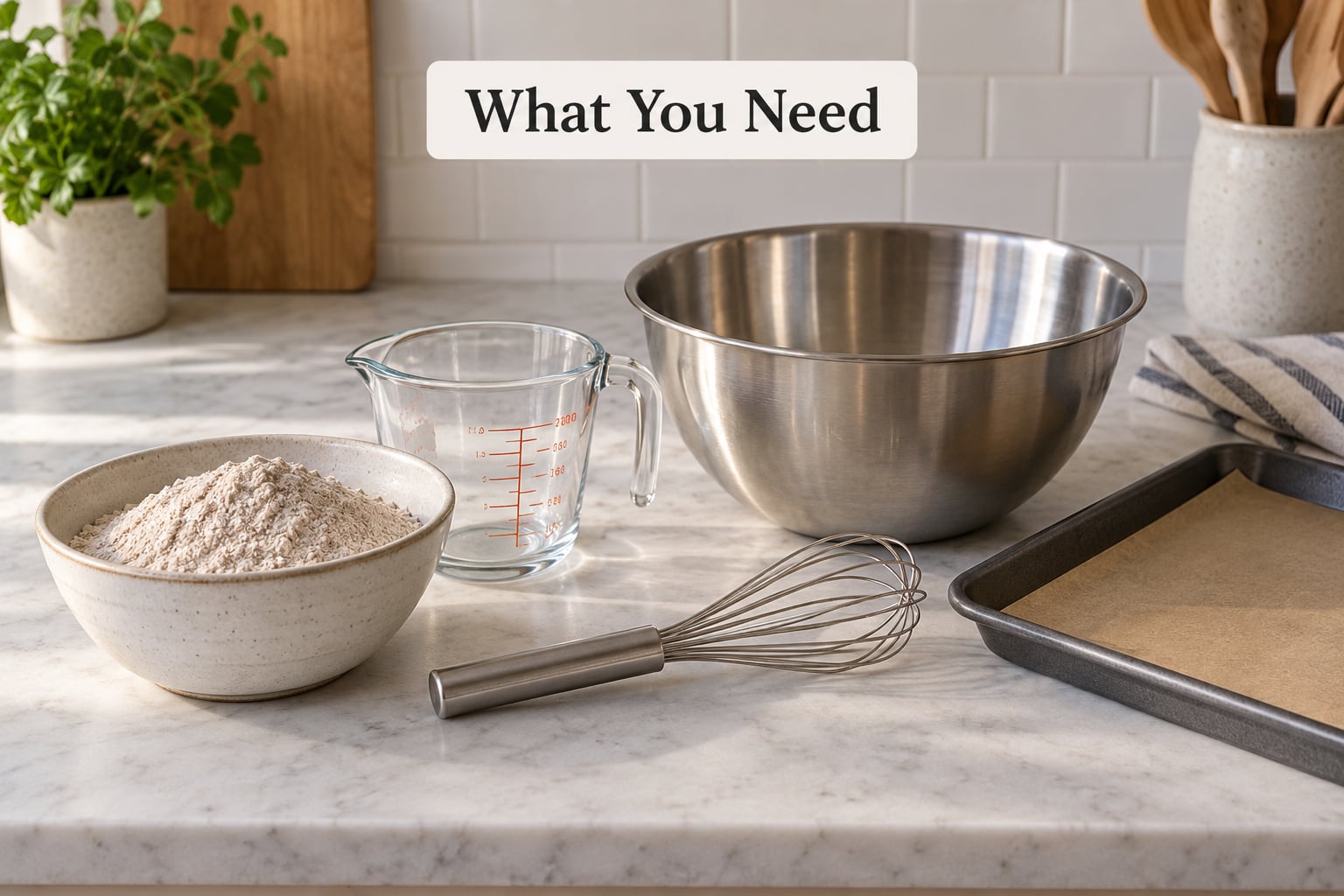
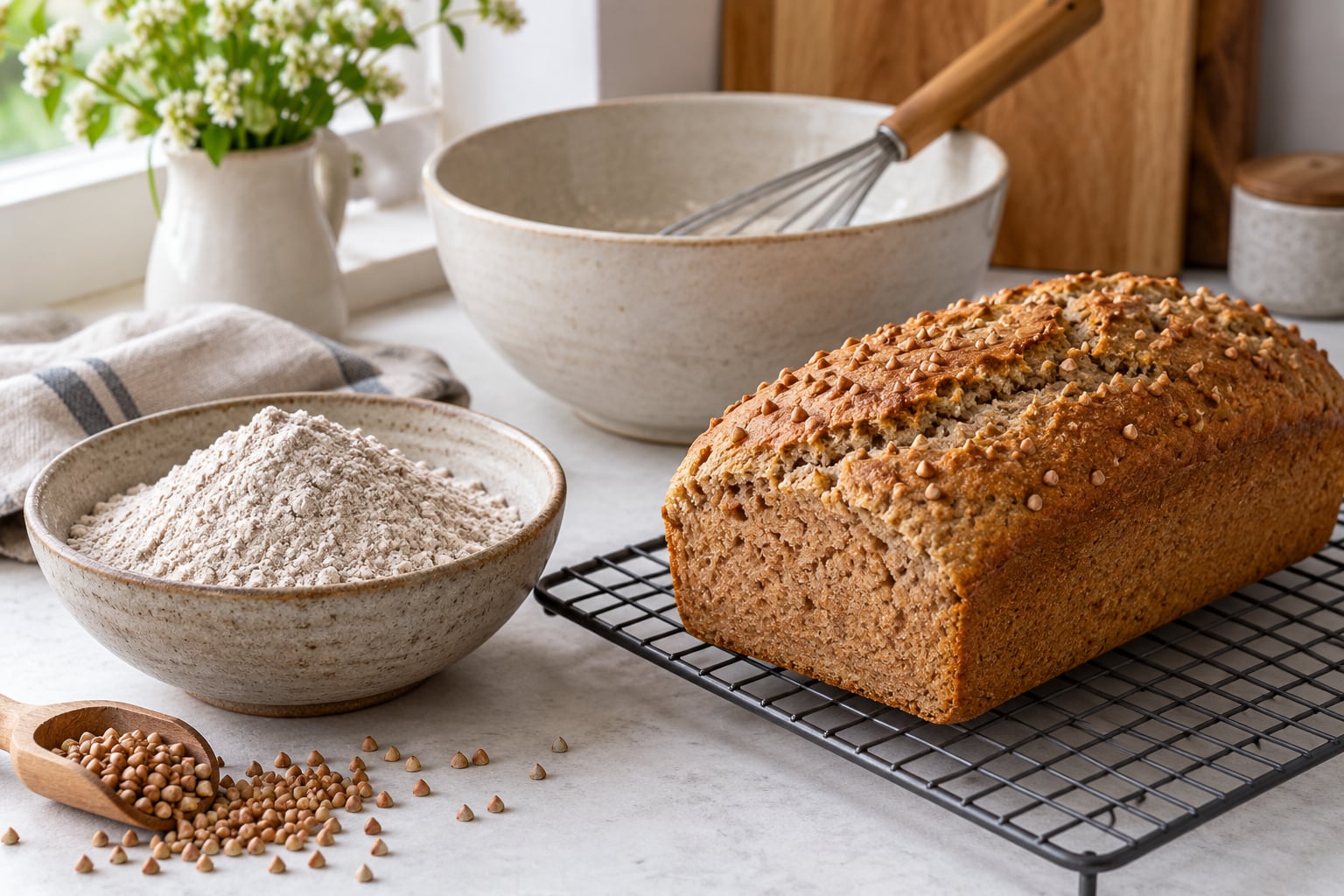
The only real ingredient decision is which buckwheat you buy, because the roast level sets the flavor before you turn on the oven. Dark buckwheat flour is milled from roasted groats and tastes of toast, malt and coffee, which suits bread, crackers and savory baking. Light buckwheat flour is milled from raw groats, tastes closer to oat and walnut, and keeps its sweetness in cookies, cakes and muffins. Whole buckwheat keeps the hull on, so it carries dark flecks, more fiber and a grittier bite. Stone-milled flour is usually the coarsest and the most flavorful of the lot.
You also want a scale, a fine-mesh sieve and one binder within reach: xanthan gum, ground psyllium husk or ground chia seed. Buckwheat has no gluten to build a network, so structure has to come from a hydrocolloid, from the eggs in the recipe, or from the wheat flour you did not replace.
Start with a cookie or a quick bread rather than a loaf or a pie crust. Those two are forgiving, they brown quickly, and they show you the flavor without asking you to manage a dough at the same time.
Storage matters more than most flour because buckwheat is rich in unsaturated oils that turn rancid. Keep it airtight in a cool cabinet away from the stove and buy in a size you will use within a few months. If it smells like old crayons or wet cardboard when you open the bag, it has gone past its window and no amount of baking will hide it.
Step-by-Step
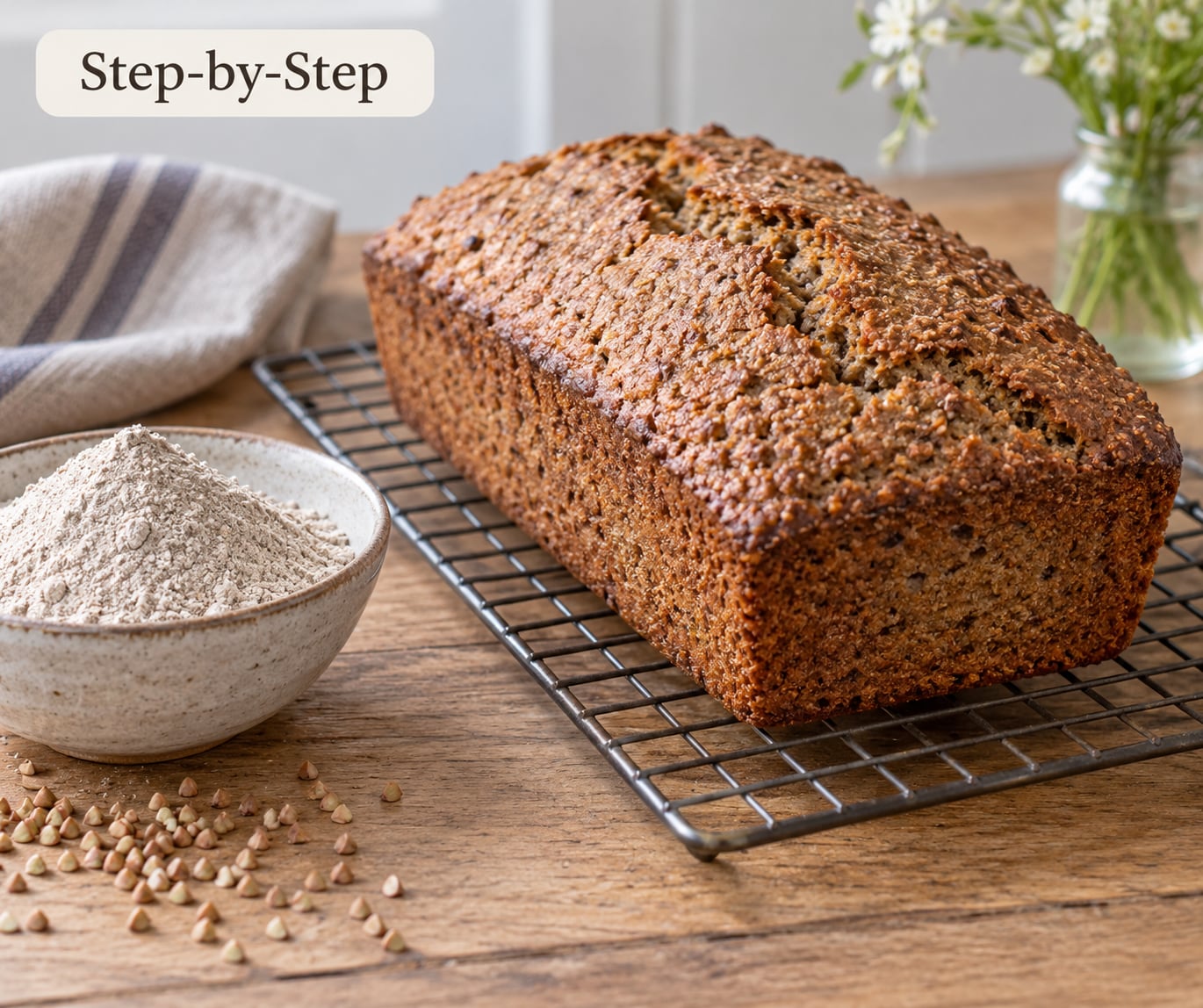
How to Choose the Right Buckwheat Flour
Pick dark for anything you want to taste like bread and light for anything you want to taste sweet. A cup of light buckwheat flour weighs roughly 120 grams, while a cup of dark flour packs closer to 130, so weigh it if the recipe lists cup measures and you care about consistency. A gram scale removes the single biggest source of confusion in buckwheat baking, which is that two bags from two mills may not weigh the same in a cup.
Start With a Simple Formula
Here is the working rule I use: keep buckwheat between 10 and 40 percent of the total flour weight in most bakes, and let it go higher only in yeast-free quick breads, pancakes and crackers, where eggs or baking powder are already doing the lifting. For a familiar wheat recipe, 25 percent is the safe swap. Replace 60 grams of the 240 grams of all-purpose flour with 60 grams of buckwheat and change nothing else. You learn the flavor in isolation this way, which is much easier to debug than a four-flour blend.
| Bake | Buckwheat share of total flour | What you get |
|---|---|---|
| Cookies and brownies | 25-40% | Crisp at the rim, tender and fudgy in the middle, deeper flavor |
| Pancakes, crepes, blini | 100% | Thin, earthy, browns fast; an egg supplies the structure |
| Quick breads, muffins, soda bread | 50-100% | Dense and moist; needs baking powder or soda to lift |
| Yeast breads | 20-30% | Darker, nuttier crumb; buckwheat ferments faster than wheat |
| Pie crust and galette | 15-25% | Short and nutty; needs a long rest and cold handling |
| Crackers and flatbread | 40-60% | Shattering snap with a strong savory note |
When you blend rather than substitute, rice flour gives you the neutral bulk, oat flour softens the grit and adds body, sorghum flour keeps a clean tender crumb without going heavy, and millet flour is mild enough for anyone who finds buckwheat too loud. A gluten-free all-purpose blend plus buckwheat at one to three parts works well for loaves, with a teaspoon of xanthan stirred into the liquid so it has time to hydrate before it meets the flour.
Mix the Batter Without Making It Tough
Dough, not just batter, is where buckwheat punishes you. Buckwheat has no gluten to develop, so every extra minute of mixing is work you did not need. Mix dry ingredients separately, add liquid to dry, and stop the moment it comes together.
For a quick bread or batter, whisk dry first, then fold wet in with a spatula until only the last streak of flour disappears. Overmixed buckwheat batter turns bouncy and rubbery because the fine starch and bran are being hydrated past the point where the water is useful. For a dough, mix, rest ten minutes, knead briefly, rest again, and shape. Those two rests let the flour drink its water instead of you forcing it.
Adjust Liquid and Leavening
A too-dry buckwheat batter crumbles at the edges and cracks across the top. Add liquid a tablespoon at a time, mostly toward the edges where it dries out first, and wait a minute between additions so the flour can absorb it. A too-wet batter spreads instead of holding its shape, which is usually a leavening problem rather than a liquid one; an extra quarter teaspoon of baking powder per cup of flour fixes the lift.
Change one variable at a time. Adjusting liquid and sweetener and leavening together means you never learn which one mattered, and you have to start the next bake from scratch anyway.
Bake and Check the Texture
Drop the oven temperature by about 25 degrees and give the bake three to five extra minutes. Buckwheat browns faster than wheat because there is less gluten protein taking the heat, so a recipe that looks pale at the stated time can still be raw in the middle.
Doneness is a toothpick plus a press. A skewer should come out clean, and the center of the bake should spring back a little and feel firm rather than tacky. When in doubt, give it two more minutes. Cool the finished bake fully on a wire rack before slicing, because starch that is still hot finishes setting as it cools, and cutting early is why so many buckwheat loaves feel gummy out of the pan.
Common Mistakes
Swapping every gram of wheat flour for buckwheat is the most common failure and the least forgivable one. All-buckwheat bread has no gluten at all, so it relies entirely on your binder and your oven technique. Replacing the whole flour is reasonable in pancakes and crackers and rarely wise anywhere else.
| What went wrong | Why | Fix |
|---|---|---|
| Gummy center | Underbaked, starch not fully set | Bake 3-5 minutes longer at a reduced temperature; cool completely before cutting |
| Gritty bite | Coarse mill, or flour not sifted | Sift through a fine mesh, rest the batter 5 minutes so the flour hydrates |
| Crumbly, falls apart | No gluten and no binder | Add half to one teaspoon xanthan, or one tablespoon ground chia, per cup of flour |
| Flat and spread out | Nothing to hold lift | Add baking powder and rest the dough 10 minutes before shaping |
| Bitter or dusty | Swap too high, or overbaked | Drop to 25 percent, use light flour, pull it two minutes early |
| Sinks in the middle | Wet batter, or oven opened too soon | Set the pan on a rack and leave the door shut for the first 25 minutes |
The second mistake is skipping a binder in a gluten-free recipe and then blaming the buckwheat for a crumble that the xanthan should have prevented. Stir the gum into the liquid first and let it sit a minute before you pour it in. Dumping it in with the dry flour leaves lumps that read as grit.
Third, people reach for very dark or very strongly flavored flour when the problem is really that they used too much of it. Bitterness in buckwheat comes from roast level and bake time, not from the flour being spoiled.
Fourth is overmixing, covered above, and fifth is adjusting liquid in a single large pour, which turns a slightly dry batter into a slack one and leaves you guessing.
Baking Ideas to Try
Buckwheat chocolate chip cookies at 30 percent buckwheat give you a cookie with a soft, almost fudgy center and a rim that snaps, and they taste nuttier without being savory. A brown-butter buckwheat brownie at 40 percent is fudgier than the wheat version because there is no gluten to chew through.
A 100 percent buckwheat quick bread needs double the leavening of a wheat quick bread and bakes in noticeably less time, so start checking it early. Buckwheat soda bread is simpler still: stir wet into dry, wait five minutes so the flour drinks the milk, then bake. That five-minute wait is the whole trick to losing the grit.
Pancakes and crepes at 100 percent buckwheat are thin, lacy at the edges and brown almost immediately, which is exactly what you want for blini with cultured butter. Buckwheat crackers and savory flatbreads reward a higher percentage because the roast flavor wants something to anchor it.
A yeast loaf works at 20 to 30 percent, using the buckwheat for flavor and color while the wheat does the rising. Buckwheat ferments faster than wheat, so watch the dough rather than the clock. And for crumb coatings, pulsing the flour briefly in a blender gives a finer, less dusty shell than the stone-milled version straight from the bag.
Frequently Asked Questions
Can I use buckwheat flour instead of all-purpose flour?
You can, but replace only 25 to 40 percent of the flour in most recipes. Buckwheat has no gluten, so a full swap leaves nothing to develop structure and the bake turns dense or crumbly. Start with 60 grams of buckwheat in place of 60 grams of all-purpose flour, change nothing else, and adjust from there. Recipes with eggs, baking powder or cheese tolerate much higher percentages than lean breads.
Is buckwheat flour gluten-free?
Buckwheat is a pseudocereal unrelated to wheat, and the plant contains no gluten, so the flour is naturally gluten-free. The confusion comes from cross-contact: some mills and brands note buckwheat is milled in a facility that also handles wheat, oats or rye, so they label the bag as containing gluten. If you need a strict gluten-free bake, read the allergen statement on the specific bag rather than trusting the category.
What is the best flour ratio for buckwheat baking?
Keep buckwheat between 10 and 40 percent of total flour weight for cookies, yeast breads and pie crust, and use 50 to 100 percent for pancakes, crackers and quick breads that get their lift from eggs or soda. Measure by weight rather than cups, since dark and light buckwheat pack differently. When you blend, pair it with rice, sorghum, oat or millet for bulk and add a binder.
Does buckwheat flour make baked goods taste bitter?
It can, in three situations: when the swap percentage goes past about 50 percent in a sweet bake, when you use dark roasted flour in something delicate, and when the bake runs long in a hot oven. Choose light buckwheat for cakes and cookies, hold the swap at 25 percent, and pull the bake two minutes early. A small amount of molasses or dark sugar also softens the bitter edge.
Can buckwheat flour be used in yeast breads?
Yes, and it improves the flavor and the color of the crust. Use 20 to 30 percent of the total flour weight so the wheat still builds the gluten that traps the rise. Buckwheat ferments faster than wheat and carries more sugars, so the dough may be ready earlier than the recipe suggests. Watch the dough, not the clock, and expect a darker, nuttier crumb than an all-wheat loaf.
Why is my buckwheat cake or cookies dense?
Density almost always means no structure, not too much flour. Buckwheat forms no gluten network, so it needs a binder such as xanthan gum or ground chia, or enough wheat flour or egg to do the work. Check your swap percentage, confirm the binder went into the liquid, and let the batter rest five minutes before baking. Overmixing also produces density, so stop as soon as the flour disappears.
Where to Start This Week
Make a chocolate chip cookie with 30 percent buckwheat and change nothing else about your favorite recipe. Weigh the flour, sift it, mix until the streaks disappear, drop the oven temperature a little and let it cool before you cut it. That single bake will teach you more about buckwheat than any ratio table, and the next one will be faster.