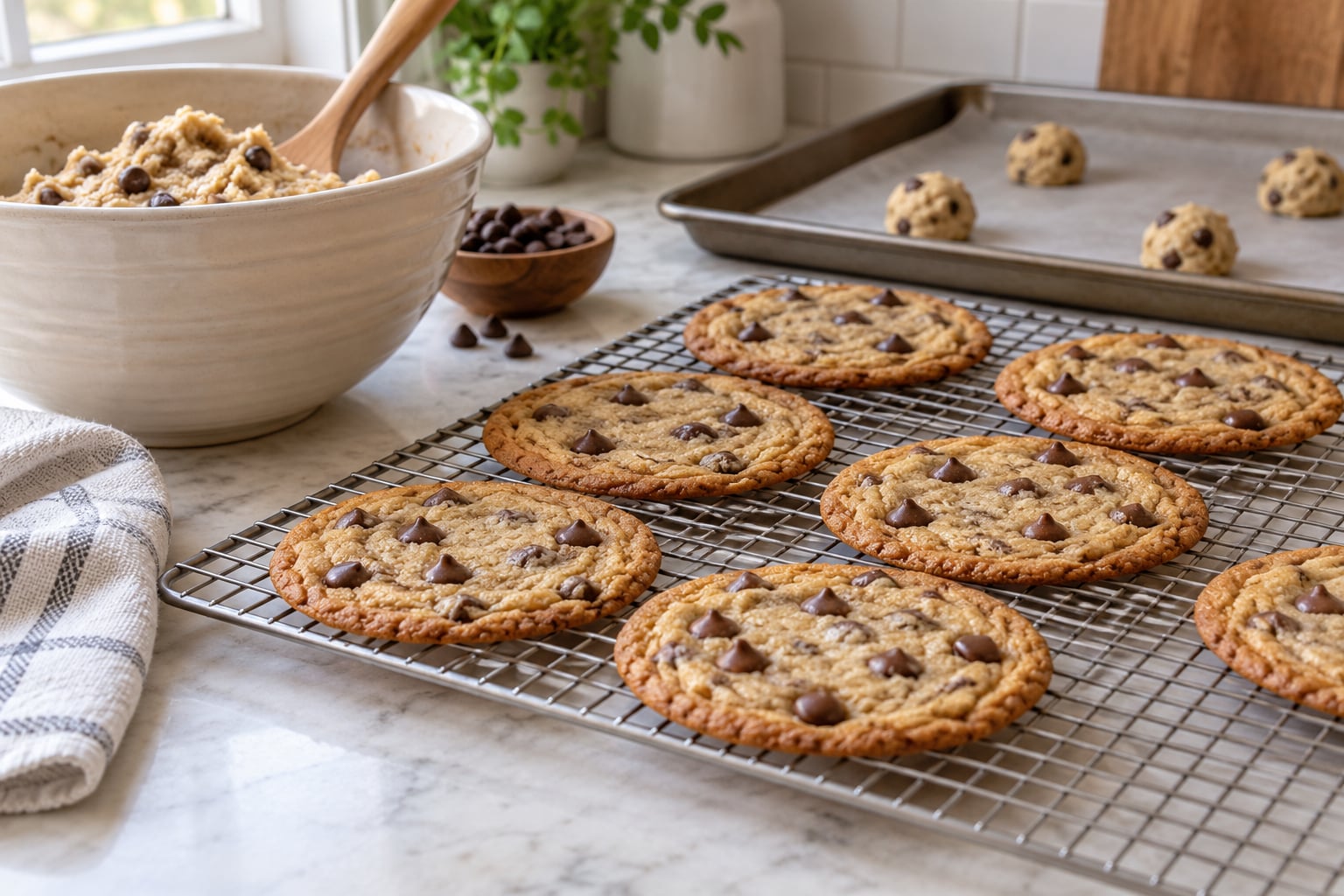
Cookies spread too much because the fat in the dough melts in the oven before the flour, starch, and leavening have set enough structure to hold it. Warm butter, too little flour, extra sugar, a cool oven, and dough that never chilled all stretch that window wider.
That window is the first three to five minutes of the bake. Once the edges set while the middle is still fluid, the shape is baked in and no amount of cooling will bring it back. Nearly every fix has to happen before the pan goes into the oven.
The good news is you rarely need to change a recipe. You need to find which of about six variables moved, and the fastest way is to bake one cookie and read it.
Table of Contents
- Why do my cookies spread too much?
- What makes cookies spread instead of staying thick?
- How to fix cookies that spread too much
- What ingredients control cookie spread?
- Why do my cookies spread in the oven?
- Does chilling cookie dough help it spread less?
- How to keep gluten-free cookies from spreading
- Can baking temperature and pan size change cookie spread?
- Frequently Asked Questions
- Why do my cookies spread too much the first time I bake them?
- Why do my cookies spread before they are done baking?
- Should I chill cookie dough to stop spreading?
- Why do gluten-free cookies spread more than regular cookies?
- Does melted butter make cookies spread too much?
- How long should cookie dough chill before baking?
Why do my cookies spread too much?
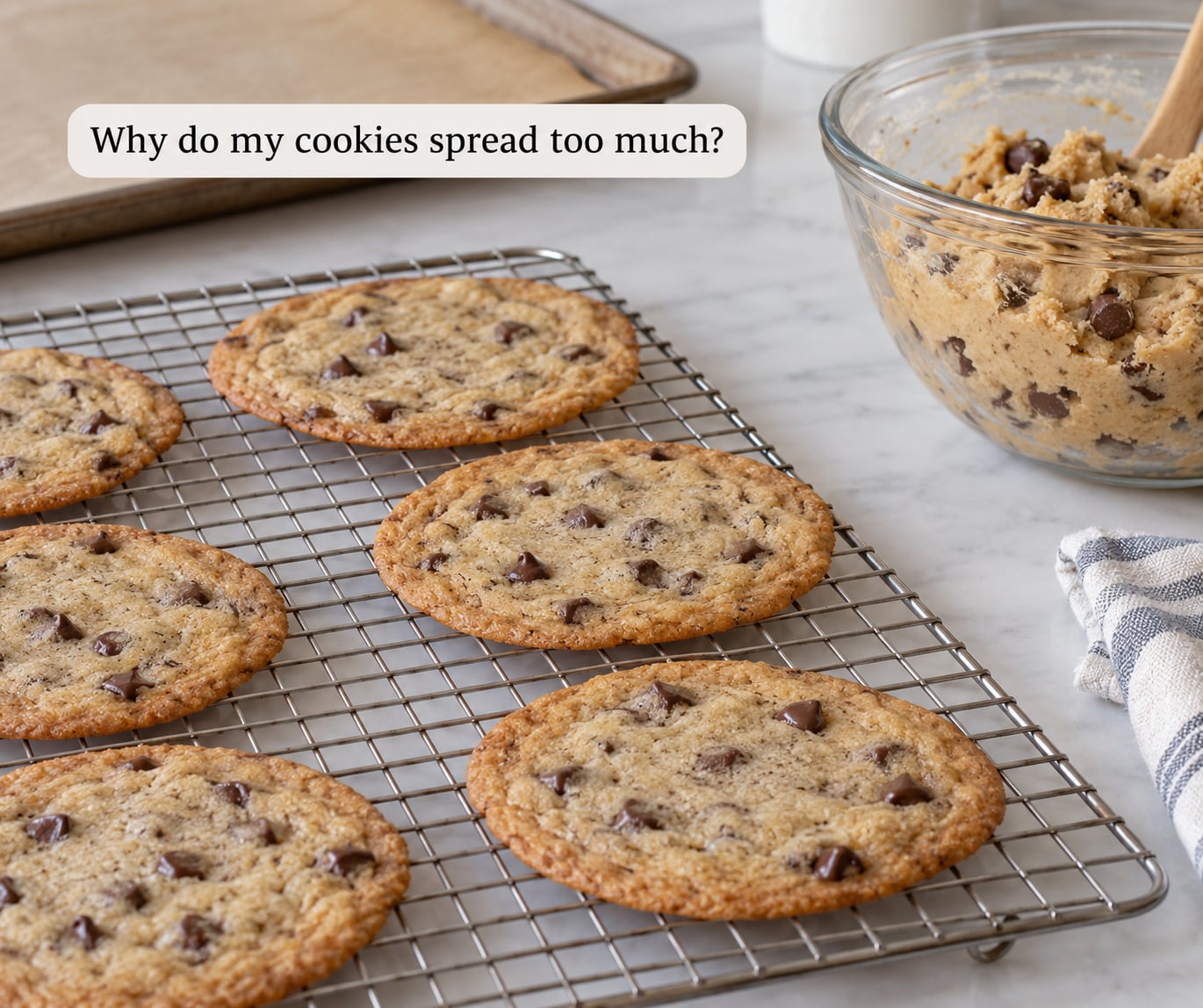
Here are the causes I see most often, roughly in the order they are worth checking. Each one is a different reason the same thing happens.
- Butter too soft or already melted. Liquid butter hits the pan with nothing left to slow it down.
- Dough too warm. Cold fat is the reserve that buys structure time; warm fat has none.
- Too little flour. Not enough starch and protein to hold the fat in place.
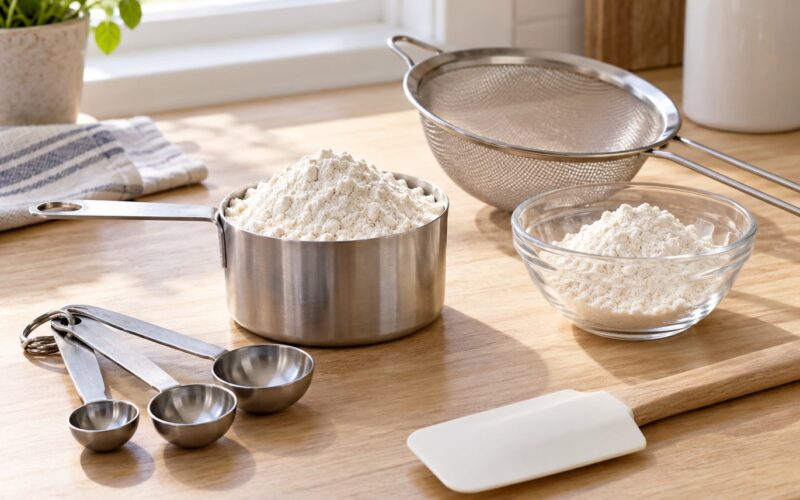
- Flour measured by volume. Spooned flour can pack 15 to 20 percent heavier than a weighed cup.
- Too much sugar, especially brown. Extra brown sugar melts later and holds more moisture.
- Baking soda overdone or expired. Extra soda thins the dough and speeds the spread.
- Oven running cool. Slow heat keeps the butter liquid longer than the crust can set.
- A dark, nonstick, or preheated sheet. Fast heat transfer sends moisture out and the cookie goes thin sooner.
Most bakers fix two of these and assume they fixed the dough. Change one thing, bake one cookie, then change the next thing. That is how you find the real culprit instead of guessing at all eight.
What makes cookies spread instead of staying thick?
Every cookie is a small structure made of fat, sugar, water, starch, and protein. Spread is what happens when the fat gets ahead of the structure.
Butter softens around 65 to 68°F and melts completely near body temperature, which is why recipes ask for butter that dents under a finger but keeps its shape. In the oven that fat turns liquid almost immediately. Solid fat melting slowly is what gives the cookie time to build its wall before everything turns to oil and runs outward.
Sugar works against you here. Granulated sugar dissolves as it heats and brown sugar softens into a syrup later, so a dough with more sugar keeps a wetter, looser center for longer. It also competes with flour for water, which thins the dough you are trying to firm up.
Flour is the actual wall. Gluten proteins link into an elastic network when they hydrate and get worked, and the surrounding starch absorbs water and gelatinizes in the heat. Both shrink and stiffen as they set. Reduce the flour, use bread flour, or skip gluten entirely, and there is less wall between you and a puddle.
Liquid does the rest. Eggs, vanilla, milk, and melted chocolate add water that has to evaporate before the cookie can firm, and every extra bit of water buys the fat more time to spread.
How to fix cookies that spread too much
Work down this list in order, stopping at each change long enough to bake one test cookie. Ten minutes of testing beats committing a full tray to a result you already suspect.
- Chill the dough 30 to 60 minutes. Cold dough bakes noticeably tighter, and overnight is better still for high-sugar doughs.
- Weigh the flour and add more if needed. Add 1 to 2 tablespoons per cup of flour already in the recipe.
- Add 1 to 2 teaspoons of cornstarch. Cornstarch softens the bite and stiffens the spread, and it is the fix bakers reach for most often.
- Check the butter. It should be 65 to 68°F, dent under a finger, and still hold its shape.
- Chill or cool the baking sheet. A sheet fresh from hot water spreads the dough on contact.
- Line with parchment or a silicone mat. Do not grease the pan; grease adds fat right where the cookie touches.
- Bake on a middle rack at 350°F. Pull the test cookie when the edges are set and the center still looks slightly soft.
- Space cookies 2 inches apart. Overcrowding merges the edges and pulls moisture sideways.
If one test cookie is right, the rest of the batch is right. Scaling up does not change spread much as long as you keep the same dough mass per cookie and do not overwork it.
What ingredients control cookie spread?
Fat: butter holds shape better than oil. Oil stays liquid all the way through the bake, so oil cookies spread wider and flatter by design. Brown butter spreads more than plain butter because browning dries some water out and leaves the fat more mobile.
Sugar: granulated sugar pulls less moisture than brown sugar. Swapping a portion of your brown sugar for white sugar thickens the cookie, and skipping add-ins like nuts and chocolate chips removes solids that would otherwise prop the dough up.
Flour: all-purpose sits around 10 to 11 percent protein, bread flour around 12 to 13 percent for more strength, and cake flour near 7 to 8 percent for less. Bread flour helps, cake flour makes it worse, and blending 2 tablespoons of cornstarch into each cup of all-purpose flour approximates cake flour’s structure without weakening the flavor.
Leavening: baking soda is the spreader. It raises acidity, thins the dough, and pushes the edges out while giving crisp bottoms. Baking powder domes and thickens. Halving the soda and adding a small pinch of powder is a well-worn fix for cookies that never stop flowing.
Extras: oats, oatmeal, and brownie-style doughs carry more sugar and fat and spread more by nature. Extra brown sugar and no nuts is about the fastest way to turn a sturdy cookie into a thin one.
Why do my cookies spread in the oven?
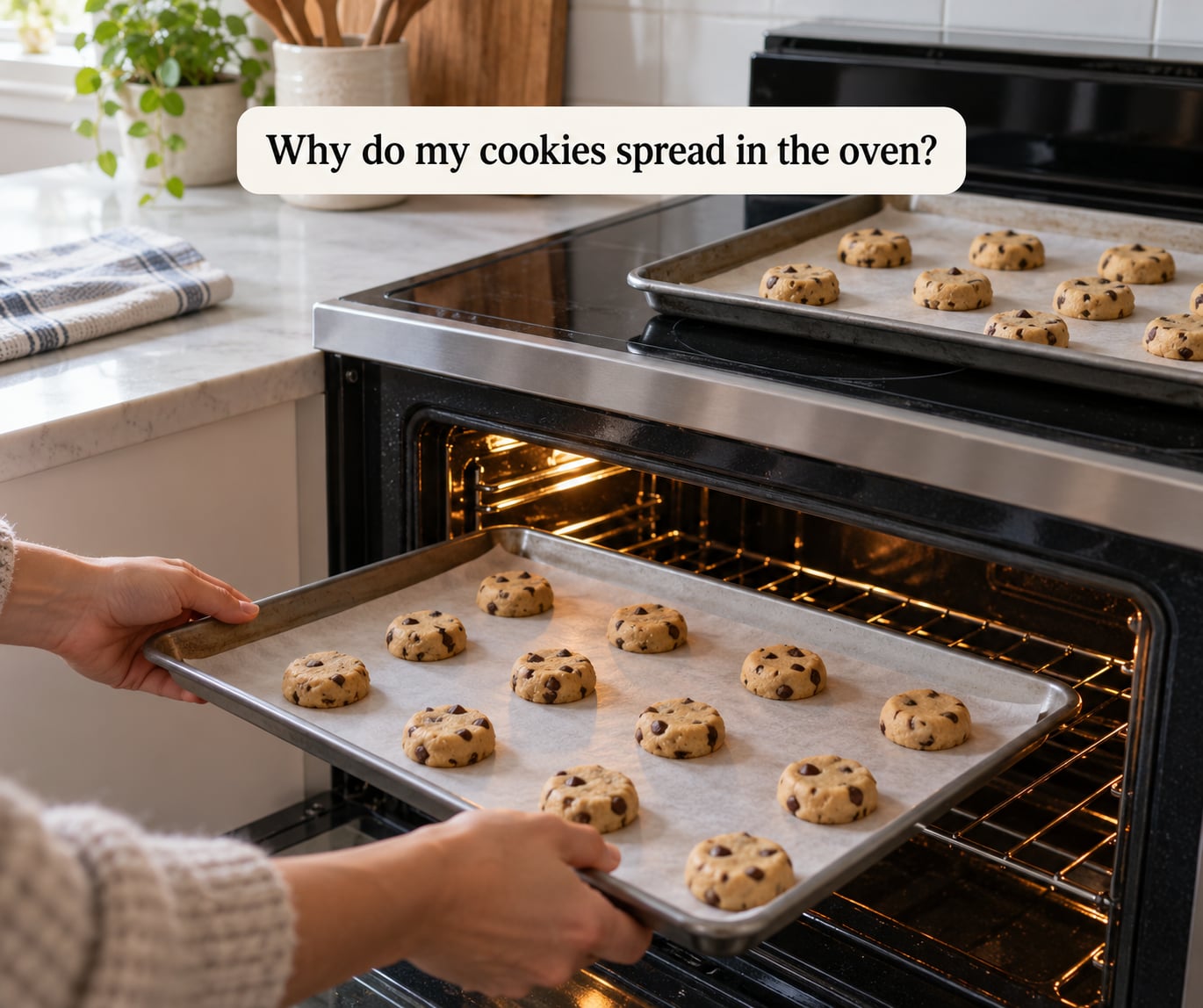
The first three minutes are the whole story. Butter melts, water turns to steam, starch begins to gelatinize, and the protein network firms up. Steam pushes outward from the center and drags the still-soft edges with it.
Heat moves outward, so the rim sets first while the center stays fluid. That is why a cookie with set edges and a wet middle is normal at eight minutes and why you pull it before the center looks done. A hot oven dries that moisture out faster and leaves a thin, brittle cookie; a cool oven keeps the butter liquid long enough for the cookie to travel.
Crowding makes it worse for the same reason. Sheets of cookies near each other heat the surrounding air and stall the escaping steam, so more moisture stays in the middle and the spread has nowhere to stop.
Does chilling cookie dough help it spread less?
Yes, and it is the single change with the widest effect. Chilling solidifies the butter, so the fat melts gradually through the first minutes of the bake instead of all at once, giving starch and protein time to set before the dough moves.
It helps most where fat is high and flour is low. Shortbread, snickerdoodles, pecan sandies, peanut butter cookies, and anything with melted butter show the biggest change from a cold dough. A sturdy sugar cookie may not look different at all.
Chilling longer than a few hours changes texture as well as spread. The dough relaxes, spreads less in the pan, and bakes up denser and more flavorful, sometimes with 1 or 2 extra minutes needed. Very long chill is not better; a night in the refrigerator is plenty for almost anything.
How to keep gluten-free cookies from spreading
Gluten-free dough has no protein network, so starch and gum are doing all the structural work. That makes these cookies lean on fat and sugar for texture, which makes them run unless you give them something else to hold.
- Weigh flour by weight rather than volume, the same as everyone else.
- Swap 2 tablespoons of the flour for cornstarch, or blend in rice or tapioca starch at 20 to 30 percent.
- Start with a blend that already includes xanthan gum, then add starch only if it still runs.
- Cut 1 to 2 tablespoons of fat from the recipe before you cut anything else.
- Chill the dough at least an hour, and refrigerate the pan while it preheats.
- Bake smaller portions. Per-cookie mass matters more in gluten-free dough than in wheat dough.
Cornmeal, sorghum, and oat flour all spread more than plain all-purpose. Oat flour soaks up liquid, which helps, but it also brings extra sugar and fat to the dough, so chill those cookies rather than fighting them at the pan.
Can baking temperature and pan size change cookie spread?
Temperature changes the speed of spreading more than most people expect. Bumping an oven from 350°F to 375°F speeds up melting and browning and dries the cookie faster, so the batch comes out thinner, crisper, and darker. Dropping to 325°F gives the fat more time and usually yields thicker, softer cookies, at the cost of less browning.
Cookies baked at 400°F run the widest of all, and they set so fast that the bake time gets short enough to overcook the edges. 375°F sits in the middle and is a reasonable one-step nudge if 350°F has never quite given you enough spread.
Pan size works the same way. More sheet means more air and faster moisture loss, so cookies on a large half-sheet spread more than the same dough on a small pan. A dark or nonstick sheet pulls heat harder than a light-colored aluminum one and pushes the cookie toward thin and crisp. Preheating the sheet adds to the same effect.
The mat question comes up constantly and the honest answer is that it depends on the mat. A silicone mat raises the surface slightly and insulates the dough, which slows the bottom and can leave a cookie spreading more; a parchment-lined cold sheet grips and slows everything. Test both with one cookie from the same dough rather than taking a forum’s word for it.
Frequently Asked Questions
Why do my cookies spread too much the first time I bake them?
Most often the dough was too warm and the flour was measured by volume. A first batch also exposes unverified oven temperature, and a sheet straight from the tap water spreads dough on contact. Chill the dough 30 to 60 minutes, weigh the flour, cool the pan, and bake a single test cookie before committing a full tray.
Why do my cookies spread before they are done baking?
Because spreading is decided in the first three to five minutes, long before the center finishes baking. Warm fat, thin dough, extra sugar, and a cool oven all keep the dough fluid while the edges lock in. Once the edge sets while the middle is still moving, the thin shape is baked in. Pull cookies when the edges are set and the center still looks slightly soft.
Should I chill cookie dough to stop spreading?
Yes, chilling is the highest-impact change for most doughs. It solidifies the butter so the fat melts gradually while the starch and protein set. Thirty to sixty minutes handles most recipes, and overnight works even better for high-sugar or high-fat doughs. Chilling also thickens the finished cookie, so it may need one or two extra minutes in the oven.
Why do gluten-free cookies spread more than regular cookies?
Gluten-free flour has no protein network, so cookies lean entirely on starch, gum, and sugar for structure. That leaves fat doing work it should not be doing, and the dough stays fluid longer. Weigh the flour, swap some of it for cornstarch, cut 1 to 2 tablespoons of fat, chill the dough, and bake smaller portions than you would in a wheat recipe.
Does melted butter make cookies spread too much?
It does. Melted butter has no solid fat left to melt slowly, so it wets the flour and runs across the pan the moment the dough lands. It is the most common cause in one-bowl recipes and in any dough made ahead. If your recipe calls for melted butter, cool it until it thickens and stops looking like oil, or set the butter solid and let the dough chill.
How long should cookie dough chill before baking?
Thirty to sixty minutes is the useful range for most home doughs, and high-sugar or high-fat recipes like snickerdoodles or shortbread benefit from a full night. Cut the butter to small pieces and refrigerate it 15 minutes before mixing if you want a quick change instead. Chilling longer than a day changes the texture more than it changes the spread.
If you do one thing, chill the dough for an hour and weigh the flour instead of scooping it. Those two changes resolve more runaway batches than anything else, and the next batch tells you whether the oven needs an oven thermometer.