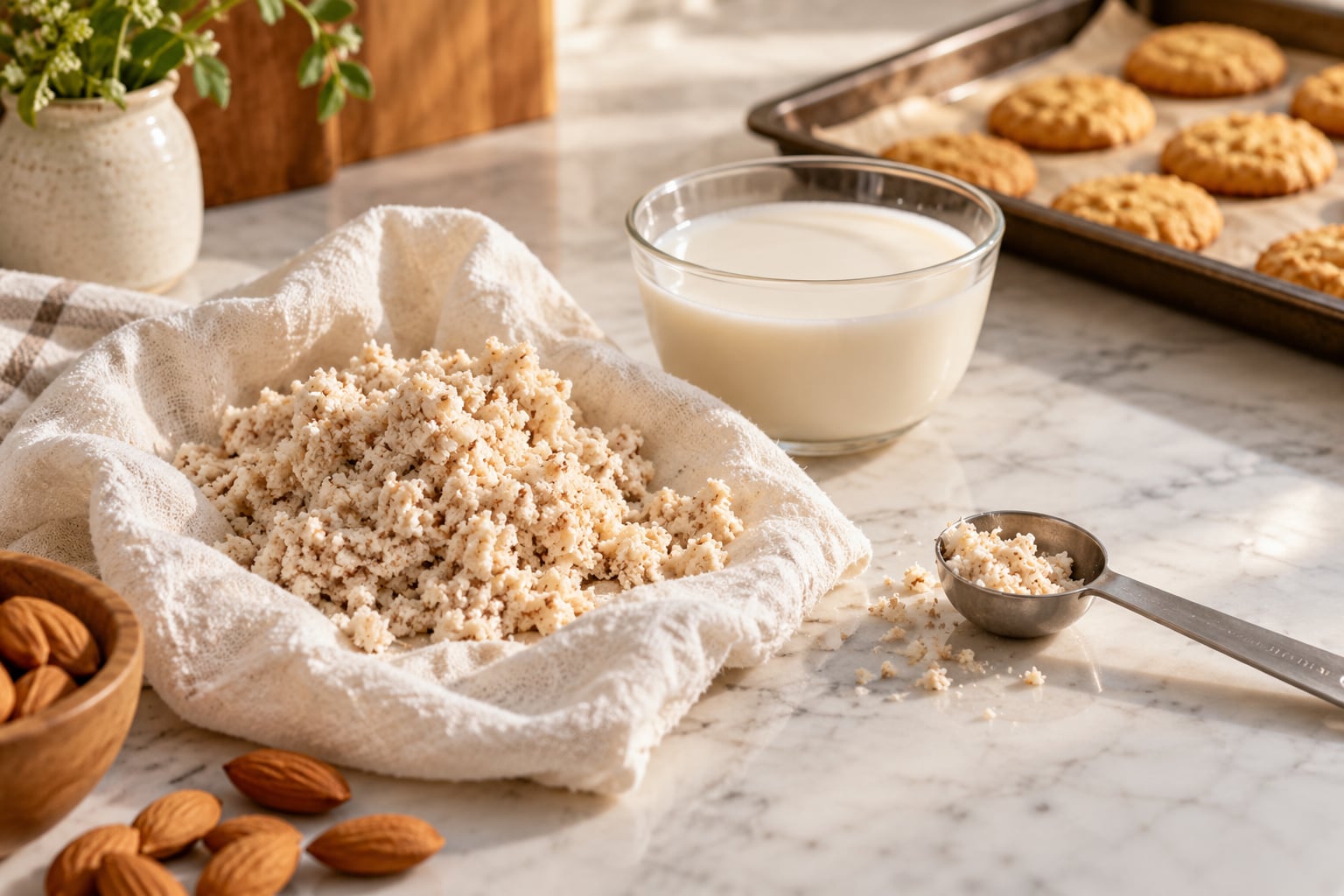
The quickest way to use leftover nut pulp is to stop treating it like flour. Pulp is a damp, fibrous solid with real body, so it works best where you would normally add oats, seeds or ground nuts, not where you would swap a dry cup of almond flour for a wet one. Press out the water, measure by weight, and you have six dependable applications that use up roughly a cup of pulp each.
A batch of homemade nut milk leaves behind three to four cups of pulp, and that pulp still carries the fiber, protein and fat that were in the whole nut. Most home cooks lose it to the compost bin because the wet texture makes it look like nothing useful. Here is how to use leftover nut pulp in six ways that actually work, plus how to store it and what to do when a batch goes wrong.
Table of Contents
- What You Need
- Step-by-Step: How to Use Leftover Nut Pulp
- Step 1: Check the Pulp and Adjust Its Texture
- Step 2: How to Use Leftover Nut Pulp in Batters and Doughs
- Step 3: Add Body to Smoothies and Spreads
- Step 4: Fold Pulp into Energy Bites and Granola
- Step 5: Use Pulp in Savory Sauces and Breading
- Step 6: Bake Crisp Cookies or Crisps
- Common Mistakes
- Why Pulp Baked Goods Turn Out Soggy
- Why Baked Goods Come Out Gritty
- Why Everything Tastes Too Sweet
- Why Cookies and Crackers Will Not Crisp
- Why Pulp Smells Off After a Few Days
- Frequently Asked Questions
- Can I use leftover nut pulp in cookies and other baked goods?
- How long can leftover nut pulp stay in the refrigerator?
- Can I freeze nut pulp after making nut milk?
- How much nut pulp should I use in place of flour?
- Does leftover nut pulp work in gluten-free recipes?
- What is the best way to use nut pulp with no added sugar?
- Start with the Smallest Batch
What You Need
You need very little. The pulp itself is the ingredient; everything else is whatever the recipe calls for. Most of these methods take under 20 minutes of active time, and the only equipment beyond a bowl and a spoon is a towel, a food processor or a dehydrator you may not even need.
Not all pulp behaves the same. Almond pulp is mild and fine, so it disappears into baked goods. Cashew pulp is fattier and slightly sweet, which makes it good in bars and creamy spreads. Walnut and pecan pulp carry a strong, bitter edge that works in savory applications but can dominate a cookie. Coconut pulp is bulky and fibrous, so it suits muffins, quick breads and snack mixes more than delicate pastries.
The single most important thing to know before you start: how wet the pulp is decides what you can make with it. Freshly strained pulp is loose and shiny. Pulp that has been squeezed and towel-dried holds together in a ball. Fully dried pulp crumbles and behaves like store-bought nut flour.
| State of the pulp | What it looks like | Best applications |
|---|---|---|
| Fresh from the strainer | Loose, glossy, holds no shape | Smoothies, sauces, dips, soup thickener, meatless meatballs |
| Squeezed and towel-dried | Damp but crumbly, clumps when squeezed | Energy bites, granola, cookies, pancakes, quick breads |
| Spread thin and fully dried | Brittle, crumbles like flour | Any baking recipe, crackers, thickeners, egg replacer |
For pressing, lay pulp on a clean towel or several layers of paper towel, roll it up and twist hard over the sink. Then spread it about a quarter inch thick on a plate or tray, cover it, and put it in the refrigerator overnight if you want drier pulp without a dehydrator. That extra drying step is the difference between a cookie that spreads into a thin wafer and one that holds its shape.
Keep a kitchen scale nearby if you have one. Cups are unreliable for wet ingredients because a cup of squeezed pulp and a cup of loose pulp can differ by 40 grams. Measuring by weight is the single change that makes pulp recipes repeatable.
Step-by-Step: How to Use Leftover Nut Pulp
Step 1: Check the Pulp and Adjust Its Texture
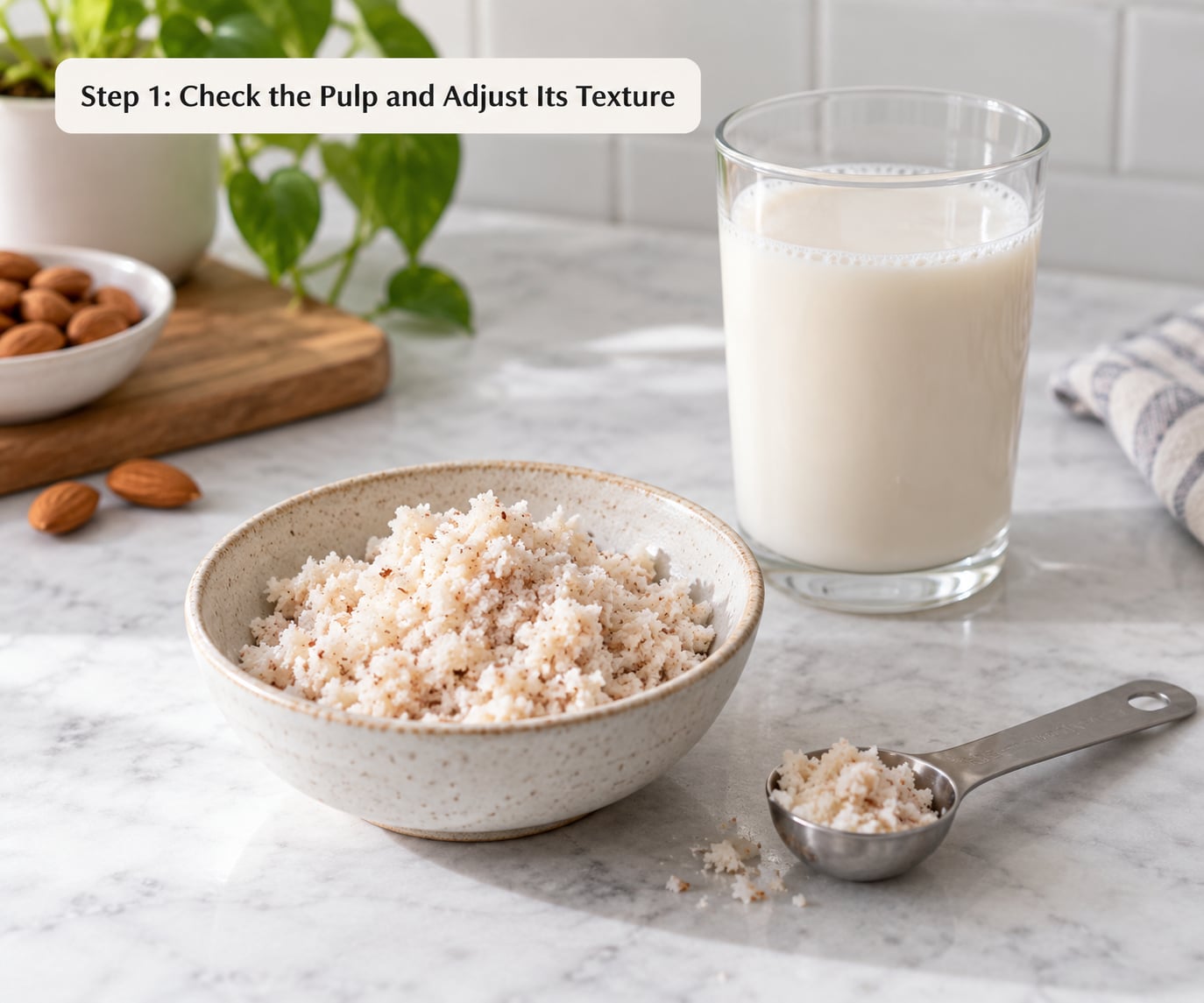
Taste a small pinch straight after straining. Fresh pulp should taste nutty and faintly sweet with no sour or fermented edge. If it smells boozy or the flavor turns sharp, it has been sitting at room temperature too long and compost it instead of cooking with it.
To adjust texture, work the pulp between your fingers to break up the clumps that form right out of the bag. Loose pulp blends into smoothies and sauces; clumped, squeezed pulp is what you want for anything that needs to hold together on a tray or in a pan. When a recipe calls for a smoother mixture, loosen the pulp with a tablespoon of water or leftover nut milk at a time until it spreads rather than sits in lumps.
You know the adjustment worked when the pulp pours slowly like thick oatmeal rather than dripping like water, or when a squeezed handful holds its shape without leaking moisture between your fingers. Stop there. Wetter pulp is the single most common reason pulp recipes fail.
Step 2: How to Use Leftover Nut Pulp in Batters and Doughs
Pulp replaces part of the flour in muffins, quick breads, pancakes, crackers and cookie dough. The safe ratio for a first attempt is one part squeezed pulp to three parts flour by weight, so 100 grams of pulp alongside 300 grams of flour. Go past that and the crumb turns dense and gummy, which is exactly the disappointment most people hit on their first try.
Fold the pulp in with the dry ingredients rather than the wet ones. It distributes more evenly, and you avoid pockets that bake into hard little nuggets. Then watch the dough rather than trusting the timer: batter that stops spreading within 30 seconds of hitting the pan is about right, and batter that runs flat means you need another two or three tablespoons of flour.
Batters made this way brown a little faster than plain flour batters because of the nut protein and fat in the pulp. Pull cakes and muffins a few minutes early and check with a toothpick. Cookies should come off the sheet with set edges and a slightly matte top, not a glossy one.
Step 3: Add Body to Smoothies and Spreads
Fresh pulp is a thickener. Two tablespoons blended into a smoothie replace the banana or the scoop of protein powder you would normally use for body, and you get fiber without a gritty catch in your throat. Blend it in before any frozen fruit, since pulp against cold blades stays grainy.
The same idea works in a food processor spread. Blend 120 grams of pulp with two tablespoons of lemon juice, three tablespoons of olive oil, a garlic clove, salt and any fresh herbs you have. That mixture sets in the fridge into something close to a soft herb cheese, and it holds on crackers, stuffed peppers and roasted vegetables for about three days.
You will know it worked when the spread holds a knife mark but smear easily when you spread it. If it is gluey, add another tablespoon of oil. If it crumbles, add a splash of water. Thick dips like hummus get the same treatment, with tahini or lemon standing in for the oil.
Step 4: Fold Pulp into Energy Bites and Granola
This is the easiest win of the six, and the one home cooks mention most often when they describe what finally worked. Combine equal weights of squeezed pulp and rolled oats, then add seeds, nut or seed butter, a sweetener such as maple syrup or dates, and a pinch of salt. Mix with your hands until the mass holds together when you squeeze it.
Portion into balls and either roll them in coconut or chopped seeds, or press them flat and bake at 325°F for 18 to 22 minutes until the edges brown. For crunchier results, spread the mixture on a lined tray and dehydrate or bake low until fully crisp before cutting. Bars and bites made this way travel well and keep for a week in a sealed container.
For loose granola, toss pulp with oats and oil first and bake at 325°F for 20 minutes, stirring twice, before adding dried fruit and any sweetener. Skip fresh or frozen berries, which release water as they bake and turn the tray soft.
Step 5: Use Pulp in Savory Sauces and Breading
Pulp thickens savory sauces without dairy or gluten. Whisk a tablespoon of damp pulp into a simmering pot of tomato sauce, curry or soup and let it cook two or three minutes; the starches in the pulp thicken the liquid and mute sharp spices. Add it near the end of cooking so it does not sit long enough to break down.
For meatless meatballs and patties, mix pulp with cooked grains, lentils or chopped mushrooms at roughly one part pulp to two parts filling. A flax or chia gel stands in for egg: stir one tablespoon of ground flaxseed with three tablespoons of water, rest it for ten minutes until it thickens, then fold it in. Bake patties at 400°F until crisp outside and hot through, about 20 minutes.
Pulpy breading for tofu, eggplant or seitan works the same way the dough does. Toss pulp with flour, salt and spices at one part pulp to two parts flour, press onto the surface, then bake at 400°F for 15 minutes or air-fry until golden. Walnut and pecan pulp shine here, since their deeper flavor matches herbs, garlic and smoked paprika.
Step 6: Bake Crisp Cookies or Crisps
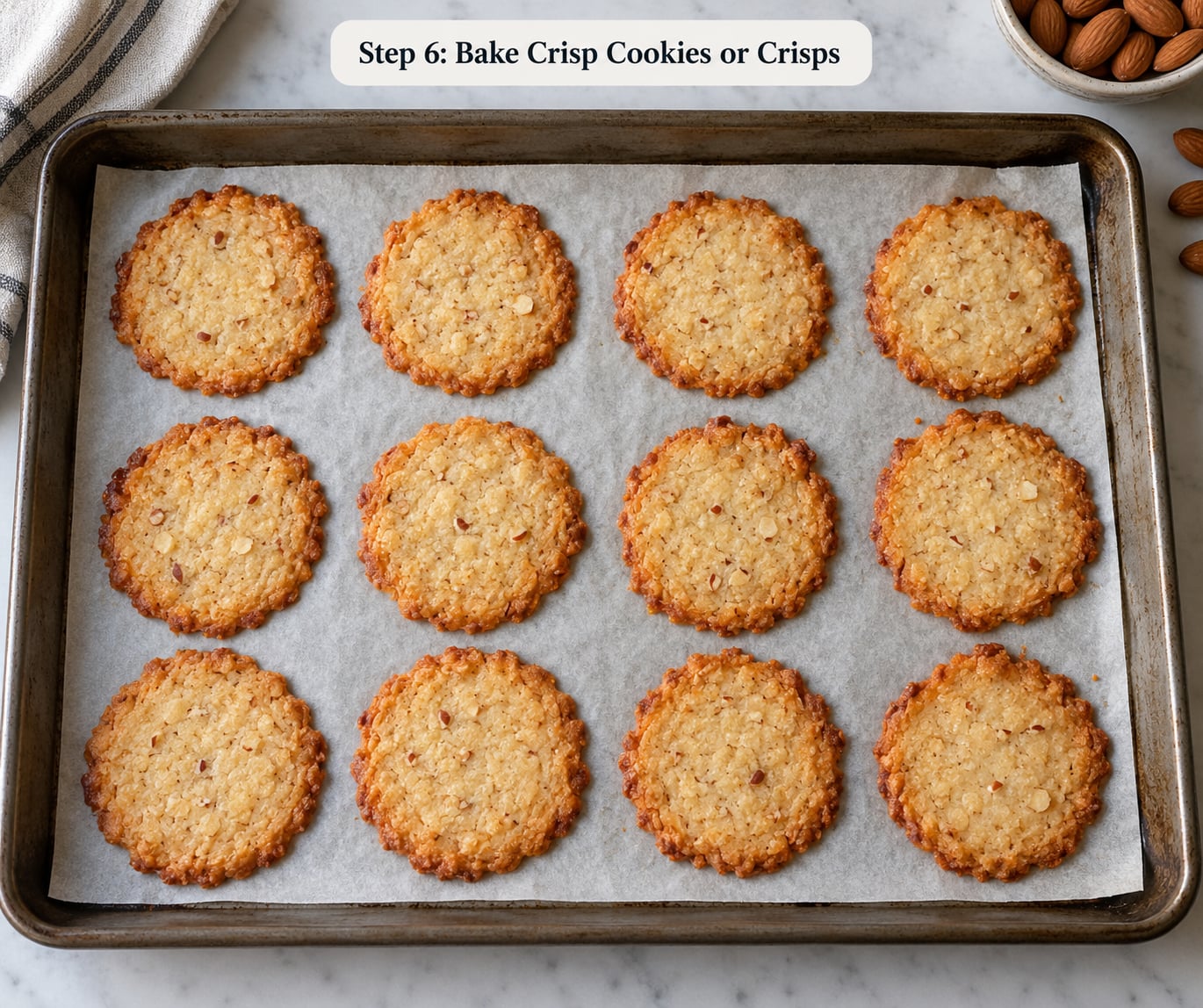
A dependable small-batch formula starts with 150 grams of squeezed pulp, 100 grams of oats or almond flour, a quarter cup of oil or melted butter, three tablespoons of a sweetener and a pinch of salt. Mix, rest the dough for ten minutes, then shape into small rounds on a lined sheet. Baking at 350°F for 12 to 15 minutes gives you cookies that are crisp at the edge and chewy in the middle.
The sign of doneness is visual. The edges should be set and the centers should look dry, not glossy. If you pull them early they stay soft and the tray finishes them on the pan; if you wait for the whole cookie to brown, the edges burn before the center sets.
For a plain crisp like a cracker, use the same mix, add a little extra oil for flakiness, and roll the dough thin. Bake at 350°F for 10 to 12 minutes, turn once at the halfway mark, and cool on the tray so the last moisture escapes. These keep about five days in a jar and travel well in a lunch box.
Common Mistakes
Why Pulp Baked Goods Turn Out Soggy
This is the number one complaint from people trying pulp for the first time. Wet pulp carries its own water, so using it as a straight one-for-one swap for almond flour doubles the liquid in the batter. Squeeze the pulp dry, spread it out to dry further, and cut your flour by the weight of the pulp you add rather than replacing it measure for measure.
Why Baked Goods Come Out Gritty
Grit comes from two places: pulp that was never broken up, and dough that was overworked. Work the clumps apart before they go in the bowl, and stop mixing as soon as the dry ingredients disappear. Coarse grit in cookies and bars usually traces back to a blender that ran too long and pulverized the fiber into sand.
Why Everything Tastes Too Sweet
Sweet pulp, like cashew, plus a sweetened nut butter plus maple syrup is three sources of sugar in one bite. Use unsweetened nut butter when the recipe already includes maple, dates or honey, and taste the mixture before sweetening it. Tart or savory applications hide an overly sweet batch better than another baked good will.
Why Cookies and Crackers Will Not Crisp
Underbaking is the usual culprit, and moisture has to leave the dough in the oven to get a crisp texture. Use thinner rounds, give yourself the full 15 minutes, and let the finished goods cool on the sheet for five minutes before moving them. Trapping them in a container while warm condenses steam and softens the crust again.
Why Pulp Smells Off After a Few Days
Refrigeration slows pulp but does not stop it. Nut milk residue ferments quickly, so treat the fridge as a three-day window, keep the pulp in a sealed container with the lid screwed down, and never return it to a bowl that held raw soaked nuts. Freeze anything you will not use inside that window.
Two substitutions cover most recipe flexibility. Pulp replaces roughly a quarter of the flour in most quick breads, muffins and cookies, and once fully dried it behaves as nut flour in any recipe that calls for it. For binding, one tablespoon of flax gel replaces one egg in a bar or bite recipe, while two tablespoons of pulp soaked and squeezed replace one egg in a loaf or muffin.
Flavor-wise, treat the pulp as an ingredient with a point of view. Sweeten it for cookies and bars, salt it for crackers, load it with garlic and lemon for spreads, or leave it alone and let the other ingredients carry the dish. Pulpy results are much easier to fix than wasted batches, so keep making it.
Frequently Asked Questions
Can I use leftover nut pulp in cookies and other baked goods?
Yes, and it works best in recipes that already use oats or nut flour. Squeeze the pulp dry first, then replace about a quarter of the flour by weight. Because the pulp is damp, swap it one-for-one for dry almond flour and your cookies will spread thin and turn out chewy in the middle.
How long can leftover nut pulp stay in the refrigerator?
Plan on about three days in the fridge for pulp pressed dry and sealed in an airtight container. Pulp straight from the strainer holds a day or two at most, since it still carries enough liquid to ferment. Smell it before cooking: a boozy or sour edge means it has turned and belongs in the compost.
Can I freeze nut pulp after making nut milk?
Freezing works well. Portion it in the amounts your recipes call for, about half a cup or a cup per bag, squeeze out the air, and lay the bags flat in the freezer. It keeps three to four months. Thaw in the refrigerator overnight rather than on the counter, and expect slightly looser texture, which is fine for sauces and smoothies.
How much nut pulp should I use in place of flour?
Start at one part squeezed pulp to three parts flour by weight, which means 100 grams of pulp with 300 grams of flour. That ratio gives a moist, nutty crumb without turning the bake dense. Cookies and crackers tolerate closer to one part pulp to two parts flour, while pancakes and waffles want the gentler ratio.
Does leftover nut pulp work in gluten-free recipes?
It does, and pulp is naturally gluten-free, so nothing about it conflicts with gluten-free baking. Because it supplies fiber, protein and some fat, it often improves the binding in recipes made without wheat flour. Keep total added fiber under about a third of the dry ingredients per serving, or the batter will spread instead of setting.
What is the best way to use nut pulp with no added sugar?
The savory uses take no sweetener at all. Blend pulp with lemon, olive oil, garlic and herbs into a spread for crackers, or stir it into a simmering soup or tomato sauce to thicken it. Energy bites and granola work too, since dates, banana and nut butter carry plenty of sweetness without any refined sugar.
Start with the Smallest Batch
Do not plan your first use around a recipe with nine ingredients. Mix 100 grams of squeezed pulp with 100 grams of rolled oats, a spoonful of nut butter and a little salt, then bake it at 325°F until the edges brown. That single tray tells you how much pulp you like, how your machine strains and how wet your particular pulp runs.
Whatever you do not bake, press and freeze it the same day in half-cup and cup portions. Squeezed pulp keeps about three days in the fridge and three to four months frozen; fully dried pulp keeps several months in a sealed jar in the pantry. Once you stop throwing it away, knowing how to use leftover nut pulp stops being a question you look up and starts being part of the same night you make the milk.