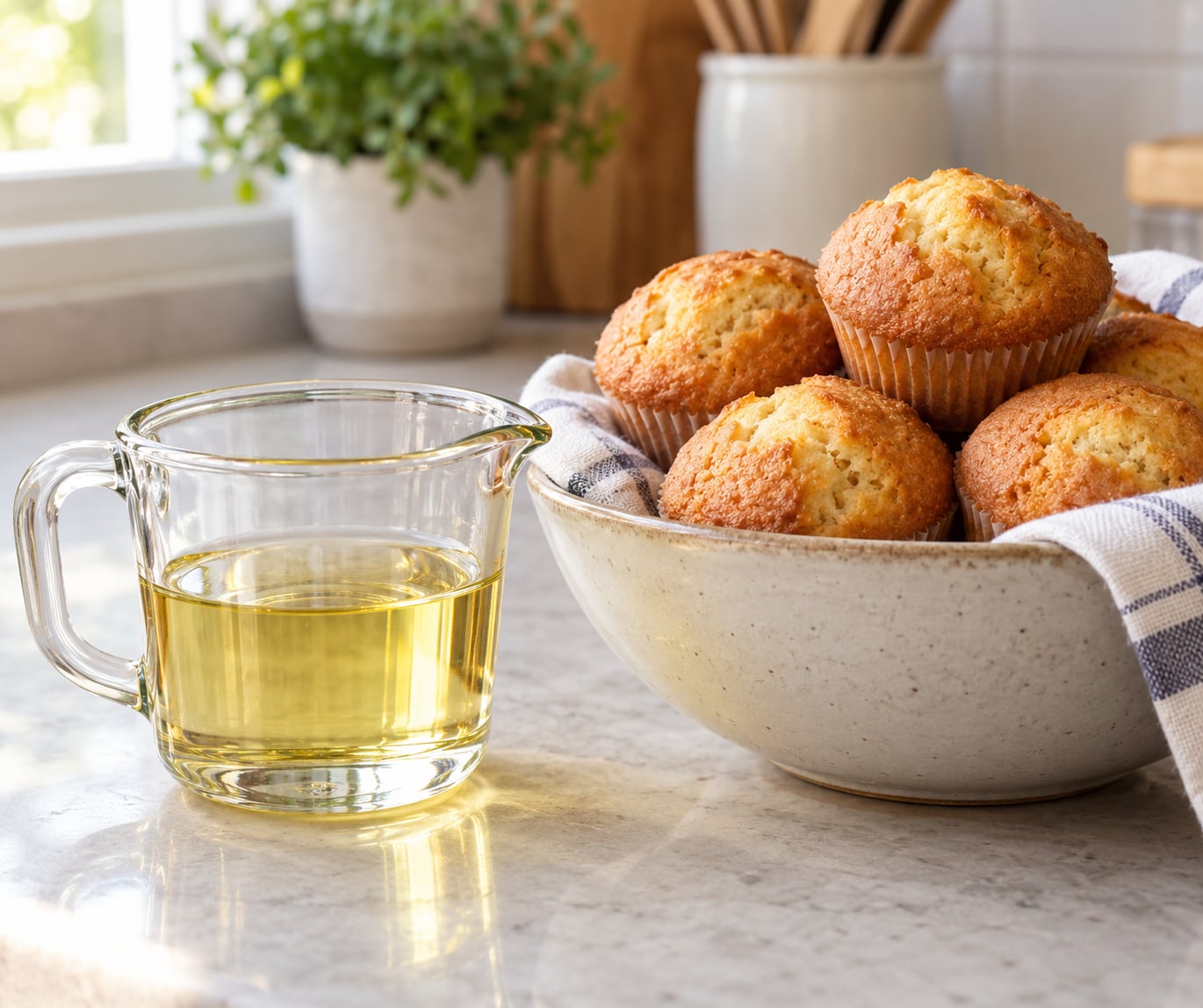
If you want to know how to substitute oil for butter in baking, the short answer is simple: use three-quarters as much oil as the butter the recipe calls for, so 3/4 cup of oil replaces 1 cup of butter. That ratio is not arbitrary. Butter is roughly 80% fat while oil is 100% fat, so a cup-for-cup swap loads the batter with about a quarter more fat than the recipe was built to hold. Cakes, muffins, quick breads, brownies and cakelike cookies take the swap well; pie crust, biscuits and laminated dough do not, because there the butter is doing structural work instead of flavor work.
The swap takes about five minutes of extra planning and no special equipment. Most people who do it end up pleasantly surprised by the crumb. A well-adjusted oil cake is more tender and stays moister on day two, and it browns more gently than its butter version, which is a real trade rather than a defect.
Table of Contents
- What You Need
- Step-by-Step
- Choose a Recipe That Works With Oil
- Use the Basic 3-to-4 Substitute for Baking
- Adjust Texture and Browning
- Bake and Check the Results
- Common Mistakes
- Frequently Asked Questions
- Can I use any cooking oil in place of butter?
- Does oil make baked goods healthier?
- Why does my oil-based cake rise more or less than usual?
- Can oil replace butter in cookies without changing the recipe?
- Should I change the baking temperature when using oil?
- What oil is best for brownies, muffins, and cakes?
- Conclusion
What You Need
To substitute oil for butter you need three things: the oil itself, a way to measure it accurately, and about two tablespoons of the recipe’s own liquid in reserve.
Start with the rule. Multiply every butter measurement in the recipe by 0.75 and you have your oil measurement. For a 1/2 cup of butter that is roughly 1/3 cup of oil. Do not round up out of habit; the extra fat is exactly what makes a careless swap greasy.
Next, pick the oil. For most baking, reach for a neutral oil that tastes like nothing in particular, so it does not argue with the other flavors in the bowl:
- Canola oil, for an entirely neutral, all-purpose result
- Refined (not virgin) olive oil, which is mild and works everywhere
- Vegetable oil, a solid default in the United States
- Avocado oil, neutral with a high smoke point and a clean finish
- Refined coconut oil, which is odorless once refined and behaves much like a neutral oil
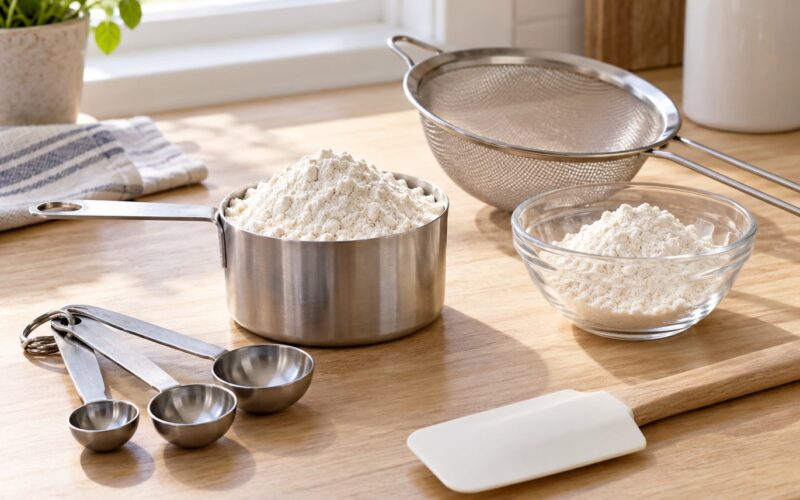
Save your measuring tools too. A liquid measuring cup handles the job for most recipes, and a kitchen scale is better when precision matters, because oil weight is easier to hit than oil volume. Have the milk, water, buttermilk or yogurt that the recipe calls for nearby, since you will likely trim a tablespoon or two from it.
That is the whole setup. Nothing exotic, no special pan, no plan to buy a replacement butter.
Step-by-Step
Choose a Recipe That Works With Oil
Oil belongs in recipes where fat means tenderness and moisture, not layers. Cakes, cupcakes, muffins, quick breads, banana bread, brownies, cobblers, fruit bars and cakelike cookies are all good candidates. The same applies to cornbread and most sheet cakes, including the pound cake and layer cakes that show up on Appalachian holiday tables.
Some home bakers assume oil cakes turn dry on the second day. They are the ones that go stale first, so the swap tends to help rather than hurt there, and gluten-free versions of the same cakes often come out better with oil because fat is compensating for the missing gluten structure that makes gluten-free bakes dry.
Leave the butter alone where it is a building material. Pie crust, biscuits, scones, puff pastry and other laminated doughs need solid fat that forms distinct layers when the dough is rolled and chilled. Shortbread and sandwich cookies depend on the same butter flavor and flakiness. Yeasted breads and rolls are a gray area, because some lean doughs and some enriched doughs can take oil while the classic enriched ones rely on butter for both tenderness and aroma.
Use the Basic 3-to-4 Substitute for Baking
To substitute oil for butter in baking, replace each cup of butter with 3/4 cup to 1 cup of neutral oil, and measure by weight when precision matters. The full conversion table below covers cups, tablespoons and sticks.
| Butter | Sticks | Oil to use |
|---|---|---|
| 1 cup | 2 sticks (16 tbsp) | 3/4 cup (12 tbsp) |
| 3/4 cup | 1 1/2 sticks (12 tbsp) | 1/2 cup (8 tbsp) |
| 2/3 cup | 1 1/3 sticks | 1/2 cup (8 tbsp) |
| 1/2 cup | 1 stick (8 tbsp) | 1/3 cup (about 5 tbsp) |
| 1/3 cup | 2/3 stick | 1/4 cup (4 tbsp) |
| 1/4 cup | 1/2 stick (4 tbsp) | 3 tbsp |
| 2 tbsp | 1/4 stick | 1 1/2 tbsp |
| 1 tbsp | 1/8 stick | 3/4 tbsp |
If you see 7/8 cup quoted for a cup of butter, that is a defensible number for a very moist cake where you have also trimmed the liquid. A 2:1-style 2/3 cup figure belongs to nut, fruit and other heavy quick breads where extra fat is welcome. Nobody needs either of those; the plain 3/4 cup figure is the one to memorize.
If the recipe was creaming butter and sugar, that step goes away. You cannot cream a liquid, and trying only gives you a flat batter. Pour the oil into the other wet ingredients, whisk until combined, then fold that mixture into the dry ingredients. Total time in the bowl actually drops by five minutes or so, which is the one genuine perk of the swap.
A 50/50 blend is the low-risk middle path. Half the butter creamed as usual, half the butter’s volume replaced with oil, keeps most of the butter aroma and most of the tenderness. It also suits a first attempt if you are nervous about a cake that means something to somebody.
Adjust Texture and Browning
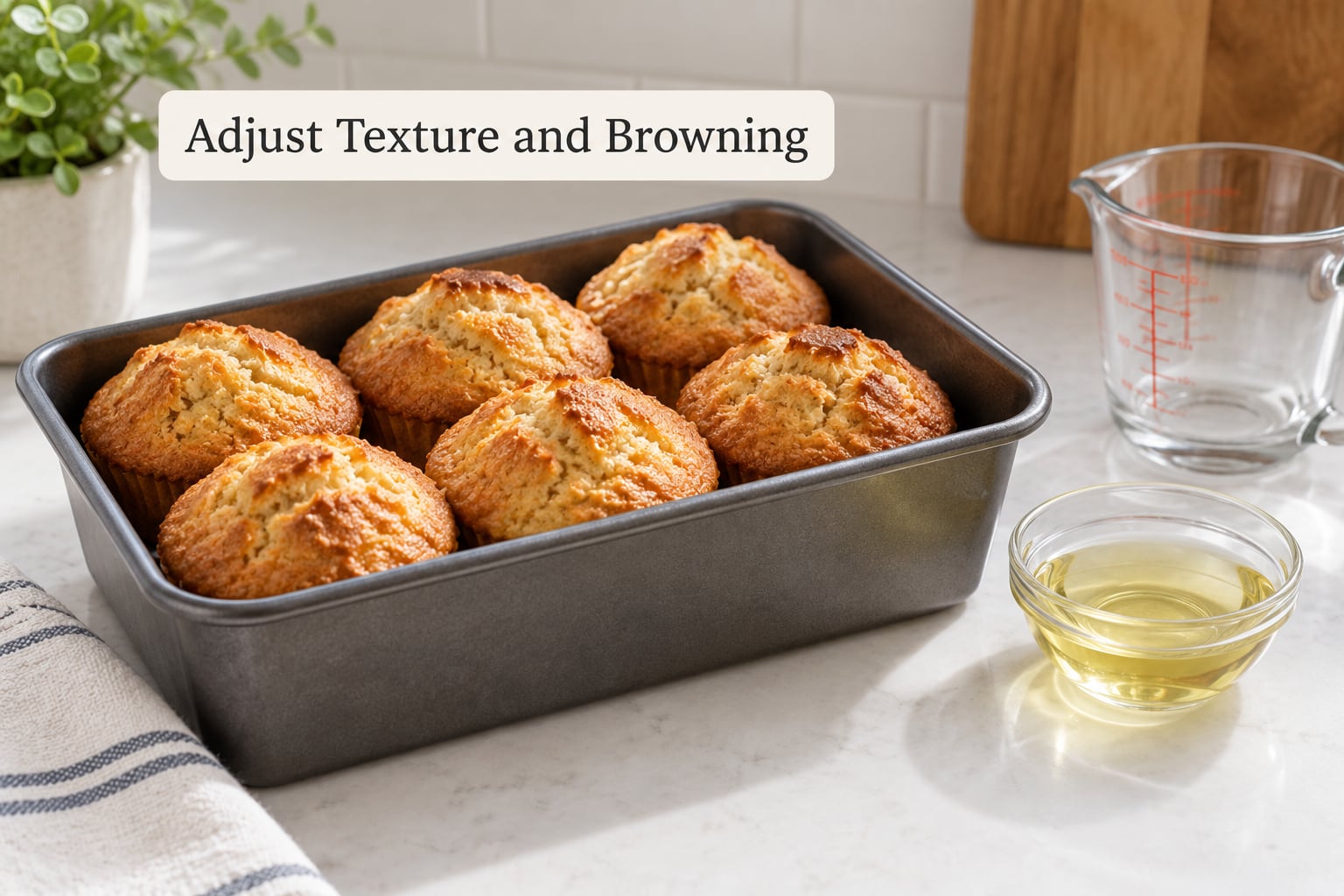
Oil produces a more tender, moist crumb than butter and usually less browning, because there are no milk solids to brown and caramelize. Because it delivers pure fat with no water, oil coats the flour proteins more evenly, so the crumb reads finer and more tender rather than crumbly. It is a different texture, not a worse one.
Because oil brings no water, trim the recipe’s other liquid by 1 to 2 tablespoons per cup of butter replaced. A cup of butter in a cake normally ships with milk or buttermilk; when the fat jumps by a quarter, the liquid should come down. Skip this step and the middle goes gummy.
Flatten things a little if you need to. An extra teaspoon of baking powder or baking soda in a muffin or quick bread recipe firms up a batter that feels heavy, and it is the standard fix for a flat, oily top. Going the other way, a cake with too much structure from that extra leavening will dome and crack, so change one variable at a time.
Coat the pan a little more heavily than the recipe says when you swap, and use baking paper for the base. Oil has no water to steam away, so it pools differently than melted butter does, and a well-greased pan is what keeps the bottom from tearing when you cool and turn out the cake.
Bake and Check the Results
Keep the oven temperature the recipe gives you. Oil does not require a hotter or cooler oven, and the browning people sometimes miss is a feature of the fat, not a fault in the temperature.
Do expect a slightly shorter bake in some cakes. Without the butter water, the batter can set a little faster, so start checking a few minutes early with a toothpick in the thickest part. Come out clean or with a couple of damp crumbs, not wet. A brownie is done when the edges set and the center still looks slightly fudged, which usually happens a few minutes sooner than a butter version.
Let the cake cool in the pan for 10 to 15 minutes before turning out, then cool completely on a rack. Oil cakes are more tender and more fragile when hot, so that resting time matters more than usual. They also stay moist longer once cut, so wrap them when they are barely cool rather than waiting.
Common Mistakes
Almost every disappointing oil bake traces back to one of six habits.
Swapping cup for cup. This is the big one. One cup of oil in a recipe built for one cup of butter adds about a quarter more fat than the formula can hold, which is what gives you a greasy top, a dense middle, or a gummy brownie. Use 3/4 cup and the problem disappears.
Reaching for a strongly flavored oil. Extra-virgin olive oil, toasted oils and unrefined coconut oil bring their own personality into the batter. They work in recipes where butter is a background note, such as olive oil cake or citrus cakes, and they fight you in a vanilla pound cake. Choose by the recipe, not by the bottle’s reputation.
Swapping where butter is the structure. Pie crust, biscuits, scones and laminated dough need solid fat that stays in distinct layers when chilled. Oil coats the flour instead of forming those layers, and you get a pale, crumbly, sometimes flat shell. Leave the butter in those recipes.
Expecting the same browning. Butter browns because of its milk solids. Oil cakes and muffins color more gently and often a shade paler on top. Pull them when a toothpick reads done, not when the top matches a butter photo, and they will still taste good.
Forgetting to trim the liquid. If you go full oil, cut 1 to 2 tablespoons of milk, water, buttermilk or yogurt per cup of butter removed. This is the adjustment nobody mentions and it is the difference between moist and soggy.
Cutting while hot. An oil crumb is tender and fragile, and a knife through a warm oil cake tears it into crumbs. Give it the full cooling time on a rack before you slice.
Two habits do more for you than any other. Measure the oil by weight when you can, since volume measures drift with the shape of the cup, and write down which recipes you converted. The second time you make that banana bread, you already know it works and you can skip the arithmetic entirely.
Frequently Asked Questions
Can I use any cooking oil in place of butter?
Neutral oils are the safe default. Canola, refined olive, vegetable and avocado oil all behave similarly in a batter, and refined coconut oil works once the coconut flavor is gone. Strongly flavored oils such as extra-virgin olive, toasted sesame or unrefined coconut are choices, not general substitutes. They suit olive oil cakes, citrus cakes and savory bakes where butter is a background note.
Does oil make baked goods healthier?
It depends on which oil and what you are balancing. Olive, canola and avocado oil are high in unsaturated fat, so swapping them in usually lowers saturated fat compared with butter. Oil still carries the same calories per tablespoon, so it is not automatically lighter, and an oil cake is often sweeter because sugar carries more of the perceived sweetness once the butter flavor is gone. A swap changes the fat profile more than the calorie count.
Why does my oil-based cake rise more or less than usual?
Usually it rises more, and it rises faster. Butter traps air when you cream it with sugar, and that aeration is missing from an oil batter, so any lift has to come from the chemical leavening alone. If the top domes and cracks, add 1 to 2 teaspoons more baking powder or soda to firm the structure. If the cake is flat, check your oven temperature before adjusting anything else.
Can oil replace butter in cookies without changing the recipe?
For cakelike cookies, yes. Soft chocolate chip cookies, molasses cookies and oatmeal cookies all take oil at 3/4 the butter volume with no other change. For shortbread, snappy sandwich cookies and anything meant to be crisp and buttery, no, because the butter flavor and the flaky set are the point. For those, a 50/50 blend keeps the character while cutting some of the butter.
Should I change the baking temperature when using oil?
No. Bake at the temperature the original recipe specifies. Oil does not need extra heat to set, and the paler top you will notice is caused by the absence of milk solids to brown, not by a wrong oven setting. Do start checking a few minutes early, since some oil cakes firm up slightly ahead of their butter counterparts, and pull brownies when the edges set and the center still looks faintly fudged.
What oil is best for brownies, muffins, and cakes?
For brownies, refined olive oil and avocado oil add flavor without much odor, and a teaspoon of instant espresso powder rounds out any cocoa flavor. For muffins and quick breads, canola or vegetable oil keeps the profile neutral, and a teaspoon of vanilla or a pinch of lemon zest stands in for missing butter aroma. For cakes, use the oil your recipe already trusts, or melted butter flavoring if you want the butter note back.
Conclusion
Use 3/4 cup of neutral oil for every 1 cup of butter, choose a recipe that was already leaning on fat for tenderness rather than structure, and treat the crumb as its own result rather than a butter copy. Trim 1 to 2 tablespoons of the other liquid, skip the creaming step, and let the cake cool fully before you cut it. The first time, a 50/50 blend is the gentle way to find out whether you like the flavor.