Chewiness is a moisture problem, not a baking-time problem. Cookies go crisp because water leaves the dough and sugar crystals set as the batch bakes past the point where the center is still soft, so the fix is to hold on to that water and stop baking while the middle still looks underdone. Swap most of your white sugar for brown sugar, melt the butter instead of creaming it, add a spoonful of cornstarch, drop the oven to 325F, and pull the tray 1 to 2 minutes early.
That is the whole method. It takes about 15 minutes of active work and one afternoon of baking, and it works on a standard chocolate chip dough without any special equipment.
The most common mistake runs the other direction. Bakers see a pale center, assume it is underdone, and give it another three minutes, which dries out the middle and leaves you with a cookie that snaps instead of bends. A chewy cookie out of the oven usually looks slightly wrong, with a center that still looks damp and a footprint that looks a few degrees too light.
The rest of this guide breaks the process into the four levers you can actually control: sugar, fat, flour and starch, and time. It also covers what to do when the batch is already baked, and why cookies that feel perfect in the oven can turn into bricks by Wednesday.
Table of Contents
- What You Need
- How to Make Cookies Chewy Instead of Crispy: Step-by-Step
- How to make cookies chewy instead of crispy by adjusting the dough
- How to make cookies chewy instead of crispy during baking
- How to keep cookies chewy after baking
- Common Mistakes
- Frequently Asked Questions
- Can I make crispy cookies chewy by adding water?
- Why do my cookies turn out hard and crisp?
- Does adding an egg or egg yolk make cookies chewy?
- How do I make gluten-free cookies softer and chewier?
- How long do chewy cookies stay soft, and how should I store them?
- Conclusion
What You Need
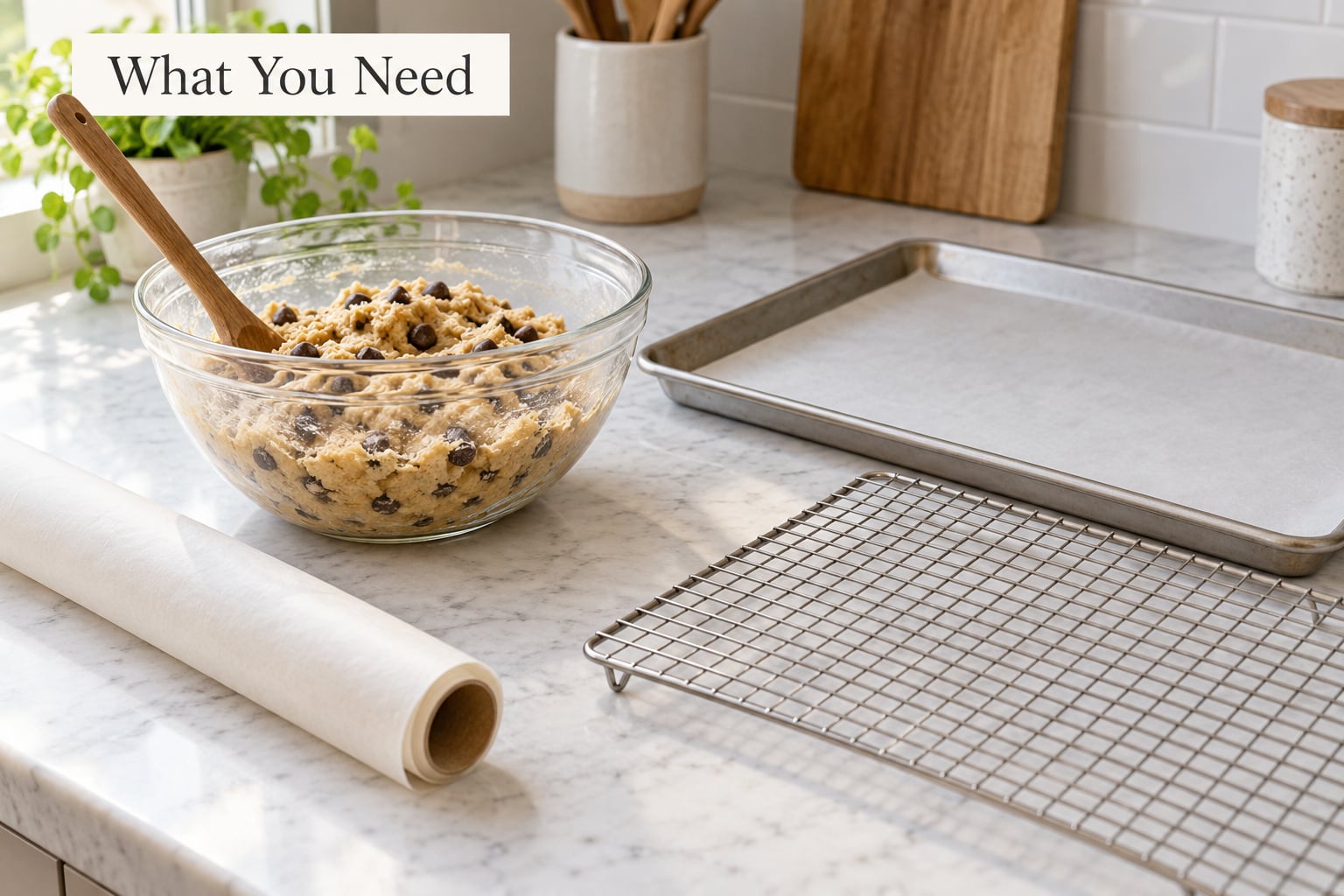
Start with the recipe you already make. Chewy texture comes from adjustments, not from a new formula, so a standard all-purpose chocolate chip dough is a fine base.
From the pantry:
- Light brown or dark brown sugar, to replace most or all of the granulated sugar
- Cornstarch, 1 teaspoon per cup of flour
- Bread flour, or 1 to 2 tablespoons of extra flour per cup for a chewier crumb
- An extra egg yolk, plus optional water or milk for thin doughs
- Baking soda, fresh, not expired
From the equipment shelf:
- A rimmed baking sheet and parchment paper or a silicone mat
- An oven thermometer, which matters more than most people expect
- A wire cooling rack
- A 2-tablespoon cookie scoop or a kitchen scale, so every cookie bakes at the same rate
Specialized gear buys you nothing here. A good oven thermometer and a scale will fix more bad batches than any gadget marketed for chewy cookies, and both are cheap.
If your dough is sticky or crumbly rather than soft, that is a separate issue from texture and usually means the flour balance is off. Handle it in step 2 rather than at the baking stage.
How to Make Cookies Chewy Instead of Crispy: Step-by-Step
How to make cookies chewy instead of crispy by adjusting the dough
Five changes do most of the work. Each one is independent, so you can test them one at a time across several batches.
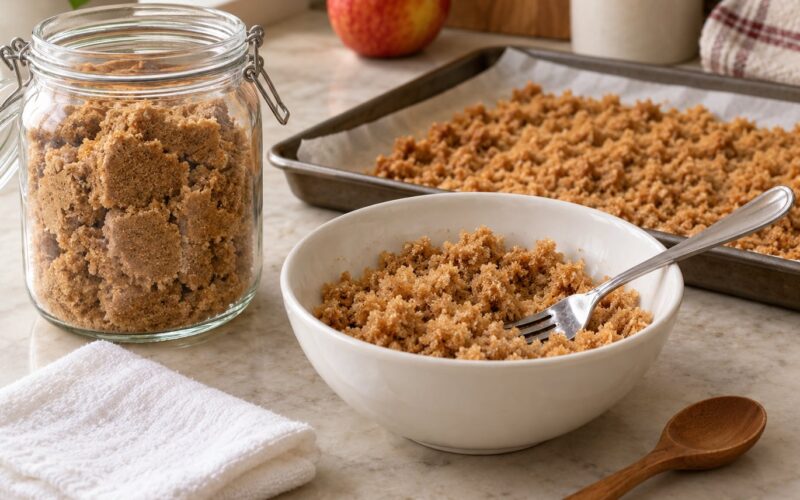
- Go mostly brown sugar. Brown sugar is hygroscopic, which means it pulls in and holds moisture instead of letting it escape. For a reliably chewy cookie, make brown sugar 75 to 80 percent of your total sugar. All-white-sugar recipes give crisp results no matter how you bake them.
- Melt the butter and let it cool to just warm. Creaming butter with sugar whips air into the dough, and aerated dough puffs tall and bakes like cake. Melted butter makes a denser dough that spreads more and stays tender. Cool it for 10 minutes before mixing so you do not scramble the eggs.
- Add one egg yolk. Yolks carry extra fat and water. An extra yolk in a dozen cookies is a real change, not a rounding error, and it softens the crumb.
- Add cornstarch. One teaspoon per cup of flour tenderizes the crumb and slows the spread, which keeps the cookie thick enough to stay chewy at the center.
- Add bread flour. Bread flour carries more protein, so it builds more gluten, and gluten gives chew. Swap some of your all-purpose flour for it, or add a couple of tablespoons per cup.
If the dough feels stiff or cracks when you scoop it, add a tablespoon of water or milk at a time. Dry dough produces dry cookies, and no baking change will bring that moisture back.
Rest the dough in the fridge overnight when you have the time. Bakers report firmer dough, less spread and better flavor after 12 to 24 hours, because the flour hydrates fully and the dough chills, which slows the melt during the first minutes in the oven.
Pat the dough balls flat to an even thickness instead of rounding them. A round ball bakes thin at the edges and thick in the middle, so you get one texture at the rim and another at the center. An even 1.5-inch disc bakes evenly all the way through.
How to make cookies chewy instead of crispy during baking
Drop the oven to 325F. A lower, slower bake sets the edges before the center can dry out, and it is the single change people notice most in the finished batch. If your oven runs hot, an oven thermometer tells you whether 325F is really 325F, because a 25-degree error is the difference between chewy centers and dried ones.
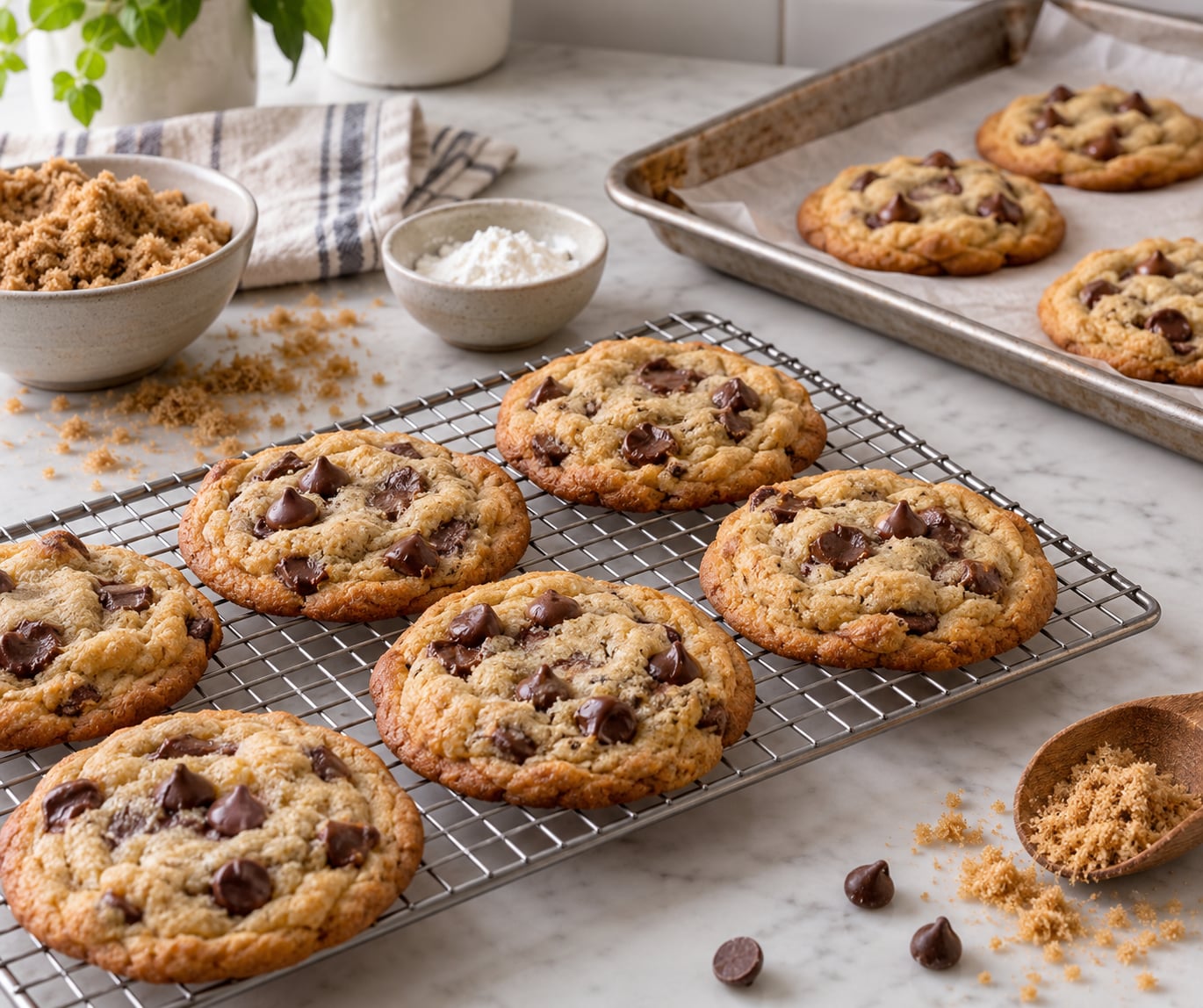
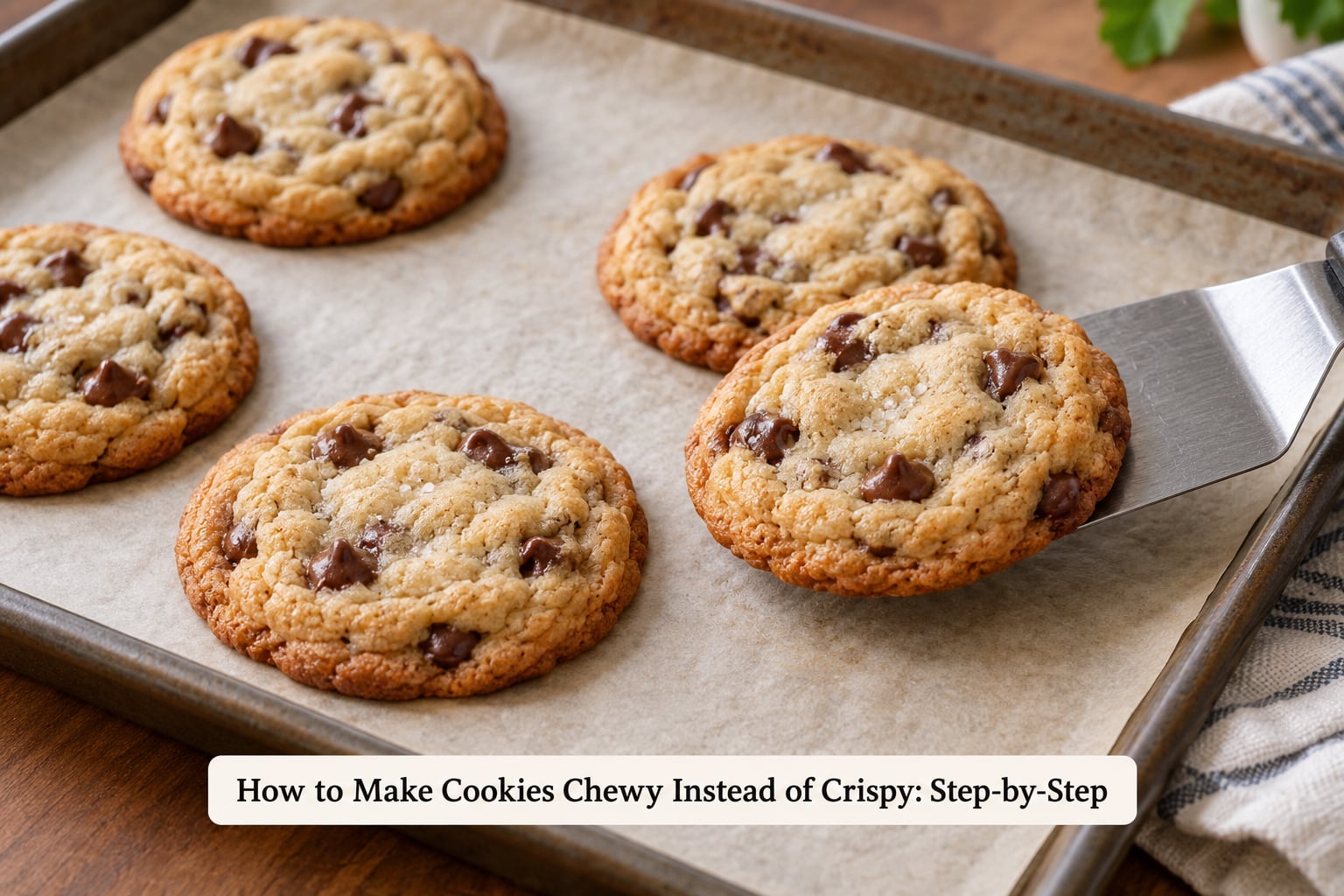
Then take the tray out early. Watch the edges and the center rather than the overall color. The cookies are done when the edges look set and lightly colored and the centers still look slightly underdone, with a faint wobble if you nudge the pan.
Do not judge by browning alone. Browning is a Maillard reaction, and it is flavor, not doneness. A cookie can be deeply brown on the edges and dry in the center, which is exactly the failure this method avoids.
Two more habits help. Space the cookies about 2 inches apart, since touching cookies bake together into one spread sheet. And bake on the middle rack, where the heat is steadiest.
Bake time scales with size, so a single number will mislead you:
| Cookie size | 325F | 350F |
|---|---|---|
| Teaspoon, thin | 7 to 9 minutes | 6 to 8 minutes |
| Tablespoon, medium | 10 to 12 minutes | 9 to 10 minutes |
| 1/4-cup scoop, thick | 13 to 15 minutes | 11 to 13 minutes |
Then subtract 1 to 2 minutes from every row, because the tray keeps cooking after it comes out.
How to keep cookies chewy after baking
Cookies keep baking on the sheet. Residual heat finishes the center during those 5 to 10 minutes on the pan, so leaving them there is part of the method. Moving them too early means the middle is still raw when the heat drops and the crumb sets hard.
Once they have cooled, move them to a wire rack so air circulates underneath. Then store them airtight, away from the stove and out of direct sun, where humidity swings are largest.
Three storage habits keep them bending instead of snapping:
- Skip the refrigerator. It is the fastest way to firm up a cookie, and it also dries the dough out for the next batch.
- Add a slice of bread to the container. The cookies absorb the bread’s moisture and hold onto it.
- Freeze in a single layer, then move to a sealed bag. Thaw in the container, uncovered, so condensation does not settle on the tops.
Humidity works for you here, against you here. A damp summer kitchen slows the drying that turns chewy into crisp, so pull a minute earlier than usual. Dry winter air and a wood-stove or cast-iron kitchen do the opposite, so a minute or two of extra time is reasonable. Altitude is its own variable: above roughly 5,000 feet, drop the leavener by about a quarter and expect faster spread, because the dough loses moisture more quickly and gas expands more.
If a batch has already gone crisp, you have three options. Microwave a cookie for 8 to 10 seconds and eat it warm. Store the batch with a slice of bread for a day, which softens the edges noticeably. Or place the cookies on a baking sheet with a damp towel over them for 15 minutes, which reintroduces surface moisture without making them soggy.
Common Mistakes
Almost every crispy batch traces back to one of the rows below. Find your symptom first, since the symptom tells you which variable to move.
| Symptom | Likely cause | Fix |
|---|---|---|
| Crisp edges, hard center | Baked too long | Pull 1 to 2 minutes earlier and use 325F |
| Thin, lacy, spread flat | Too much sugar relative to flour, or butter too warm | Add 1 to 2 tablespoons flour per cup and chill the dough |
| Tall, cakey, bulky | Butter and sugar overcreamed | Melt the butter instead, and cut baking soda slightly |
| Hard and brittle the next day | Stored uncovered or refrigerated | Airtight container, room temperature, add bread |
| Crumbly, breaks when scooped | Dough too dry or overmixed | Add a tablespoon of water, and stop mixing as soon as the flour disappears |
| Spread wildly, lacy edges | Expired baking soda or too much of it | Test the soda in warm water, use 1 teaspoon per cup of flour |
Overmixing deserves its own mention. Once flour and water meet, gluten starts forming, and more mixing makes a tougher network that resists spreading and bakes firm. Mix until the last streaks of flour disappear, then stop.
Baking soda spreads dough because its gas expands at a high rate, which puffs the cookie and pushes it outward. Baking powder does the same with a milder, slower lift, and it leaves the dough less aerated. For chewy cookies, use baking soda in small amounts, and add a little cream of tartar to balance it when you want crackly tops without the spread.
Gluten-free and eggless doughs need their own adjustments. Gluten-free flour blends are thirsty, so add an extra tablespoon of liquid per cup or the cookies bake up dry, and cornstarch or arrowroot becomes the tenderizer that gluten would otherwise have provided. For eggless chewy cookies, aquafaba works for leavening, and a cornstarch-and-water slurry thickened into a paste gives the same moisture an egg yolk would have.
One habit does more than any single ingredient change: change one variable per batch. Write the change on the dough container, since you will not remember it at 6 p.m. on the third attempt.
Frequently Asked Questions
Can I make crispy cookies chewy by adding water?
Not in the dough after baking, but yes before. A tablespoon of water or milk mixed into stiff cookie dough softens the crumb and gives you moisture to work with. You cannot add water to cookies that already came out of the oven crisp. For those, use a slice of bread in the airtight container overnight, or warm a cookie for 8 to 10 seconds in the microwave to take the edge off.
Why do my cookies turn out hard and crisp?
Three things do it, in order of likelihood: the batch baked too long, it baked too hot, or the dough had too little moisture to hold onto. White sugar lets water escape, butter creamed with sugar aerates the dough into something cake-like, and any extra minute in the oven dries what is left. Switch to mostly brown sugar, bake at 325F, and pull the tray while the centers still look underdone.
Does adding an egg or egg yolk make cookies chewy?
Yes, and the yolk does more of the work than the white. Yolks add fat and water that tenderize the crumb and slow the spread, so a dozen cookies with one extra yolk come out noticeably softer. An extra whole egg works too, though it can make the dough looser. For an eggless version, use aquafaba for lift and a cornstarch-water paste for the moisture.
How do I make gluten-free cookies softer and chewier?
Gluten-free dough bakes drier because there is no gluten network holding water in place. Add an extra tablespoon of liquid per cup of flour, and lean on cornstarch or arrowroot as the tenderizer that gluten would have supplied. Rest the dough in the fridge overnight, keep the same 325F temperature, and pull the tray a minute earlier. Cornstarch is what stops them from tasting like cardboard.
How long do chewy cookies stay soft, and how should I store them?
Stored correctly, chewy cookies stay soft for about five days at room temperature. Keep them in an airtight container at room temperature, skip the refrigerator, and add a slice of bread to the container to hold moisture in the cookies. Freezing works well for longer storage: freeze in a single layer, bag them up, and thaw in the container so condensation settles on the cookies instead of the lid.
Conclusion
If you learn one thing from how to make cookies chewy instead of crispy, make it this: bake at 325F and take the tray out while the centers still look underdone. That single change does more than any ingredient swap, and it is free.
After that, work the dough. Swap 75 to 80 percent of your sugar to brown sugar, melt the butter, add a yolk and a teaspoon of cornstarch per cup of flour, and keep the batch airtight at room temperature with a slice of bread inside.
Change one thing per batch, write it on the container, and give the results 24 hours before you judge them. Chewy texture shows up the next day, not in the pan.