What to do with leftover mashed potatoes? Turn the surplus into crispy skillet potato cakes, a pot of creamy potato soup, or a loaded shepherd’s pie. Chilling the mash is the trick that makes it hold together, and every idea below takes 20 minutes of prep or less. Updated for 2026.
Most of us hit this same wall a day or two after a big meal. There’s a container of mash in the fridge, it’s already salted and buttered, and it looks a little sad next to a fresh bowl of anything.
The good news is that chilled leftover mash is a genuinely better ingredient than freshly made mash. Cooking breaks potato starch down into a gluey gel, and chilling thickens that gel further. That’s why a patty made from yesterday’s mash holds in a hot skillet while one made straight from the pot falls apart. Treat it like an ingredient with quirks, not a compromise, and it’ll behave.
Table of Contents
- What to Do With Leftover Mashed Potatoes: Quick Guide
- 1. Make Crispy Potato Cakes
- 2. Bake Cheesy Potato Cups
- 3. Mix Leftover Mashed Potatoes into Breakfast Bites
- 4. Turn Them into Potato Waffles
- 5. Use Them in a Potato Casserole
- 6. Make Potato Stuffed Peppers
- 7. Mix Them into Meatless Meatballs
- 8. Use Them in Crispy Potato Soup
- 9. Make Potato Hand Pies or Turnovers
- 10. Repurpose Them as Potato Pancakes
- How to Do With Leftover Mashed Potatoes: Storage and Reheating
- Frequently Asked Questions
- How long do leftover mashed potatoes keep?
- Can I freeze leftover mashed potatoes for later use?
- What is the best way to reheat leftover mashed potatoes?
- Can I use leftover mashed potatoes if they are slightly dry?
- What can I add to leftover mashed potatoes to make them taste better?
- Do I need to add eggs or another binder when making potato cakes?
- Where to Start With a Container of Leftover Mash
What to Do With Leftover Mashed Potatoes: Quick Guide
Start here if you’re standing at the fridge at six with no plan. Each idea lists the extras you need and how much leftover mash it swallows.
| Idea | Extra ingredients | Time | Best batch |
|---|---|---|---|
| Crispy potato cakes | Egg, flour, panko | 25 min | 1 to 2 cups |
| Cheesy potato cups | Cheese, chives, muffin tin | 30 min | 2 to 3 cups |
| Breakfast bites | Eggs, herbs, bell pepper | 20 min | 1 cup |
| Potato waffles | Egg, flour, waffle iron | 20 min | 1 to 2 cups |
| Potato casserole | Cheese, onion, buttery topping | 60 min | 4 cups or more |
| Stuffed peppers | Bell peppers, cheese, herbs | 50 min | 3 to 4 cups |
| Meatless meatballs | Oats or breadcrumbs, herbs, sauce | 40 min | 2 cups |
| Crispy potato soup | Broth, onion, greens or beans | 30 min | 3 cups or more |
| Potato hand pies | Refrigerated biscuit dough | 35 min | 1 to 2 cups |
| Potato pancakes | Egg, flour, griddle | 20 min | 1 to 2 cups |
A rough rule: one to two cups is snack and breakfast territory, three to four is casserole and soup, and anything past that usually means a freezer bag. If you have more than a family’s worth, freeze it before you start cooking, because frozen mash loses the binding quality that makes ideas one through four work.
1. Make Crispy Potato Cakes
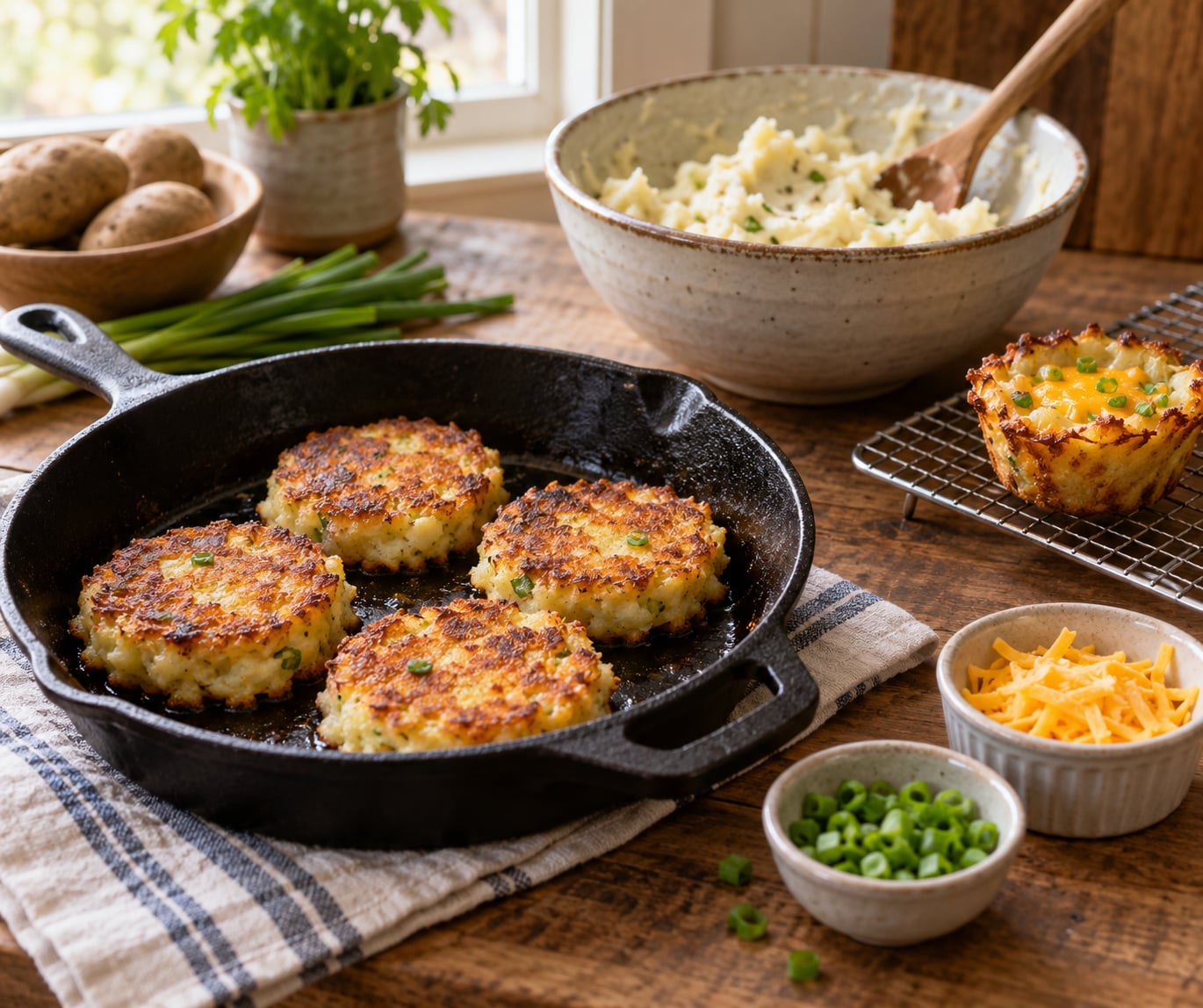
This is the answer that shows up in almost every search for leftover mashed potatoes, and for good reason. It’s fast, it’s cheap, and it converts a soggy leftover into something with a crust.
Chill the mash first. If it was just cooked, spread it in a shallow dish and refrigerate it 20 to 30 minutes, or use it straight from the fridge if it’s been there since yesterday. Cold mash is firmer and easier to shape.
For two cups, mix in one beaten egg, two tablespoons of all-purpose flour, a quarter cup of grated cheddar, and a handful of scallions. Season at the end, not the start. Your leftover mash is already salted, and salting twice is how you end up with salt cakes.
Shape into patties about a quarter inch thick. Dip each in beaten egg, then panko breadcrumbs. Fry in a cast-iron skillet over medium heat, two to three minutes a side, until deep gold. Crowding the pan drops the oil temperature and gives you a pale, greasy result, so work in batches.
Why do potato cakes fall apart? Usually the mash was too warm or too wet. Three fixes: chill it longer, add another tablespoon of flour, or stir in a tablespoon of instant mashed potato flakes, which absorb moisture without making the patty cakey. Flour alone tends to push these toward a cakey texture, and the flakes are the better fix.
No eggs in the house? Two tablespoons of flour plus a tablespoon of instant potato flakes will bind, though the patties are more fragile. Skip the panko and use toasted breadcrumbs instead, which also solves a gluten-free week.
In our house these get eaten standing up over the sink, so nobody has ever asked for a plate.
2. Bake Cheesy Potato Cups
Mashed potato puffs are the hands-down easiest way to feed a crowd without standing over a skillet. Each cup is a single serving, and they hold their shape better than anything else on this list.
Grease a muffin tin well. Beat two eggs into four cups of cold mash, then stir in a cup of shredded cheese, a quarter cup of chopped onion, salt, and pepper. Fill each well about three-quarters full, top with more cheese, and bake at 375°F until the tops are golden, roughly 20 to 25 minutes.
Dairy-free works fine. Use a shredded cheddar-style vegan cheese and check that your butter is plant-based, since it’s blended straight into the mash. These also freeze well formed and unbaked, which makes them a good batch-cook item for a meal-prep freezer.
3. Mix Leftover Mashed Potatoes into Breakfast Bites
Breakfast is where leftover mash gets the most surprising second life. A cup of cold mash, two eggs, and whatever is in the crisper drawer makes a satisfying skillet meal that takes about the same time as scrambled eggs.
Brown chopped bell pepper and onion in a skillet first. Stir in the mash, let it crisp for a few minutes without stirring, then add well-beaten eggs and fold gently. Finish with chives, hot sauce, or a spoonful of salsa.
For a make-ahead version, press the mixture into a greased mini muffin tin and refrigerate until morning. Bake at 375°F for 15 minutes. Kids in our circle of friends eat these without complaint, which is more than I can say for most vegetable-containing breakfasts.
4. Turn Them into Potato Waffles
A waffle iron gives you the crispest surface of any method here, and the grid traps little bits of crust that people fight over. Two extra ingredients is all it takes.
Whisk two eggs into two cups of cold mash, add three-quarters cup of flour, and leave it alone otherwise. Grease the iron, scoop about a quarter cup per well, and close the lid. Most irons need 4 to 6 minutes per cycle. Stop when they stop steaming.
Salt comes out after cooking, not before. Top with sour cream and chives, or a fried egg and hot honey if the batch is going into a weekend brunch.
Air fryers work too. Small cakes at 375°F for about 12 minutes, flipped once, come out close to the skillet version.
5. Use Them in a Potato Casserole
When the leftover pile is bigger than three cups, casserole is the efficient move. One dish, feeds six, and reheats better than anything else here.
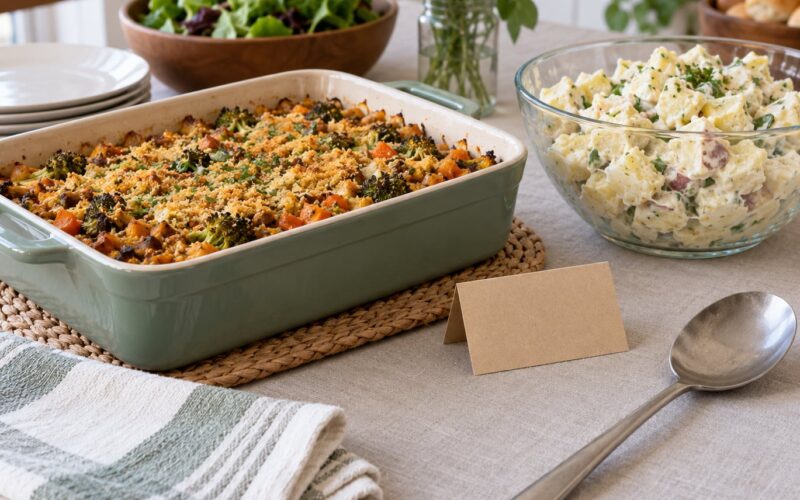
Build it in layers. A bed of hash browns or shredded sweet potato, then the seasoned mash, then the topping of your choice. For a Southern-style version, top with shredded cheddar and crushed saltines dotted with butter, and bake at 350°F until the top is browned and the edges bubble, about 30 to 40 minutes.
Got leftover sausage or ground beef from the same meal? Brown it with a can of cream of mushroom and onion, spoon it over the mash before the topping, and you’ve got a full dinner instead of a side.
Shepherd’s pie is the same dish built in a deeper dish with a meat layer underneath, and leftover mash is arguably better for it than fresh mash would be.
6. Make Potato Stuffed Peppers
Halve four bell peppers, remove the seeds, and roast the halves cut-side down for 15 minutes at 400°F while you season the filling. Roast them, don’t boil them, and the shells will hold.
Season three cups of mash with minced garlic, smoked paprika, dried thyme, and a handful of grated cheese. Fill the pepper halves, set them in a baking dish, and pour a splash of broth in the bottom of the dish so they don’t dry out. Bake at 375°F for 25 minutes.
The skin softens and picks up the paprika. Serve with a green salad and this reads as a meal you planned, not one you scavenged.
7. Mix Them into Meatless Meatballs
Here’s the binding formula: for every two cups of cold mash, add a third cup of rolled oats or breadcrumbs, a quarter cup of grated Parmesan, two tablespoons of chopped parsley, one beaten egg, and salt and pepper.
Roll into golf-ball sized portions and bake on a lined sheet at 400°F for 20 minutes, or pan-fry in batches. Simmer them in jarred tomato sauce for 15 minutes, or mushroom sauce if you want something deeper.
Don’t skip the egg here. These have no other structure, and oat flour plus potato starch alone gives you a bowl of crumbly failures. If you’re avoiding eggs entirely, mash in two tablespoons of ground flaxseed and water and let it sit five minutes before mixing.
8. Use Them in Crispy Potato Soup
Don’t stir leftover mash into finished soup and call it done. Loosen it first with cold broth until it pours, then add it to a sautéed onion and garlic base with the heat off the burner.
That last part matters. Boiling thickens the starch further and turns the soup gluey. Warm it through gently afterward and stir in cream, butter, or a splash of milk at the end.
Three cups of mash plus two quarts of broth feeds a family. Add what needs using: white beans for protein and body, chopped kale or collards for greens, shredded chicken if you eat it, or a cup of corn for sweetness.
9. Make Potato Hand Pies or Turnovers
Refrigerated biscuit dough or a rolled pie crust turns mash into a hand-held meal you can pack for a lunchbox. Work with cold mash again. Warm mash leaks into the pastry.
Roll the dough to an eighth inch, cut circles, add a spoonful of mash mixed with shredded cheese and a little caramelized onion, then fold and crimp. Bake at 400°F for 18 to 22 minutes until puffed and golden.
Pan-frying in a little oil for three minutes a side gives you a flakier result than the oven does, and it’s faster. Air fry at 375°F for about 9 minutes if you’d rather not heat up the house.
10. Repurpose Them as Potato Pancakes
Pancakes and cakes overlap, but the mix is wetter and the finish is softer, which makes them the better option for kids and for a sit-down breakfast. Same base, one egg more, a couple tablespoons of milk.
For two cups of cold mash, whisk two eggs, half a cup of flour, and a third cup of milk into a batter that still shows streaks of potato. Rest it five minutes. Cook on a buttered griddle over medium heat at about a quarter cup per pancake, two minutes a side.
Too dry is the usual complaint. Fix it with a splash of milk at the batter stage, not the pan. Too sticky and sticking to the griddle is the other one, and the fix there is more fat in the pan and a lower flame, plus not flipping until the edges look set and the top has gone dull.
Sweet potatoes work the same way. Mash them with brown sugar and cinnamon, and the pancakes come out closer to a breakfast cake.
How to Do With Leftover Mashed Potatoes: Storage and Reheating
Fridge first: get mash into a sealed container within two hours of cooking and keep your refrigerator at or below 40°F. Cooked mashed potatoes are good for three to four days, and after that you discard them without tasting. A week-old container is not a judgment call, it’s just food waste in a different direction.
Freezing works well, and it’s the move for a big holiday surplus. Cool completely, portion into airtight containers or a flat freezer bag with the air squeezed out, and freeze for up to 10 to 12 months for safety, though texture is best in the first two months. Thaw overnight in the fridge, never on the counter. You can also freeze formed, uncooked patties on a tray before bagging them, which is faster than cooking a whole batch just to freeze it.
Reheat once, to 165°F, and only the amount you’re eating. Splash in milk, broth, or a knob of butter first and warm gently on the stove, stirring often. The microwave dries it out faster than anything else, so cover it and use short bursts.
Food that has sat between 40°F and 140°F for over two hours is what food poisoning actually comes from. Cooked potatoes included.
Frequently Asked Questions
How long do leftover mashed potatoes keep?
Refrigerated mashed potatoes are generally safe for about 3 to 4 days when stored promptly in a sealed container. Cool them within two hours of cooking and keep the refrigerator at or below 40°F. If a container is heading toward day five, freeze it instead of planning to eat it, and discard anything that has been sitting out longer than two hours.
Can I freeze leftover mashed potatoes for later use?
Yes. Cool the potatoes completely, transfer them to a freezer-safe container or bag, and remove as much air as possible. They can usually be frozen for up to 10 to 12 months for safety, with the best texture in the first one to two months. Thaw overnight in the refrigerator rather than on the counter, and stir in a little liquid before reheating.
What is the best way to reheat leftover mashed potatoes?
Add a small amount of milk, broth, or water and reheat gently on the stove or in the microwave, stirring as needed. For crisp potatoes, skip the microwave entirely and use a skillet, an oven at 375°F, or an air fryer, which reheats a cooked pancake in about eight minutes. Reheat only the portion you plan to eat, and heat it once to 165°F.
Can I use leftover mashed potatoes if they are slightly dry?
Yes. Mash in a little warm liquid, then use the potatoes in cakes, croquettes, soup, or stuffed vegetables. If they are very dry or have developed an odor, discard them instead. Dry mash actually works better for pan-frying than wet mash, since it browns more readily and needs less binder, so a slightly stiff container is not a problem.
What can I add to leftover mashed potatoes to make them taste better?
Salt, pepper, garlic, smoked paprika, herbs, cheese, scallions, or a splash of gravy can give them a new flavor. For a stronger result, mix in cream cheese, grated Parmesan, caramelized onion, and a pinch of cayenne, then warm it through. Seasoning after cooking rather than before keeps the texture from turning grainy.
Do I need to add eggs or another binder when making potato cakes?
Eggs help some potato cakes hold together, but they are not always necessary. A workable binder is a couple of tablespoons of flour, a tablespoon of instant mashed potato flakes, or about a third cup of rolled oats per two cups of mash. Without an egg, chill the mash first and fry the patties a little thicker, since they will be more fragile.
Where to Start With a Container of Leftover Mash
Start with idea one. Cold mash, one egg, a little flour, and a handful of panko turns into the one dish that reliably disappears in this house, and it takes about 25 minutes.
If you have more mash than that will absorb, freeze the rest in sealed portions before it turns gray around the edges. Pull one out on a cold week for breakfast bites or a bowl of soup, and you will never again stand at the fridge wondering what to do with leftover mashed potatoes.