How to make vegan cornbread croutons? Cube day-old cornbread, toss it with a little olive oil and salt, and bake at 400°F until the edges are golden and crisp. The whole thing takes about 25 minutes, and no butter, milk, eggs, or honey is involved at any stage.
Cornbread makes an unusually good crouton because it is already crumbly, sweet-savory, and sturdy enough to survive a hot oven without turning to dust. It also solves the oldest problem in a Southern kitchen: what to do with the pan of cornbread nobody wants to throw away. I make a batch most weeks, and the loaf from two nights ago is always the one that comes out best.
- Prep: 5 minutes
- Cube size: 1/2 inch (1.5 cm)
- Fat: 1 to 2 tablespoons olive oil per 4 cups of cubes
- Bake: 400°F (200°C) for 12 to 20 minutes
- Total time: about 25 minutes, then cool completely
Table of Contents
- What You Need to Make Vegan Cornbread Croutons
- How to Make Vegan Croutons Without Butter
- What Makes Cornbread Not Vegan?
- Which Cornbread Works Best?
- Tools
- Step-by-Step: How to Make Vegan Cornbread Croutons
- Step 1: Choose and Cube the Cornbread
- Step 2: Season and Toss the Croutons
- Step 3: Bake Until Crisp
- Four Methods for Making Vegan Cornbread Croutons
- Step 4: Cool and Store the Croutons
- Common Mistakes and How to Fix Them
- Flavor Variations to Try
- Frequently Asked Questions
- Do vegan cornbread croutons need old or stale cornbread?
- Can I make vegan cornbread croutons with gluten-free cornbread?
- How do I make cornbread croutons without oil?
- How long do homemade vegan cornbread croutons stay crunchy?
- Can I make vegan cornbread croutons in a skillet?
- How do I soften vegan cornbread croutons that became chewy?
- Conclusion
What You Need to Make Vegan Cornbread Croutons
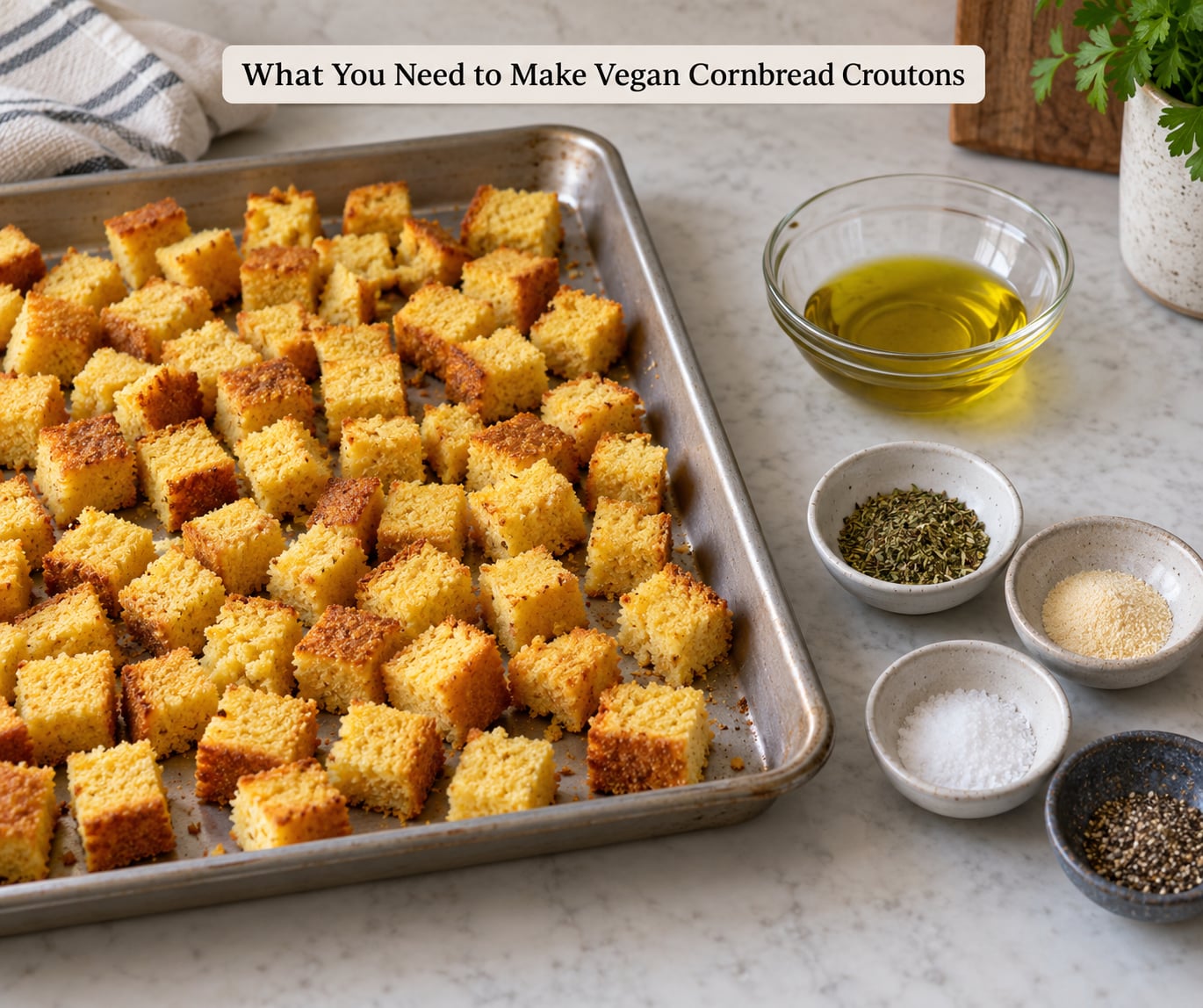
The ingredient list is short because the cornbread does the work. Everything else is seasoning and a little fat for the crust.
- Cornbread: 4 cups (about 300 g) of vegan cornbread, one day old if possible, cut into 1/2-inch cubes
- Olive oil: 1 to 2 tablespoons (15 to 30 ml), enough to coat but not pool
- Fine sea salt: 1/2 teaspoon
- Black pepper: 1/4 teaspoon, freshly ground if you have it
- Optional seasoning: 1 teaspoon garlic powder, 1 teaspoon smoked paprika, 1 tablespoon nutritional yeast, or 1 to 2 teaspoons dried herbs like rosemary or thyme
How to Make Vegan Croutons Without Butter
Butter is the only thing standing between most cornbread crouton recipes and a vegan version, and olive oil replaces it cleanly. Melted butter sets as it cools and gives a heavier, buttery crust; olive oil stays light and lets the cornmeal flavor come through. Avocado oil works too and has a higher smoke point, which matters if you are using the air fryer or a skillet.
Melted coconut oil is a third option. It behaves like butter in a skillet, so it is the best pick for the stovetop method, but it adds a faint coconut note that fights the corn if you are using more than a tablespoon.
What Makes Cornbread Not Vegan?
Most bakery cornbread is not vegan, and the four culprits show up constantly:
- Butter or milk fat in the batter or brushed on the top
- Milk, buttermilk, or cream in the batter
- Eggs as a binder
- Honey as the sweetener, which is common in sweet cornbread and entirely off limits
When you shop, read the ingredient list rather than trusting the front of the box. If you bake the cornbread yourself, maple syrup replaces honey, olive oil replaces butter, and a spoonful of ground flaxseed mixed with water works as an egg substitute. Aquafaba, the liquid from a can of chickpeas, whips up and binds just as well in a cornbread with no change to the texture.
Which Cornbread Works Best?
Day-old cornbread is the traditional and the easiest. It has already given up some moisture, so it dries out evenly in the oven instead of going chewy in the middle. If your loaf is only a few hours old, leave it out uncovered on a rack for a few hours, or toast it at 300°F for 10 minutes first. That drying step is the difference between croutons and warm bread cubes.
Sweet cornbread works. Cinnamon-sugar seasoning leans sweet, and if you are serving croutons with chili or a savory soup, skip the sugar and lean on smoked paprika and garlic powder instead.
Gluten-free cornbread croutons work well. The crumbs are a little more fragile, so handle them gently and skip the parchment liner, which makes lifting pieces harder. Expect slightly softer centers since there is no gluten structure holding them together.
Tools
You need a rimmed baking sheet, a large bowl for tossing, and a wire cooling rack. Parchment paper is optional. It stops nothing from sticking on a rimmed sheet, but it does make the loose crumbs harder to scoop up, and those crumbs are worth saving.
Step-by-Step: How to Make Vegan Cornbread Croutons
Step 1: Choose and Cube the Cornbread
Cut the cornbread into 1/2-inch cubes with a sharp serrated knife. Uniform size is what matters here, more than removing the crust. Cornbread does not have a real crust, so trimming edges mostly just creates more loose crumbs.
Test a cube by squeezing it. If it holds its shape without crumbling, it is ready to crouton. If it powders in your hand, it is too dry for the oven and needs a different plan: crush it into crumbs for a breading, or blend it into a crust for a plant-based casserole.
Do not over-handle the cubes. Cornbread breaks apart far more easily than wheat bread, and tossing it six times when one good toss will do is the single biggest reason batches turn into cornbread dust. One bowl, one toss, straight onto the sheet.
Step 2: Season and Toss the Croutons
Warm the olive oil slightly, or just use it cold from the bottle. Either works; cold oil is slightly thicker and coats more evenly. Put the cubes in a large bowl, drizzle with 1 to 2 tablespoons, and add the salt, pepper, and any seasoning you chose.
Toss with your hands for about fifteen seconds, scooping from the bottom twice, until every face looks faintly shiny and a few grains of salt cling to the edges. That faint sheen is the target. Oil pooling in the bottom of the bowl is a sign you added too much, and pooled oil makes the bottoms burn before the centers dry out.
Cornbread drinks oil differently than sourdough because it has less gluten structure to absorb it. Start with one tablespoon and add a second only if the cubes still look dry after tossing.
Step 3: Bake Until Crisp
Heat the oven to 400°F (200°C) and put a rimmed baking sheet in while it heats. A preheated sheet gives the bottom of each cube an immediate sear, which is where crunch comes from.
Spread the cubes in a single layer with a little space between them. Crowding traps steam between the pieces and you get soft, pale croutons with browned bottoms. One large sheet holds roughly 4 cups of cubes; if yours overflows, bake in two batches rather than stacking.
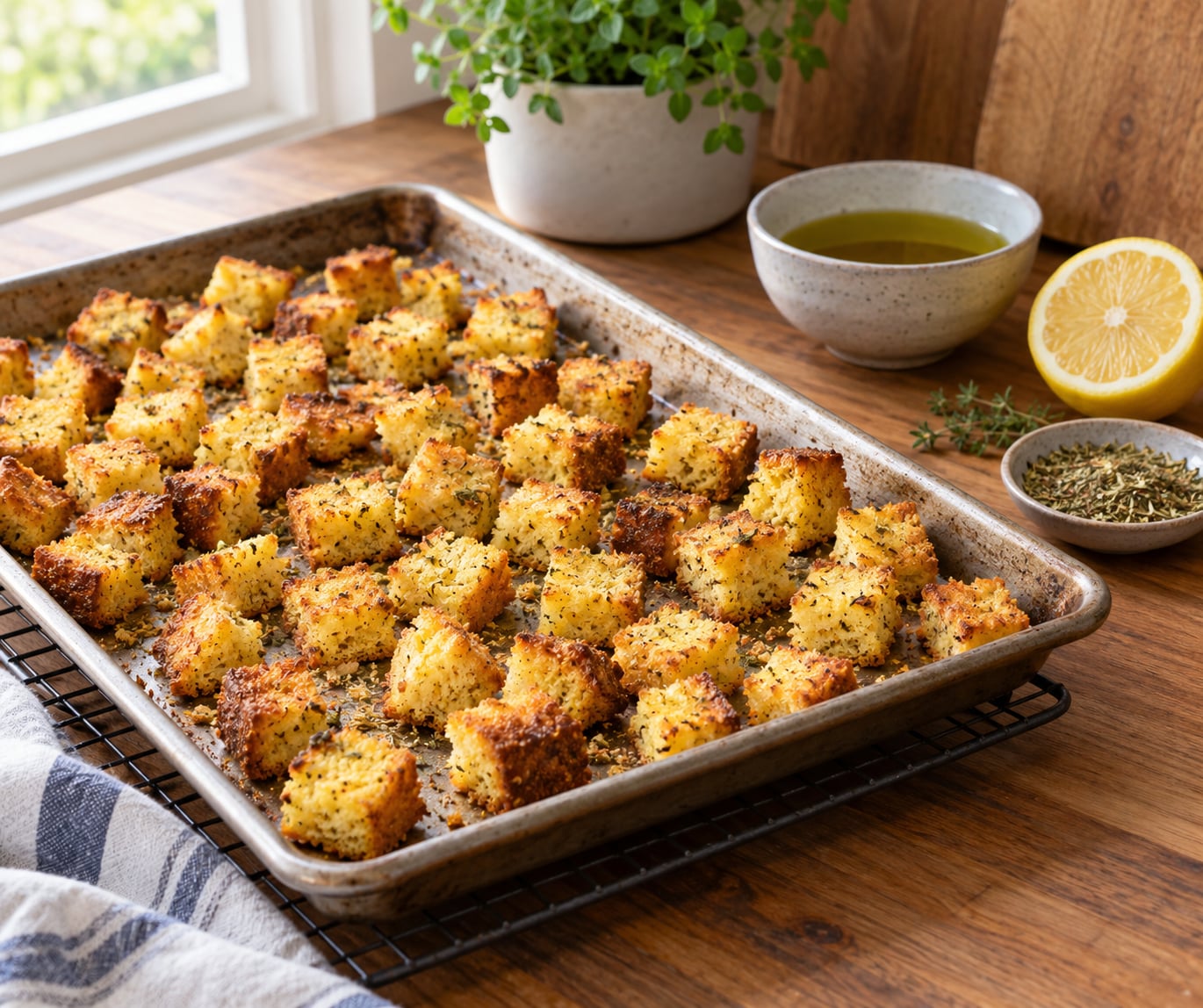
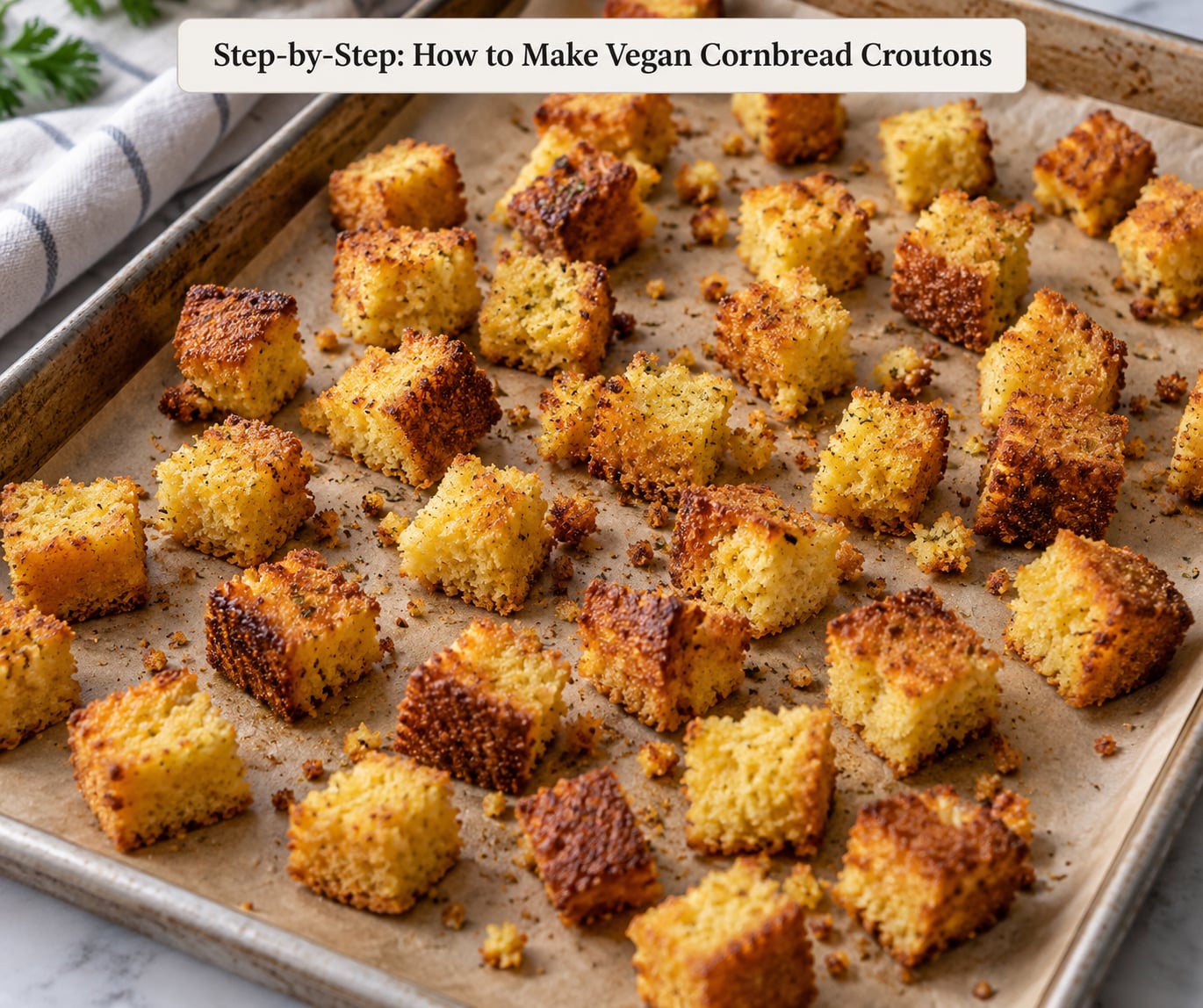
Bake for 12 to 20 minutes, stirring once at the halfway mark. Shake the sheet and use a spatula to flip any pieces that are coloring faster than the rest, usually the ones near the edge. Cornmeal browns quickly because of the sugar, so pull the pan a minute before the color you want. Golden brown edges with a slightly paler center is exactly right.
They will feel faintly soft coming out of the oven. That is normal, because the crumb is still giving off moisture as it cools. The pieces firm up noticeably in the last ten minutes on the rack.
Four Methods for Making Vegan Cornbread Croutons
If your oven is already on, use the oven. If you want croutons in fifteen minutes without heating the whole kitchen, the other three work just as well, and how to make vegan cornbread croutons in an air fryer or a skillet follows the same seasoning and single-layer rules.
| Method | Temperature | Time | Notes |
|---|---|---|---|
| Baked, conventional oven | 400°F (200°C) | 12-20 min | Most even result, best for large batches |
| Air fryer | 350°F (175°C) | 8-12 min | Check at 5 min, shake twice; burns fast |
| Toaster oven | 400°F (200°C) | 10-15 min | Half a sheet pan only, rotate halfway |
| Skillet on the stovetop | Medium heat | 8-12 min | Use avocado or coconut oil, stir often |
Home cooks who bake croutons regularly often go lower and slower instead, around 250 to 300°F for 20 to 30 minutes, on the theory that gentle heat dries the center before the outside burns. That works well for wheat bread. Cornbread is sugarier and drier, so 400°F gives better color in less time.
Step 4: Cool and Store the Croutons
Spread the croutons on a wire rack and let them cool completely, about 20 to 30 minutes. Do not store them warm. Warm croutons in a closed container give off steam, and that steam is what turns a crisp crouton into a chewy one by morning.
For short-term storage, use an airtight container at room temperature and keep it somewhere dark and dry. Croutons stay crisp for three to four days this way, longer in dry winter air and shorter in humid summer.
Freezing works well for holiday prep. Let the croutons cool completely, spread them in a single layer on a tray to freeze solid, then move them into a freezer bag. They keep for up to three months and need no oil or parchment between layers once frozen.
To bring them back, spread on a sheet and heat at 350°F for 5 to 8 minutes. Skip the microwave. It heats the outside and leaves the middle damp, which is exactly the soggy texture people complain about when croutons come from a boxed mix.
Store croutons separately from dressed salads and from stuffing until serving. Any dressing, broth, or moisture transfers directly into the crust, and there is no bringing it back.
Common Mistakes and How to Fix Them
Cubes too large. Big pieces take much longer to dry through, so the outside burns while the center stays chewy. Stay near 1/2 inch and use a rimmed sheet rather than crowding pieces together for more pan surface.
Overcrowded pan. Steam gets trapped and you get pale, soft croutons. Spread in one uncrowded layer and bake in batches when needed. If a second sheet means a hot, tired kitchen, the air fryer is faster.
Too much oil. Pooled oil browns the bottoms and fries the cubes into greasy nuggets. One tablespoon per 4 cups, plus a second only if the cubes look thirsty, is the whole rule.
Wet or fresh ingredients. Wet ingredients on the cubes steam instead of toast. Pat the cornbread dry, use dried herbs rather than fresh, and make sure any oil measured with a spoon is not dripping.
Wrong temperature. Below 350°F the croutons dry slowly and stay pale. Above 400°F the sugary cornmeal burns before the centers crisp. 400°F with a slightly early pull is the sweet spot.
Storing before cooling. This is the mistake that ruins the most batches. Steam trapped in a warm container softens everything overnight. Wire rack first, container second.
Too many crumbs. Cornbread crumbles, and it is not really a flaw; treat the loose crumbs as a bonus. Press them into the bottom of a salad bowl, use them to coat roasted vegetables, or toast them on a separate pan for a few minutes to make a second small batch. To reduce crumbs in the first place, handle the cubes once, bake on an unlined rimmed sheet, and skip the parchment if lifting pieces is your plan.
Flavor Variations to Try
Once the basic method is comfortable, change one or two things at a time.
- Smoky paprika and chili: add 1 teaspoon smoked paprika and a pinch of cayenne. Built for chili and black bean soup.
- Rosemary garlic: 2 teaspoons finely chopped dried rosemary and 1 teaspoon garlic powder, with more black pepper than usual. Good with white bean soup.
- Curry cumin: 1 teaspoon curry powder and 1/2 teaspoon ground cumin. Surprisingly good on roasted cauliflower and grain bowls.
- Lemon pepper: the zest of one lemon added after baking, plus extra black pepper and a little extra salt. Pairs well with kale salads.
- Cinnamon sugar: 2 tablespoons turbinado or coconut sugar and 1 teaspoon cinnamon. Toss on with a little oil and bake at 375°F for 10 to 12 minutes instead; this one goes on fruit salads and oatmeal.
- Nutritional yeast: a tablespoon mixed in before baking adds a savory, almost cheesy depth that works in stuffing and on casseroles.
Frequently Asked Questions
Do vegan cornbread croutons need old or stale cornbread?
No, but day-old cornbread gives the most reliable crunch. It has already lost some moisture, so it dries evenly instead of staying chewy in the middle. Fresh cornbread works if you dry it first: leave it uncovered on a rack for a few hours, or toast it at 300°F for 10 minutes before you cube it. That step is the whole difference between croutons and warm bread cubes.
Can I make vegan cornbread croutons with gluten-free cornbread?
Yes, and they work well. Gluten-free cornbread crumbles more easily than wheat-based versions, so handle the cubes gently, toss once rather than several times, and skip the parchment liner so you can lift pieces cleanly. Expect a slightly softer center since there is no gluten structure holding the crumb together, and check the baking time early because the pieces brown faster.
How do I make cornbread croutons without oil?
Bake the cubes plain on a preheated rimmed sheet at 400°F for 12 to 20 minutes, seasoning with salt only. They come out noticeably lighter and more crumbly than oiled croutons and they brown less deeply. You can add flavor with dried herbs and garlic powder instead of fat. The same approach works well in the air fryer at 350°F for 8 to 12 minutes.
How long do homemade vegan cornbread croutons stay crunchy?
In an airtight container at room temperature, they stay crisp for three to four days, assuming the croutons cooled completely before you closed the container. Dry winter air stretches that; humid summer air shortens it. Frozen on a tray first and then bagged, they keep up to three months. Reheat at 350°F for 5 to 8 minutes and skip the microwave, which leaves the middle damp.
Can I make vegan cornbread croutons in a skillet?
Yes, and it is the fastest method. Use a wide skillet with about a tablespoon of avocado or melted coconut oil, add the seasoned cubes in one layer, and cook over medium heat for 8 to 12 minutes, stirring every two minutes. Work in small batches so the pan stays dry, and pull them once the edges are golden brown. The oven version is more even, but the skillet gives you the same crust in about fifteen minutes.
How do I soften vegan cornbread croutons that became chewy?
Spread them on a baking sheet and heat at 350°F for 8 to 10 minutes, flipping halfway through, until they crisp again. Do not use the microwave, which is the usual cause of chewiness in the first place. For serving alongside soup or chili, let the croutons sit on a dry plate for five minutes first so they firm up rather than absorbing broth on contact.
Conclusion
If you keep one thing from how to make vegan cornbread croutons, make it this: cube a day-old loaf into even 1/2-inch pieces, toss once with about a tablespoon of olive oil and salt, and bake them in a single uncrowded layer at 400°F until the edges turn golden. Cool them on a wire rack before anything else, and that one habit decides whether they stay crunchy for days.
Then play with the seasoning. Smoked paprika and chili for a pot of chili, rosemary and garlic for bean soup, lemon zest for a kale salad, nutritional yeast for stuffing. Cornbread croutons built this way are worth eating straight off the sheet, which is usually how half of them disappear in my kitchen.