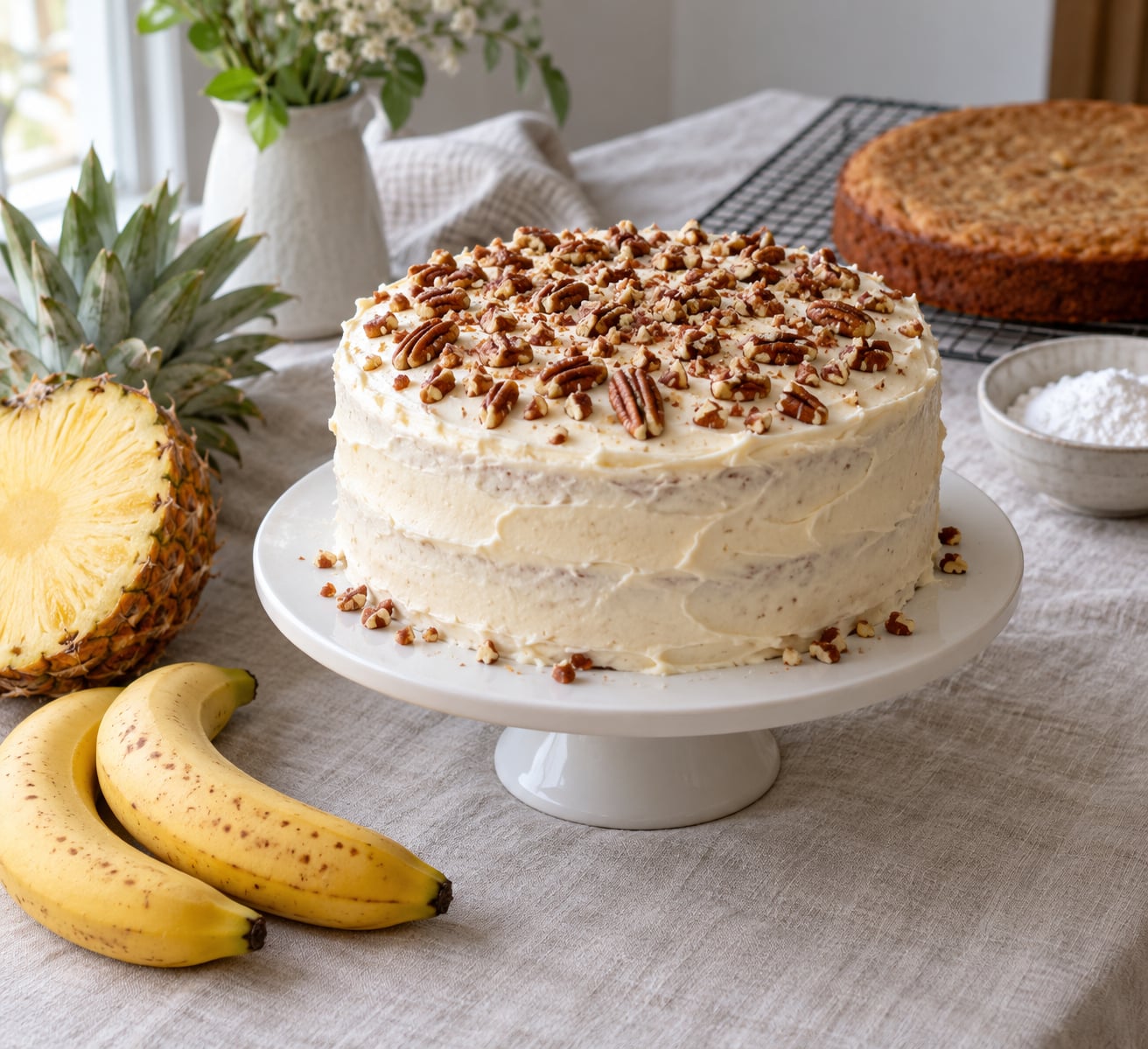
The classic hummingbird cake layers contain no dairy at all, so making one dairy free mostly means swapping the cream cheese frosting. Use a neutral oil instead of butter, a vegan or cashew-based frosting instead of dairy cream cheese, and unsweetened plant milk in place of buttermilk. The whole thing takes about 70 minutes and needs one bowl and no mixer.
Hummingbird cake is a Southern layer cake built on ripe bananas, crushed pineapple, chopped pecans and warm spices, first published in the pages of Southern Living in 1978 and popular before that in Jamaica. Its crumb stays moist because of the fruit and oil, not because of butter, which is exactly why it converts so cleanly.
Table of Contents
- What You Need
- Step-by-Step
- Prepare the pans and set the oven racks
- Mix the dry ingredients
- Mix the wet ingredients and fold in the batter
- Bake the cake layers
- Make the dairy-free frosting
- Assemble and chill the cake
- Common Mistakes
- Frequently Asked Questions
- Is hummingbird cake already dairy free?
- Can I use almond milk in place of buttermilk?
- What is the best dairy-free frosting for hummingbird cake?
- How do I stop my hummingbird cake from sinking in the middle?
- Why is my cashew cream cheese frosting too thin to spread?
- How long does dairy-free hummingbird cake keep?
What You Need
Two 9-inch round cake pans, or three 8-inch rounds if you want taller layers. A sheet of parchment for each pan bottom, a medium bowl, a whisk, a rubber spatula and a wire rack. That is the whole tool list, which is why this is a good weekend bake with kids hovering.
For the cake:
- 2 cups all-purpose flour, spooned and leveled
- 2 teaspoons baking powder
- 1 teaspoon baking soda
- 1 teaspoon ground cinnamon
- 1/2 teaspoon ground allspice, or a pinch of nutmeg
- 1 teaspoon fine salt
- 3/4 cup neutral oil such as canola or vegetable oil
- 1 cup packed light brown sugar
- 2 teaspoons vanilla extract
- 2 large eggs at room temperature
- 2 very ripe bananas, mashed (about 1 cup)
- 1 can (8 ounces) crushed pineapple in juice, well drained but not rinsed
- 1 cup pecans, chopped and toasted
For the frosting, choose one:
- Store-bought route: 8 ounces vegan cream cheese softened to room temperature, 1/2 cup vegan butter or softened coconut oil, 3 to 4 cups powdered sugar, 1 teaspoon vanilla, a pinch of salt
- Cashew route: 1.5 cups raw cashews soaked 4 hours or overnight, 1/4 cup water or unsweetened plant milk, 1 tablespoon lemon juice, 2 to 3 cups powdered sugar, 1/4 teaspoon salt
What swaps cleanly and what does not: neutral oil, plant milk, vegan cream cheese and powdered sugar are one-for-one. A 1:1 gluten-free all-purpose flour blend also works, though I have not tested it here, so treat the bake time as a starting point rather than a promise. Cannot eat nuts at all? Use sunflower seed cream cheese in place of the cashews and leave the pecans out or swap in sunflower seeds.
One clarification saves a lot of confusion. Eggs are not dairy, so for a dairy-free cake you keep them. Swap in flaxseed eggs, aquafaba or a commercial egg replacer only if you also want the cake vegan. A flax egg is 3 tablespoons ground flaxseed stirred into 9 tablespoons of water, left to thicken for 10 minutes.
One frosted slice lands roughly 300 to 350 calories depending on how thick the frosting goes on.
Step-by-Step
Prepare the pans and set the oven racks
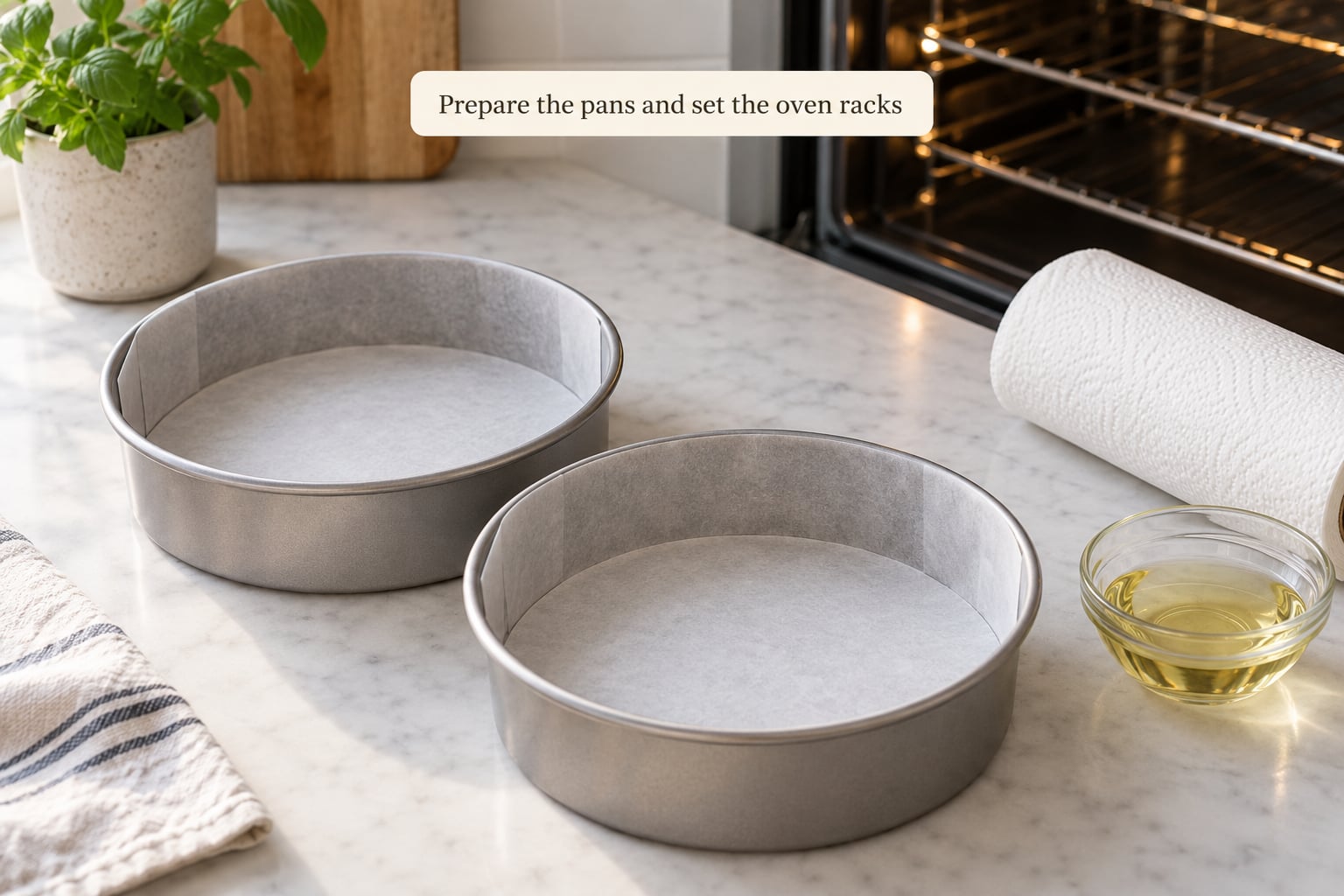
Heat the oven to 350°F (175°C) with one rack in the center and one in the lower third. Rub the pans with a little of the oil, then line the bottoms with parchment and oil the paper too. The cake is tender and fruit-heavy, so parchment is worth the extra minute; without it you will be lifting glued edges with a spatula.
The pans are ready when the paper sits flat with no air bubbles under it and the sides have a thin, even sheen of oil. If you bake two pans at once, use the center and lower racks and swap them halfway so both layers color the same way.
Mix the dry ingredients
Whisk the flour, baking powder, baking soda, cinnamon, allspice and salt in a medium bowl until no concentrated pockets of spice remain. If you can see a streak of cinnamon in the flour, whisk another 20 seconds. Baking soda matters more here than in most cakes, because the acidic pineapple and banana react with it and give the rise.
Use all-purpose flour as written. A 1:1 gluten-free blend can work, and a cup of almond flour will make it denser and cakier. Either way, sift or whisk the dry mix rather than dumping it on the wet ingredients.
Mix the wet ingredients and fold in the batter
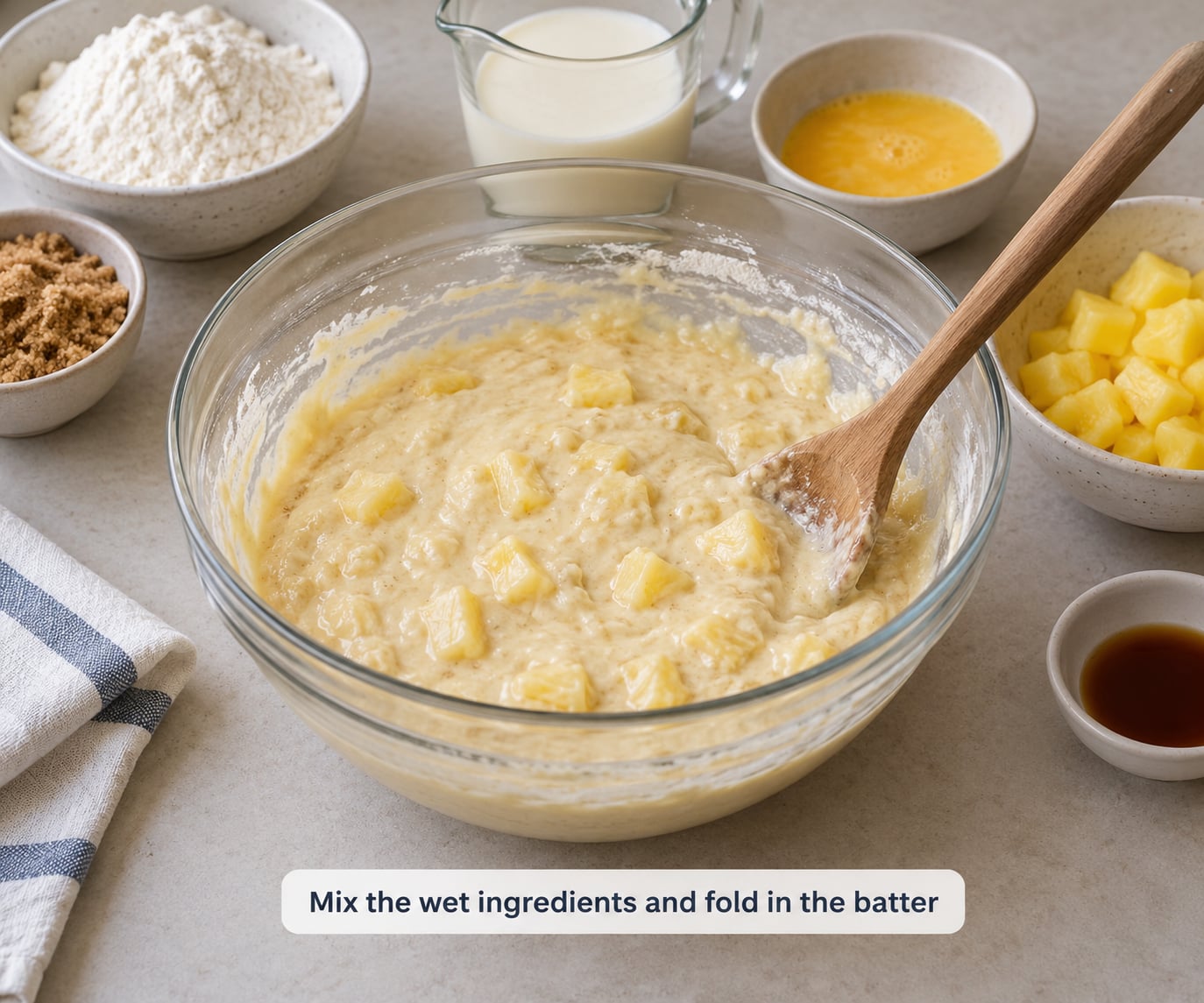
In the same bowl, whisk together the oil, brown sugar, vanilla, mashed banana, crushed pineapple with its juice and the eggs until mostly smooth. The mixture will look loose and slightly split. Pour the dry ingredients over the top and fold with a spatula until the last streak of flour disappears.
Stop the moment it comes together. Hummingbird batter has no gluten structure to develop, and ten extra stirs of beating gives you a dense, gummy crumb. The finished batter is thick, glossy and still shows lumps of pineapple and pecan. That is the texture you want going into the pan.
Bake the cake layers
Divide between the pans and bake at 350°F (175°C) for 28 to 35 minutes. A skewer or toothpick inserted in the center should come out clean or with a few moist crumbs, never wet batter. The top should feel springy when pressed lightly and be a shade past golden at the edges.
Cool in the pans for 15 minutes, then turn out onto a rack. The layers will dome slightly in the oven; that is normal. Level them with a serrated knife once fully cool, and never frost a warm layer, because dairy-free frosting melts faster than the real thing.
If you switch to three 8-inch pans, expect 22 to 28 minutes. A 9×13-inch sheet pan takes about 30 to 35. Cupcakes bake 18 to 22 minutes, though readers often report needing a few extra minutes for the tops to set.
Make the dairy-free frosting
Beat the softened vegan cream cheese and vegan butter until smooth, then add the powdered sugar a cup at a time, scraping the bowl twice. Add the vanilla and salt last. Stop while the frosting is soft and spreadable; a stiff frosting pulls the top crumbs off the cake when you spread it.
For the cashew version, drain the soaked cashews and blend them with the water or plant milk and lemon juice until completely smooth, about 60 seconds. Add the powdered sugar and salt and blend again. If it seeps into the cake instead of sitting on top, chill the bowl 20 minutes and try again before adding anything else.
Assemble and chill the cake
Once both layers are completely cool, level the tops. Spread a thin crumb coat on the first layer, refrigerate it 15 minutes, then add the filling and the final layer of frosting. That quick chill keeps the crumbs locked in and gives the frosting something solid to sit on.
Chill the finished cake 30 minutes before slicing and serve it slightly cool rather than straight from the fridge, where the fruit flavor flattens. Scatter chopped toasted pecans over the top just before serving, so they stay crunchy instead of softening into the frosting.
Common Mistakes
The cake comes out dry. You weighed the flour by scooping it straight from the bag and it went in heavy. Spoon it into the measuring cup, level it with a knife, and give the batter the full 2 cups. Overpacking flour is the number one reason this cake fails, dairy-free or not.
The crumb is dense and gummy in the middle. Two causes. Either you beat the batter past the point where the flour disappeared, or the pans were underfilled and the batter sat thick in the center. Stir for about 20 seconds, then fold, and stop the moment the streaks are gone.
The center sinks. Check your baking soda, which is the most common mistake: a tablespoon instead of a teaspoon doubles the leavening, the batter rises fast, then collapses. Open the oven door only once, near the halfway mark, and always use room-temperature eggs and milk.
The frosting weeps or slides off. The layers were still warm, or the frosting was too thin to start with. Cool to room temperature, beat in 30 to 60 minutes of the refrigerator, and chill the crumb coat before the final layer.
The cake tastes like banana and barely like pineapple. That is the honest reality of the recipe. Pineapple mostly contributes moisture and acidity; the banana dominates on top. Drain the crushed pineapple well but keep the juice, and use the full can rather than rinsing it dry.
You scaled the recipe down and it baked too fast. A halved recipe in the same pans finishes earlier because the batter is shallower. Start checking at two-thirds of the stated time with a toothpick rather than trusting the clock.
Unfrosted layers keep 3 to 4 days wrapped at room temperature and freeze up to 3 months. A frosted cake belongs in the refrigerator for up to 4 days; freeze it in slices without the pecans, which turn soft after thawing.
Frequently Asked Questions
Is hummingbird cake already dairy free?
Mostly. The traditional layers call for neutral oil rather than butter, so the cake itself holds no milk, butter or cream. Dairy sneaks in through the cream cheese frosting and sometimes a splash of buttermilk. Swap the frosting and that liquid and the cake is fully dairy free, with no other changes to the method.
Can I use almond milk in place of buttermilk?
Yes. Use unsweetened almond milk, oat milk or soy milk one for one, and skip vanilla varieties since they add sweetness the batter does not need. To fake buttermilk, stir a teaspoon of lemon juice or apple cider vinegar into a cup of unsweetened plant milk and let it sit five minutes before you pour it in.
What is the best dairy-free frosting for hummingbird cake?
Vegan cream cheese frosting is the closest match to the original tangy, rich finish, and it takes five minutes in a bowl. A cashew cream cheese frosting blends a little nuttier and slightly thinner, so chill it before spreading. For a nut-free table, use sunflower seed cream cheese in the same amounts, or a simple vegan buttercream.
How do I stop my hummingbird cake from sinking in the middle?
Measure baking soda by teaspoon, not tablespoon, because extra leavener makes the batter rise fast and collapse. Bring eggs and milk to room temperature, and avoid opening the oven until the halfway mark. A sunken center also points to underbaked batter, so use the toothpick test before you pull the pans.
Why is my cashew cream cheese frosting too thin to spread?
Unsoaked cashews or too little blending are the usual reasons. Soak the raw cashews 4 hours or overnight, drain them well, and blend a full 60 seconds until no graininess remains. If it is still loose, chill the bowl 20 minutes, then pulse in more cashews or a spoonful of coconut oil. Powdered sugar is the last resort because it sweetens fast.
How long does dairy-free hummingbird cake keep?
Unfrosted layers wrapped tightly keep 3 to 4 days at room temperature and freeze up to 3 months. A frosted cake keeps about 4 days in the refrigerator, covered so it does not pick up odors. Bring it out 20 minutes before serving, because straight-from-the-fridge frosting tastes flatter and the fruit flavor mutes.
Start with the pans and a tin of crushed pineapple. Toast the pecans, mix the batter while the oven heats, and the rest is mostly waiting. If you are working around a dairy allergy in the house, get the vegan cream cheese and plant milk out the night before so they are soft enough to beat in the morning.