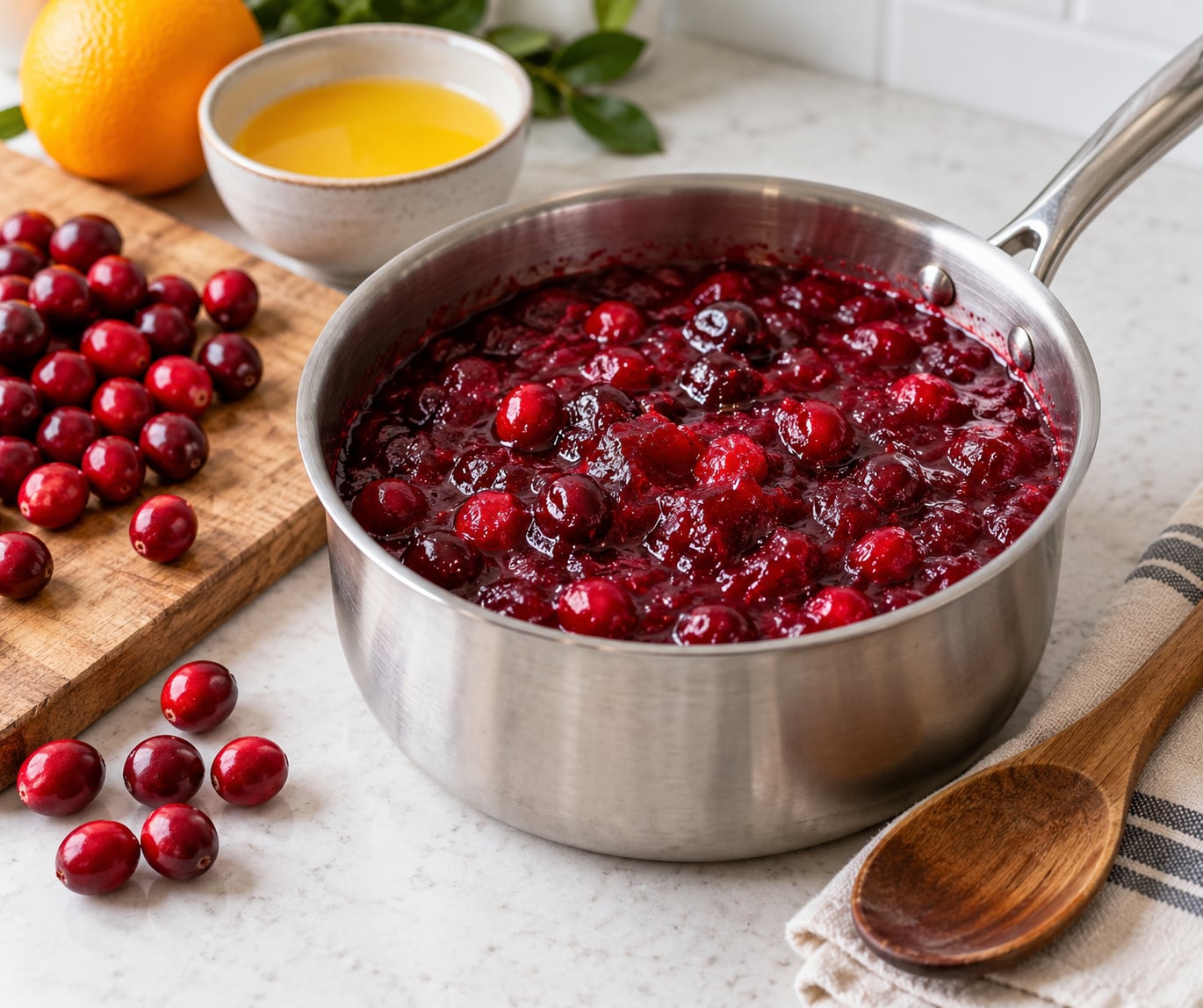
How to make cranberry sauce from fresh cranberries takes about 20 minutes start to finish, and you need only three things: a 12 ounce bag of fresh cranberries, 3/4 to 1 cup of sugar, and 1/2 cup of orange juice. The berries simmer until they burst and the liquid reduces to a glossy, spreadable sauce that thickens further as it cools. No pectin, no gelatin, no canned shortcut.
I make this every year, and the whole pot comes together while the turkey rests. The part that trips people up isn’t the recipe, it’s knowing when to stop cooking. Get that right and the rest is straightforward.
Fresh cranberries show up in grocery stores from September through November, and they’ll sit in the freezer for months without losing their bite. So buying a big bag in the fall is safe, even if Thanksgiving is still weeks away.
Table of Contents
- What You Need
- Step-by-Step: How to Make Cranberry Sauce from Fresh Cranberries
- Rinse and Sort the Cranberries
- Choose the Sweetness and Liquid
- Simmer Until the Berries Burst
- Choose Whole-Berry or Smooth Cranberry Sauce
- Thicken and Flavor the Sauce
- Cool, Serve, and Store the Cranberry Sauce
- Common Mistakes
- Frequently Asked Questions
- How long does homemade cranberry sauce last in the fridge?
- What to do when cranberry sauce doesn’t set?
- Is brown sugar or white sugar better for cranberry sauce?
- Can I make cranberry sauce ahead of time?
- Can I use frozen cranberries instead of fresh?
- How can I make cranberry sauce without added sugar?
- Conclusion
What You Need
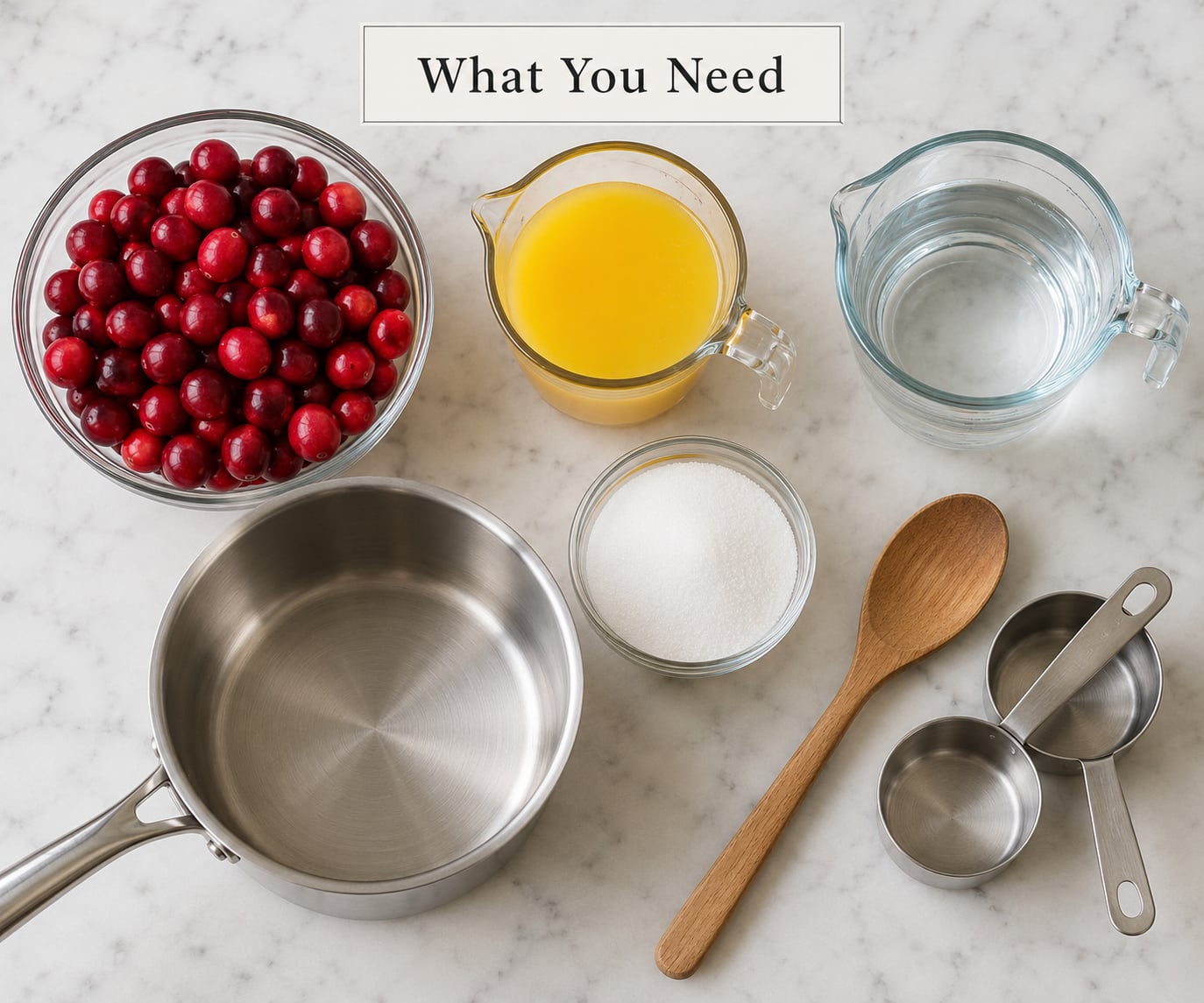
The base recipe fits in a medium saucepan and makes about 4 servings.
- 12 ounces (340 g) fresh cranberries, roughly 3 cups. Sorted and rinsed.
- 3/4 to 1 cup (150 to 200 g) granulated sugar. Start at 3/4 cup and add more to taste.
- 1/2 cup (120 ml) orange juice, plus a few strips of peel or the zest of one orange if you like it brighter.
- 1/2 cup (120 ml) water. Swap this for cider, dry white wine, or all juice if you want more body.
- A pinch of salt. Not optional in my kitchen. It sharpens everything.
Optional additions: a cinnamon stick, 2 or 3 whole cloves, 1 inch of fresh ginger, the zest of one orange, 1 teaspoon vanilla extract stirred in at the end, diced apple cooked alongside, or a handful of pecans folded in off the heat.
Tools: a medium saucepan with a lid, a wooden spoon or silicone spatula, a fine strainer only if you’re making a smooth sauce, and a heatproof jar or container for storing.
Step-by-Step: How to Make Cranberry Sauce from Fresh Cranberries
Rinse and Sort the Cranberries
Tip the berries into a colander and pick out any with brown spots, soft spots, or a stem still attached. Those are the ones that go soft and pulpy in the pot and leave you with grey spots in the finished sauce.
Rinse under cold running water for about 30 seconds, then shake the colander well or pat the berries dry. Sorting first takes two minutes and it’s the step that separates a clean sauce from a speckled one.
Choose the Sweetness and Liquid
Cranberries are genuinely tart, so the sugar isn’t there to make the sauce sweet, it’s there to balance the acid and help the sauce set. The starting ratio is about 3/4 cup sugar per 12 ounces of berries. Go to a full cup if you like it noticeably sweeter.
Brown sugar adds a deeper, almost caramel note, and cooks people like it. Maple syrup works and brings a woodsy edge. Honey is fine, though it can make the sauce slightly stickier over time.
The liquid is more flexible than the sugar. Orange juice gives a bright, classic profile. Water gives you the purest berry flavor, and all orange juice produces a sauce with more body and a bit of a gel. Cider or dry white wine adds acidity and complexity that handles a lower sugar level well.
Simmer Until the Berries Burst
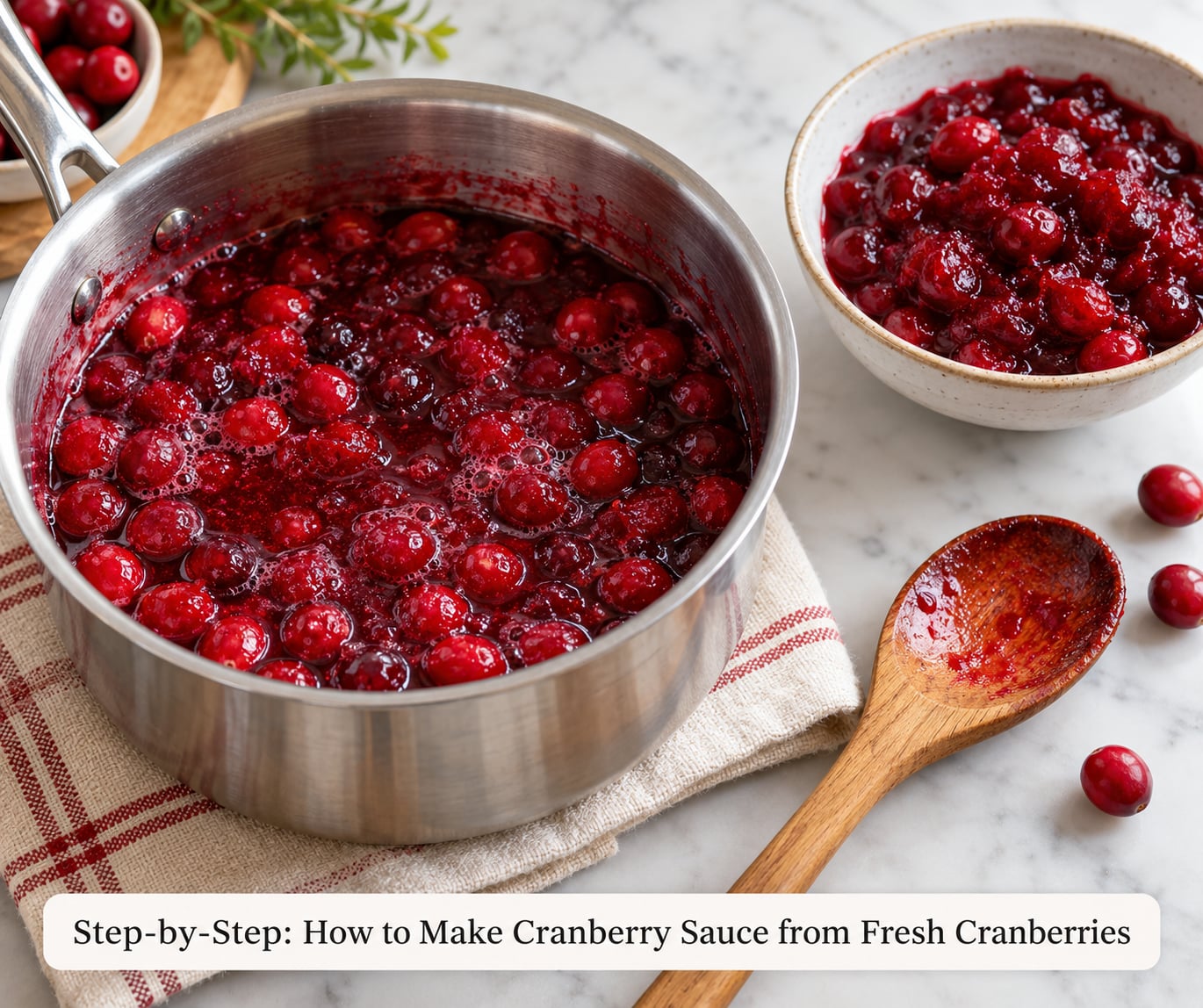
Combine the berries, sugar, liquid, and salt in the saucepan. Bring to a boil over medium-high heat, then turn the heat down to medium and let it simmer.
Stir often, roughly every minute or two, so the sugar on the bottom dissolves and nothing catches. You’ll hear the first few berries pop within about 5 minutes. The sauce is close to done when nearly every berry has split and you can see the liquid running glossy around them.
That usually takes 10 to 15 minutes of simmering, depending on how much liquid you started with. Watch for the foam in the first few minutes and skim it off, or it leaves a dull skin on the top of the sauce.
Choose Whole-Berry or Smooth Cranberry Sauce
Whole berry sauce is the traditional Appalachian and New England style, and it’s what I make most years. The berries stay whole and collapse to a soft, spoonable texture, which means the finished dish is a bit runnier on the plate. Stop cooking as soon as the burst berries lose their shape and the sauce looks glossy.
For a smooth sauce, cook five minutes longer, then press the mixture through a fine mesh strainer with the back of a spoon, or pulse it in a food processor. Blending in the pot with an immersion blender is faster but adds air, so go easy on the pulse button. Thick blobs of skin and seeds are the part people don’t like, and straining them out is the fix.
One tip if the sauce seems thin: hold back a spoonful of the strained liquid and stir it back in at the end. It’s the difference between a sauce that pours and one that barely moves on the plate.
Thicken and Flavor the Sauce
If the sauce is looser than you want, put it back over medium heat and simmer uncovered for another 5 to 10 minutes, stirring, until the liquid has reduced. Reducing means cooking off water, not shrinking the berries, so the flavor sharpens rather than dulling.
Add the warm spices at the start of the simmer so they have time to infuse. Orange zest, ginger, and vanilla go in at the end, off the heat, to keep their brightness.
Taste before you serve it, and adjust. Too tart gets a spoonful of sugar stirred in. Too sweet gets a squeeze of lemon juice. A pinch more salt fixes a flat batch better than anything else.
Cool, Serve, and Store the Cranberry Sauce
Let the sauce cool in the saucepan, then transfer it to a covered container and refrigerate. It sets as it chills, so a pot that looks loose on the counter will be scoopable after two hours in the fridge.
Homemade cranberry sauce keeps in the refrigerator for 5 to 7 days, and you can eat it straight from the fridge, at room temperature, or warmed gently. It’s good on toast, on a leftover turkey sandwich, folded into chopped stuffing, or spooned over ice cream.
For freezing, leave a half inch of headspace in the container so the sauce can expand. It keeps for 2 to 3 months and thaws slowly in the fridge overnight. If it separates a little on thawing, stir it hard and it comes right back together.
One safety note: don’t water-bath can homemade cranberry sauce at home, especially a low-sugar or no-sugar version. Acidified and tested recipes only.
Common Mistakes
The sauce is watery at serving time. The most common complaint, and the easiest to fix. Let it simmer uncovered a few more minutes until the liquid reduces, and remember that it thickens noticeably as it cools. If it’s still loose after chilling, warm it gently and reduce it again on the stove.
The sauce is too sweet. You started with a full cup of sugar for a 12 ounce bag. Next time use 3/4 cup or less, and add the sugar in two stages so you can taste. For a batch that’s already too sweet, stir in a squeeze of fresh orange or lemon juice to bring the acid back up.
The berries stay tough and papery. That’s what happens when whole berries cook sitting in sugar from the first minute. Two fixes: add the sugar and liquid to the pot first, bring it to a boil, then stir the berries in, or pulse the raw berries two or three times in a food processor before cooking so the skins break up.
The bottom scorched. The sugar burns fast once the liquid is low. Stir more often near the end, and pull the pot off the heat the moment it looks right rather than cooking to a specific time. A splash of hot water stirred back in will loosen a scorched batch enough to serve.
The sauce is too tart to eat. Undersweetened, or the berries were underripe. Sugar in small amounts, plus a bit of orange juice, will fix most of it. A teaspoon of vanilla also rounds out sharp edges.
The texture is different every batch. Cook time is the variable, not the recipe. Watch the berries rather than the clock, and stop when they have all burst, which is the cue that works across ranges of altitude and stove temperature.
Frequently Asked Questions
How long does homemade cranberry sauce last in the fridge?
Homemade cranberry sauce keeps in the refrigerator for 5 to 7 days when stored covered in an airtight container. It also freezes well for 2 to 3 months, so making a double batch and freezing half is the easy way to have sauce on hand for leftovers. Thaw it overnight in the fridge rather than on the counter.
What to do when cranberry sauce doesn’t set?
Warm the sauce over medium heat and let it simmer uncovered for 5 to 10 more minutes until the liquid cooks down, stirring often. The sauce thickens considerably as it cools, so a pot that looks loose in the pan is often fine. If it is still runny after chilling, reduce it a second time and cool it before serving again.
Is brown sugar or white sugar better for cranberry sauce?
White sugar gives the cleanest, most classic cranberry flavor, and it is what most traditional recipes use. Brown sugar adds a deeper molasses note and cooks people like it, and a mix of both works well. Either one sets the sauce the same way, so choose on flavor. Start with 3/4 cup per 12 ounces of berries and adjust to taste.
Can I make cranberry sauce ahead of time?
Yes, and it is better for it. Make the sauce up to two days before serving and keep it covered in the refrigerator. It firms up as it chills, which actually helps it hold its shape on the serving table. Reheat gently on the stove with a splash of water if you want it warm, but serve it cold straight from the fridge and it is just as good.
Can I use frozen cranberries instead of fresh?
Yes, and cook from frozen without thawing. Frozen berries release their liquid faster, so the sauce finishes in closer to 8 to 10 minutes and sets up slightly softer. Add the berries to the hot sugar and liquid rather than into cold liquid, since adding them cold drops the temperature and slows the cook.
How can I make cranberry sauce without added sugar?
Skip the sugar and use 1 cup of orange juice or apple juice concentrate as the sweetener instead, then simmer until the liquid reduces to a thick spread. The sauce will taste much sharper because sugar is doing the balancing as well as the sweetening. Cutting sugar in half with more liquid is an easier compromise if you only want to dial it back.
Conclusion
Start with the boring part: sort and rinse the fresh cranberries, pulling out anything soft or stemmy. From there it’s a single pot, a medium simmer, and about 10 to 15 minutes of stirring until the berries split and the liquid goes glossy.
Taste before you serve and adjust the sugar, the acid, or the salt. That one habit fixes almost every problem people run into. Make it a day or two ahead and Thanksgiving gets a lot calmer.