The fastest way to make a holiday cookie tray dairy free is to change three things and nothing else: the fat, the dairy liquids, and the frosting. Swap butter for a plant butter or coconut oil at a 1:1 ratio, swap milk or cream for an unsweetened plant milk at 1:1, and rebuild your icing without butter. Everything else in a standard butter cookie recipe can stay exactly where it is.
That sounds almost too easy, because there is one catch worth knowing up front. Dairy hides in more places than butter. Once you learn where it hides and how each fat behaves in the oven, a dairy-free tray stops being a compromise and starts being just a tray of very good cookies.
Table of Contents
- What You Need
- The fats worth stocking
- The dairy liquids you will swap out
- The mix-ins that carry the flavor
- Tools that make the tray easier
- Step-by-Step: How to Make a Holiday Cookie Tray Dairy Free
- Which Dairy-Free Fat Should You Use?
- How Do You Mix the Dough Without Making It Tough?
- How Do You Chill and Shape the Cookies?
- How Do You Bake for a Crisp Edge and a Chewy Middle?
- How Do You Cool and Arrange the Tray?
- Common Mistakes and How to Fix Them
- Frequently Asked Questions
- What cookie dough is naturally dairy free?
- Is coconut oil better than butter for cookies?
- What are the most common mistakes with dairy-free cookies?
- Can I make dairy-free cookies ahead of time for a party?
- How long does a dairy-free cookie tray stay fresh on the table?
- How do I bake safely for someone with a real milk allergy?
- Conclusion: Start With One Easy Batch
What You Need
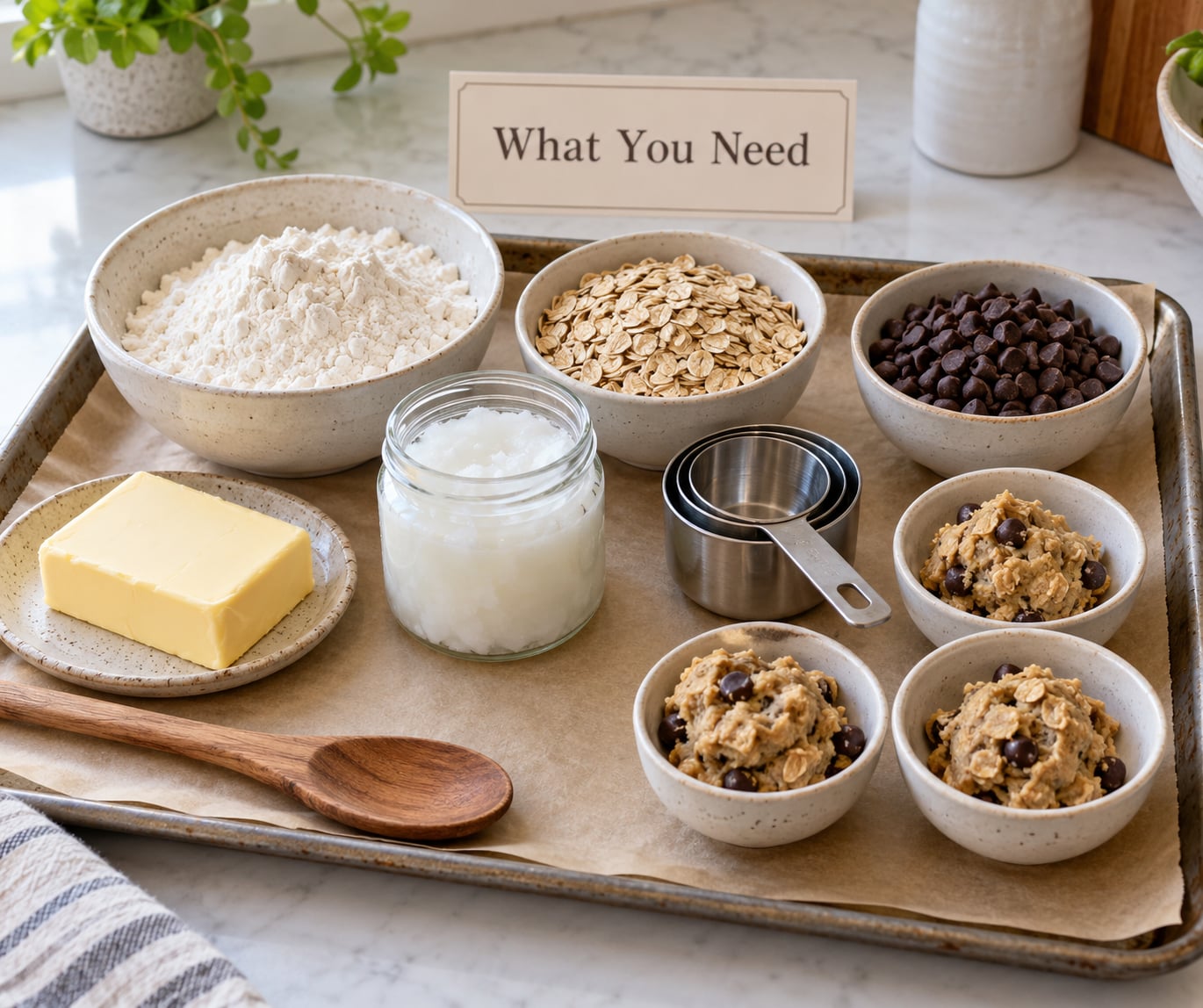
You do not need any special equipment for this. You need the same bowl, the same sheet pan, and the same cooling rack you use every December. The only genuine upgrade is parchment paper, which keeps delicate cookies from sticking and stops thin cookies from browning too fast on the bottom.
The fats worth stocking
Pick one of these to do the work of butter. A plant butter that behaves like butter is the least disruptive choice, coconut oil gives you chew with crisp edges, and a neutral oil keeps things light. Shortening still works too, and it travels well for gifting.
Avoid olive oil for anything cutout or frosted. Its flavor is loud enough that guests will taste it in the first bite, which is not the note you want on a tray meant to look like a holiday tradition.
The dairy liquids you will swap out
Unsweetened oat milk and almond milk both behave predictably and taste neutral, so use either one at a 1:1 ratio. Coconut milk and cream are thicker and sweeter, which suits a glaze or a no-bake filling far better than a dough. Soy milk works if it is already in your pantry and nobody at the table is avoiding soy.
Reach for the unsweetened version whenever you can. Sweetened plant milk carries added sugar, and cookies get sweet fast.
The mix-ins that carry the flavor
Since the dairy swap flattens a little of the richness, flavor has to come from somewhere else. Dark chocolate chips, toasted coconut, rolled oats, sorghum or molasses, black walnuts, spices like cinnamon and ginger, citrus zest, and a little extra vanilla all do real work here. Anything dried is fine: dried cranberries, cherries, dates, and raisins bring chew and sweetness without a drop of milk.
Tools that make the tray easier
- Two rimmed baking sheets, so you can bake one batch while the other cools
- Parchment paper, cut to fit
- A wire cooling rack for full batches, or two oven racks for small ones
- A small offset spatula or thin dinner knife for lifting cookies off the sheet
- Airtight containers or a sheet pan with a tight-fitting lid for storage
- A platter, board, or cake stand for arranging
One safety note for households baking for a genuine cow’s milk allergy. Milk is one of the nine major food allergens the FDA requires to be declared on food labels, so check labels every time and keep an eye on the fine print: condensed milk, milk solids, whey, casein, ghee, butter flavoring, some marshmallows, and some vanilla extracts all carry milk. If the risk is severe, bake the dairy-free batch first, on a clean sheet pan, with clean utensils and before anything conventional goes in the oven. Cooked cookies wrapped for gifting need the same treatment, since a shared scoop crosses cookies in seconds.
Step-by-Step: How to Make a Holiday Cookie Tray Dairy Free
Work through the five stages below and the tray takes care of itself. The order matters more than precision: fat choice first, gentle mixing second, a real chill third, then a moderate bake, then a slow cool.
Which Dairy-Free Fat Should You Use?
What can you use instead of butter for cookies? A plant-based butter that is meant for baking, swapped cup for cup, is the answer most people want. It creams with sugar, holds shape when rolled, and bakes close enough to butter that nobody at the table asks questions. Coconut oil is second: it produces a cookie with more chew and a lightly crisp edge, and it works well in oatmeal and chocolate chip cookies. Neutral oil is third, best for cookies where you want a tender, cakey crumb. Shortening, still dairy free, gives you the flakiest, most tender pie crust and shortbread of the group.
| Dairy-free fat | Ratio vs butter | Flavor | Texture result | Best for |
|---|---|---|---|---|
| Plant baking butter | 1:1 | Neutral, slightly sweet | Closest to butter; creams and holds shape | Cutouts, sandwich cookies, drop cookies, spritz |
| Coconut oil | 1:1, or 3/4 for less chew | Faintly tropical when unrefined | Chewy center with crisp edges; spreads more | Oatmeal, chocolate chip, crinkle cookies |
| Neutral oil (canola, grapeseed, avocado) | 3/4 cup oil per 1 cup butter | None | Tender and cakey, less flaky | Brownies, oatmeal cookies, quick breads |
| Shortening | 1:1 | None | Flaky and tender, very pale when baked | Shortbread, spritz, crackers |
| Unsweetened applesauce | Replace 1/4 of the fat only | Fruity | Moist and soft, less tender | Reducing fat in a chocolate cookie, not replacing all of it |
Coconut oil needs one extra step: soften it. Scoop it out and let it sit at room temperature for 20 to 30 minutes, or microwave a small measured amount in 10-second bursts and stir. Cold coconut oil will not cream with sugar, and that is where dough cracks and crumble cookies turn out sandy.
How Do You Mix the Dough Without Making It Tough?
Whisk the dry ingredients first, then add them to the fat and sugar in two or three additions. Mix with a spoon or the paddle attachment on low until no dry flour is visible, then give it a few turns by hand.
Stop there. Overworked cookie dough turns tough and bakes hard, and the dairy-free version is no exception. You are looking for a dough that holds together when you pinch a piece but still breaks with a crumb when you press it. If it looks like wet sand, add another tablespoon of fat. If it clings to your hands, dust a little flour over the top rather than mixing it all in.
How Do You Chill and Shape the Cookies?
Dairy-free dough often spreads a bit more than butter dough because plant fats have less solid fat to hold the structure. Chilling is your fix, and it does more than any ingredient swap. Wrap the dough and rest it in the refrigerator for at least 30 minutes, and an hour if your kitchen is warm, before you roll anything.
Roll cutout cookies to a quarter inch and keep an eye on the thickness as you go; the cookies that break in the box are usually the thin ones. For drop cookies, use a cookie scoop and space them two inches apart on the pan. They will spread. Sugar cookies need two inches, chocolate chip cookies two to three.
Add toppings before the chill, not after, so they press in and stay put. A drizzle of melted dairy-free chocolate, a few chopped nuts, rolled oats, or a light sprinkle of sanding sugar all survive the oven better than anything you add post-bake, which slides off the first cookie somebody picks up.
How Do You Bake for a Crisp Edge and a Chewy Middle?
Bake at 325 to 350 degrees Fahrenheit. That range is the reliable path to an edge that sets crisp while the center stays soft, and it gives plant-based cookies the extra time they need because they carry less browning flavor than butter. Drop the temperature 10 degrees if you are using coconut oil, since it browns faster than butter does.
Rotate the pan halfway through the bake. On a lower rack, the cookies closest to the heating element brown first, and rotating evens that out without needing two ovens. For cookies of different sizes, pull the small ones early rather than letting them overbake waiting for the big ones.
Watch the edges, not the clock. Edges set and take on a little color when a cookie is done, and the center should still look slightly underdone when it comes out of the oven. It firms up as it cools, which is why pulling them a shade early keeps them from turning hard or crumbly.
How Do You Cool and Arrange the Tray?
Let cookies sit on the sheet for 5 to 10 minutes so the bottoms set, then move them to a rack. Moving them while hot is what snaps a delicate cookie in half and leaves you with crumbs on the platter. A full cooling cycle to room temperature takes about 30 minutes.
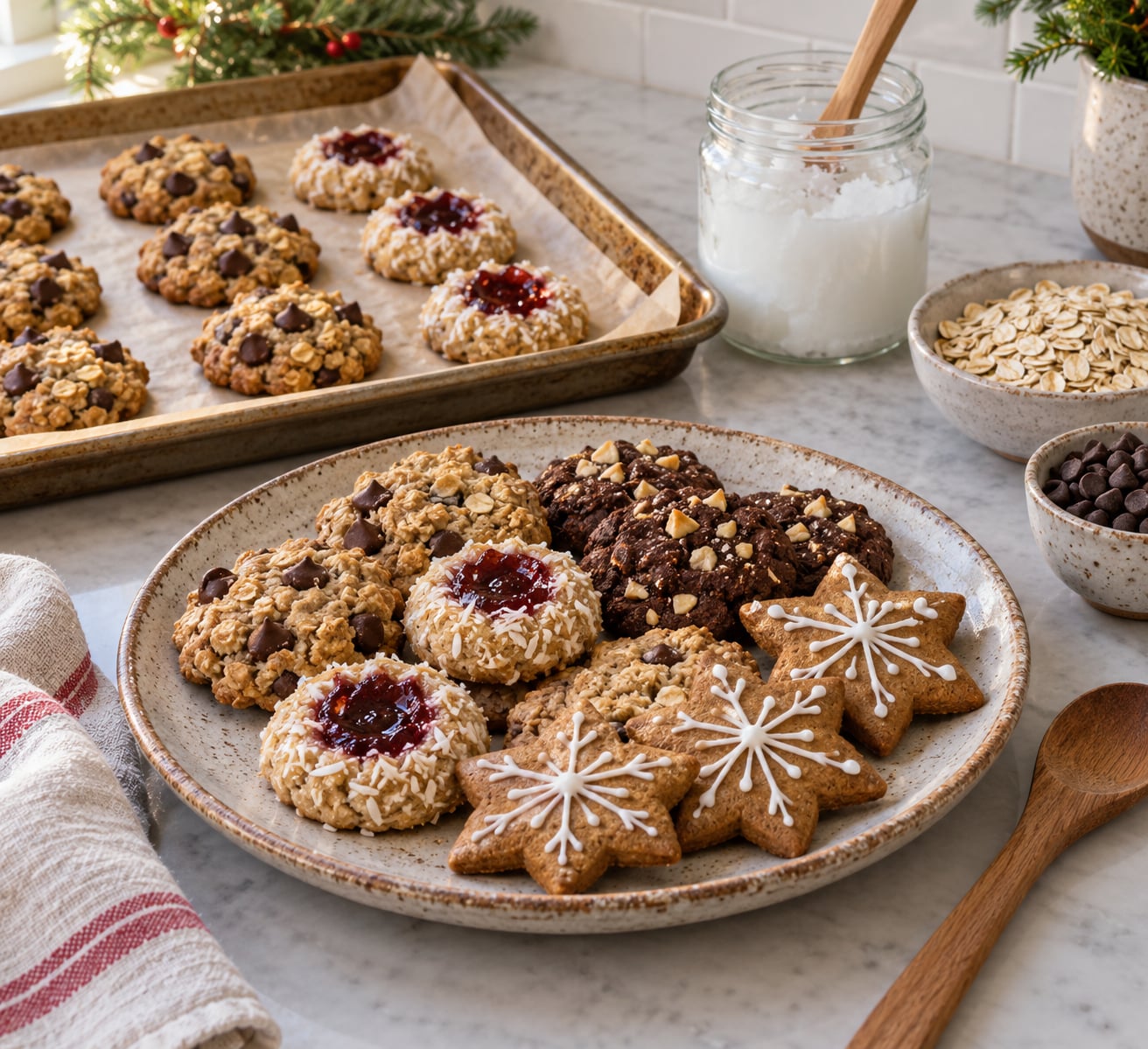
Build the tray by texture rather than by recipe. A mix that works for most gatherings: four sturdy cookies for the adults who travel and dunk, four soft and chewy ones, four crisp ones like gingersnaps or spritz, and four decorated or no-bake cookies as the visual anchor. That is 20 to 24 cookies, which fills a large platter or two smaller ones for roughly eight to twelve people. If some guests are not avoiding dairy, keep their favorites in the mix so the dairy-free batch does not become the whole tray.
For storage across a multi-day holiday, plan it like this. Baked cookies keep about five to seven days in an airtight container at room temperature, and they are best in layers separated by parchment. Fully cooled cookies freeze well for up to three months, so freeze your sturdy, unfrosted cookies the day you bake them and thaw them uncovered on the platter about an hour before serving. Frosted cookies do not freeze as well because the icing goes tacky, so make those the night before and refrigerate them.
No-bake cookies such as marzipan balls or rolled coconut bites are the exception to all of this. They hold fine for several days on a covered platter at cool room temperature. If you make the entire tray a day ahead, cover it loosely and keep it somewhere cool and dry rather than in the fridge, which softens crisp cookies.
Common Mistakes and How to Fix Them
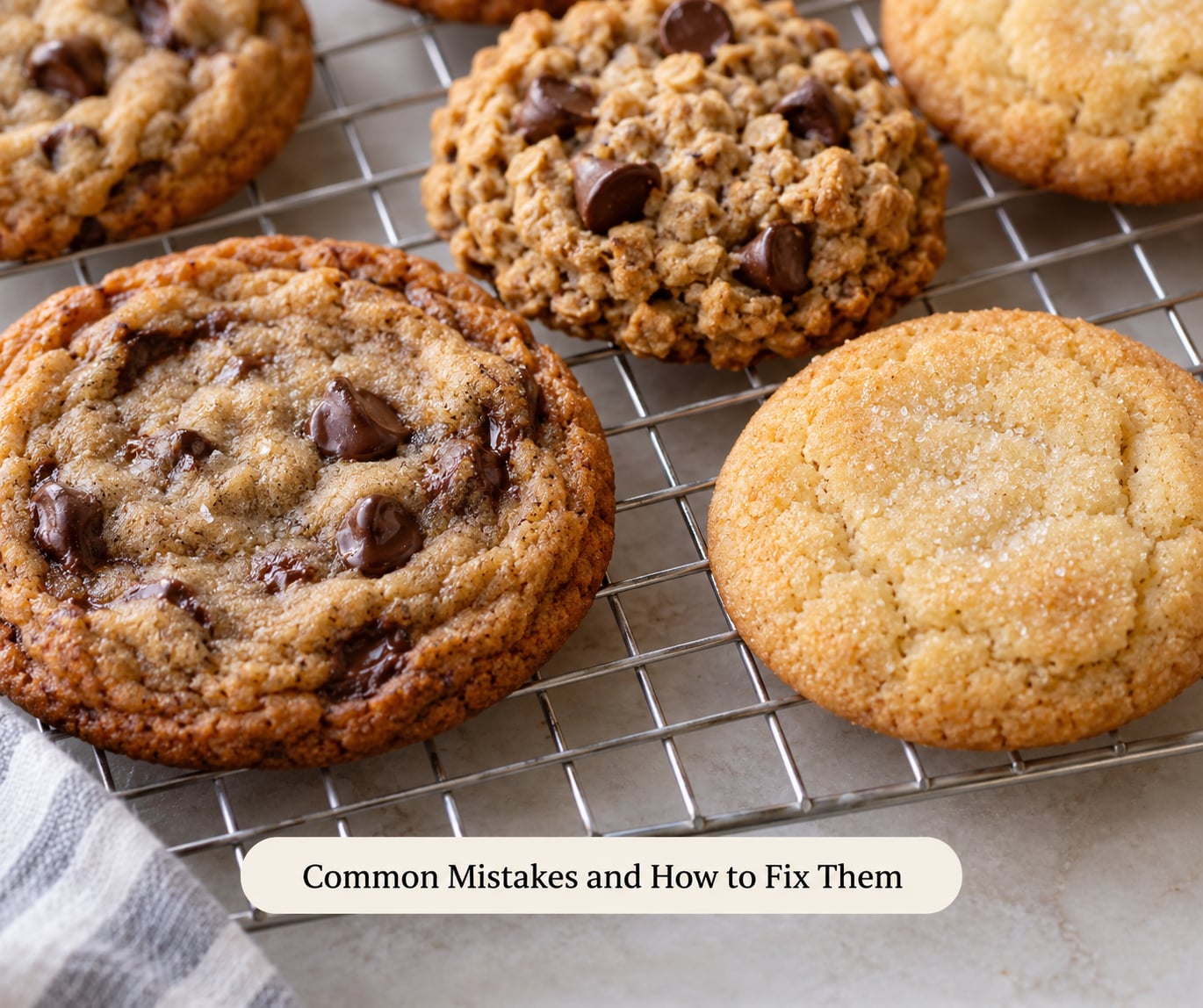
Almost every dairy-free cookie problem traces back to fat, heat, or hidden milk. Here is what goes wrong and the specific correction.
The dough looks greasy and will not hold together. Usually the fat was not soft enough to cream, or the dough sat out too long and the coconut oil melted through it. Chill the dough again for 20 minutes and try again. If it still crumbles, add a tablespoon more fat rather than more flour.
Cookies spread into one another on the pan. Too little chilling and too much oven heat are the two causes. Give the dough a full hour in the refrigerator, add two inches of spacing, and drop the temperature 10 to 15 degrees.
Cookies come out soft and pale. They were underbaked, or the pan was crowded. Give them another minute or two and rotate, and bake in single layers with space between cookies so heat circulates.
Bottoms burn before the tops color. Line the sheet with parchment and move the rack up one position. Dark or nonstick pans conduct heat straight to the bottom, so switch to a light-colored aluminum sheet.
Everything tastes faintly of coconut. You used unrefined coconut oil, which keeps its tropical note. Use refined coconut oil for a neutral result, or buy a plant baking butter and use it 1:1 instead. The other fix is flavor: molasses, sorghum syrup, brown sugar, cocoa, and spices all push the coconut flavor down.
The frosting is the only dairy-free casualty left. This is the most common miss in the whole project. Buttercream built on dairy butter, cream cheese frosting, and any glaze made with cream all have to be rebuilt. Dairy-free buttercream is plant butter plus powdered sugar plus a splash of plant milk. For a glaze, simmer dairy-free butter with brown sugar and a little plant milk until thick. Royal icing is already dairy free.
Half the guests still cannot eat the tray. A dairy-free recipe is often heavy on eggs and nuts, and that is usually the bigger problem at a mixed table. Add at least one egg-free, nut-free anchor cookie. Baked coconut macaroons need only egg whites, and a sorghum cookie made from scratch takes neither.
One more worth flagging: many people treat dairy free, lactose free, and vegan as interchangeable. They are not. Lactose free still contains milk protein, which matters to most people with a cow’s milk allergy. Dairy free may still contain eggs, honey, or gelatin. Know which one you are actually cooking for.
Frequently Asked Questions
What cookie dough is naturally dairy free?
Several classic cookie doughs start life with no milk in them at all. Egg white and almond based cookies like amaretti and coconut macaroons, fruit and nut bars, and rolled cookies made from rice flour or buckwheat contain no butter, cream, or whey. Most standard butter cookie doughs, by contrast, are dairy free only after you swap the fat, which is exactly why a plant butter works so well as a stand-in.
Is coconut oil better than butter for cookies?
Neither is better; they just behave differently. Coconut oil produces a chewier cookie with a crisper edge and browning that comes a little faster, so drop your oven temperature by about 10 degrees. Plant baking butter keeps a more familiar texture and neutral flavor. If coconut flavor is not something your guests enjoy, refined coconut oil removes nearly all of the tropical note.
What are the most common mistakes with dairy-free cookies?
Four failures account for most of them. Fat that was not soft enough to cream properly, dough that was not chilled long enough and spread on the pan, baking too hot so the bottoms darkened before the tops set, and forgetting that the buttercream or glaze still contains dairy. Fix the chill time and the temperature first, since those two account for most of the spread and the burnt bottoms.
Can I make dairy-free cookies ahead of time for a party?
Yes, and for most cookies ahead is better. Fully cooled, unfrosted cookies keep five to seven days in an airtight container at room temperature, and sturdy ones freeze up to three months. Frosted or glazed cookies are the exception; the icing turns tacky in the freezer, so decorate them the night before the event. No-bake cookies such as marzipan balls hold for several days under a loose cover.
How long does a dairy-free cookie tray stay fresh on the table?
An uncovered tray at cool room temperature stays good for roughly two hours before the cookies turn soft or stale at the edges. For a longer party, set the platter out after guests have eaten some dinner rather than at arrival, and keep the rest in a sealed container so you can refill as needed. If coconut oil was your fat, expect slightly shorter shelf life and serve those cookies within a day.
How do I bake safely for someone with a real milk allergy?
Bake the dairy-free batch first, before anything with butter goes in the oven, using a clean sheet pan and clean utensils. Milk is a major allergen the FDA requires on labels, so read ingredient lists rather than trusting a front-of-package dairy free claim. Keep an eye on hidden sources like condensed milk, whey, casein, ghee, and butter flavoring, and use separate scoops and containers so cookies never touch.
Conclusion: Start With One Easy Batch
Pick two or three cookies that share a dough, so one chill and one mixing session covers all of them. Bake a small test sheet first, adjust the oven temperature and spacing based on how much they spread, then commit to the full tray. Chill every dough between mixing and shaping, and remember that the frosting is the last place dairy sneaks back in.