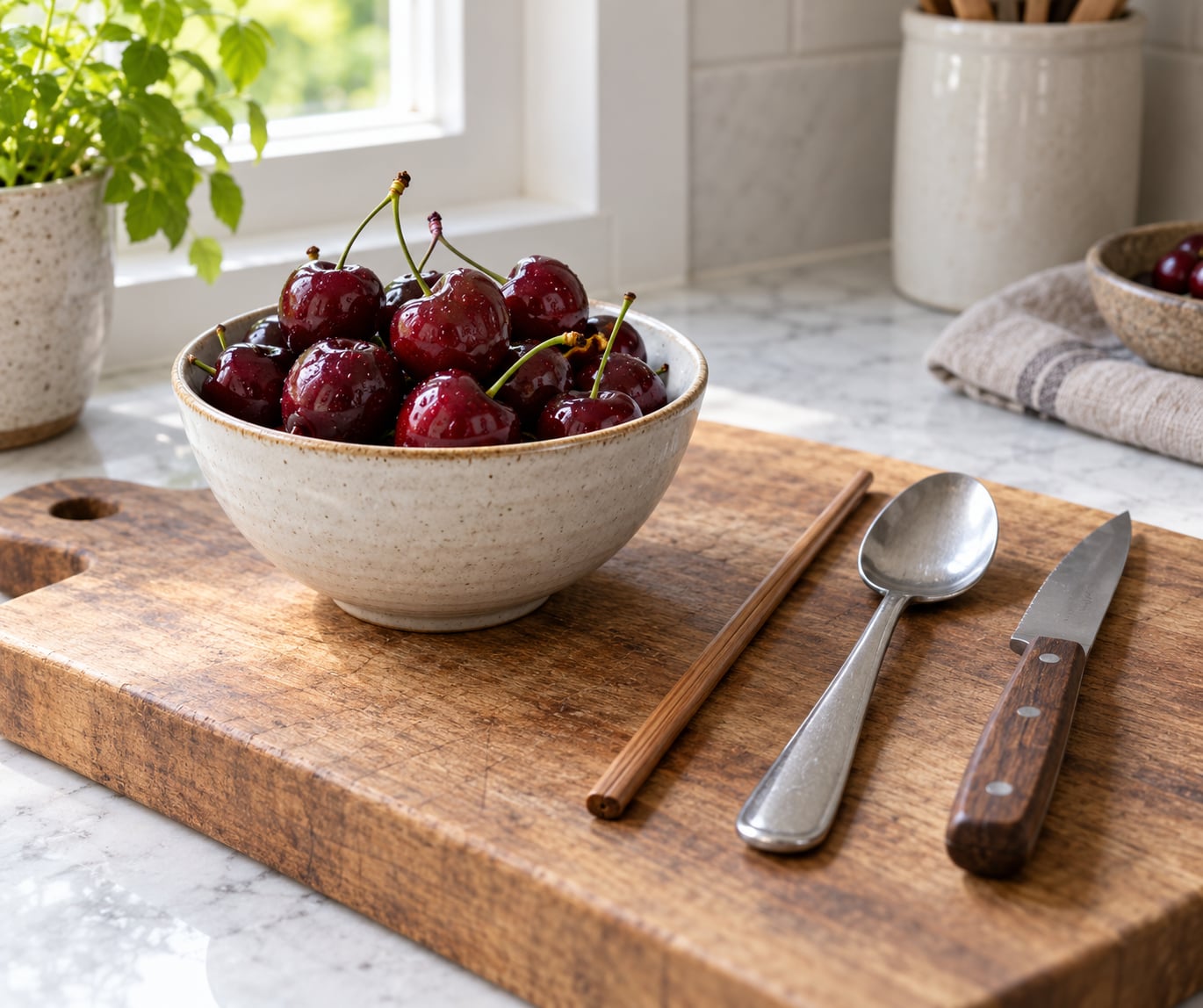
You can pit cherries without a tool by pushing a narrow, stiff object through the hollow where the stem was, which drives the pit out the bottom. A sturdy spoon is the gentlest option, a chopstick or wooden skewer is the fastest for a full bowl, and a paring knife gives you the most control. None of it takes more than a couple of minutes to learn.
Cherry season in the mountains is short and messy. You come home with ten pounds of sour cherries and a pie to bake, and the last thing you need is a gadget you never ordered. What you actually need is a bowl, a steady hand, and one of three things already sitting in your kitchen drawer.
Table of Contents
- What You Need
- Step-by-Step: How to Pit Cherries Without a Tool
- How to Pit Cherries Without a Tool Using a Spoon
- Pitting Cherries With a Chopstick or Skewer
- Pitting Cherries With a Knife
- Common Mistakes
- Frequently Asked Questions
- Is it safe to eat a cherry if the pit is still inside?
- Should I pit cherries before freezing, canning, or baking them?
- What can I use instead of a cherry pitter?
- How long do pitted cherries stay fresh in the refrigerator?
- Which tool-free method is fastest for a large batch of cherries?
- Can I pit maraschino or jarred cherries without transferring them?
- Conclusion
What You Need
A dedicated cherry pitter is nice, but it is not required. For most home cooks, the setup is a cutting board to catch the drips, a small bowl for the pits, and a colander for rinsing the fruit before and after.
Beyond that, pick the implement that matches the batch:
- A sturdy metal spoon for a handful of cherries, or any fruit that is already soft enough to bruise.
- A wooden chopstick or bamboo skewer for medium and large batches. A flat, blunt end beats a pointed one, because a point slides off the pit.
- A small paring knife when you want the pit out and the shape of the fruit intact.
- A small bowl or wide-mouth jar to work over, so pits and juice land somewhere useful instead of on the counter.
- A dish towel to grip wet cherries, and to wipe your hands before you touch the phone.
If you want a fourth option, a wide-bore metal straw works exactly like a chopstick, and a decorating or pastry tip worn on your thumb like a thimble adds a lot of pushing force. Skip plastic straws, which bend or crush mid-push.
| Method | How it works | Mess level | Speed | Best cherry type |
|---|---|---|---|---|
| Spoon | Scoop the pit out from the stem end | Low | Slow | Ripe, soft fruit |
| Chopstick or skewer | Push down the stem cavity | Medium, works over a bowl | Fast | Sour and firm sweet cherries |
| Metal straw | Push down the stem cavity | Medium | Fast | Sour cherries |
| Pastry tip | Push with the tip, thimble grip | Low | Fast | Firm, cold sweet cherries |
| Paring knife | Cut around and lift out the pit | Medium | Slowest | Any, if shape matters |
| Two cutting boards | Crush the fruit, pick pits from the mash | High | Fastest for jam | Sour cherries only |
Sour and sweet cherries pit differently, and knowing why saves you time. Sour cherries are smaller with thinner flesh and a rounder pit, so almost any blunt object pushes through cleanly. Sweet cherries are meatier and colder straight from the fridge, and their pits sit in a tighter cavity, so a chopstick or pastry tip beats a spoon there.
Step-by-Step: How to Pit Cherries Without a Tool
All three methods rely on the same thing: the small dimple at the top where the stem was attached. That stem cavity is already a ready-made channel, which is why you push down through it rather than trying to stab at the pit from the side. A pit is widest at its middle, so a straight push with a blunt object is the only geometry that works cleanly.
Rinse the cherries first, pat them dry, and pull off the stems if you have the patience. Stemmed fruit is easier to grip and easier to find the cavity on.
How to Pit Cherries Without a Tool Using a Spoon
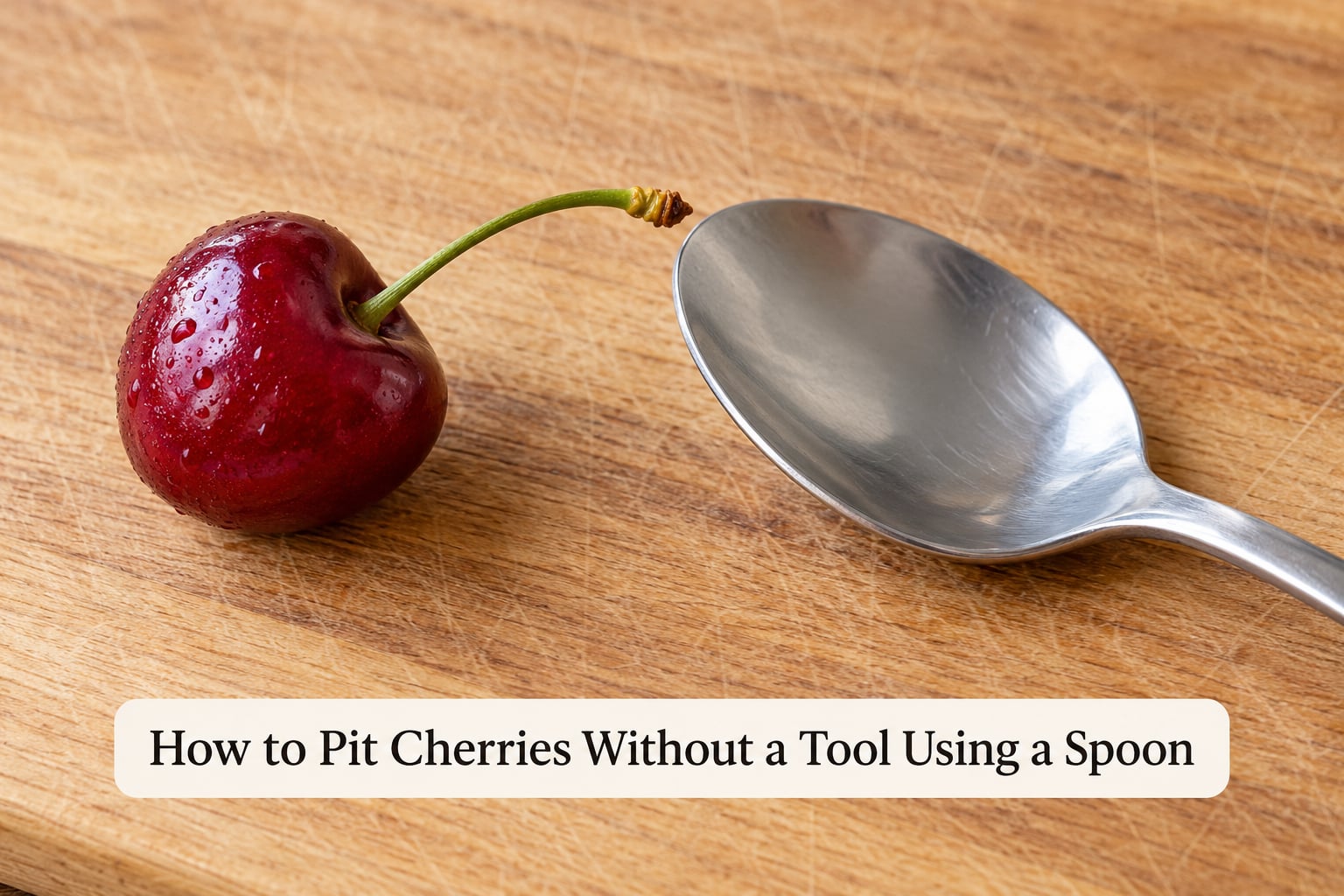
Hold the cherry in one hand with the stem end up, and rest the curved edge of a sturdy spoon against it. Push the spoon into the cavity and scoop the pit out through the flesh on the opposite side.
Two details matter here. The spoon should enter at the stem end, not the bottom, or you will tear the fruit open at the base. And you want a firm-fleshed spoon, not a flexible plastic one that just bends around the pit.
The cherry should give a little but not collapse under your thumb. If it crushes before the pit moves, it is overripe, and no method will save it cleanly. A clean hole where the pit sat is the sign you succeeded. Rinse the fruit under cold water to wash away any loose skin or juice.
Pitting Cherries With a Chopstick or Skewer
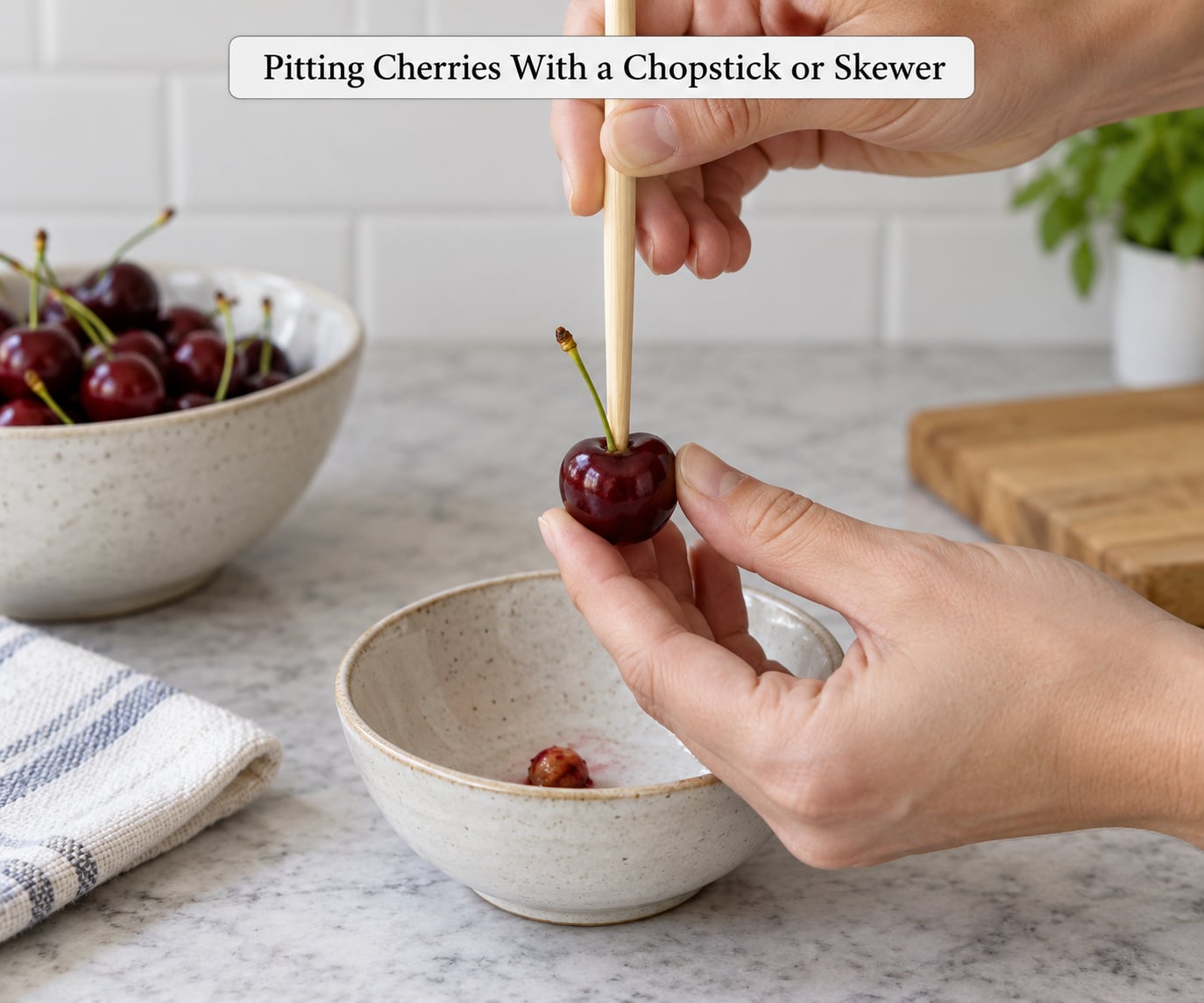
This is the method I come back to, and the one home canners use for everything from pie filling to jam. Set a bowl on the counter, hold the cherry over it stem-end up, and drop the blunt end of the chopstick straight down into the stem cavity.
Follow the pit all the way through. You will feel it engage somewhere in the middle of the fruit, and then it slides out the bottom and drops into the bowl. Keep your other hand clear of the path of the stick. More than one person has ended up with a splinter or a puncture from a chopstick that slipped.
A flat-ended chopstick beats a pointed one every time. A pointed tip skates off the side of the pit, which tears the flesh and leaves you halfway there. Never use a metal skewer for this. Work in small piles, dropping the pitted fruit into a second bowl, and you can get through a pound in a few minutes.
Pitting Cherries With a Knife
The paring-knife method is the most controlled and the most fiddly. Slice off the top of the cherry where the stem was, cutting in a circle to expose the top of the pit. Then set the cherry cut-side down and take four shallow slices down the sides, rotating as you go, until the pit lifts free.
You are removing the flesh around the pit, not cutting through the pit itself. A rocking motion with the tip of the knife keeps you in control better than a straight chop.
Stability matters more than sharpness here, honestly. A damp towel under the cutting board keeps it from sliding, and curling your fingers into a claw on the cherry keeps your knuckles out of the blade’s path. Even slices matter for pies, since ragged chunks cook unevenly.
Common Mistakes
Crushing soft cherries. Fruit that is already giving gets worse no matter how gently you work. Pitted cherry flesh bruises under a thumbnail, so hold the cherry by the stem end or the base, not around the middle. Save the softest fruit for smoothies and jam where texture does not matter.
Pushing from the wrong end. Entering at the stem end is what makes the pit follow the channel out the bottom. Starting at the blossom end splits the fruit in half.
Breaking the pit. If you feel the chopstick glance sideways, stop and start with a fresh cherry. Shards of pit in a pie are unpleasant, and a cracked pit means you are pushing too hard or too fast.
Using a flexible spoon. Thin plastic spoons and silicone spatulas just fold around the pit. A metal spoon with a firm back is the one to reach for.
Holding the knife with extended fingers. Keep fingertips curled back and let the knife’s curve do the work. Most kitchen cuts happen because the fruit rolls, not because the blade is dull.
Leaving stems on. Stems are bitter and they snag in pie crust. Pull them while you pit rather than hunting for them later.
Two more that come up constantly. Juice squirts when you pop the pit at the bottom, so open the fruit facing down over the bowl instead of toward you. And cutting into the pit leaves a bitter almond note in cooked cherries, so dull the pie filling with a little lemon juice if that happens.
For speed, match the method to the volume. Under five pounds, the chopstick over a bowl is comfortable. Past twenty pounds, stop pitting one at a time for jam: crush the fruit between two cutting boards and pick the pits out of the mash, which is the fastest option there is.
The same goes for baking. A dedicated pitter is worth buying only if you regularly handle firm, cold sweet cherries in quantity. For sour cherries, anything in your drawer does the job.
Frequently Asked Questions
Is it safe to eat a cherry if the pit is still inside?
Accidentally swallowing a whole cherry pit is rare and usually harmless, since it is small enough to pass through the digestive tract. The risk comes from swallowing a cracked or broken piece of pit, which has sharp edges. If you pit the fruit and rinse it under cold water, you will see and feel any fragments. Do not eat around a broken pit in a pie filling, because it is easy to miss.
Should I pit cherries before freezing, canning, or baking them?
Pit before baking, almost always. For freezing, pit first and measure as you go, since pitted cherries freeze softer and you want the right amount for each pie. For canning, you can leave the pits in for jam, jelly, and brandied cherries, because the pits add flavor and the fruit is not eaten whole. If you can cherries in syrup and eat them whole, pit them or warn people.
What can I use instead of a cherry pitter?
A sturdy metal spoon, a flat-ended wooden chopstick, a bamboo skewer, a wide-bore metal straw, a decorating or pastry tip worn on the thumb, a straightened bobby pin, or even a small spice jar funnel will all push a pit out. A wide-mouth jar or bowl catches the fruit and the pit. A paring knife works too, though it is slower and needs a stable cutting board.
How long do pitted cherries stay fresh in the refrigerator?
Pitted cherries keep about three to four days in the refrigerator in a covered container, compared with roughly a week for whole fruit, since the cut surface browns faster. Rinse and dry them well before storing, and add a squeeze of lemon juice to slow browning. For longer storage, freeze them in a single layer first, then transfer to a bag so they do not clump into one solid block.
Which tool-free method is fastest for a large batch of cherries?
For a bake or a freezing session, a chopstick or bamboo skewer worked over a bowl is the fastest option that keeps the fruit whole. For jam or preserves, none of them are faster than crushing the fruit between two cutting boards and picking the pits out of the mash. Past about twenty pounds, that crush method is the only one that stays practical at home.
Can I pit maraschino or jarred cherries without transferring them?
Yes, and a chopstick works on them too, though the fruit is softer and squashes more easily. Tip the jar over a bowl, work the cherries out a few at a time with a spoon, and pit them as you go. Because they are already packed in syrup, rinsing them changes their texture, so drain instead if the recipe expects the sugary coating.
Conclusion
Start with the spoon if you have a handful of cherries and want almost none of them crushed. Switch to the chopstick once the bowl is full, and keep a paring knife nearby for any fruit that needs to keep its shape. Rinse the pitted cherries under cold water and dry them right away, and they will hold up for days or go straight into the pie.