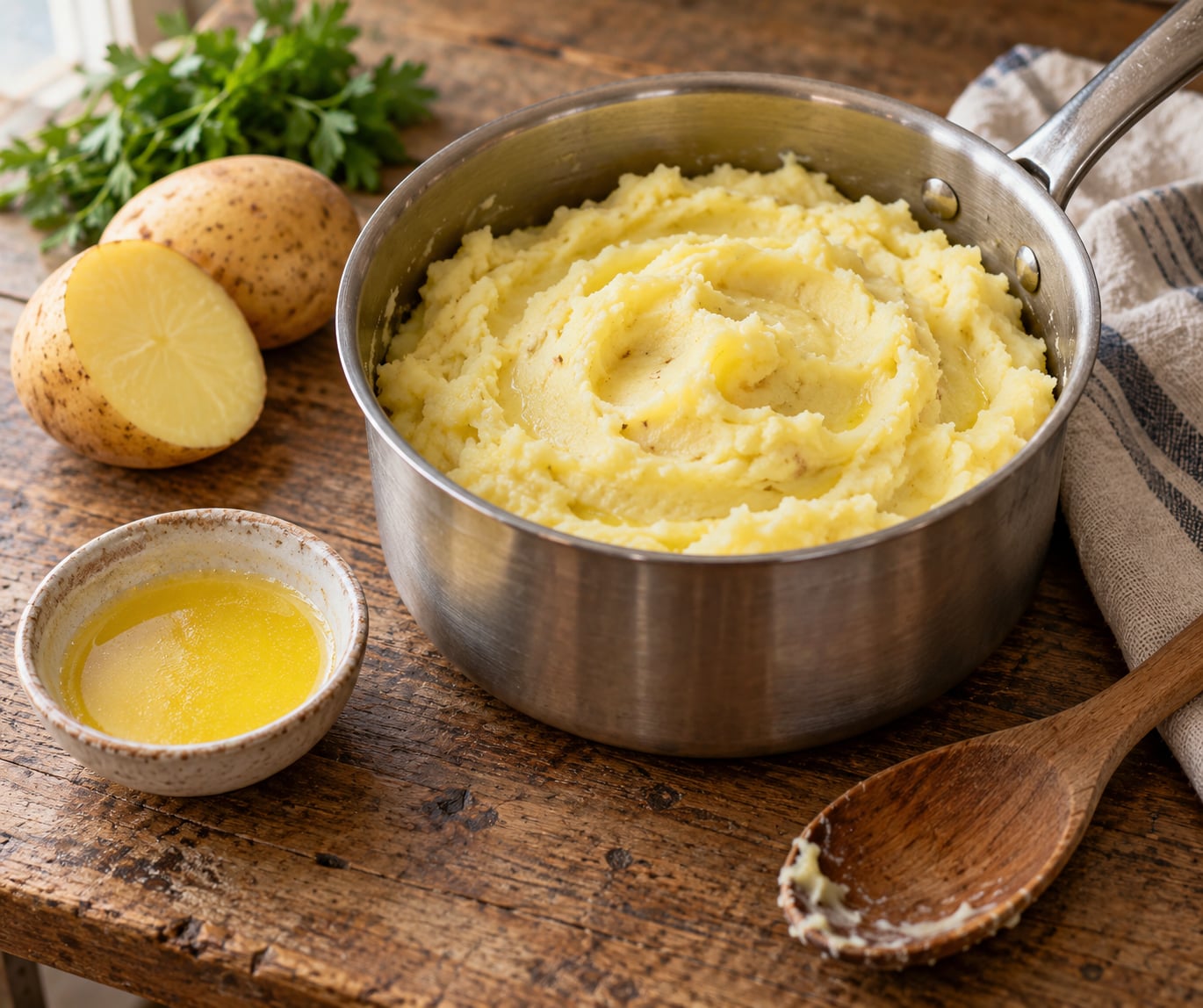
Creamy vegan mashed potatoes come down to three things: fat, liquid, and texture. Add more plant fat than a traditional recipe asks for, use a creamy unsweetened plant milk instead of thin almond milk, and mash or rice the potatoes while they are still hot. That combination is the whole trick, and it takes about 35 minutes start to finish.
I cook for a mixed household, which means I make the dairy version and the vegan version back to back most weeks. Early attempts at the vegan pot came out gluey and starchy while the regular one was silky, and the difference was never the potatoes. It was that plant milk is thinner than whole milk and vegan butter carries less water, so the liquid-to-starch ratio was off.
This method fixes that ratio instead of papering over it. It also stays flexible: you can use cashew cream, oat milk, broth, or nothing more than a splash of water if that is what you have.
Table of Contents
- What You Need
- How to Make Vegan Mashed Potatoes Creamy
- 1. Cut and Simmer the Potatoes Evenly
- 2. Drain Well and Steam Away Excess Water
- 3. Add Fat and Start Mashing
- 4. Add Liquid Gradually for a Silky Texture
- 5. Season, Fold, and Serve
- Common Mistakes
- Frequently Asked Questions
- What is the best potato for creamy vegan mashed potatoes?
- Do I need plant milk to make mashed potatoes creamy?
- How can I make vegan mashed potatoes thicker?
- Can I use vegan butter instead of dairy butter?
- How long do vegan mashed potatoes keep in the refrigerator?
- Conclusion
What You Need
For four servings you want roughly 2 pounds of potatoes, 4 to 6 tablespoons of plant fat, and a small amount of liquid you can add in stages. Everything else is seasoning.
- Potatoes: 2 pounds (about 900 g) Yukon Gold, russet, or another starchy variety. Yukon Gold gives the creamiest result because of its high starch and thin skin. Russets are fluffier and need more liquid. Red potatoes hold their shape and go gluey faster, so save them for a chunky mash.
- Plant fat: 4 to 6 tablespoons vegan butter sticks, olive oil, avocado oil, or coconut oil. Vegan butter in stick form behaves closest to dairy butter because it is solid enough to coat the potatoes before they break down.
- Liquid: 1/3 to 1 cup unsweetened plant milk, cashew cream, oat cream, or vegetable broth, warmed first. This is optional, not required, but it is what makes the mash loose enough to be creamy.
- Seasoning: 1 to 2 teaspoons kosher salt for the cooking water, plus salt and black pepper to taste at the end. Garlic, chives, nutritional yeast, or white miso paste are all optional extras.
- Tools: A pot, a colander, a potato masher or ricer, and a wooden spoon. A ricer gives the smoothest result because it shears the potatoes instead of crushing them.
Two warnings on ingredients. Buy plain unsweetened plant milk; vanilla or sweetened varieties will make the whole pot taste like dessert. And peel your vegetables if you want the color right, though leaving Yukon Gold skins on is fine if you do not mind a speckled mash.
How to Make Vegan Mashed Potatoes Creamy
1. Cut and Simmer the Potatoes Evenly
Cut the potatoes into evenly sized chunks, about 2-inch pieces, and put them in a pot with cold salted water. Starting in cold water is what makes them cook evenly from the outside in instead of breaking apart on the edges first. The water should just cover them by an inch.
Bring the pot up to a gentle simmer, not a rolling boil, and cook until a fork slides into a piece with no resistance at all. That usually takes 18 to 22 minutes for 2-inch chunks. A full simmer keeps the water moving so the outsides do not turn waterlogged while the middles are still raw.
2. Drain Well and Steam Away Excess Water
Drain the potatoes completely and return them to the warm, empty pot. Let them sit for a minute or two so the residual heat evaporates the surface water, then start mashing. Moisture you leave behind is the single biggest reason a mash turns thin and watery later.
You will know they are ready when the pieces slump apart from a gentle press and the outside looks dry and slightly matte rather than wet and glossy. Do not rinse them. That washes away surface starch, and that starch is part of what gives you a full, creamy body.
3. Add Fat and Start Mashing
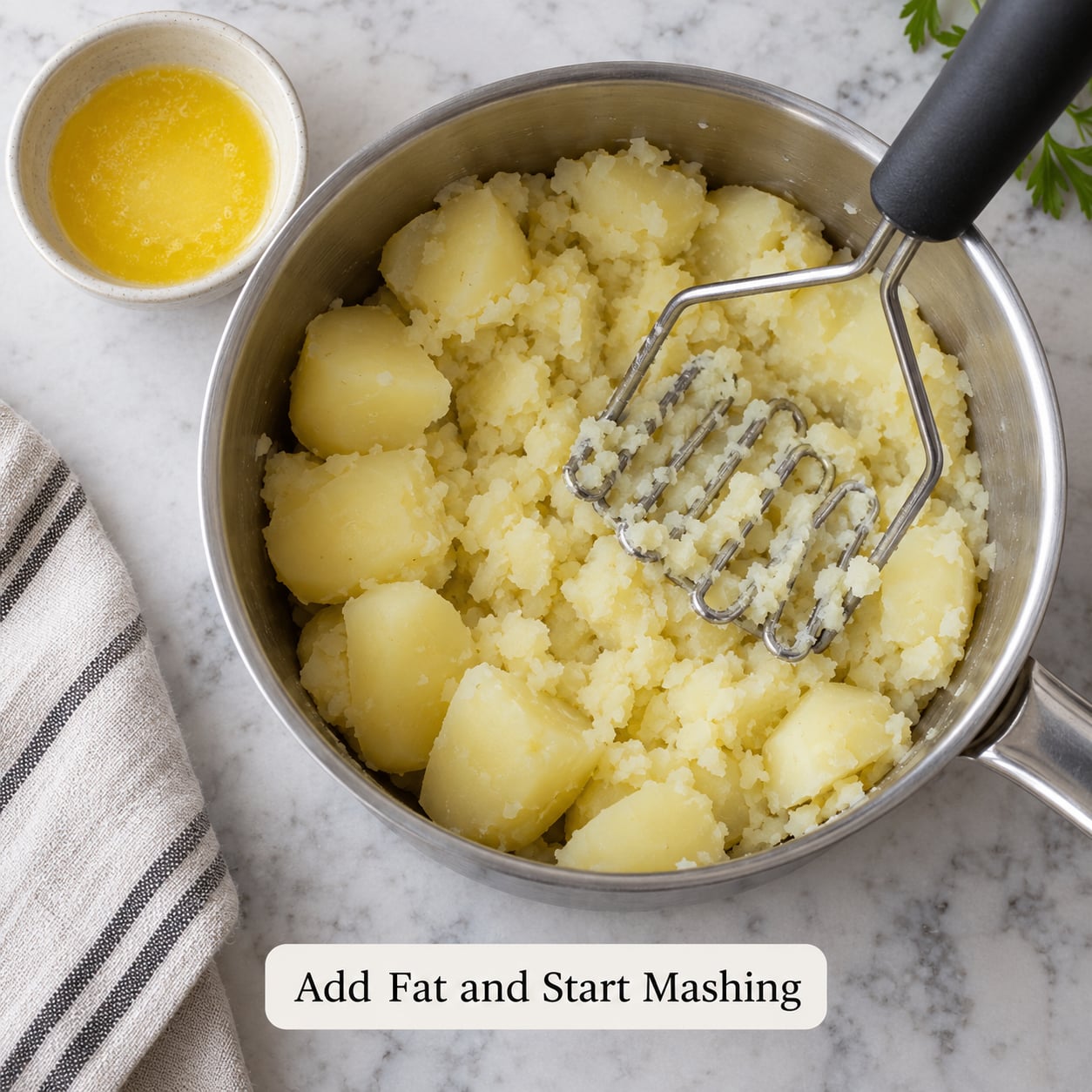
Add your fat first, before any liquid, and mash it into the hot potatoes until nothing distinct is left. Fat is doing the real work here: it coats the starch granules so they slide past each other instead of releasing sticky gluey starch that turns to paste.
Use a masher for a rustic texture and press with light, confident strokes. For the silkiest result, push the potatoes through a ricer instead, then fold the fat back through. Once the potatoes look mostly smooth, stop. Overworking is what turns creamy potatoes into wallpaper paste, and there is no way back from it once the starch has hydrated.
4. Add Liquid Gradually for a Silky Texture
Warm your liquid first. Lukewarm plant milk absorbs into the potatoes instead of sitting on the surface, and room temperature is even better in a cool kitchen. Add it a tablespoon at a time, mashing and tasting between each addition.
Different potatoes take different amounts. Start with 1/4 cup for russets, which drink a lot, and hold back the rest. If the mash looks stiff and matte, it needs more. If it slumps off the spoon, stop adding and let it sit a minute; it will tighten as it cools.
If you have already gone too far and the mash is loose, the fix is not more liquid. Take it off the heat and let it sit for several minutes while the starch absorbs what it can, or spread it into a shallow pan so it cools and sets faster.
5. Season, Fold, and Serve
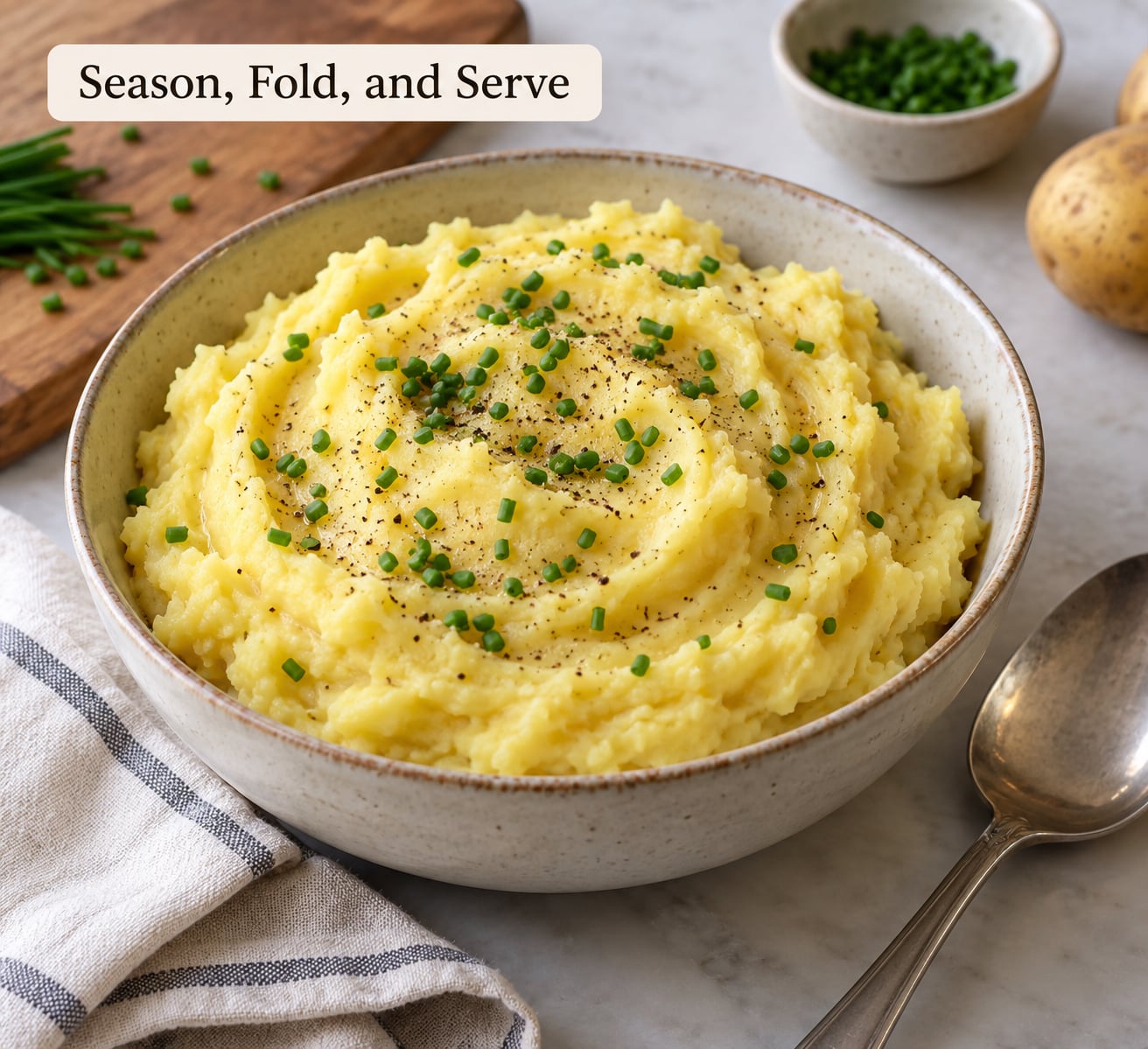
Season with salt and plenty of black pepper, then fold rather than stir. Chopped chives, minced roasted garlic, a spoonful of nutritional yeast, or a teaspoon of white miso paste all add the savory depth that dairy used to supply. Taste again after every addition, since miso and salt move fast.
To hold them warm, put the covered pot in a barely warm oven, around 200°F, or use a small slow cooker on its lowest setting. Do not hold them over direct heat, which keeps driving off moisture and dries the surface. Covered at 140°F or above is the safe window if you are serving a crowd, and it will stay creamy for several hours.
Common Mistakes
Watery potatoes. You did not drain long enough or you added too much liquid at once. Drain for an extra minute, return to the warm pot, and let the surface steam off. Next time add liquid by the tablespoon.
Gluey potatoes. Overmashing is the usual cause. Mashing breaks starch cells, and too much breaking releases starch that acts as glue. Use fewer, firmer strokes, or switch to a ricer for a coarser, cleaner texture.
Lumpy potatoes. You mashed before the pieces were fully tender, or you stopped too early. Fork-tender is the test, and mash the whole pot rather than working on it in batches.
Gummy, grey potatoes. That is waterlogged potato, not a dairy-free problem. It comes from starting in hot water or boiling hard enough to break the cells down. Start in cold salted water and keep the simmer gentle.
An oily film on top. Vegan butter melted and separated rather than emulsifying, which happens when the butter was added to potatoes that had cooled too far. Add fat to hot potatoes and mash immediately, or melt it first and drizzle it in while you mash.
Bland seasoning. Salting only the cooking water leaves the finished mash flat. Salt at the end and taste before serving. A tablespoon of nutritional yeast, a teaspoon of white miso, or a few drops of soy sauce adds the umami that dairy fat used to provide, without making the dish taste savory-heavy.
Dry reheated potatoes. Refrigerated mash loses moisture. Reheat in a covered pan over low heat with a splash of plant milk or water and stir often, or microwave in short bursts with a lid on.
A few habits help more than any single trick. Measure your liquid before you start rather than pouring from the carton, so you can add it in stages. Roast your garlic instead of sautéing it if you want a rounder flavor. And if you want maximum creaminess, blend cashews soaked in hot water with a little of the cooking liquid until silky, then stir that in where dairy cream would go.
Frequently Asked Questions
What is the best potato for creamy vegan mashed potatoes?
Yukon Gold is the best potato for creamy vegan mashed potatoes because it has a high starch content and a thin skin, so it breaks down into a smooth mash with very little liquid. Russets also work but are fluffier and drier, so they need closer to a cup of liquid. Red potatoes hold their shape well but turn gluey quickly if you overmash them.
Do I need plant milk to make mashed potatoes creamy?
No. You can make creamy vegan mashed potatoes with fat alone, since the plant fat is what stops the starch from turning to glue. Liquid loosens the mash and makes it lighter rather than creamy, so add it in small amounts only if the mixture looks stiff. Warm vegetable broth or water works if you have no plant milk on hand.
How can I make vegan mashed potatoes thicker?
Let the mash sit off the heat for several minutes so the starch absorbs the excess liquid, or spread it into a shallow pan and let it cool and set. You can also fold in more melted vegan butter, a spoonful of cashew cream, or a tablespoon of nutritional yeast. Adding more liquid makes a thin mash thinner, so measure before you pour.
Can I use vegan butter instead of dairy butter?
Yes, and it is the closest swap. Vegan butter sticks carry the fat and some water like dairy butter, so they coat the potatoes the same way. Olive oil, avocado oil, and coconut oil all work too, though they are pure fat and lighter in flavor, so you may want an extra pinch of salt. Soft tub spreads melt too easily to coat well.
How long do vegan mashed potatoes keep in the refrigerator?
Refrigerated vegan mashed potatoes generally keep 3 to 4 days in a sealed container. Reheat with a small splash of plant milk or water over low heat, stirring often, and heat to 165°F until steaming hot throughout. Adding fat back in while reheating helps restore the creamy texture that the fridge takes out.
Conclusion
Cook the potatoes evenly in cold salted water, drain them and let them steam dry, mash with more plant fat than a dairy recipe would call for, then add warm liquid a little at a time. Start with a small splash and taste before you add more, and stop mashing the moment the texture looks right.