Most Thanksgiving sides can be made one to three days ahead and reheated on the day: casseroles and stuffing hold three days in the fridge, cranberry sauce and chutneys hold a week, and anything frozen thaws overnight in the refrigerator. Only gravy, crisp toppings and hot rolls need the morning of. Knowing how to make Thanksgiving sides ahead of time turns one simultaneous cooking problem into a short list of reheating steps.
I cook this dinner in a kitchen with one oven and a fridge that barely fits a turkey, so the plan below is built around real shelf space and real cooking order. It also covers the swaps that matter if you are mixing vegan and gluten-free dishes with the traditional cornbread and sweet potato casserole.
Table of Contents
- What You Need
- Step-by-Step: How to Make Thanksgiving Sides Ahead of Time
- Two Weeks Before: Choose and Inventory the Menu
- One Week Before: Make Freezer-Friendly Sides
- Three to Four Days Before: How to Make Thanksgiving Sides Ahead of Time That Reheat Well
- One to Two Days Before: Finish Assemble-Style Dishes
- Thanksgiving Morning: Reheat and Finish Everything
- Common Mistakes
- Common Mistakes and Helpful Fixes
- Frequently Asked Questions
- Can I prepare Thanksgiving sides four days ahead?
- Which Thanksgiving sides freeze best?
- Should casseroles be baked before freezing or kept unbaked?
- How do I keep mashed potatoes and other sides warm without drying them out?
- What temperature should Thanksgiving casseroles and vegetables reach when reheated?
- Conclusion
What You Need
Before you buy a single extra ingredient, take ten minutes to inventory what you have and how much room it has. This is the step that decides whether the rest of the plan works.
- Your written menu. Every dish gets a lead time assigned: freeze, refrigerate, reheat, or make fresh on the day.
- A shelf count. Count refrigerator shelves with the turkey in mind. A frozen 12 to 14 pound bird displaces more space than people expect.
- Freezer space with a clear path. Sunday through early November is when the freezer fills up with other people’s leftovers, so make room before you start.
- Shallow airtight containers. Glass or food-safe plastic, sized so food sits no more than two inches deep for fast cooling.
- Aluminum foil pans and a baking sheet. Foil pans go straight from fridge to oven; the sheet catches drips from a casserole reheating uncovered.
- Parchment paper or silicone liners for cornbread and biscuit batches that you plan to freeze.
- Freezer bags and a marker so every frozen portion carries the dish name, the date and one line of reheat instructions.
- An instant-read thermometer. A cold casserole can look done on the outside and stay cool in the middle.
Keep the thermometer out during prep too. Cooked sides that go into the refrigerator need to cool fast, and a deep hot dish straight into a cold fridge is the most common mistake I see.
Step-by-Step: How to Make Thanksgiving Sides Ahead of Time
Two Weeks Before: Choose and Inventory the Menu
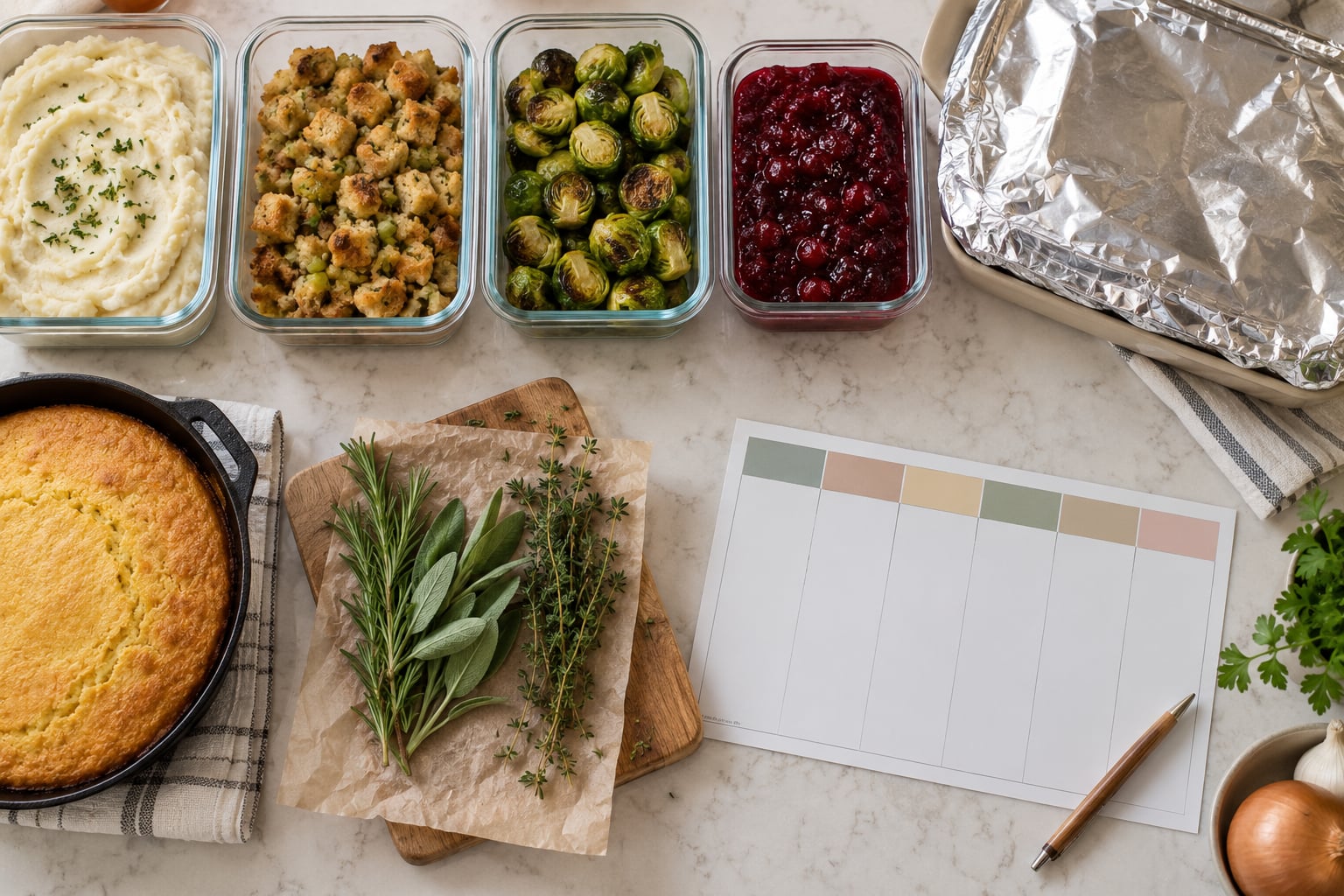
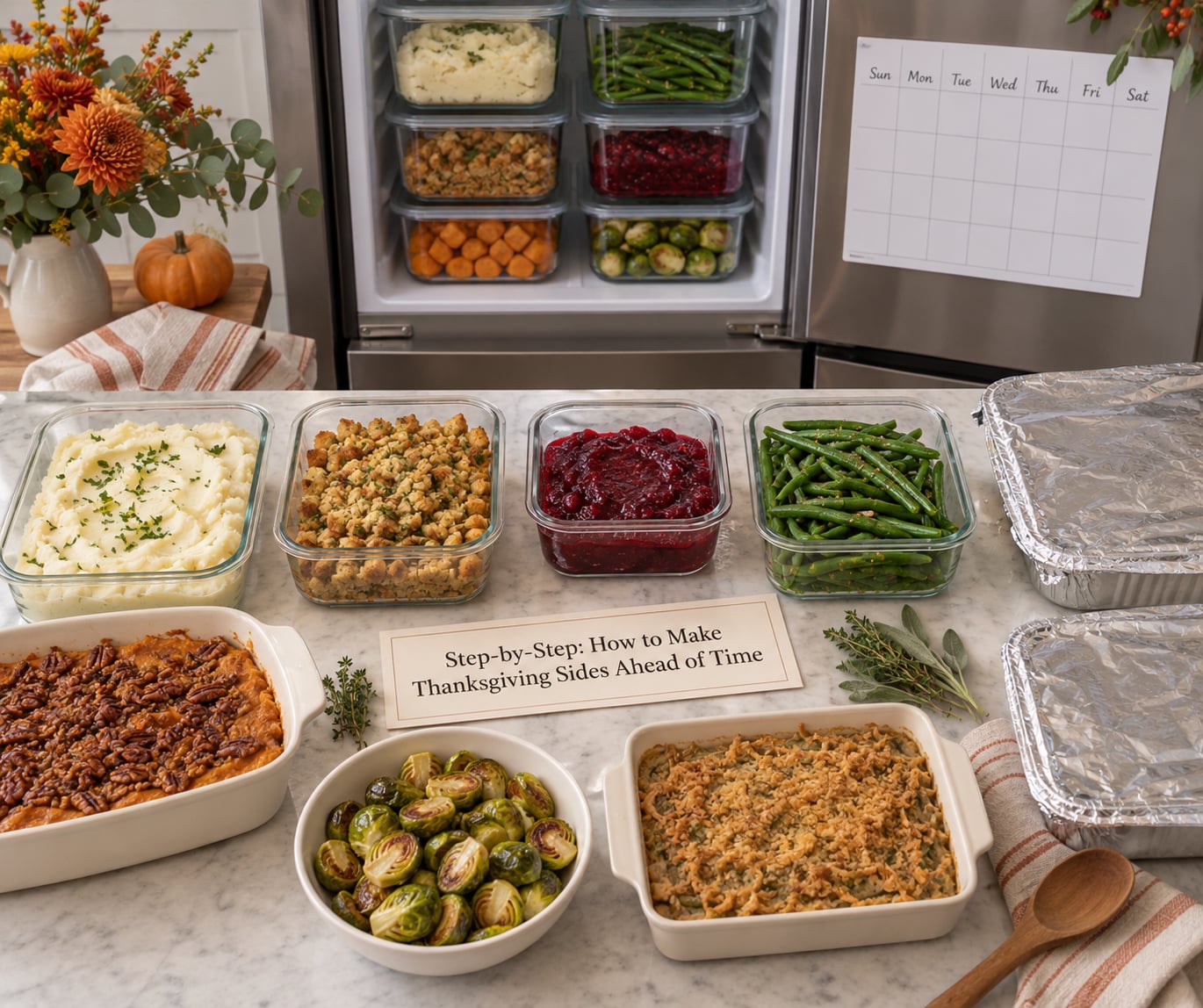
Sort your menu into four buckets, because each one behaves differently when it sits for days. Freezer-friendly dishes are soups, braised vegetables, chili, cornbread dressing and unbaked casseroles. Refrigerator-stable dishes are cranberry sauce, chutney, pickled vegetables, dips and seasoned relishes. Reheat-best dishes are mashed potatoes, stuffing, macaroni and cheese and green bean casserole. Make-fresh dishes are gravy, giblet stock, roast vegetables and hot rolls.
Then check the labels. Most people planning a gluten-free table do not realize that chicken broth and some cornbread mixes carry gluten, and most people planning a vegan table miss the butter in a mashed potato or a stuffing base. A quick label check two weeks out is cheaper than a duplicate side at the table, and it is the part of how to make Thanksgiving sides ahead of time that gets skipped most often.
Count your refrigerator shelves against the turkey now, not the night before. Most households can hold four refrigerated sides comfortably alongside a thawing bird. If your menu is longer, move two dishes into the freezer this month.
One Week Before: Make Freezer-Friendly Sides
Batch cook the dishes that get better from freezing and use the weekend for it. Squash soup, cornbread dressing, biscuits and baked beans all handle a freezer well. Plenty of cooking guides treat how to make Thanksgiving sides ahead of time as a single weekend project; splitting that work across two weekends is what keeps the oven free on the actual day.
Cool every dish uncovered on a rack before you wrap it. Wrapping a warm dish traps condensation, and that moisture is what makes frozen casseroles turn watery when they thaw. Once cool, portion in foil pans or freeze flat in a freezer bag, label with the date and a reheat note, and lay things flat so the stack stays stable.
Thaw in the refrigerator, never on the counter. A frozen casserole moved to the counter spends hours in the danger zone before the center even softens. Moving it to the fridge the night before keeps it cold the entire time.
Not every texture survives. Biscuits are better fresh, and frozen blanched vegetables turn watery and limp. Soup, chili, dressing and baked beans freeze essentially without loss, so those are the dishes to double up on.
Three to Four Days Before: How to Make Thanksgiving Sides Ahead of Time That Reheat Well
This is the biggest chunk of work and the biggest reduction in Thursday stress. Macaroni and cheese, green bean casserole, mashed potatoes taken through the mashing stage, glazed sweet potatoes and cornbread dressing can all be finished here.
Cool them the right way. Spoon food into shallow containers, leave them uncovered on the counter until the steam stops, then cover and refrigerate. Get food into the refrigerator within two hours of cooking and keep the fridge at or below 40°F. USDA guidance for cooked leftovers is three to four days in the refrigerator, which is why this window matters.
Bake casseroles about ten minutes under the finished time before refrigerating them. Reheating then finishes the dish instead of overcooking it, and the top stays moist instead of drying out under a long second bake.
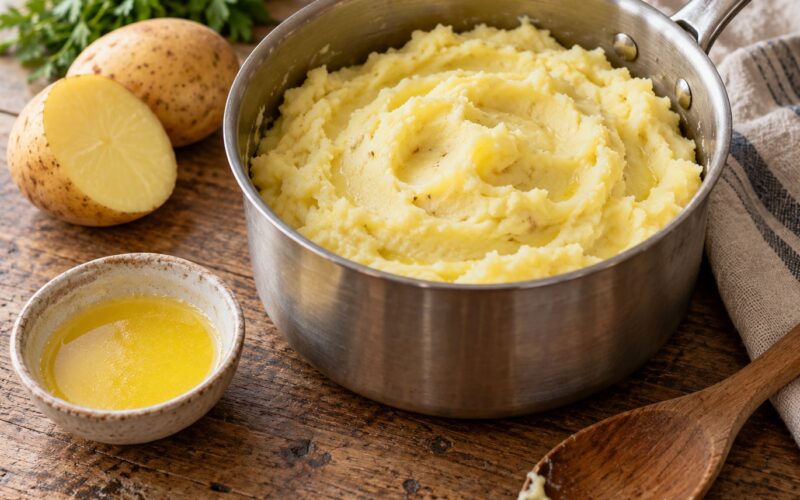
For mashed potatoes, stop a little short of stiff. Leave them looser than normal and write extra butter or cream on the lid, because the mixture needs liquid again on the day. Rub a thin layer of butter over the surface before covering so the potatoes do not develop a skin.
For collards and greens, wash, dry and store them undressed with a paper towel in the container. Dressing added days ahead wilts the leaves and makes the salad water the next day.
One to Two Days Before: Finish Assemble-Style Dishes
Some dishes work only when the components stay separate until the oven. Stuffing is the big one: tear the bread, cook the onion and celery, combine them with seasoning, but hold the stock back until baking. Stuffing soaked two days early turns into wet bread crumbs no matter how you reheat it.
Assemble the casserole and refrigerate it unbaked whenever the top is a crusty layer such as pecan streusel, fried onions or marshmallows. Those toppings belong in a sealed bag at the back of the fridge, scattered over the dish right before it goes in the oven.
Shape dinner rolls or biscuits and refrigerate them covered, unbaked. Bring them to room temperature for 30 to 45 minutes before baking so they rise properly. Freeze half the shaped rolls now if you expect a crowd that eats late, then bake them straight from the freezer at a slightly higher oven temperature, adding a few minutes.
Take the butter out of the refrigerator and leave it covered on the counter for no more than two hours. Soft butter creams smoothly, cold butter tears the mashed potatoes and leaves lumps.
Thanksgiving Morning: Reheat and Finish Everything
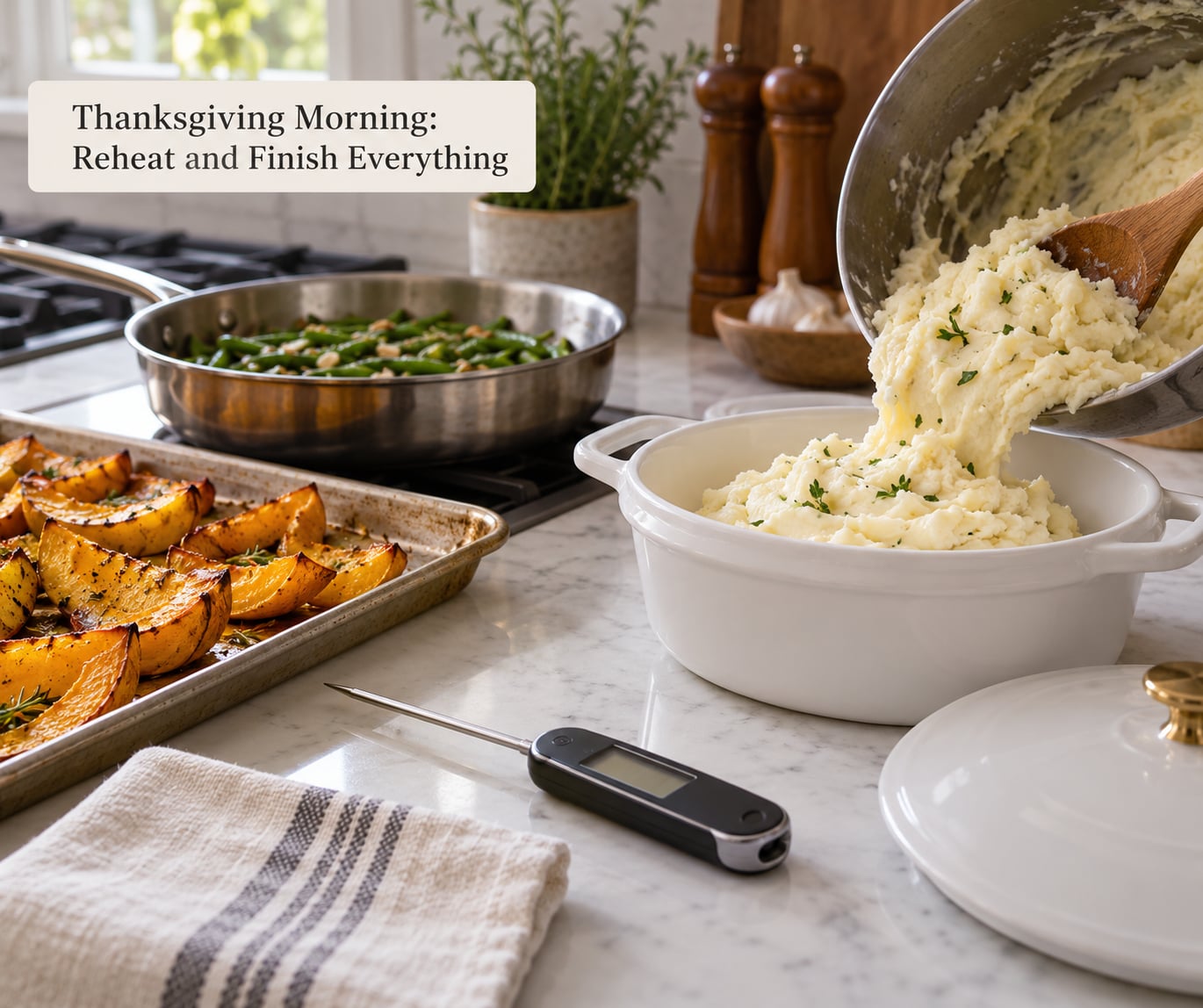
Pull the refrigerated casseroles out about an hour before they go in the oven. A chilled dish straight into a hot oven heats unevenly and stays cool in the middle. Heat the oven to 350°F and work in this order: bread, then casseroles, then vegetables, then potatoes, then gravy on the stovetop last.
| Dish | Reheat method | Cover |
|---|---|---|
| Dinner rolls | 350°F for 10 minutes | Wrapped in foil |
| Green bean or sweet potato casserole | 325°F for 20 to 30 minutes, then 5 minutes uncovered | Covered, then uncover to brown |
| Stuffing or dressing | 325°F for 25 to 35 minutes with a splash of stock | Covered |
| Mashed potatoes | Stovetop low with butter and a splash of milk, or microwave in two-minute bursts | Covered |
| Greens and glazed vegetables | Stovetop 5 to 8 minutes | Covered |
| Gravy | Stovetop, whisk in turkey fat and a cornstarch slurry | Lid on to hold |
Check the center of each dish with the thermometer before you call it done. Reheated cooked sides should reach 165°F and be steaming hot all the way through, and that reading matters more than any timer on the table.
Three reheating rules cover most cases: cover casseroles so they steam, then pull the foil off for the last few minutes so the top browns; add butter and milk to mashed potatoes before heating; and give stuffing a splash of stock so it steams instead of drying out.
Common Mistakes
- Freezing bread too early. Biscuits and cornbread are best baked fresh. Freeze the cornbread, not the finished dressing.
- Refrigerating a deep hot dish. The center stays warm long enough to be unsafe. Cool in shallow containers instead.
- Topping too early. Crisp and marshmallow-style toppings go on the morning of, not on Tuesday.
- Reheating too early. Sides held warm for two hours dry out and get pasty. Keep them in the fridge and reheat in waves.
- Packing sides without their sauces. Casseroles reheated dry need a splash of stock, milk or butter to come back together.
Common Mistakes and Helpful Fixes
Here is how to fix the dishes that most often disappoint, plus the safety limits that matter more than any recipe.
Dry stuffing. Hold back the stock at assembly, then pour a cup of warm turkey or chicken broth over the top before covering it for the reheating. Covered heat is what keeps crumbs soft; uncovered heat dries them out.
Gluey mashed potatoes. Starch is the problem, not the reheating method. Loosen the cold potatoes with warm milk and butter before they hit heat, and stir often. A splash of warm cream works better than cold milk because it heats evenly.
Soggy casserole topping. Add the topping in the last five minutes, not when the dish first goes in. If you already topped it early, put it under the broiler for two or three minutes and watch it closely.
Cold center in a hot dish. Let the casserole sit at room temperature for up to an hour before baking, and check the center with a thermometer. A dish that goes in cold needs roughly a third more reheating time.
Everything lukewarm at serving time. Reheat in waves instead of at once. Bread and casseroles first, potatoes once the turkey is carved, gravy last. Food held above 140°F for more than two hours is no longer considered safe.
Reheating a dish twice. Mashed potatoes and casseroles do fine twice, but stuffing turns dry and crumbs crisp on a third pass. If you cook for a big crowd, expect one reheat and plan seconds accordingly.
Cooking at someone else’s house. Carry cold dishes in a cooler with ice packs, and put the slow cooker on warm at the destination rather than trying to reheat a whole pan on an unfamiliar stovetop. Assemble stuffings in a disposable foil pan so nothing has to be returned.
Too many sides. Five reheated dishes taste better than nine. Pick three or four that hold well and let the rest be something you can put together from a package while the turkey rests.
Frequently Asked Questions
Can I prepare Thanksgiving sides four days ahead?
Yes, for most cooked sides. Mashed potatoes, macaroni and cheese, green bean casserole, sweet potato casserole and cornbread dressing all hold safely three to four days refrigerated if cooled fast in shallow containers. Keep the fridge at or below 40F. Dishes meant to be eaten fresh, like gravy, roast vegetables and crisp-topped casseroles, do not survive that window.
Which Thanksgiving sides freeze best?
Soups, chili, cornbread dressing, baked beans, braised cabbage and casseroles assembled but unbaked freeze best. Freeze them flat in a freezer bag or in foil pans, cool them uncovered first, and thaw in the refrigerator overnight. Biscuits, fresh rolls and blanched vegetables do not freeze well, so plan to make those close to the day.
Should casseroles be baked before freezing or kept unbaked?
For the richest texture, bake the casserole slightly underdone, about ten minutes short of finished, then cool and freeze it. Reheating finishes the dish gently and keeps the middle moist. If you are freezing for longer than a couple of weeks or want a crisp crust, freeze it unbaked and add any streusel, fried onion or marshmallow topping right before baking.
How do I keep mashed potatoes and other sides warm without drying them out?
Keep them covered, not uncovered, and hold them above 140F for no more than two hours. Mashed potatoes dry out fastest, so add butter and warm milk before reheating and stir often. A tight lid or a layer of foil on the serving dish holds steam in. If you are holding more than two hours, refrigerate the dish and reheat it in small batches instead.
What temperature should Thanksgiving casseroles and vegetables reach when reheated?
Aim for 165F in the center and check it with an instant-read thermometer rather than trusting the timer. Reheat casseroles covered at 325 to 350F for 20 to 30 minutes, then uncover for the last few minutes to brown the top. Cold casseroles taken straight from the refrigerator need closer to an extra third of that time.
Conclusion
Start by picking two or three dishes that can be made four or more days ahead, such as a casserole, a soup and cranberry sauce. Then work backward from Thanksgiving morning: put a time on each reheating step, count your oven racks around the turkey, and label every container as it goes into the fridge. That is how to make Thanksgiving sides ahead of time and still eat dinner at the table instead of over the stove.