If you’re wondering what to do with a bunch of kale, start by trimming the leaves off the thick stems, washing them, and drying them well. Then pick your method: sauté or braise them in a hot pan, bake them into crisp chips, blend them into smoothies or pesto, or toss the raw chopped leaves into a salad. One store-size bunch usually feeds four to six small meals once you account for how much the leaves shrink when cooked.
Most people end up with too much kale because a bunch looks enormous raw and then collapses to a fraction of its size in the pan. The fix is not to buy less, it’s to plan the bunch as three or four dishes instead of one. I’ll walk through prep, storage, twelve specific uses, and the mistakes that turn kale bitter or slimy.
Updated for 2026. If your kale is already starting to soften in the crisper, jump to the freezing section first so it doesn’t get away from you, then come back and cook from the freezer stash.
Table of Contents
- What to Do With a Bunch of Kale: A Quick Guide
- How to Clean and Prepare a Large Bunch of Kale
- Strip the leaves and slice the ribs
- Wash once, thoroughly
- Dry every drop
- Prep varies by type
- How to Store Kale So It Stays Fresh
- How to Cook Kale on the Stovetop
- What Can You Make With a Bunch of Kale?
- How to Use Kale in Soups, Stews, and Braises
- Can You Freeze Kale?
- What to Do With Kale Ribs and Stems
- Common Mistakes When Cooking a Large Bunch of Kale
- Frequently Asked Questions
- How long does kale last in the refrigerator?
- Should kale be washed before storing?
- Do you eat the stems of kale?
- How long does it take to cook kale on the stovetop?
- Can kale be frozen without blanching?
- What is the best way to use a large bunch of kale?
- Conclusion: Start With the Leaves You Can Use Right Away
What to Do With a Bunch of Kale: A Quick Guide
De-stem, wash, dry, then choose a direction based on how much time you have. Raw goes to salads and smoothies. A hot pan handles sautéing and braising in under 10 minutes. The oven turns a large pile into chips you can snack on for days. And a blender clears out the fastest volume of any method here.
| Where the kale is going | Method | Approximate time |
|---|---|---|
| Salad, raw | Strip, roll leaves into a cylinder, chop, then massage with dressing | 5 minutes plus 10 minutes massaging |
| Soups and stews | Add chopped leaves in the last 15 minutes of cooking | 15 minutes |
| Sautéed side or braise | Hot oil, garlic, then kale in a single layer until bright green and soft | 5 to 8 minutes |
| Crisp kale chips | Toss with oil and salt, bake in a single layer, rotate the sheet halfway | 20 to 25 minutes at 350 F |
| Smoothies | Blender with fruit, liquid, and something creamy | 1 minute |
| Freezing | Blanch, drain, portion into bags | 10 minutes plus freezing |
Three techniques cover the fastest volume, and they pair well on the same evening.
- Sauté or stew. Heat olive oil, fry minced garlic until fragrant, add chopped kale with a splash of broth, cover, and let it collapse for 5 to 8 minutes. Finish with salt and a splash of vinegar.
- Toss into pasta, rice, or a grain bowl. Add a handful of raw chopped leaves to the pot a minute before draining. The hot pasta steams them just enough.
- Blend into pesto. Half the leaves, toasted nuts, garlic, grated parmesan, olive oil, and lemon. Pulse rather than puree if you want texture.
Volume collapse is the thing nobody mentions. A skillet packed with raw curly kale finishes as a small serving, so cook a whole bunch by working in batches rather than crowding one pan. One bunch of curly kale fills about three to four baking sheets for chips, or two skilletfuls for sautéing.
How to Clean and Prepare a Large Bunch of Kale
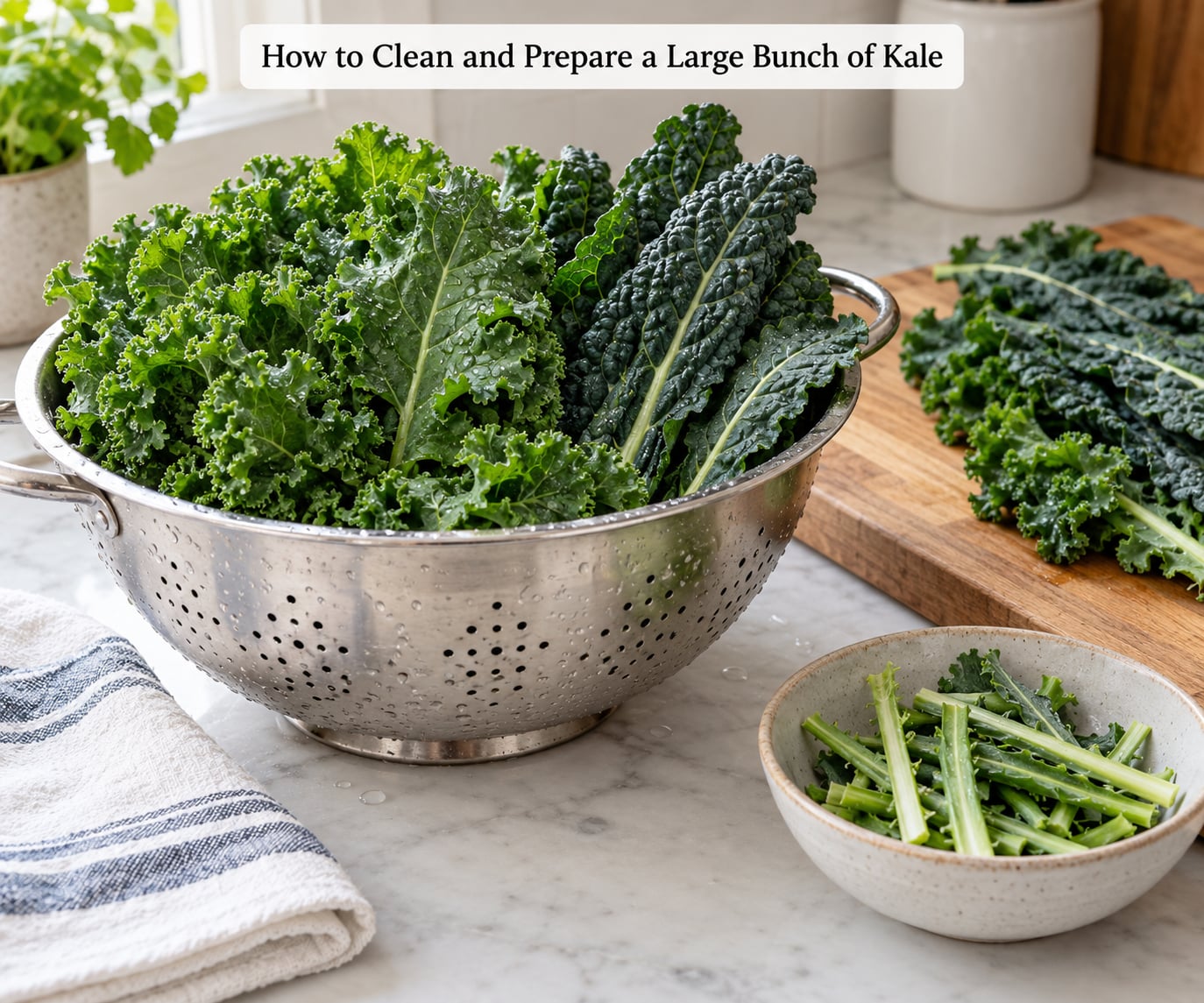
Pull off any leaves with brown spots, holes, or slime on the edges. Those don’t recover, and they’ll drag the rest of the bunch down in the container.
Strip the leaves and slice the ribs
Hold the stem at the bottom and pull the leaf upward with your thumb along the rib. The leaves snap off cleanly. On curly kale the ribs are thinner and you can leave a little of the stem attached; on lacinato, cut a thin sliver from each side instead so you keep more leaf.
Any stem under about half an inch thick is edible once you slice it lengthwise into coins. Save those in a separate bowl rather than the compost. Thicker, woody stems from older kale are not worth chewing, but they make good flavor for a pot of broth.
Wash once, thoroughly
Fill a basin or sink with cool water and swish the leaves through it. Lift them out, dump the water, and repeat until it runs clear. Kale hides grit in the curls, so check a handful against the light before you move on. Running water alone is not enough for curly varieties.
Dry every drop
Spin the leaves in a salad spinner in two or three rounds, then pat them with a clean towel. This is the step most people skip and it’s the one that causes soggy chips and bitter sautéed greens. Wet leaves steam instead of searing, and they can’t crisp in the oven no matter how long you bake them.
Prep varies by type
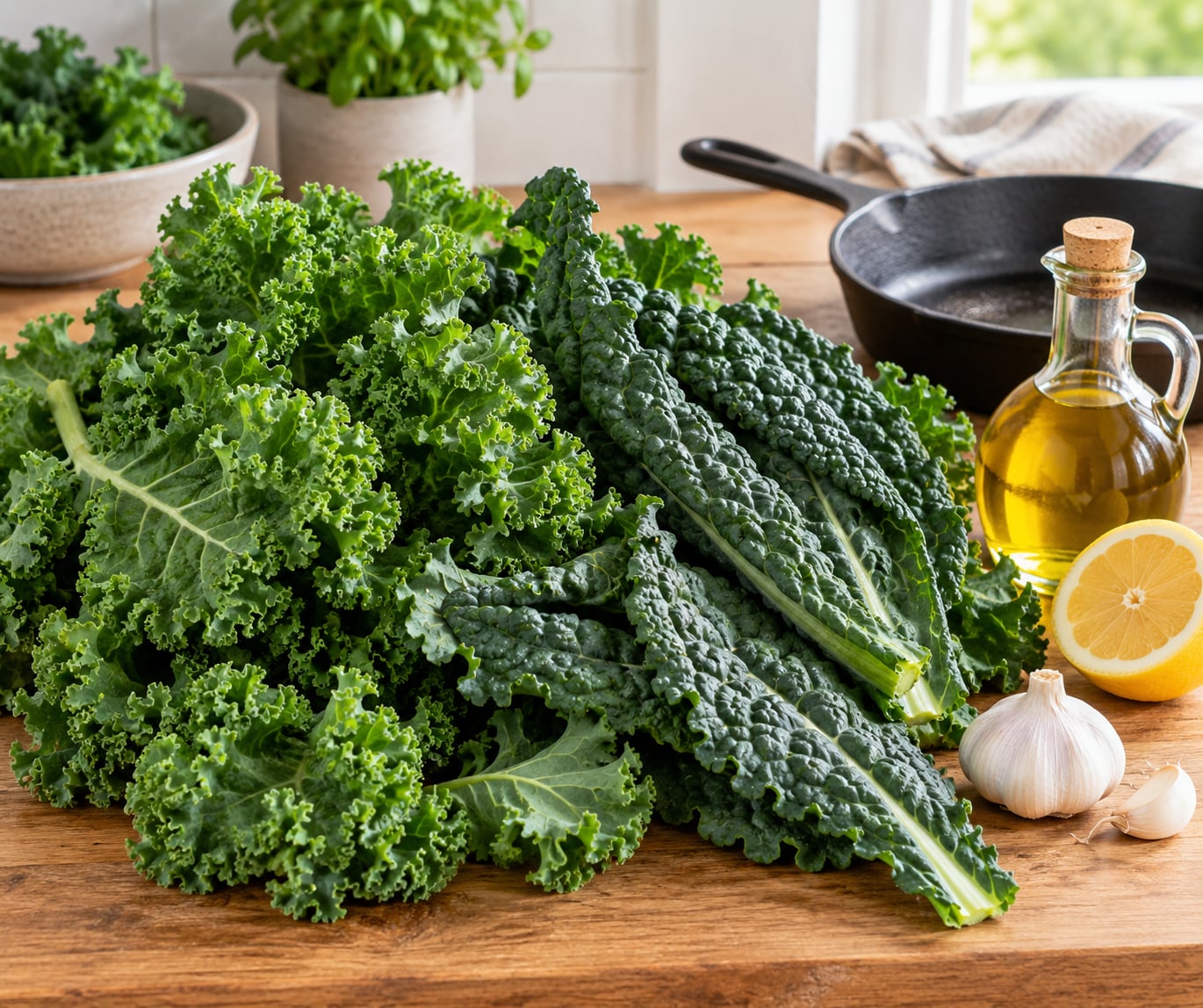
Curly kale keeps its ruffled shape and holds up to high heat, which makes it the best chip candidate. Lacinato, sometimes called dinosaur kale or cavolo nero, has flat tender leaves that wilt fast and go silky in about 5 minutes. Baby kale needs almost nothing: a rinse, a dry, and a rough chop. Red kale behaves like curly kale but wilts a bit faster, so start checking it early.
How to Store Kale So It Stays Fresh
Keep it unwashed. Moisture trapped in the fridge is what turns a bunch of greens into a slimy mass, so store kale dry and wash only the amount you’re about to cook.
| Form | Fridge | Freezer | Notes |
|---|---|---|---|
| Raw, in a bag or container | 5 to 7 days | Not recommended raw for texture | Paper towel in the bag; loosely closed |
| Blanched and chopped | 3 to 4 days | 10 to 12 months | Best all-round method for cooked dishes |
| Cooked | 3 to 4 days | 2 to 3 months | Cool quickly, refrigerate in a sealed container |
For fridge storage, put the dry leaves in a loosely closed bag or an airtight container with a paper towel tucked inside. The towel catches condensation. A tight roll in a bag works well too, and a rolled bundle usually holds together better than loose leaves because less surface area touches air.
Kale goes bad in a very specific way: the leaves get slimy and the smell turns sour and sharp. Slight wilting is not spoilage. To revive wilted leaves, dunk them in ice water for 10 minutes and shake them dry, and they will crisp back up for a salad. Skip that trick if you’re cooking, because soaking plus cooking makes the texture mushy.
If a few leaves have gone soft and browning, pull them off the bunch and use the rest. One bad leaf left in the container will spoil the neighbors within a day or two.
How to Cook Kale on the Stovetop
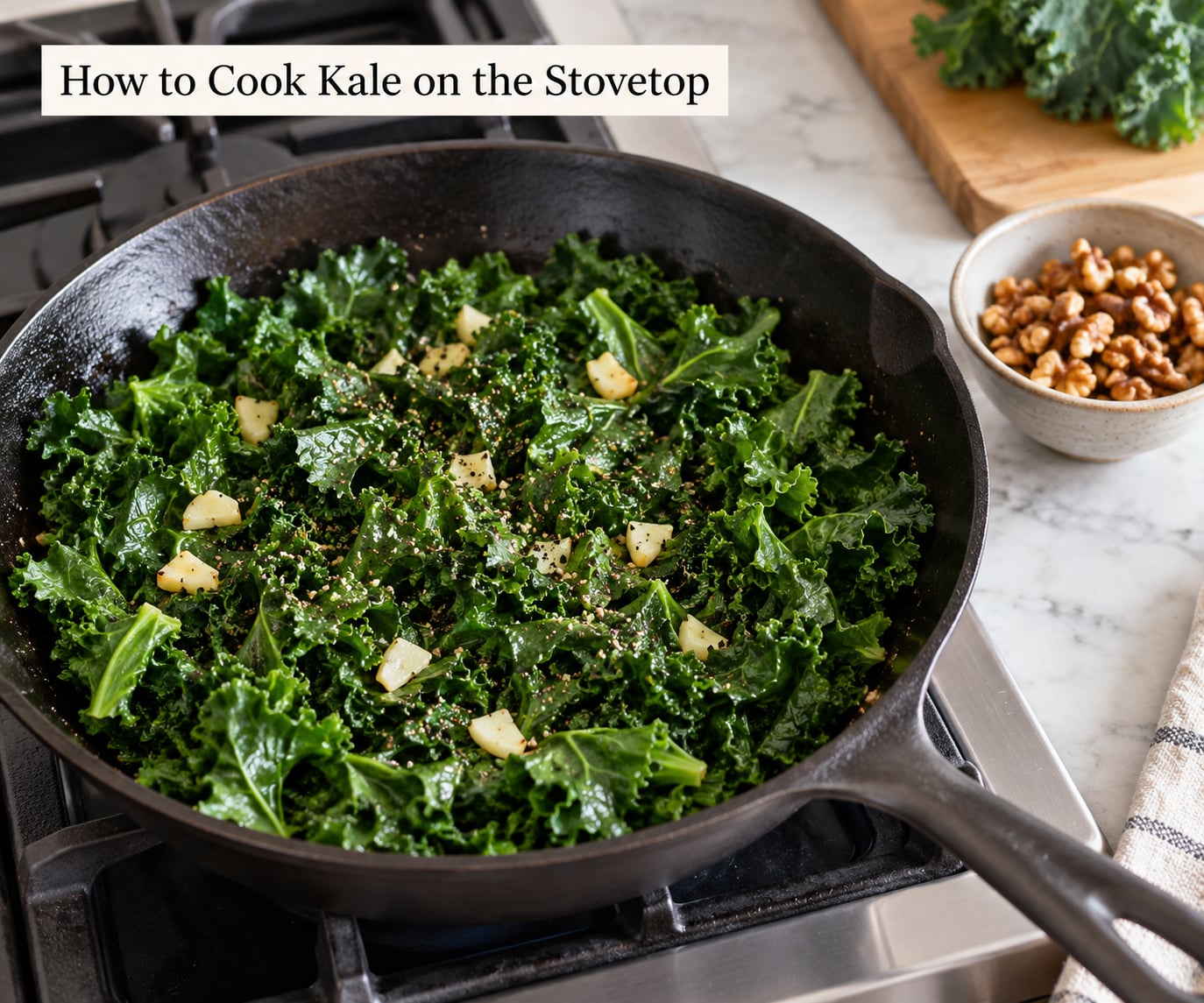
Sautéing is the fastest way to make kale taste good, and it’s where the flavor lives: garlic in oil first, then the kale, then salt and acid at the end.
- Heat the pan properly. Get the skillet hot before anything goes in. A medium-high heat with a tablespoon of olive oil is the starting point.
- Fry the aromatics. Two minced garlic cloves for about 30 seconds, until fragrant but not brown. Add a pinch of red pepper flakes if you like heat.
- Add the kale in a single layer. Let it sit 30 to 60 seconds without stirring so the bottom actually sears. Then stir.
- Add liquid and cover. A third of a cup of broth or water and a lid gives you a braise; leave it uncovered for a crisper sauté.
- Watch the color. Cook until the leaves are bright green and tender, 5 minutes for chopped curly, 3 to 4 minutes for sliced lacinato. Another minute if you like it softer.
- Finish off the heat. Salt, a squeeze of lemon or a splash of vinegar, and a grind of pepper.
Curly kale can take more heat without turning to mush, so it works well for a hard sear. Lacinato and red kale wilt quickly and want lower heat and less time. Cook them separately if you’re mixing varieties in one dish.
To turn the skillet into a full side dish, add toasted walnuts and a spoonful of grated parmesan at the end, or serve it alongside white beans and cornbread. Vinegar at the end is the single biggest upgrade, because it cuts the bitterness that makes people think they dislike kale.
What Can You Make With a Bunch of Kale?
A whole bunch is roughly one to two pounds of leaves. That’s enough for a big pot of soup plus two or three sides, or for chips plus a salad plus a batch of pesto. Here are twelve specific uses, ordered by how fast they clear the pile.
- Green smoothie. Two packed cups of leaves, a banana, a handful of berries or a splash of juice, milk or water, and something fatty like peanut butter, nut butter, or protein powder. The fat and fruit both take the edge off.
- Baked kale chips. Tear or chop into bite-size pieces, toss with olive oil and salt, spread in one uncrowded layer on a lined sheet, bake at 350 F for 20 to 25 minutes, turning once. A full bunch needs three or four sheets done in batches.
- Kale pesto. Blanched leaves, toasted nuts or seeds, garlic, hard cheese, olive oil, lemon juice. Pulse for texture or run it smooth for a sauce that spoons over beans or grilled bread.
- Raw kale salad. Strip, roll the leaves into a tight cylinder, slice into ribbons, then massage with dressing for 10 minutes. The rolling and massaging is what turns tough raw leaves into something tender. Lemon juice and salt with a little tahini or olive oil works well.
- Kale and white bean soup. Sauté onion, carrot, and garlic, add broth and a can of white beans, then the kale in the last 15 minutes. Blend half the pot for thickness without cream.
- Greens with beans. Southern and Appalachian plate: braise the kale with a little broth, then serve it over pinto beans with cornmeal and a hot sauce. Skip the pork and use smoked paprika or a little oil for a meatless version.
- Sweet potato and kale curry. Simmer cubed sweet potato with coconut milk, curry powder, and onion until nearly tender, then add the kale for the last 10 minutes.
- Kale pasta. Chopped leaves go into the pasta water in the final 2 minutes, or into the sauce after draining. Garlic, chili, and a ladle of pasta water make it a full dinner.
- Kale in eggs. Chop fine and fold into scrambled eggs, a frittata with onions and cheese, or a crustless quiche. It carries flavor without dominating it.
- Kale tacos or grain bowls. Massage shreds with lime juice, salt, and a little oil, then pile them on black beans, roasted sweet potato, or farro with avocado.
- Kale chips in a salad, or a slaw. Shredded kale with cabbage, carrot, and apple in a sharp vinegar dressing stands up to a heavy dressing where plain lettuce would wilt.
- Fermented or pickled kale. Salted and jarred as quick pickles with garlic and pepper flakes, or a kraut-style ferment. Both keep for weeks in the fridge and cut the volume problem entirely.
When the bunch is especially large, spread the work across days instead of cooking everything at once. Chips and pesto both freeze; soup freezes without any change to the recipe; eggs and salads do not.
How to Use Kale in Soups, Stews, and Braises
Add kale late and use it in layers. Kale added at the start of a simmer turns to stringy bits by the end, which is the most common way a pot of soup gets ruined.
The rule: kale goes in during the last 15 minutes of cooking for soups, and it needs a liquid plus a lid to braise properly. Stock, broth, canned tomatoes, and coconut milk all work. Salt it early enough to season, but add the acid late, because acid is what keeps it from tasting flat.
For a white bean and kale soup, cook onion, carrot, garlic, and a bay leaf in olive oil until soft, add broth with a can of white beans, simmer 20 minutes, then add chopped kale for the final 15. Blend a cup of the broth back into the pot for body. This is the dish to make when a bunch lands in the fridge with no plan attached, because it scales in a straight line and reheats all week.
For a curry, treat kale like a leafy green rather than a meat substitute. Sweet potato and coconut milk give it something to sit on, and 10 minutes of simmering is enough. Add it after the potatoes are nearly fork-tender so the kale doesn’t go to paste.
For a Southern-style braise, think of it as the green in a greens-and-beans plate. Cooked down with a little meat stock or oil until collapsed and glossy, it goes over beans with cornbread. Vegetarian version: swap in vegetable broth and a spoonful of liquid smoke.
Can You Freeze Kale?
Yes, and blanching first is the short answer to how to freeze fresh kale so it keeps for about 10 to 12 months. Bring a pot of water to a boil, drop in chopped leaves for 2 minutes, then move them straight to ice water to stop the cooking. Drain well, squeeze out what you can, and pack into bags in the amounts you’ll actually use.
Label with the date and the amount. One cup of chopped kale per bag is a useful unit, since that’s roughly what goes into a serving of soup.
Blanched kale is the all-rounder: soups, curries, pasta, eggs, and sautéed greens all thaw fine. Raw kale straight from the bag can be blended into smoothies, where texture doesn’t matter, but after thawing it turns into a limp, watery mess that ruins anything with texture.
If freezing feels like too many steps and you want to use up kale fast instead, skip it. The same volume disappears into a soup pot or a batch of chips in an evening, and the blender clears a bunch in about a minute.
What to Do With Kale Ribs and Stems
Most of the discarded part of a kale bunch is edible. On a typical bunch, the stems make up a noticeable share of the weight and they’re loaded with flavor.
Thin stems under about half an inch: slice lengthwise into coins and throw them in soups, stews, and stir-fries during the last 10 minutes. They’re more tender than they look and they thicken a broth while adding a clean, sweet note.
Thick stems from mature or curly kale: split them lengthwise, scrape out the pale stringy core with a knife, then slice the outer shell thin. Or save the lot for a stock pot, where the flavor gets extracted anyway. A freezer bag of saved stems is a freezer bag of free broth base.
Stems that are genuinely woody, fibrous, or browning should go in the compost. If a stem bends easily between your fingers it’s fine to eat; if it snaps with resistance, it isn’t.
Another use: blend tender stems with garlic and oil for a quick green sauce, or simmer them alone for a few minutes and drink the liquid as a light broth. Nothing about a kale stem requires a recipe.
Common Mistakes When Cooking a Large Bunch of Kale
- Washing right before cooking instead of right before storing. If you’re not using the whole bunch today, store it dry. Washing early is what makes stored kale turn slimy within days.
- Not drying the leaves. Wet leaves steam in a skillet and never crisp in an oven. Spin twice, then pat with a towel.
- Crowding the pan. A packed skillet drops the temperature and boils the kale in its own water. Cook batches, or use a second pan, and it stays bright green.
- Overcooking. Once the leaves are dark olive and limp they’ve gone past good. Pull them at bright green and tender, which for sliced kale can be as little as 3 minutes.
- Skipping the acid. A squeeze of lemon or vinegar at the end is the difference between good greens and bitter ones. Bitterness is often just missing acid.
- Adding kale to soup at the beginning. Long simmers turn it stringy. Add it in the final 15 minutes unless you want it to dissolve into the pot as texture.
- Treating every variety the same. Curly tolerates high heat and long bakes. Lacinato wilts in minutes. Cooking them at the same setting gets one batch perfect and the other ruined.
- Throwing out all the stems. You lose flavor and volume. Slice tender stems and cook them with the leaves, or save them for broth.
- Packing the baking sheet for chips. Overlapping pieces steam and stay limp. One layer per sheet, three or four sheets per bunch, rotate the racks, and bake in batches.
- Storing kale sealed airtight with no towel. Condensation builds and the leaves go soft and spotted. A paper towel inside the bag absorbs it.
One honest note on the vegetable itself: kale got its “superfood” label for good nutritional reasons, but the hype outran the evidence. Nothing about it is dangerous in normal portions. Two things are worth knowing: kale is very high in vitamin K, which matters for people on warfarin, and it’s easy to eat so much raw that a big salad leaves you bloated, especially with IBS. Cooking a portion down shrinks the volume and usually settles that. If you’re managing a thyroid condition or taking blood thinners, ask your doctor about your portions rather than taking general advice as gospel.
Frequently Asked Questions
How long does kale last in the refrigerator?
Unwashed kale stored dry in a loosely closed bag or an airtight container with a paper towel usually keeps 5 to 7 days. Check for slimy leaves or a sour smell, which means it’s past saving even when the color still looks fine. Washed kale keeps shorter, often only 2 to 3 days, so store it dry and wash only what you plan to cook that day.
Should kale be washed before storing?
No. Washing adds moisture, and stored moisture is what turns kale slimy and brown. Store the leaves dry and rinse them right before you cook. If you wash kale ahead of time, spin it very dry in a salad spinner and keep it in a container lined with a paper towel, which absorbs condensation.
Do you eat the stems of kale?
Most of them, yes. Stems under about half an inch thick are tender once you slice them lengthwise into coins, and they’re good in soups, stews, and stir-fries during the last 10 minutes. Thicker stems can be split and scraped, then sliced thin, or saved in the freezer for broth. Woody, snapping stems are the only ones worth composting.
How long does it take to cook kale on the stovetop?
Sliced lacinato or dinosaur kale takes 3 to 4 minutes in a hot pan. Chopped curly kale takes 5 to 8 minutes, and red kale lands around 5. If you add broth and cover the pan, allow another 3 to 5 minutes. Cook in batches if the pan is full, since crowding drops the temperature and boils the leaves.
Can kale be frozen without blanching?
You can, but raw kale thaws into a watery mess that suits smoothies and nothing with texture. Blanching for 2 minutes, chilling in ice water, draining, and freezing in portions keeps it usable for about 10 to 12 months for soups, curries, pasta, eggs, and sautéed greens. Label each bag with the date and the portion size.
What is the best way to use a large bunch of kale?
Split the bunch instead of forcing it into one dish. Bake a pan of chips, cook a pot of white bean and kale soup, and blend the remaining leaves into pesto or smoothies. One store-size bunch usually covers those three easily. Store the portion you will not cook this week by blanching and freezing it so the rest doesn’t spoil.
Conclusion: Start With the Leaves You Can Use Right Away
Wash and dry the bunch tonight, then cook the portion you’d eat in the next two days. A hot-pan sauté with garlic and a squeeze of vinegar at the end is the fastest way to find out how you actually like kale. Keep the tender stems with the leaves rather than in the compost.
For the rest, match the method to the leaf. Curly kale bakes into chips and holds up to heat, lacinato wilts fast and wants a short braise, and anything already softening should go into a soup or get blanched and frozen. Once you treat a bunch as four small dishes instead of one large one, buying kale stops being a gamble.