To order gluten free at a restaurant without the drama, you research the kitchen before you sit down, say your need once in three plain sentences, ask two specific questions about cross-contact, and let the server pass it along. It takes about two minutes and it feels completely normal after the tenth time.
Here is the script, ready to copy:
Sentence one: I have celiac disease, so gluten is a medical thing for me, not a preference.
Sentence two: I am not allergic, so I will not react in an emergency, but a crumb or a shared fryer makes me sick for days.
Sentence three: Could you check with the kitchen about how they handle it, and tell me honestly what they can do?
That is the whole conversation. Nobody has ever been asked to perform gratitude for the script. Servers want an answer they can act on, and this gives them one.
Table of Contents
- What You Need
- Step-by-Step: How to Order Gluten Free at a Restaurant Without the Drama
- 1. Check the restaurant before you go
- 2. Separate gluten-free from cross-contact-free
- 3. Ask specific preparation questions
- 4. Order directly and confidently
- 5. Confirm the meal when it arrives
- 6. Keep the meal comfortable and realistic
- What to do if the kitchen says no
- Common Mistakes
- Frequently Asked Questions
- Can someone with celiac disease eat at a restaurant?
- Is a gluten-free menu celiac safe?
- What questions should I ask about gluten when eating out?
- What happens if I accidentally eat gluten at a restaurant?
- Do I need a NIMA sensor or gluten test kit to eat out safely?
- How do I politely decline a meal at a restaurant?
- Conclusion
What You Need
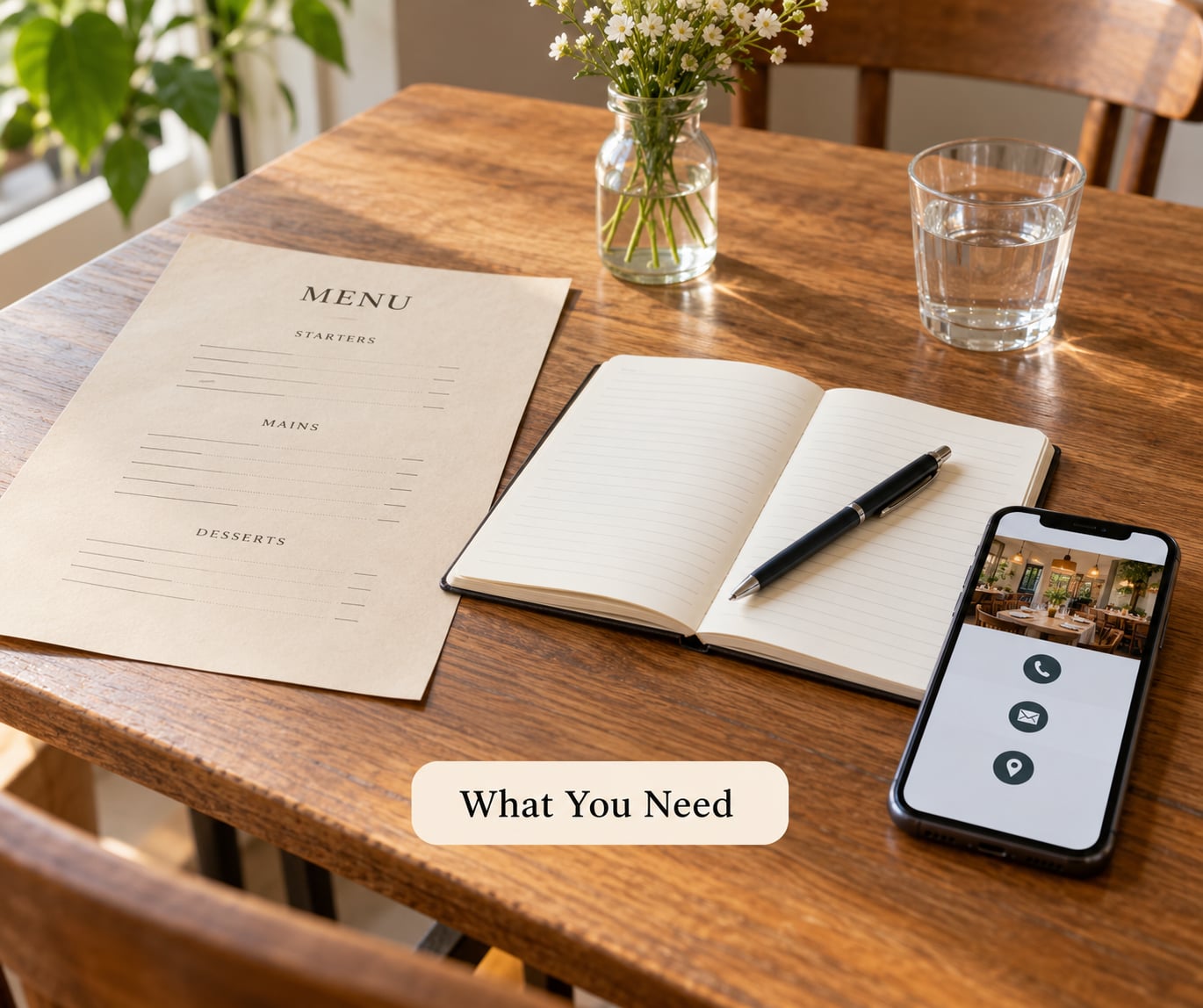
Before this works, you need four things settled. Most of the anxiety comes from walking in without them.
Your own tier. Celiac disease, gluten sensitivity, and eating gluten free by preference are three different orders. Celiac is an autoimmune condition where a strict gluten free diet is the only treatment, and even trace amounts matter, roughly 20 parts per million. Sensitivity is real and miserable but not a villi destroying illness. Preference is a choice, and you should not have to pretend otherwise at a restaurant where you pay the same as everyone else.
The menu, before the walk. Most restaurants post an allergen guide or a gluten free menu online. If nothing is published, that is your first signal, not your last.
Your questions. Decide which two or three you will actually ask. Everybody freezes when handed an open-ended question, so arrive with a short list.
Your line on risk. Some people will not eat unless a kitchen says it can control cross-contact. Some will order carefully and accept a small amount of uncertainty. Both positions are legitimate, and deciding yours ahead of time means you can walk away from a bad answer without deciding anything in the moment.
Carry a backup snack in your bag. Not because you expect the worst, but because a plain protein and a potato are not always available, and being hungry is what turns a dietary conversation into an argument.
Step-by-Step: How to Order Gluten Free at a Restaurant Without the Drama
1. Check the restaurant before you go
Start with the website, not the menu in your hand. Look for a gluten free menu, an allergen information page, and a dated last-updated stamp. Then try Find Me GF, Yelp gluten free filters, or the restaurant directory run by your national celiac association. Directories are crowd-sourced, so treat them as a shortlist rather than a verdict.
If the information is thin, call ahead. Ask a manager whether they have a protocol for gluten free orders, whether they use a dedicated fryer, and whether the staff handling modifications have been trained on it. You are one phone call, and you will know in ninety seconds whether this place can work for you.
Timing matters more than people expect. Go early or go late. A kitchen working a packed room with a line cook who has not changed gloves since the lunch rush is the most common source of accidental exposure, and the fix is not a better question, it is a quieter room.
2. Separate gluten-free from cross-contact-free
Gluten free describes what is in the food. Cross-contact-free describes the kitchen it was made in. A dish with no wheat in the ingredient list can still be a problem if it was dredged, fried or plated on a surface that handled bread two minutes earlier.
The peanut allergy analogy works better than anything else, so use it. If someone told you they had a severe nut allergy and the kitchen used the same fryer and the same scoop for almonds, you would not relax. You would want to know what changes. Treat gluten the same way when it comes to medical need, and use the phrase cross-contact rather than contamination, which is the word restaurant staff hear as an accusation.
Say it plainly: I need this without cross-contact, not just without wheat in the recipe. Those are two different orders and the kitchen may be able to do one and not the other.
3. Ask specific preparation questions
Ask about equipment and zones, not about whether a dish looks safe. These are the questions that get useful answers.
- Do you have a dedicated fryer, or does the fryer also cook breaded items?
- What is the chicken or fish dredged in, and can it be served unbreaded or with a gluten free breading?
- Is the pasta water shared, and is there a separate pot and strainer?
- For a salad, can it come in a clean bowl with a clean scoop, no croutons, and dressing on the side?
- Are the gravy, roux, or any thickening made with flour, and is the soy sauce or malt vinegar in the sauce wheat based?
- Are the seasoning blends plain, or do they contain wheat starch or hydrolyzed wheat protein?
Where the answer lands is easier to read when you hear what people actually say. Here is the honest decode, and it is the part nobody else writes down.
| What they say | What it usually means | What to do next |
|---|---|---|
| Our oven is hot enough to burn the gluten off. | They have never heard of cross-contact and are trying to end the conversation kindly. | Thank them, then ask what they can actually do: a clean pan, a clean surface, fresh gloves. Procedure beats temperature every time. |
| Gluten free is a preference, right? | They are deciding whether to take you seriously. | Answer once, flatly: I have celiac disease. Then move on to the practical questions without justifying anything further. |
| We clean the surface between every order. | Sometimes true, sometimes a habit rather than a written protocol. | Accept it and ask for clean gloves and a fresh bowl. Small additions are easier for a line cook than a new procedure. |
| We can make anything gluten free with substitutions. | They mean the recipe has no wheat, and they have not considered the kitchen. | Ask the fryer and surface questions. This is exactly where you find out what the label is worth. |
| We have a gluten free menu. | The kitchen has a written protocol. This is a good sign. | Ask whether the protocol covers cross-contact, not just ingredients, and whether the person taking your order was trained on it. |
| Sorry, we probably can’t do that. | An honest no, often from a shift worker who knows the limits of the kitchen. | Say thank you, order something naturally gluten free, and note the place for next time. A clean no is worth more than a hopeful yes. |
4. Order directly and confidently
Short, unhurried, and specific. Tell the server your diagnosis, tell them why cross-contact matters to you, and ask for one thing.
I have celiac disease, so I am strict. Could you make sure the kitchen knows, and can you tell me whether the chicken is dredged in wheat and what it is fried in? If the answer is not great, I will just order the grilled vegetables and a plain salad.
That last sentence does a lot of work. It tells the server you are not a customer who will be difficult, and it gives the table a landing spot if the kitchen cannot accommodate you.
Do not explain your symptoms, your diagnosis history, or why you think your friend told you the place was safe. Servers do not need the full story, and the fuller your explanation, the more it sounds like a negotiation. Ask the server to check with the kitchen when the answer matters, and let the check happen.
If the table is full of people who do not know you, keep the whole exchange at the counter side or on your way in. The restaurant handles it the same way either way, and you spare yourself a round of explaining to six people.
5. Confirm the meal when it arrives
Look before you eat. Two seconds of checking is the cheapest protection you will ever get.
Confirm it is your order. Ask whether the sauce on the side contains soy sauce, malt vinegar, or a flour roux. Check that the salad came in a clean bowl with a clean scoop and no croutons, which is where a lot of accidental exposure actually happens. If your plate touches someone else’s plate mid-table, keep to your own half.
If the wrong plate arrives, say it once, plainly, without a story: I think this came to the wrong table, could you take it back? Servers swap plates dozens of times a shift. Blame changes the temperature of the whole table, and you are still sitting in it for another hour.
6. Keep the meal comfortable and realistic
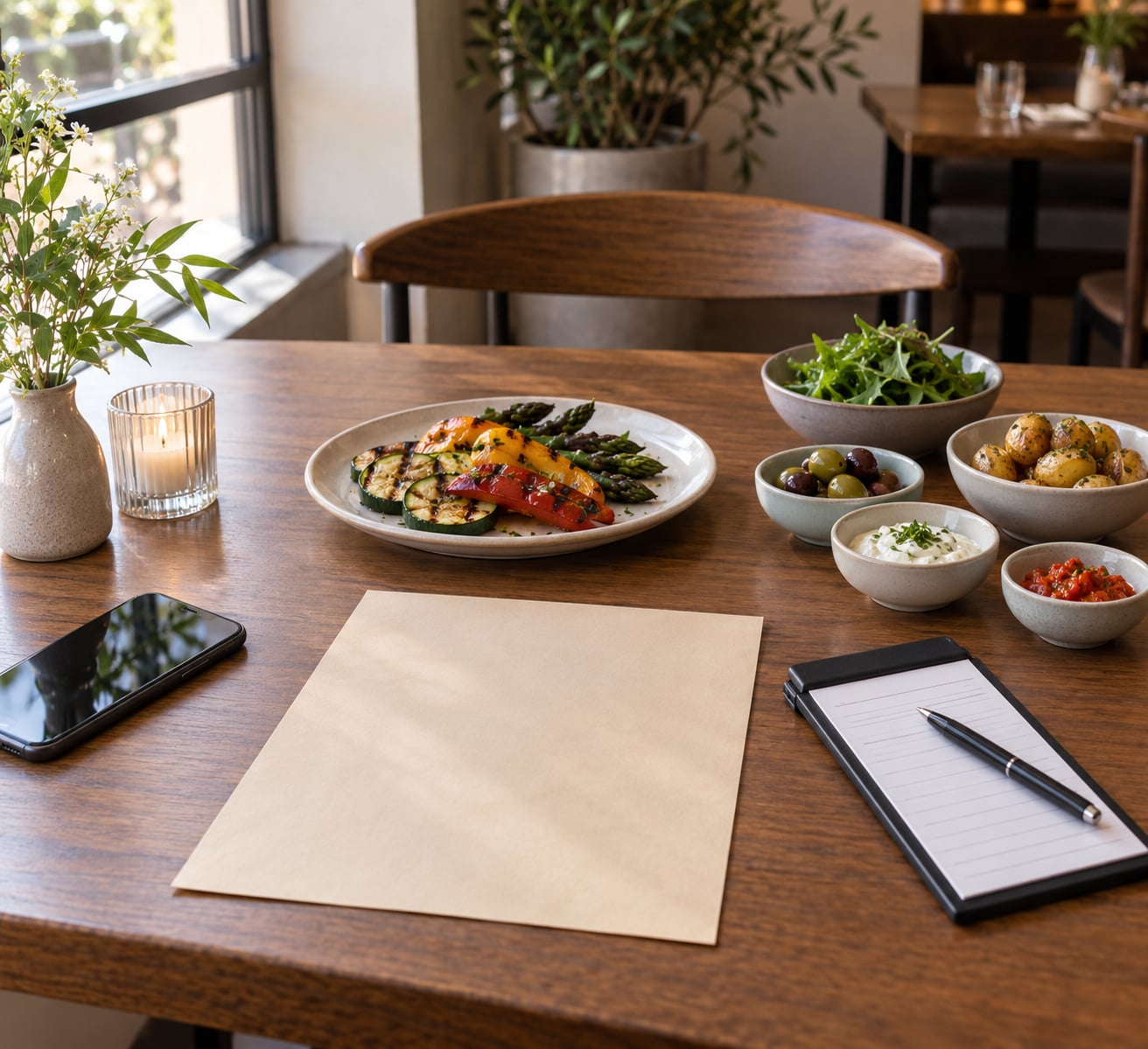
Know your fallbacks before you need them. Grilled or roasted protein with a clean surface, rice, potatoes, cornmeal, beans, plain greens, olive oil and vinegar. In South Indian restaurants, rice and lentil dishes are a natural fit. Thai kitchens do a lot with rice noodles, as long as the sauce is not a shared wheat based one. Ethiopian injera is naturally gluten free, which is a genuinely nice surprise for a birthday dinner.
Southern and Appalachian restaurants are harder, and it is worth being specific about why. The biscuit basket is the shared surface, and it sits on the table all meal. Gravy is routinely thickened with a wheat roux. Fried chicken, hush puppies and fries usually go into the same fryer. Cornmeal dishes are often fine, but some are dusted with flour first and served with a wheat breading mix.
When you eat Southern food out gluten free, order the meat unbreaded, ask for gravy on the side and ask what thickens it, keep the basket away from your half of the table, and treat fryer questions as the real question rather than an exception.
Timing, again, is the quiet lever. Order early, before the bread basket and before the kitchen gets loud. At a family-style table, the shared basket, the gravy boat and a friend plate piled with rolls are the actual risk, and the polite fix is to ask for your plate to come without the basket and to keep a small buffer of table space. Nobody has ever objected to that.
And give yourself permission to order something boring. Eating out is a treat, and a plain plate you can eat is a better evening than a dramatic one you cannot.
What to do if the kitchen says no
This is the part the query is really about, so here is the line to have ready.
I appreciate you being straight with me. I am not able to eat it safely, so I will pass on the meal. Could you bring me the plain salad with dressing on the side instead, and hold the check until the end so we can settle up? Thanks for helping.
Declining is not rude. It is the normal end of an order nobody can fill safely, and saying it early is a kindness to the kitchen, which otherwise spends ten minutes building a plate you will not eat.
You do not have to announce it to the table, either. A quiet word with the server, a plate removed, a small salad, done. The people you came with are there for dinner, not for a status report.
Common Mistakes
Assuming a dish is safe because it looks it. A steamed vegetable with no visible flour can arrive on a surface that just handled bread. Fix: ask the preparation questions anyway, every time, including at the place you go most.
Apologizing for your diet. Sorry to bother you, I know this is a pain, sorry to make this complicated. That framing puts the restaurant in the position of doing you a favor. Fix: state the need, ask the question, skip the apology entirely. Servers do the same job for nut allergies, dairy and shellfish every shift.
Trusting the word natural. Natural tells you nothing about wheat. Fix: ask about ingredients and equipment separately.
Failing to mention celiac disease at all. Gloves and a wiped-down griddle are unusual requests without a stated reason. Fix: one sentence of context, then the practical request.
Asking an open-ended question. Is this gluten free? invites a guess. Fix: fryer, dredge, surface, sauce, and one more. Name the equipment.
Buying a home gluten sensor and calling it a safety plan. The Canadian Celiac Association Professional Advisory Council and Gluten Free Watchdog both advise against relying on home testing as a substitute for kitchen protocol. A clean test plate does not mean a clean kitchen, and a negative result cannot fix a shared fryer. Test kits tell you about one sample on one plate, not about the person who handled it or the tongs that touched it three minutes before.
Assuming a chain is always safer than an independent. Chains have more standardized written protocols, but training varies by location and franchise, and the front line staff are frequently not the people who were trained. Independents can be excellent and inconsistent in equal measure. Fix: call the specific location, every location.
Frequently Asked Questions
Can someone with celiac disease eat at a restaurant?
Yes. With planning, the right questions and realistic expectations, dining out with celiac disease is entirely workable. No kitchen can guarantee zero gluten, so safety comes from protocols, training and communication rather than from a gluten free label on the menu. Ask about cross-contact, go off-peak, and carry a backup snack.
Is a gluten-free menu celiac safe?
Not automatically. A gluten free menu means the recipe excludes wheat, barley and rye. It does not tell you whether the food touched a shared fryer, a used griddle, shared pasta water or a scoop that handled croutons. Written protocols are a good sign, but confirm whether staff were trained on them at that specific location.
What questions should I ask about gluten when eating out?
Ask about equipment and zones: do you have a dedicated fryer, what is the chicken or fish dredged in, is the pasta water shared, can my salad come in a clean bowl with a clean scoop and no croutons, and is the gravy or sauce thickened with flour. Specific questions get specific answers, while broad ones get guesses.
What happens if I accidentally eat gluten at a restaurant?
Symptoms for people with celiac commonly appear hours to a day later, commonly bloating, cramps, diarrhea and fatigue. Stop eating anything you suspect, tell someone nearby so an episode is not mistaken for something else, keep fluids down, and contact your physician if symptoms are severe, persistent, or accompanied by vomiting or signs of dehydration. Do not self-treat beyond advice your clinician has already given you.
Do I need a NIMA sensor or gluten test kit to eat out safely?
Professional bodies advise against relying on home testing as a substitute for kitchen protocol, and the Canadian Celiac Association Professional Advisory Council and Gluten Free Watchdog have both pushed back on that idea. A sensor tests one sample on one plate. It cannot show you the fryer, the tongs or the hands that handled the order, and a negative reading cannot make a shared kitchen safe.
How do I politely decline a meal at a restaurant?
Say it early, once, and without explanation: I appreciate you being straight with me, but I cannot eat that safely, so I will pass on the meal. Ask for something simple instead, such as a plain salad with dressing on the side, and settle the check at the end. Declining is a normal part of ordering, not a scene.
Conclusion
Start with one action: research the restaurant before you go, then make one clear, specific request when you arrive. Say the diagnosis in a sentence, ask about the fryer and the surface, and let the answer decide whether you stay or order something plain.
Nobody remembers the diner who made a fuss. They remember the one who was easy to help. Tip well, leave a review when the kitchen earned it, and come back. Restaurants change their protocols, so check again next time.
Last updated October 2026. Restaurant kitchens change staff and procedures often, so re-verify any safety question rather than relying on what worked the last visit. This guide is general information, not medical advice; talk with your physician or a registered dietitian about your own situation.