The short version: decide your meal stops before you turn the key, pack a car pantry of shelf-stable food, and verify each option with an app or the restaurant’s own menu before you commit to that stretch of highway. Three layers, and you only need two of them to have a good day. This guide is updated for 2026 and works whether you are driving four hours or four days.
Most people get stuck because they wait until they are hungry, sixty miles past the last town, and then settle for fries. Planning flips that. Put the plan together the night before, keep food in the car that needs no cooking, and know exactly what to say when you walk into a roadside diner that has never heard the word vegan.
Table of Contents
- What You Need
- Step-by-Step: How to Find Plant-Based Food on a Road Trip
- 1. Build a route-wide food plan before you leave
- 2. Search for plant-based options before you leave home
- 3. Read menus online before you arrive
- 4. Call ahead when the menu is unclear
- 5. Use grocery stores as your resupply stop
- 6. Pack portable food for the stretches with nothing
- 7. Read reviews for signs of real plant-based care
- 8. Have a no-stop plan for remote segments
- Where to Find Plant-Based Food by Stop Type
- Ordering Plant-Based at Fast Food Chains
- What to Say at a Restaurant That Is Not Plant-Based
- Vegan-Friendly Pit Stops Worth a Detour
- Common Mistakes
- Frequently Asked Questions
- What vegan snacks can I find at a gas station?
- Which fast food chains have plant-based options?
- How do I ask for a vegan meal at a non-vegan restaurant?
- What should I pack to eat plant-based on a road trip?
- How long can plant-based food sit out in a hot car?
- How do I find vegan-friendly restaurants in a small town?
- Conclusion
What You Need
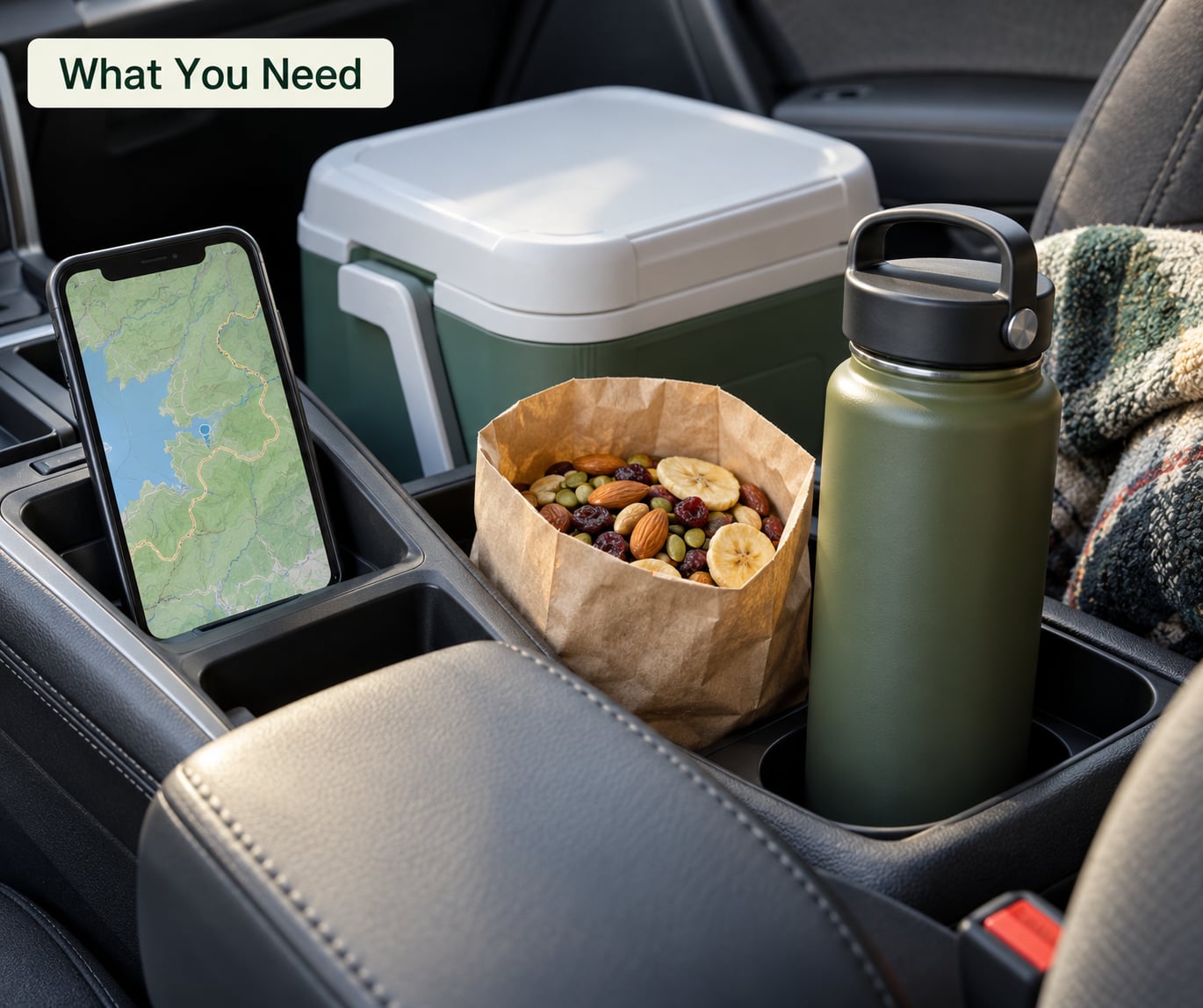
None of this is expensive or exotic. It is the difference between a road trip where food is a non-event and one where you spend half of it looking for a menu.
- A phone with offline maps downloaded for the whole route. Signal drops in valleys and along rivers, and that is exactly where you will be deciding what to do next.
- One plant-based finder app. HappyCow has the widest coverage for dedicated vegan and vegetarian spots. Google Maps is more dependable for small towns, where it knows every local diner even when a vegan-specific app shows nothing. Cross-check both.
- A cooler or insulated bag and a couple of frozen ice packs, if you want to carry anything that needs refrigeration. See the food safety section for how long that actually buys you.
- Two or three shelf-stable meal options per person per driving day. Not snacks, actual meals: a bean burrito you can assemble from a microwave cup of rice, instant noodles plus tofu, a wrap with hummus.
- A knife, a can opener, paper towels, and napkins. Nobody talks about this part and everybody needs it.
- A list of two options per major driving segment, one sit-down and one fast food or grocery. Having a backup decided in advance is what separates a plan from a hope.
Step-by-Step: How to Find Plant-Based Food on a Road Trip
1. Build a route-wide food plan before you leave
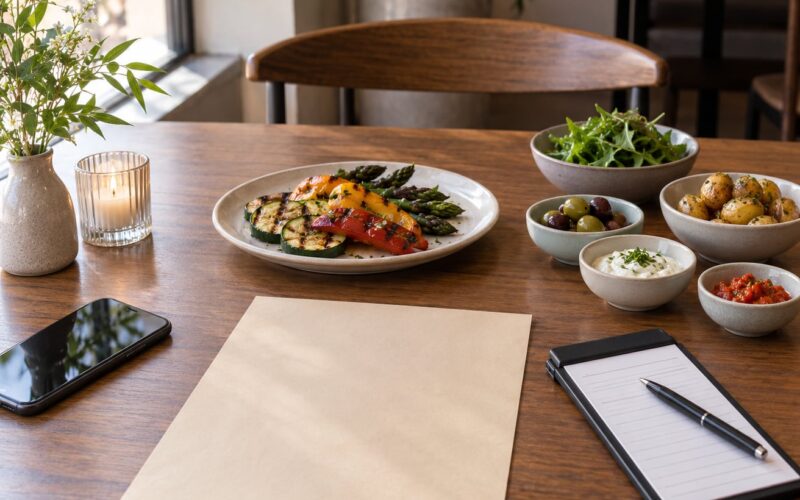
Open your route and mark the likely meal stops at regular driving intervals, roughly every three to four hours. Then pick one dependable option for each segment and write it down. If a leg has nothing good, that is the segment that needs a packed meal, not the one where you improvise.
You will know the plan is working when you can glance at the list and answer what you are eating at lunch without opening an app. Forum travelers reach the same conclusion over and over: plan the stops around food first, then drive.
2. Search for plant-based options before you leave home
Use two apps, not one. HappyCow finds dedicated vegan spots and shows vegan, vegetarian, and vegan-option icons, which matters because those three categories are not the same thing. Google Maps fills the rural gaps, and Yelp reviews tell you whether the restaurant is still open and whether the plant-based dish is an afterthought.
Search with the words travelers actually use: vegan, vegetarian, plant-based, tofu, beans, dairy-free. Most small-town cafés have no menu online, so check the app listing’s hours and last photo date. You are looking for a place with recent posts, not a five-year-old menu photo.
| Tool | Best at | Weak spot |
|---|---|---|
| HappyCow | Dedicated vegan and vegetarian spots, menu prices, coverage across 180-plus countries | Thin in small towns and rural highways |
| Google Maps | Everything, including the local diner nobody has written about | Vegan-friendly is not a filter; you have to read |
| Yelp | Recent reviews that reveal closed spots and changed menus | Reviews skew negative; read the specifics |
| Vanilla Bean and abillion | Backup databases when the first two disagree | Less actively updated |
Search before you leave, not at the rest stop. The one-seat-of-snacks-per-five-miles rule that circulates in road trip threads is funny and also basically right.
3. Read menus online before you arrive
Open the restaurant’s menu on your phone before you are ten minutes away. Look for dishes that are already plant-based, then note the modifications a non-plant-based dish needs. Most menus have beans somewhere, and most kitchens have a grilled vegetable side that needs no debate at all.
What to search for in a menu: a bean bowl, a salad with a side of dressing, a vegetable plate, a bowl with rice, a sandwich you can ask to hold the cheese. What to watch for: anything described as vegetarian that is then covered in melted cheese, croutons, or a creamy dressing.
4. Call ahead when the menu is unclear
One phone call saves a wasted detour. The whole script is one sentence: “I’m vegan, can you do the fried chicken without butter and with no dairy in the batter, or is there something on the menu you already make without animal products?” Servers hear this all day and most of them have an answer ready.
Ask what the kitchen already cooks that is plant-based before you ask them to modify something. A kitchen that makes a black bean soup every day can do you a favor far more reliably than one being asked to fry something in a fresh pot of oil.
If you are on a tight schedule, ask them to hold anything fried so it does not share oil, and ask which sauces are dairy-free. Worcestershire sauce, ranch dressing, and some barbecue sauces carry hidden dairy or anchovies, and that is worth knowing before the order goes in.
5. Use grocery stores as your resupply stop
A grocery stop is not a compromise. It is the most reliable plant-based meal on any road trip, and in a town of two thousand people it is usually the best option in the county. Pull in, walk the produce case, and assemble a meal rather than shopping for ingredients.
The go-to basket: microwave rice or couscous, a can of black or pinto beans, salsa, shredded cabbage or bagged salad, a tortilla or a loaf of bread, hummus, and fruit. Add deli sides labeled plant-based, canned chickpeas, roasted chickpeas for protein, and a bag of baby carrots with a single-serve hummus cup.
Cooked food from a grocery deli that says plant-based, sealed protein bars, and jarred salsa all travel without a cooler. Give the sealed items a smell before you eat them if the car got hot, and keep anything perishable with an ice pack rather than loose in the back seat.
6. Pack portable food for the stretches with nothing
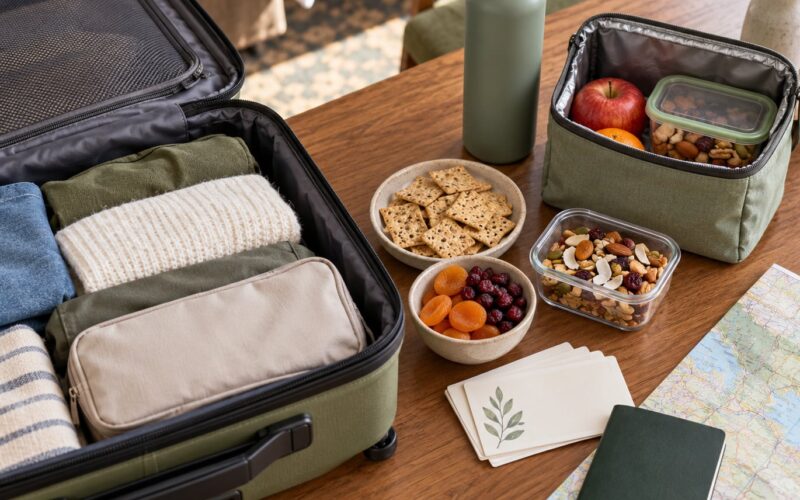
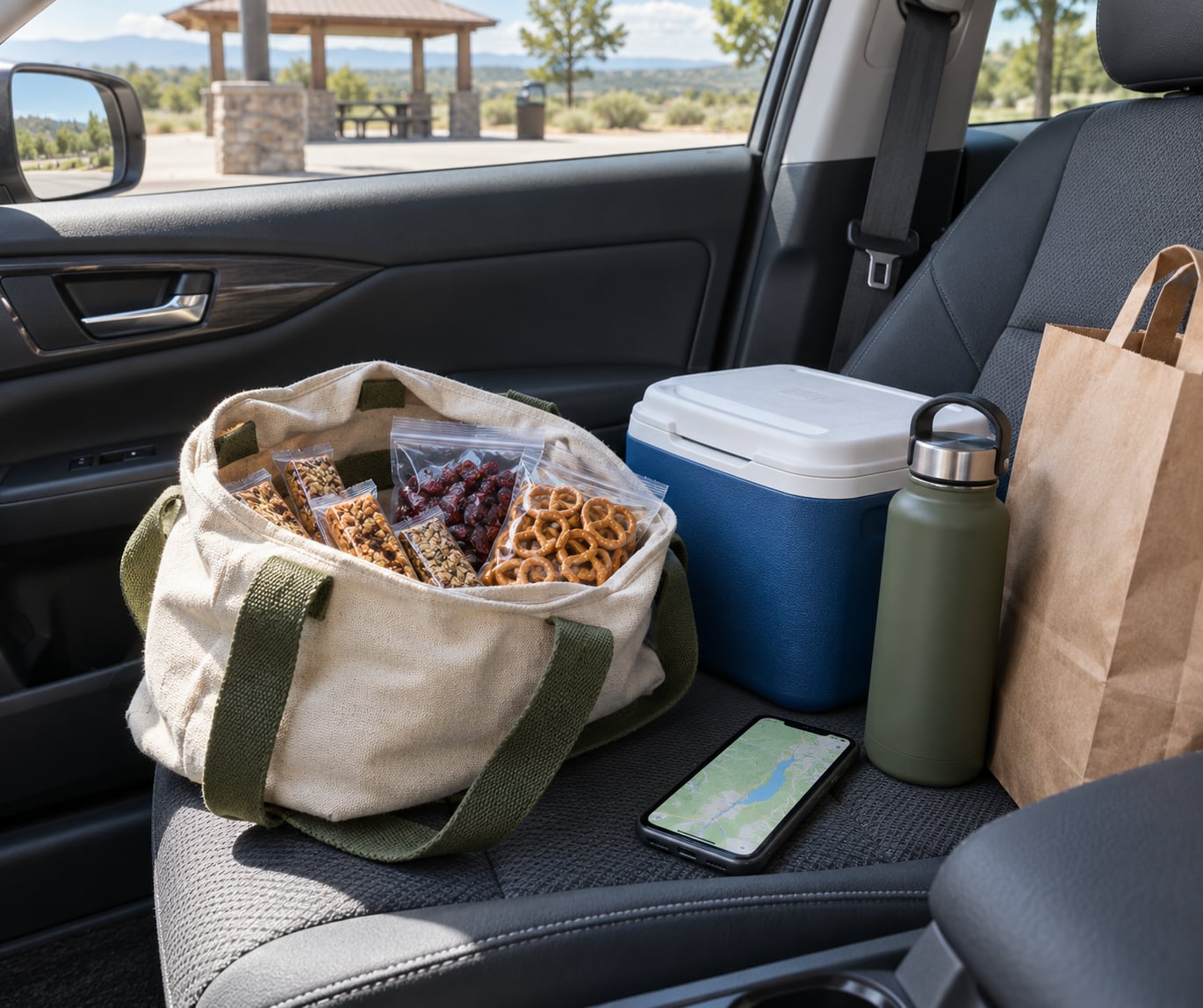
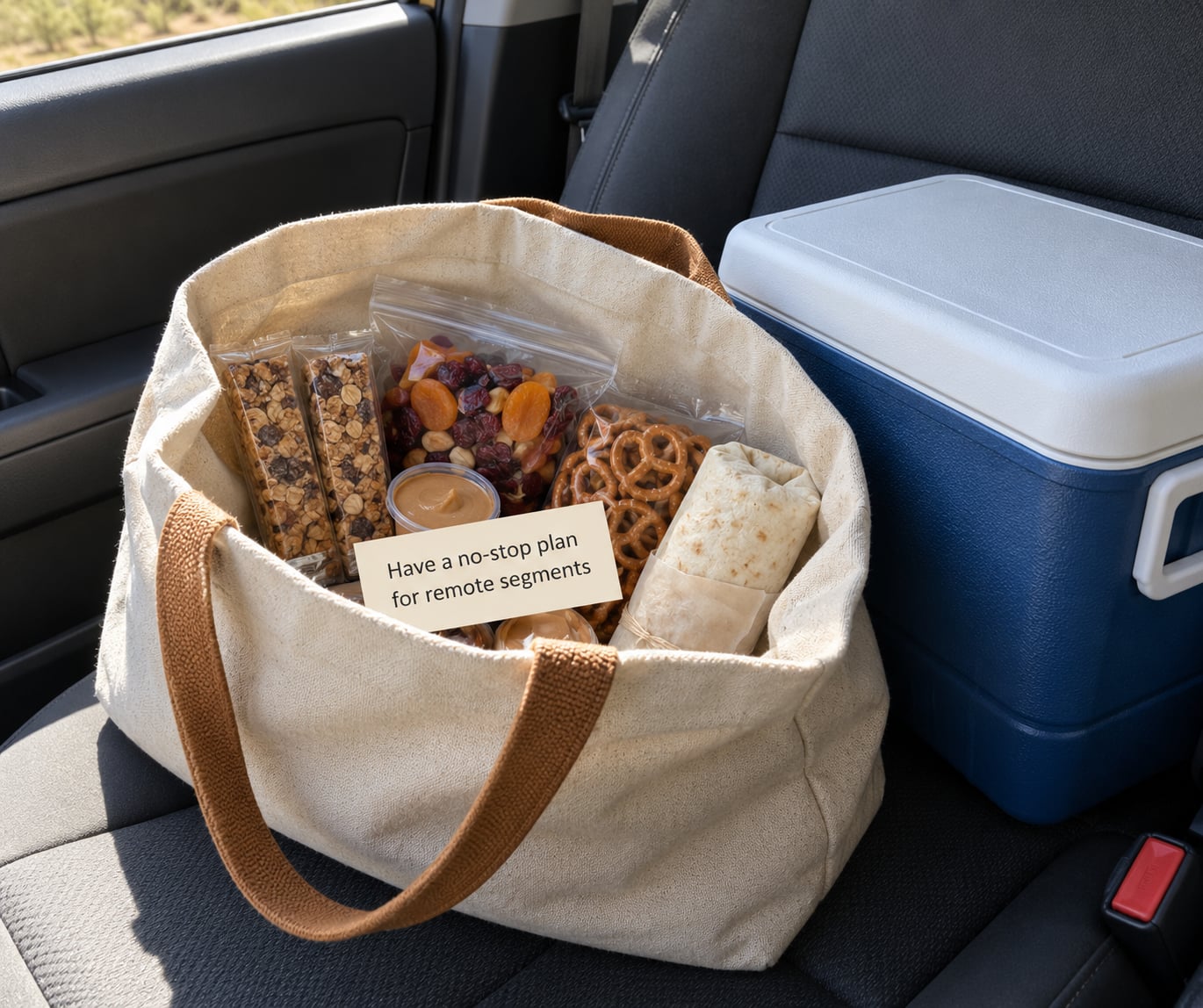
Fill a canvas bag or a lidded bin with food that survives a hot car and does not crumble when you eat it driving. Nut and seed bars, roasted chickpeas, dried fruit, single-serve peanut butter cups, pretzels, plain rice cakes, shelf-stable soy milk in a small carton, and sealed bagels all work.
Refrigerated dips like hummus and any cooked beans belong in the cooler with an ice pack, not in the glove box. USDA guidance treats perishable food as unsafe above 40°F for more than two hours, and one hour when the temperature is above 90°F, which a parked car in June hits easily. When in doubt, that sandwich goes back in the cooler.
Keep the bag in the passenger area, not the trunk, so you actually see it at the next stop. Two options per person per day is a realistic number; one means you will eat the same bar four times and resent it.
7. Read reviews for signs of real plant-based care
Good signs in recent reviews: the person mentions staff knowing the vegan options by name, a separate cooking surface or a kitchen willing to change gloves, and a menu where plant-based dishes have their own section rather than a single line added at the bottom. Ask about plant-based specifically, not vegetarian, if that is what you need.
Be careful with old reviews and with a spot that has not had a review in a while. Businesses close, menus change, and a vegan menu PDF from two summers ago proves nothing. Cross-check the listing hours against the actual business hours, and if a place looks promising on paper but the reviews are thin, treat it as a maybe and keep your second option loaded.
Honest limitation: in truly rural stretches there may be nothing vegan for fifty miles. Small local cafés are often more accommodating than the chain you expected, so it is still worth asking.
8. Have a no-stop plan for remote segments
Some legs have no options, and pretending otherwise is how road trips go wrong. For those, the meal comes from the car: the assembled grocery burrito, the cooler hummus and carrots, the backup bar. Plan water at the same time, since thirst and hunger arrive together and both make driving harder.
If you need to stop, pull into a parking lot rather than the shoulder, and eat before you are lightheaded. On a national park or forest road, a visitor center sometimes has a small cafe, and rest stops on major interstates often have better food than the town they are named after. Check the hours before you rely on it.
Where to Find Plant-Based Food by Stop Type
This table is the fast version of the whole guide.
| Stop type | What you can realistically get | What to do |
|---|---|---|
| Gas station | Nut and seed bars, dried fruit, single-serve peanut butter cups, pretzels, rice cakes, fresh fruit, shelf-stable soy milk | Scan the label for milk, whey, honey, gelatin, and pork or chicken flavoring |
| Convenience store | Same list plus sealed hummus cups, bagged salads, microwave rice bowls, energy drinks | Check the prepared food case dates before buying |
| Grocery store | A full meal: rice, beans, salsa, tortillas, produce, deli sides, roasted chickpeas | Resupply here, not just for snacks |
| Fast food | Bean burritos, sofritas bowls, veggie sandwiches, plant-based burgers, avocado bagels, salads with dressing on the side | Use the chain table below and name what to remove |
| Roadside diner | Usually beans, eggs, griddle items; almost never a vegan menu | Ask early, be specific, ask for no butter |
| Campground or visitor center | Bring your own; occasionally a park cafe with a grill | Eat before arrival; fire rules often ban cooking |
Ordering Plant-Based at Fast Food Chains
These chains show up more often than anything else in road trip threads, usually named in a specific town with a specific order attached.
| Chain | What to order | What to ask them to remove |
|---|---|---|
| Chipotle | Sofritas bowl or burrito, beans, salsa, corn | Cheese, sour cream, the creamed corn if you want it dairy-free |
| Taco Bell | Bean burrito or taco with beans go fresco | Cheese, sour cream, and skip the queso and the rice if it is cooked in butter |
| Subway | Veggie Delite or a chickpea salad sandwich, oil and vinegar | Cheese, mayo, and ask for no butter on the bread |
| Burger King | Impossible Whopper or veggie burger | Hold the mayo, ask for no cheese, check the bun for dairy |
| Starbucks | Oatmeal with fruit, or an avocado bagel | Ask for the spread on the side and no cream cheese |
| Panera Bread | Any bread bowl or salad with dressing on the side | Drizzle of honey, cheese, and croutons, which are often dairy |
| Wendy’s | Garden salad or a plain baked potato | Croutons, cheese, and creamy dressing; ask for oil and vinegar |
| Dunkin’ | Bagel with no cream cheese, or a breakfast sandwich made to order | Egg, cheese, butter on the toast, and the spread on the bagel |
| Domino’s | Thin crust with vegetables, or a salad | No cheese, no meat topping, ask for no butter in the crust or garlic sauce |
One note on cross-contact: these kitchens handle meat. If you have a severe allergy rather than a preference, say so at the order, not after.
What to Say at a Restaurant That Is Not Plant-Based
Most of the anxiety around road trip eating is about sounding rude. You are not asking for a favor; you are ordering a meal with specifications, which is a normal thing to do in a diner.
- “I’m vegan. Can you do this without butter and without dairy in the batter?”
- “Which of your dishes are already plant-based, before any modifications?”
- “Is the dressing dairy-free, or is it ranch and buttermilk?”
- “Can you hold anything fried so it isn’t cooked in the same oil?”
- “Could I get the beans and rice instead of the side of fries?”
- “Do you have beans I could add to a side of salad?”
If a server dismisses the question, do not argue. Ask what is plant-based, accept the answer, and eat the packed meal later. Servers who genuinely do not know usually get the kitchen to answer if you give them a second.
Vegan-Friendly Pit Stops Worth a Detour
If your route passes near one of these, the detour is usually worth it, and the Appalachian and southern corridor has more than most travelers expect. Asheville, Chattanooga, Atlanta, Nashville, Richmond, and Pittsburgh all have multiple dedicated vegan spots. Columbus has a large vegan scene, and DC and Baltimore have enough options to justify a half-day detour between legs.
Smaller towns surprise more often. Regulars on plant-based road trip threads describe a single excellent vegan diner in an unexpected place, and travelers report small local cafés handling a vegan request better than the chain they passed. That is not a guarantee, but it is why I plan one stop per segment and keep the second option in reserve.
Common Mistakes
Assuming vegetarian means vegan. A vegetarian menu item is often pasta in a cream or butter sauce, a salad with a dairy dressing, or a sandwich with cheese and egg-based mayo. Read the item description, not the heading.
Relying on one restaurant per day. One option that is closed, out of ingredients, or packed is a bad afternoon. Save two per major segment, one sit-down and one fast food or grocery.
Waiting until you are hungry to decide. Hunger plus a long stretch of highway makes a bad meal look like a reasonable one. Decide at the last fuel stop, not at the point of starvation.
Putting perishables loose in a hot car. Anything with dairy, meat, or cut fruit belongs in a cooler with an ice pack, and above 90°F you have about an hour before it is a gamble.
Trusting one app on a rural route. Dedicated vegan apps go quiet in small towns. Cross-check with Google Maps and a recent review, and treat an empty result as a gap in the data, not proof that nothing exists.
Forgetting that a side salad is not dinner. Ask for beans, rice, or a vegetable plate added to it, and skip the croutons and the creamy dressing.
Skipping the meal break. Eating on schedule matters more than eating well. Stop every three to four hours even when the food is mediocre; the stop is for you, not the meal.
Three things to do first: map the route and mark the stops, download offline maps for the whole trip, and pack the car before you get hungry rather than at the last minute.
Frequently Asked Questions
What vegan snacks can I find at a gas station?
Nut and seed bars, dried fruit, single-serve peanut butter cups, pretzels, plain rice cakes, shelf-stable soy milk, and whatever fresh fruit is in the produce case are the reliable picks. Sealed hummus cups and bagged salads work if they were kept cold. Read the label and skip anything listing milk, whey, honey, gelatin, or pork and chicken flavoring, which are common in jerky and BBQ-flavored snacks.
Which fast food chains have plant-based options?
Chipotle, Taco Bell, Subway, Burger King, Starbucks, Panera Bread, Wendy’s, Dunkin’, and Domino’s all have items that can be made plant-based with a few changes. Ask for no cheese, no sour cream, no butter, and dressing or spread on the side. Most kitchens are happy to hold ingredients, but say allergy concerns at the order rather than after.
How do I ask for a vegan meal at a non-vegan restaurant?
Say it plainly at the start of the order: I am vegan, can you do this without butter and without dairy in the batter. Then ask which dishes are already plant-based before any modifications. Ask about dressings and sauces, since ranch and some barbecue sauces contain dairy. Ask them to hold anything fried so it is not cooked in shared oil.
What should I pack to eat plant-based on a road trip?
Aim for two shelf-stable meal options per person per driving day: microwave rice with canned beans and salsa, instant noodles with tofu, a wrap with hummus, or a bagel with single-serve peanut butter. Add nut and seed bars, roasted chickpeas, dried fruit, and pretzels for snacks. Keep anything perishable in a cooler with ice packs, since a parked car passes 90°F quickly.
How long can plant-based food sit out in a hot car?
Follow the same rule USDA gives for any perishable food: no more than two hours above 40°F, and no more than one hour when it is above 90°F. A closed car heats up fast even on a mild day. Hummus, cooked beans, cut fruit, and anything with dairy or egg should stay in a cooler with an ice pack, or be left behind.
How do I find vegan-friendly restaurants in a small town?
Use Google Maps rather than a dedicated vegan app, because it lists every local diner and cafe even when a vegan-only app shows nothing nearby. Read the most recent reviews for words like vegan and plant-based, check that the listing hours are current, and call ahead if the plan depends on it. Small cafes are often more accommodating than expected once you order with specifics.
Conclusion
Knowing how to find plant based food on a road trip comes down to three things done before departure: map the route and mark the meal stops, save two options for every major driving segment, and pack at least one full backup meal plus snacks in the car. Then use an app to verify each stop while you still have signal, and eat on schedule rather than when hunger makes the decision for you. The rest is improvising, and improvising is much easier with a full pantry and one good question ready.