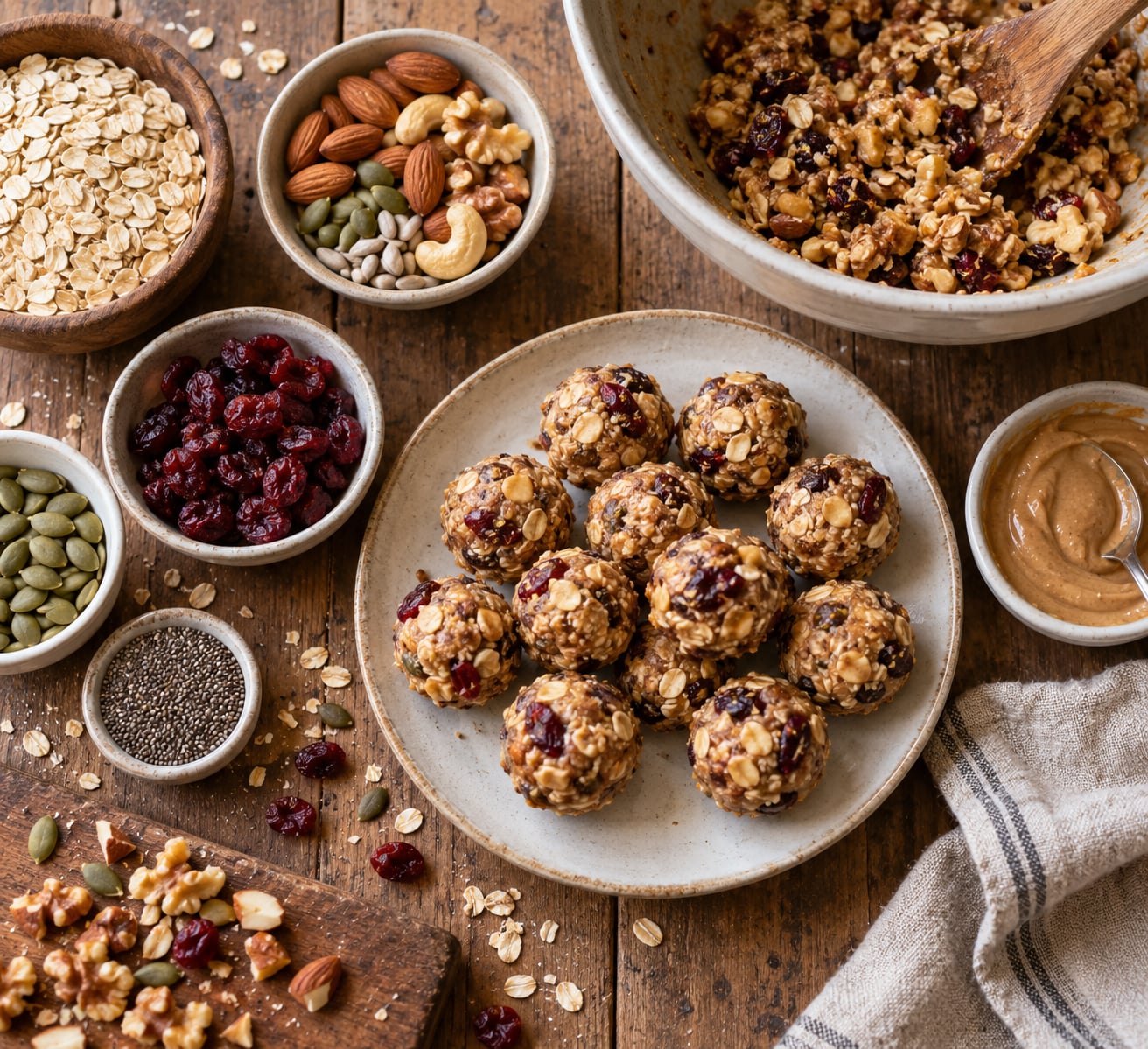
Trail mix is a dry snack you build by combining nuts, seeds, dried fruit, and extras like chocolate or pretzels. Energy bites are the same flavor profile bound into a no-bake dough with nut butter or mashed dates, then rolled into bite-sized balls. Both come out of the same bowl of ingredients in about 20 minutes, no oven required, and making trail mix and energy bites at home is the easiest way to control the sugar and salt that show up in store-bought versions.
The two formats split at exactly one point. For trail mix you keep everything dry and loose. For energy bites you add a binder, chill the mixture, and roll it. That single fork in the road is why one base recipe can feed a hiking bag, a lunchbox, and a desk drawer without repeating any work.
A few notes before you start. All measurements below are US volume with metric equivalents, and one cup equals 250 ml. Nothing here needs a food processor, though one makes the bite version faster. If you are packing food for a child with a nut allergy or working around gluten, the substitution table covers it.
Table of Contents
- What You Need
- How to Make Trail Mix and Energy Bites at Home: Step-by-Step
- 1. Choose the base and add-ins
- 2. Toast the nuts and season the mixture
- 3. How to Make Trail Mix and Energy Bites at Home: Combine the bases
- 4. Finish the trail mix
- 5. Shape and chill the energy bites
- 6. Store, serve, and vary both snacks
- Common Mistakes
- Frequently Asked Questions
- Can I make trail mix and energy bites from the same ingredients?
- What makes energy bites fall apart?
- How long do homemade energy bites and trail mix stay fresh?
- Can these recipes be made without nuts or gluten?
- Should I toast the nuts before making energy bites?
- Can I freeze energy bites for meal prep?
What You Need
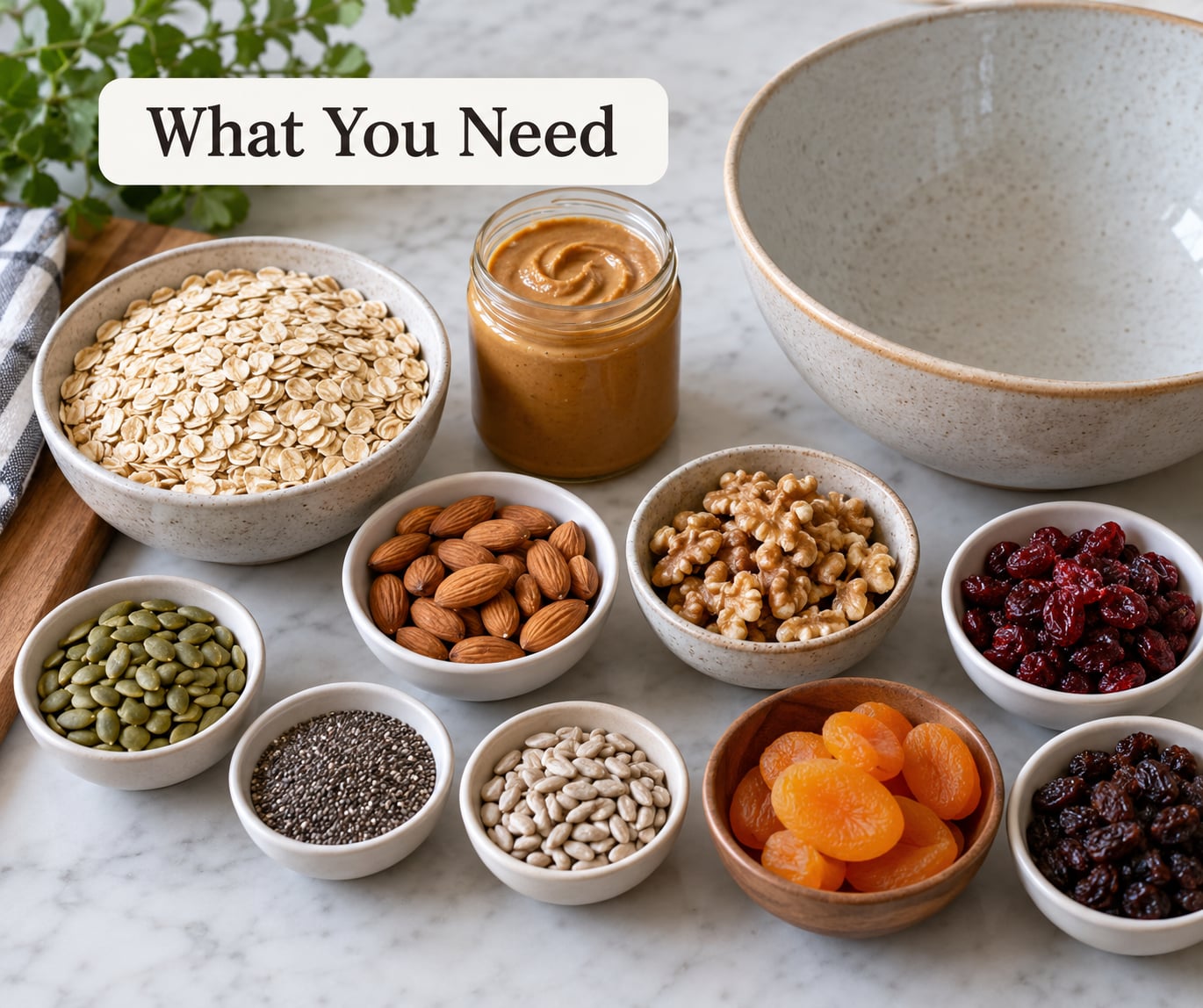
Both snacks come out of the same four component groups: something fatty, something starchy, something sweet, and something salty or spiced. Trail mix leans on volume, so you can eyeball it. Energy bites depend on ratios, so measure them.
The base components
- Oats — old fashioned or rolled oats for a chewier bite, quick oats for a softer one. Certified gluten-free oats if wheat is a problem.
- Nuts — almonds, walnuts, pecans, cashews, or pistachios. Raw or roasted, salted or unsalted.
- Seeds — pumpkin seeds (pepitas), sunflower seeds, sesame seeds, chia, hemp, or ground flaxseed.
- Dried fruit — cranberries, raisins, apricots, cherries, diced dates, or dried apple. Fresh fruit works in trail mix but softens overnight, so keep it out of anything meant to last.
- Salt and spice — flaky sea salt, cinnamon, pumpkin pie spice, vanilla extract, or a pinch of cayenne for a savory mix.
The binders, only for energy bites
Nut butter, maple syrup, honey, tahini, or mashed dates. Peanut butter, almond butter, and cashew butter are the three I reach for most often, and each brings its own flavor. Sunflower seed butter does the same job in a nut-free kitchen.
The tools
A large bowl, a wooden spoon or sturdy spatula, a measuring cup set, a rimmed baking sheet with parchment for toasting, and your hands. A food processor with a pulse button is a real time saver when you are breaking up dried fruit and seeds, but it is optional. A cookie scoop gives you even bites, and a jar makes rolling go faster once your hands get tacky.
Swapping any single ingredient does not change the method, as long as you swap it for something in the same role. Here is the matrix that covers the dietary questions people ask most:
| Need | Swap this for that | Watch for |
|---|---|---|
| Nut-free | Sunflower or pumpkin seed butter in place of nut butter; pepitas and sunflower seeds in place of nuts | Sunflower butter is looser than peanut butter, so add a spoon less at a time |
| Gluten-free | Certified gluten-free oats, or swap oats entirely for extra seeds and chopped nuts | Regular oats are often cross-contaminated with wheat |
| Grain-free | Drop the oats, use 1 cup seeds plus 1 cup chopped nuts, and bind with 3/4 cup dates and 2 tablespoons coconut oil | A grain-free batch needs more binder because there is no oat starch to hold it |
| Vegan | Maple syrup in place of honey; any nut or seed butter | Check that vanilla extract and chocolate chips are dairy free |
| No refined sugar | Mashed medjool dates as both binder and sweetener | Pit the dates and soak them in hot water for 10 minutes if they are dry and hard |
| Kid-friendly | Skip cocoa powder, keep chocolate chips, use mild dried fruit like raisins or banana chips | Very young children should not eat whole nuts |
One last piece of equipment advice. If you plan to make this more than once, buy the plain ingredients in bulk and mix your own seasoning blend with cinnamon, salt, and vanilla in a small jar. It costs nothing and saves measuring every time.
How to Make Trail Mix and Energy Bites at Home: Step-by-Step
Read the whole sequence once before you start, because steps one and two apply to both formats and only step three splits them. Everything up to the chill happens in the same order whether you end up with a jar of loose mix or a tray of firm balls.
1. Choose the base and add-ins
A balanced base needs roughly half nuts and seeds, a quarter dried fruit, and the rest oats and extras by volume. That gives you fat and protein from the nuts, fiber from the seeds, and quick carbohydrate from the fruit and oats. This starter formula makes about 6 cups of trail mix or 18 to 20 energy bites:
| Component | US volume | Grams | Metric volume | Job in the mix |
|---|---|---|---|---|
| Old fashioned oats | 2 cups | 180 g | 500 ml | Chewy bulk and slow carbohydrate |
| Raw nuts | 1 cup | 140 g | 250 ml | Fat, protein, crunch |
| Seeds | 1/2 cup | 70 g | 125 ml | Magnesium, extra crunch, binding texture |
| Dried fruit | 1 cup | 140 g | 250 ml | Sweetness, iron, potassium |
| Chocolate chips | 1/2 cup | 85 g | 125 ml | Flavor, reward for kids |
| Flaky salt | 1 teaspoon | 6 g | 5 ml | Balances the sweetness |
For allergies, think in roles rather than ingredient names. The oat slot can be filled with more seeds. The nut slot takes sunflower seeds or chopped pumpkin seeds. The chocolate slot takes dried mango or additional dried fruit. The salt matters more than people expect, because unsalted nuts next to sweetened fruit taste flat no matter how good the ingredients are.
If you want the shortest version possible, a five-ingredient base works: 1 cup oats, 1 cup peanut butter, 1/2 cup dried cranberries, 1/3 cup honey or maple syrup, and 1/4 cup chia seeds. That makes bites in one bowl, no processor. The full formula above is better when you want a real trail mix with nuts in it.
Keep the sizes honest. Anything larger than a chocolate chip or a standard nut will not roll into a bite, and anything smaller disappears into the mix. If you love dried apricots, chop them into roughly quarter-inch pieces before they go in.
2. Toast the nuts and season the mixture
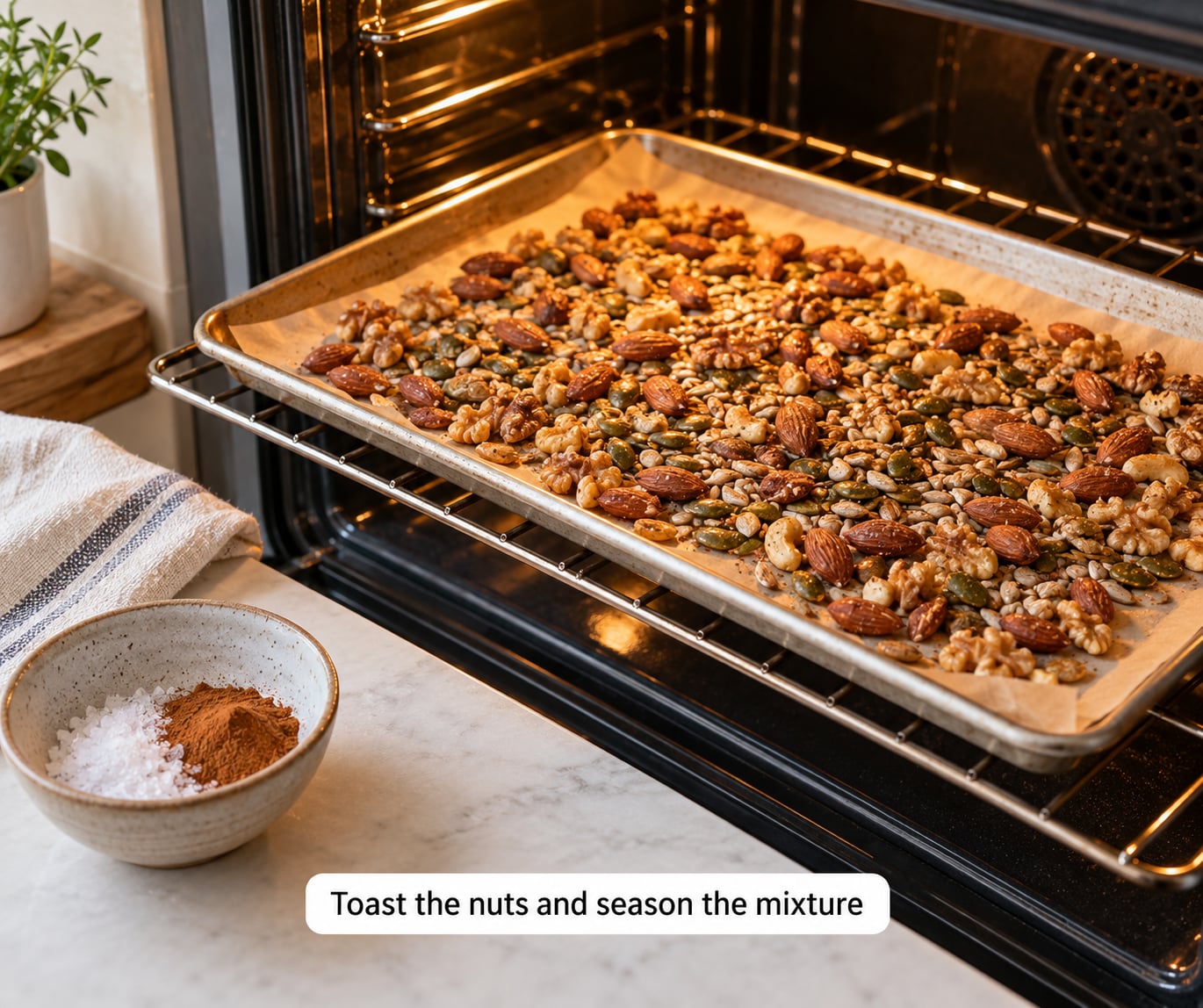
Toasting is optional and it changes the finished snack more than any other single step. Raw nuts taste grassy; roasted nuts taste like the snack you remember from childhood. Heat the oven to 350°F (175°C), spread the nuts on parchment in a single layer, and shake the pan halfway through.
| Nut | Roast time at 350°F | Note |
|---|---|---|
| Almonds | 10 to 12 minutes | They go from done to bitter fast, so watch them |
| Walnuts | 8 to 10 minutes | Pull them early; they darken quickly |
| Cashews | 10 to 12 minutes | Takes the longest of the common nuts |
| Pecans | 8 to 10 minutes | Cut to 12 minutes if halved |
| Hazelnuts | 10 to 14 minutes | Skin them after cooling if you want them mild |
| Peanuts | 8 to 10 minutes | Salty skins make good pit stop fuel |
| Pumpkin seeds | 8 to 12 minutes | Stir often; pepitas scorch fast |
Take the pan out of the oven and let the nuts cool completely, which takes 15 to 20 minutes. This is not optional for energy bites. A warm nut melting into the binder turns your dough into a sticky mess that will not hold a shape, and nuts that go in warm also taste duller later because they carry no heat into the mix.
Season the cooled nuts with a pinch of flaky salt and cinnamon while they are still slightly warm, then toss them with the oats and seeds in your big bowl. For a savory mix, use smoked paprika, garlic powder, and a small pinch of cayenne in place of the cinnamon. For an autumn mix, pumpkin pie spice and dried apple work, and they pair better with pecans than with almonds.
Hold back the chocolate chips, dried cranberries, and anything else that is delicate or coated. They go in after toasting, which is the last step for trail mix and the moment the bite dough gets finished.
3. How to Make Trail Mix and Energy Bites at Home: Combine the bases
This is where the two snacks separate. For trail mix, stir your dry ingredients and stop. For energy bites, you add a binder in the right amount and let it sit.
If you are making trail mix, combine the toasted nuts, oats, seeds, and seasoning in a large bowl. Toss with a big spoon until the cinnamon and salt are evenly distributed. The mix should look loose and dry, and every scoop should have a bit of everything in it. If you want a denser cluster mix, stir 2 tablespoons of honey or maple syrup into 2 cups of the finished mix and let it sit for 10 minutes.
If you are making energy bites, keep the same dry base in the bowl and add your binder on top. Use these ratios, then adjust:
| Binder | Amount for 2 cups oats | Flavor it adds |
|---|---|---|
| Peanut butter | 1/2 cup | Roasted, salty, familiar |
| Almond or cashew butter | 1/2 cup | Sweeter and more neutral |
| Tahini | 1/3 cup plus 2 tablespoons maple syrup | Earthy, nutty, less sweet on its own |
| Maple syrup or honey | 1/4 to 1/3 cup | Use with a nut butter, not alone |
| Pitted medjool dates | 1 cup, mashed | Chewy caramel sweetness, needs no added syrup |
| Coconut oil | 2 tablespoons, melted | Sets firm once chilled; weak flavor on its own |
Mix with a sturdy spatula, pressing and folding rather than stirring, until no dry pockets remain. Then squeeze a spoonful together in your palm. The dough should clump and hold its shape when you press it, and it should pull away from the sides of the bowl. If it crumbles, you need more binder. If it smears and refuses to leave your hand, you need more oats.
That squeeze test is the whole trick, and it is faster than any timer. Add binder one tablespoon at a time and retest. A date-based dough tells you it is ready when rolling one leaves a clean dent in the dough instead of pulling up a sticky string.
4. Finish the trail mix
Fold in the delicate ingredients last. Chocolate chips, yogurt-coated raisins, dried cranberries, banana chips, and pretzel pieces all go in now, once the oven is off and the nuts have cooled, so nothing melts or gets lost in the toasting.
Taste before you store. Batches usually need a small adjustment: a pinch of salt if it tastes flat, a squeeze of maple syrup if the dried fruit is tart rather than sweet, or a handful more seeds if the mix feels too heavy. Taste with a few dried cranberries and a few nuts together, not one at a time, because the balance is the whole point.
Keep the mix evenly combined by tossing it every time you take some out rather than stirring at the top only. The chocolate chips and pretzels settle to the bottom of any container, and the nuts collect at the top, so the mix turns uneven if nobody stirs it.
Portion it however you will use it. Small bags or silicone cups suit a lunchbox and a car console, while a wide-mouth jar suits the pantry. If you are packing for a hike, portion into zip bags at the start and eat them in order so nothing crumbles into the bottom of your pack.
5. Shape and chill the energy bites
Dough that has just been mixed is too soft to handle well. Press it flat in the bowl, cover it, and put it in the refrigerator for 30 minutes. That rest firms the fats and lets the oats drink up moisture, and it is the single step most skipped recipes leave out.
After chilling, scoop with a cookie scoop or your cupped hand. Aim for bites about the size of a walnut, roughly 1 tablespoon of packed dough each. That gives you 18 to 20 bites from a standard batch. Roll them between your palms in firm, quick circles, then let them rest on parchment for 10 minutes so they set their shape.
Sticky hands are the normal state of affairs here. Dust them lightly with oat flour or ground flaxseed, or roll each bite in one of the common coatings: unsweetened shredded coconut for crunch and grip, hemp or chia seeds for a nutty look, crushed nuts, or coarse granola. The coating also firms the outside, which helps a bite survive a lunchbox.
The bites are ready to eat when the outside feels firm and the center yields slightly to a fingertip. If you want them dense enough to travel, chill them another 20 minutes after rolling.
For handling and safety, work with clean hands and a clean board, and keep raw oats and nut butters away from any meat or dairy you may be prepping in the same kitchen, since oats are a raw grain. Refrigerate anything that will sit at room temperature for more than a couple of hours, especially in warm weather, because nut butter and dried fruit are friendly to growth once they warm.
If you are baking instead of no-bake, that is a real option too. Shape the bites, set them on a lined sheet, and bake at 350°F (175°C) for 10 to 12 minutes, until the outsides look set. They firm up as they cool, and baked bites hold their shape better, but the texture leans toward a soft cookie instead of a dense fudge ball.
6. Store, serve, and vary both snacks
Storage is the one place where recipes contradict each other most, so here are the durations with the conditions attached. All of them assume an airtight container at room temperature, not a bag left open on a counter.
| Format | Counter | Refrigerator | Freezer | What actually shortens the life |
|---|---|---|---|---|
| Trail mix, no fresh fruit | 2 to 3 weeks | 2 to 3 months | 3 to 4 months | Moisture and the oil going rancid |
| Trail mix with fresh fruit | 2 to 3 days | About 1 week | Not worth freezing | The fresh fruit bakes into the dry mix |
| No-bake energy bites | 3 to 5 days | 2 to 3 weeks | 3 months | Exposure to air, which dries them out |
| Baked energy bites | 4 to 6 days | Up to 3 weeks | 3 months | Same as above; baking slows it slightly |
Freezing is the answer to the storage question nobody agrees on. Set the bites on a tray to freeze solid first, then move them into a bag or container so they do not fuse together. Thaw them in the refrigerator rather than on the counter, and expect a slightly softer bite than the day you rolled it. People who freeze most batches report the texture change is small enough to ignore, provided you thaw them slowly.
Members of cooking forums and r/WholeFoodsPlantBased threads describe the same work-around for fridge-dried bites: press parchment between layers in the container, and keep a slice of apple in the container overnight to raise the humidity. Nobody claimed the apple trick stopped it completely, but several people reported noticeably softer bites a week in.
Flavor variations worth trying
- Maple and sea salt — add 2 tablespoons maple syrup and a pinch of flaky salt to any base. The classic combination.
- Cookie dough — 2 tablespoons maple syrup, 1 teaspoon vanilla, and 3 tablespoons chocolate chips, rolled in cinnamon oats.
- Savory — pretzels, smoked paprika, garlic powder, and a little cayenne in place of all fruit and chocolate.
- Blueberry morning — dried blueberries, lemon zest, and vanilla, which suits breakfast-style serving.
- Regional nut mix — black walnuts, toasted chestnuts, or hickory nuts where you can get them. Hickory nuts have a distinctly smoky, almost ham-like flavor that no commercial nut replicates, and they are worth hunting down in autumn.
- Lower sodium — unsalted nuts, no added salt, and pretzels swapped for unsalted popcorn or roasted chickpeas.
For serving, trail mix works loose in a bowl, over plain yogurt, or folded into pancakes. Bites pack into a small container and survive a car seat better than anything crumbly. Both split cleanly for portioning: a quarter cup of mix or two bites is a reasonable serving for most people, and putting portions in advance stops the second-helpings problem that store-bought mixes invite.
Common Mistakes
The mixture is too dry and crumbly. This is the most common failure, and it has three numeric fixes. Add one tablespoon of nut butter and mix again. If it is still dry, add one tablespoon of maple syrup or honey. If you are working with seeds rather than oats, seeds absorb far less, so add three tablespoons of mashed dates instead of trying to fix it with liquid. The dough should clump in your palm and pull from the sides of the bowl; anything less is too dry.
The dough is sticky and impossible to handle. You have too much binder, too little oat, or both. Add one tablespoon of oats and mix. If that does not firm it up, dust your hands with ground flaxseed rather than adding more flour, which turns the whole batch gritty. Prevention is easier: measure the binder rather than pouring it, and chill the dough 30 minutes before you roll.
The bites fall apart when you pick them up. Usually under-bound. Add a tablespoon of nut butter or a chopped tablespoon of dates, press the mixture again, and rest it. Rolling each bite in coconut, seeds, or crushed nuts gives the outside something to grip, which is a common suggestion from people who make these weekly for school lunches. Size also matters here, since bites packed too tight from a heaped scoop have no structure inside them.
Add-ins are too big. Chop dried fruit to roughly quarter-inch pieces and use chocolate chips rather than chunks. Anything bigger than a standard nut makes rolling difficult and makes the finished bite fall apart when eaten. If you want bigger pieces in your trail mix, add them after the base is mixed and keep that version loose.
The nuts or chocolate scorched. Scorched nuts taste bitter for the rest of their life and there is no fixing it, so prevention is the only route. Use parchment rather than bare metal, keep everything in one layer rather than a pile, stir at the halfway mark, and pull at the low end of the time range. Very small seeds like pepitas scorch in a fraction of the time almonds need. Never toast chocolate chips, and add them after the oven is off.
Everything tastes bland. Nine times out of ten this is missing salt. The fruit is sweet, the nuts are fatty, and unsalted nuts next to sweet dried fruit genuinely taste like cardboard. Add a pinch of flaky salt and taste again. If it is still flat, the dried fruit is the likely culprit, so swap tart cranberries for raisins or cherries, or add a tablespoon of maple syrup.
The bites harden after two days in the fridge. That is the oats drinking moisture out of the dough. Press parchment between layers, keep the container closed, and take bites out of the container rather than leaving the whole tray sitting exposed. Freezing from day two is the other option, and the texture comes back closer to fresh after a slow fridge thaw.
Frequently Asked Questions
Can I make trail mix and energy bites from the same ingredients?
Yes, and that is the most efficient way to do it. Build one base of oats, nuts, seeds, and dried fruit, then split it. Keep one portion dry for loose trail mix, and add nut butter or mashed dates to the other for energy bites. Toast the nuts once, cool them fully, and you are 20 minutes from both snacks with one round of measuring.
What makes energy bites fall apart?
Not enough binder, or add-ins that are too large. Squeeze test before rolling: the dough should clump in your palm and pull from the sides of the bowl. If it crumbles, add one tablespoon of nut butter or mashed dates at a time. Chop dried fruit to about a quarter-inch pieces, use chocolate chips rather than chunks, and let the dough chill 30 minutes before shaping.
How long do homemade energy bites and trail mix stay fresh?
Dry trail mix keeps 2 to 3 weeks on the counter in an airtight container, 2 to 3 months refrigerated, and 3 to 4 months frozen. No-bake energy bites keep only 3 to 5 days on the counter, 2 to 3 weeks refrigerated, and about 3 months frozen. Fresh fruit cuts the trail mix life to 2 to 3 days, since moisture is what spoils the whole mix.
Can these recipes be made without nuts or gluten?
Both, yes. For nut-free, use sunflower or pumpkin seed butter and swap nuts for extra seeds, remembering that seed butter is looser so you add it a little at a time. For gluten-free, use certified gluten-free oats. For fully grain-free, drop the oats and build the base from seeds and chopped nuts, adding more date or coconut oil binder since there is no oat starch to hold the dough together.
Should I toast the nuts before making energy bites?
Toasting is optional, and cooling them completely is the part that matters. If you toast, let the nuts cool 15 to 20 minutes before they meet any binder, because warm nuts melt the nut butter and turn the dough sticky. Toasting adds flavor and costs 10 to 14 minutes depending on the nut. Skip it and you save time and get a slightly softer texture, which some people prefer.
Can I freeze energy bites for meal prep?
Yes, and freezing is the best answer to the short fridge life of no-bake bites. Set the rolled bites on a tray until they are solid, then move them to a container so they do not fuse together. They keep about 3 months frozen. Thaw them in the refrigerator rather than on the counter, and expect a slightly softer bite than the day you made it.
The fastest way to learn how to make trail mix and energy bites at home is to make one base mixture and split it before the binder goes in. Measure your dry ingredients once, toast the nuts and let them cool fully, then keep one portion loose and bind the other. From that single batch you have a jar for the pantry and a tray of firm bites for the week.