To feed picky kids plant-based dinners, keep one familiar anchor on every plate — pasta, rice, potatoes, bread or a favorite sauce — and change only one thing at a time, like trading beef for lentils or shredded chicken for shredded tofu. Serve the new food without pressure, let your child decide whether and how much to eat, and give it roughly 15 calm exposures before you judge the result.
Most weeknight dinners built this way take 30 minutes or less, use five ingredients or so, and leave leftovers your kid will actually eat tomorrow.
The framework underneath all of it is Ellyn Satter’s Division of Responsibility in Feeding. You decide what is served, when it is served, and where the meal happens. Your child decides whether to eat it and how much. That split is what turns dinner from a negotiation into a meal, and it is the single biggest shift most families make.
Here is what to stock, the five steps that make the approach work, and the mistakes that quietly undo it.
Table of Contents
- What You Need
- Step-by-Step: How to Feed Picky Kids Plant-Based Dinners
- 1. Build a Familiar-First Dinner Base
- 2. Keep One Component Predictable
- 3. Let Kids Choose What They Control
- 4. Serve Small Samples Without Pressure
- 5. Repeat and Expand the Menu
- When Sensitivities Run Deeper
- Common Mistakes
- Frequently Asked Questions
- How do I get a picky child to eat plant-based food?
- Should I tell my child that dinner is vegan?
- What are easy plant-based dinners for picky kids?
- Can I use plant-based substitutes for meat without being asked to eat them?
- How many new foods should I offer my child at one meal?
- What if my child only wants the same plant-based meal every day?
- What to Do First
What You Need
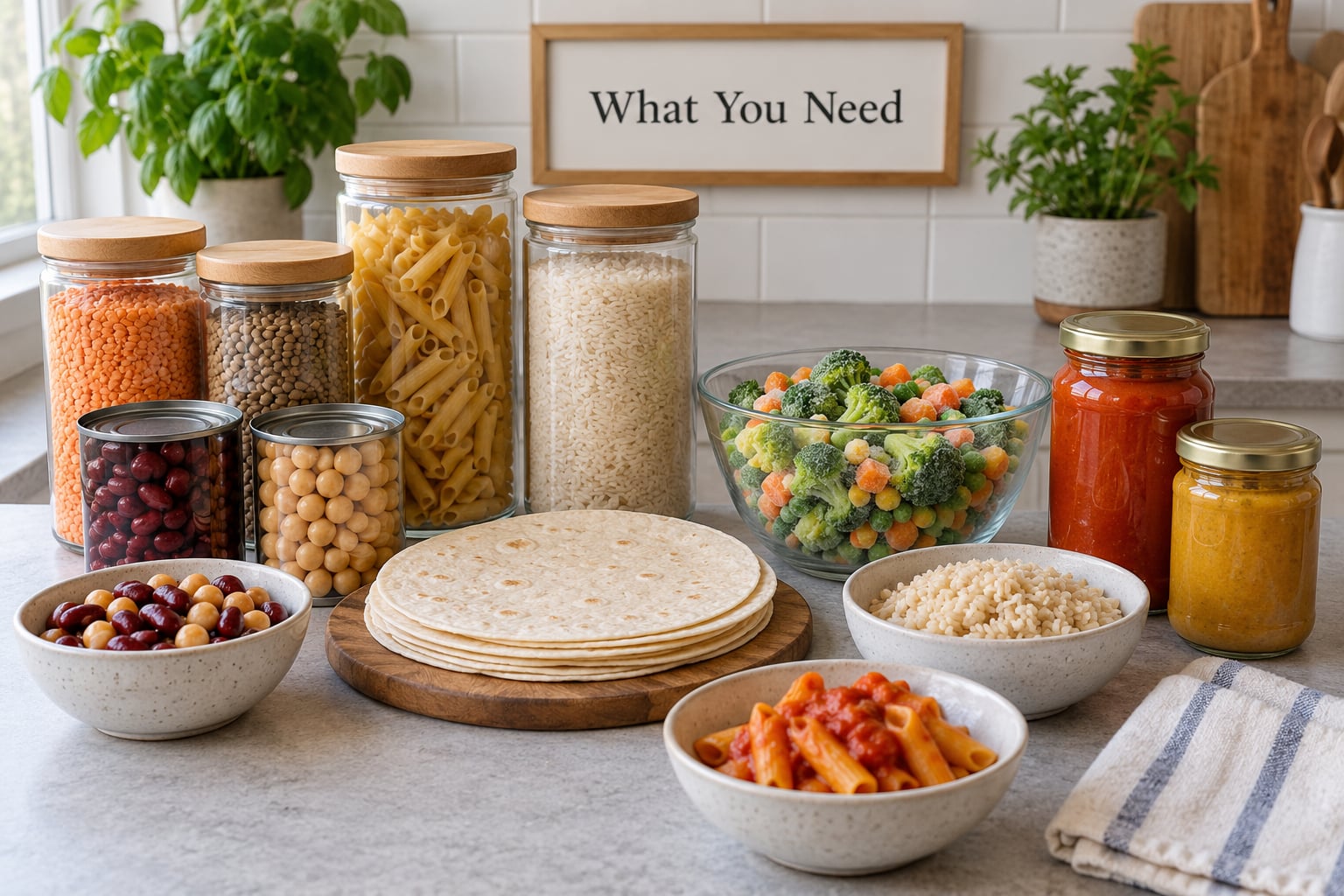
You do not need a specialty grocery run. Picky eaters respond to familiarity and speed, so the shopping list is mostly shelf-stable food you already know how to cook, plus a few plant-based stand-ins for the proteins your kid already accepts.
Build the pantry in four groups.
Proteins that imitate the real thing: crumbled tofu for taco filling, shredded tofu for pulled-pork sandwiches, tempeh strips for stir-fry, and canned lentils or black beans mashed with a little oil and salt so they behave like a filling rather than a side dish.
Starches your child already eats: pasta, white rice, potatoes, tortillas, couscous, and crackers. These carry the meal. If the starch is unfamiliar, nothing else on the plate gets tested.
Sauces that do the blending: a jarred marinara you can thin with water, a nut-free queso made from blended white beans and nutritional yeast, cashew or silken tofu cream for mac and cheese, and a yogurt-style dip. Sauce is the easiest place to hide vegetables because it changes color and texture instead of announcing itself.
Vegetables in two textures: keep a bag of frozen vegetables for smooth applications like sauces and soups, and keep a fresh crunchy option — cucumber sticks, carrot coins, bell pepper strips — for kids who spit out anything soft. Mushy beans and cold salad items are the two things picky eaters reject most often; the same beans roasted until crisp usually pass.
Tools that remove friction: a small steamer basket, a blender or immersion blender, sheet pans for roasting, silicone ice-cube trays for freezing tomato sauce in serving portions, and a kitchen scale once your child is old enough to notice portions changing. A bento-style divided plate counts too. Food touching is a real stressor for many kids, and separate compartments reliably increase what gets eaten.
For the plan itself, aim to cook one “accepted” dinner per week and freeze it in portions, so you always have a safe dinner on the night a new food is being refused.
Step-by-Step: How to Feed Picky Kids Plant-Based Dinners
1. Build a Familiar-First Dinner Base
Assemble the plate as four parts: a familiar starch, a familiar vegetable or fruit, a plant-based protein, and one new flavor or texture. The goal is that your child recognizes three quarters of the plate before tasting anything.
Start with the version they already eat, then swap one component. Instead of a whole new stir-fry, make the stir-fry they know and change the protein from chicken to tofu strips. The change is small enough to be uninteresting, which is the point.
How you know it is working: your child comments on or eats the familiar parts without being asked. If they are asking questions about the entire plate, you changed too much at once.
2. Keep One Component Predictable
Pick the element they are most attached to — pasta, rice, bread, potatoes or a specific sauce — and hold it steady while everything else shifts around it. Parents often quit this strategy too early, which is why the same kid who ate lentil sloppy joes once went back to refusing beans.
Vary the protein and the vegetable instead. Lentil sloppy joes one week, black bean tacos the next, split pea soup after that. Same bun, same cheese, same shape of food; new filling. Repeat exposure works because the child is meeting one new variable at a time, and the context stays safe.
How you know it is working: the protein changes and the meal still gets finished, or at least still gets tasted. That is a win even when nothing is eaten.
3. Let Kids Choose What They Control
Offer two or three options and let your child pick. The choices should be about color, sauce, topping, temperature, or portion size — never about whether the meal happens. “Do you want the carrots with dip or the cucumber with dip?” gives real control. “Do you want beans or no beans?” hands over a decision you should be making.
Then let them control the rest. Put the serving dish on the table with a big spoon. Let them take the portion. Let them leave the rest untouched for as long as the meal lasts. Responsive feeding depends on the child being able to notice genuine hunger and fullness, and you cannot protect that if you are plating every bite for them.
How you know it is working: your child starts serving themselves or asks for a specific component. Either one shows they are engaging with the meal instead of waiting for you to negotiate.
4. Serve Small Samples Without Pressure
Place one or two bites of the new food on a separate small plate and let it sit there for the whole meal. Do not point at it, do not count bites out loud, do not praise refusal or accept it either. A neutral response is the goal: “Thanks for trying” and nothing else.
Parents often want a rule to follow here, and two are worth knowing. The three-bite rule says a child only has to taste three bites before they can declare the food done — useful as a ceiling, harmful if you turn it into a demand. The fifteen-exposure guideline is the more useful one: a neutral, no-pressure encounter with a food about fifteen times over a few months is a normal path to acceptance, and it is far more realistic than expecting a first-try conversion.
How you know it is working: the tasting stops being an event. Touching, licking, smelling and eventually eating are all forward motion, and they all happen at the table, not after a bribe.
5. Repeat and Expand the Menu
Keep a short list of what is accepted, what is tolerated and what gets refused. Most families find a narrow list at first — pasta, crackers, bananas, maybe rice — and grow it by one accepted food every few weeks. That is normal progress, not failure.
When a new food lands, move it from “new” to “safe” and expand from there. Lentils accepted in soup? Try lentil tacos next. Tofu accepted as nuggets? Try it in a stir-fry. A blank canvas kid who only wants the same meal every day is a temporary stage, and adding one small change a month — a new dip, a different shape, one extra vegetable on the side — is usually enough to keep the relationship with food open.
How you know it is working: your accepted list is longer than it was a month ago, and refusals take less energy from you. That second part matters more than the food.
When Sensitivities Run Deeper
Some children are not simply selective. Food neophobia — an intense fear of anything new — peaks in the toddler and preschool years. Autistic children and children with avoidant/restrictive food intake disorder (ARFID) may eat only a “beige diet” of a handful of textures, and food touching, smell and mixed foods can cause real distress rather than mere reluctance.
For those kids, the same structure applies with smaller steps. Separate every component into its own compartment, avoid mixed textures, serve the same five or six foods consistently for weeks, and add one new item without removing anything. Work with an occupational therapist or a feeding therapist who knows ARFID, and tell your pediatrician about the restricted pattern rather than waiting.
Plant-based eating adds a nutrition layer worth raising with a pediatrician or registered dietitian, particularly for young children. Vitamin B12 is not naturally reliable in plant foods, and iron, vitamin D, calcium, iodine and omega-3 fats all need deliberate attention on a diet with no dairy, eggs or meat. A fortified plant milk, iron-fortified cereal and a B12 source cover a lot of the gap, but a professional can confirm what your child specifically needs.
Common Mistakes
Most families lose ground in the same five places, and the fix is usually small.
Replacing every favorite at once. A fully novel plate gets judged as a whole, and one suspicious vegetable can spoil the entire meal. The fix is one change per meal, and only after the base is sitting untouched on the table.
Hiding ingredients without explanation. Blending spinach into sauce is a fine tool, but it is not a substitute for what happens at the table. Tell your child plainly that there is a vegetable in the sauce and that it is not going anywhere. A child who later finds out otherwise stops trusting the whole meal, and that trust takes months to rebuild.
Offering too many options. Three to five familiar items on the table is a reasonable range. Ten options look like a buffet, dilute the appetite and turn a meal into a tasting marathon.
Forcing taste tests. Holding a spoon up to an open mouth, counting swallows or saying “one more bite” moves the decision from the child to the parent, which is exactly the split the framework warns against. Let the food be available and the pressure be absent.
Making the child’s plate restrictive. If dinner becomes five items your child insists on and nothing else is offered, the menu stops growing. Serve at least one thing you are working on, alongside the safe items, every meal.
A few things that help more than most parents expect. Put the new food on the child’s plate or in their hands rather than serving it from a communal dish. Let a kid touch, lick, smell and play with a food before tasting it. Serve dips and let children dunk, because dipping makes unfamiliar food familiar in the mouth. Cook tofu and tempeh until genuinely crisp — freezing first, then thawing, then cooking hard, changes acceptance more reliably than any other single trick. And keep milk and juice to mealtimes, since a full stomach is the most common reason a hungry kid says no.
Keep a parallel plate too, when one parent eats plant-based and the rest of the family does not. Cook the plant-based version from the same base ingredients, plate the animal-protein portion for everyone else, and never frame the extra plate as the “healthy” one. The point is that your child still sits with the family and still gets the familiar base.
Frequently Asked Questions
How do I get a picky child to eat plant-based food?
Keep one familiar anchor on the plate, swap a single component, and serve the new food without pressure. Most children need about fifteen neutral exposures before a food is accepted, so treat refusals as normal data rather than setbacks. Let your child decide whether and how much to eat while you decide what is served, when and where.
Should I tell my child that dinner is vegan?
Yes, simply and once. Hiding the plant-based component works in the short term and backfires the moment your child notices, because the whole meal becomes suspect. A plain sentence like this dinner is plant-based, the beans are just food keeps trust intact and still leaves room for refusal without a fight.
What are easy plant-based dinners for picky kids?
Lentil or bean sloppy joes on a bun, pasta with a blended tomato and carrot sauce, mashed potato bowls with split pea soup, tacos with crumbled tofu and plain rice, sheet-pan roasted potato wedges with chickpea bites, and mac and cheese made with a cashew or silken tofu cream. Each one is a familiar shape built from plant-based ingredients.
Can I use plant-based substitutes for meat without being asked to eat them?
Yes. The swap is a separate question from the exposure, and keeping them apart lowers the stakes. Offer the plant-based version in the familiar format, such as nuggets, tacos or sloppy joes, without announcing it, and keep the rest of the plate identical to a meal your child already accepts.
How many new foods should I offer my child at one meal?
One. Two at most, and never while you are still introducing the first. A novel plate is judged as a whole, and a single suspicious item can cost you the entire meal. If you introduce the new food alongside familiar favorites, most of it gets eaten simply because it is touching something safe.
What if my child only wants the same plant-based meal every day?
That narrow phase is common in the toddler and preschool years and usually passes. Keep the repeated meal available and add exactly one small change a month, like a new dip, a different shape or one extra vegetable on the side. Removing a favorite food rarely expands a diet and often makes the whole category harder.
What to Do First
Pick the one dinner your child reliably eats, and this week make it with one plant-based swap. Keep the rest of the plate exactly the same, serve the new part without a single comment about it, and write down how it went.
Do that three or four times before changing anything else. The version of how to feed picky kids plant-based dinners that works is the one that is boring and repeatable, and the families who get there are the ones who stopped chasing a single winning recipe and started building a plate that already works.