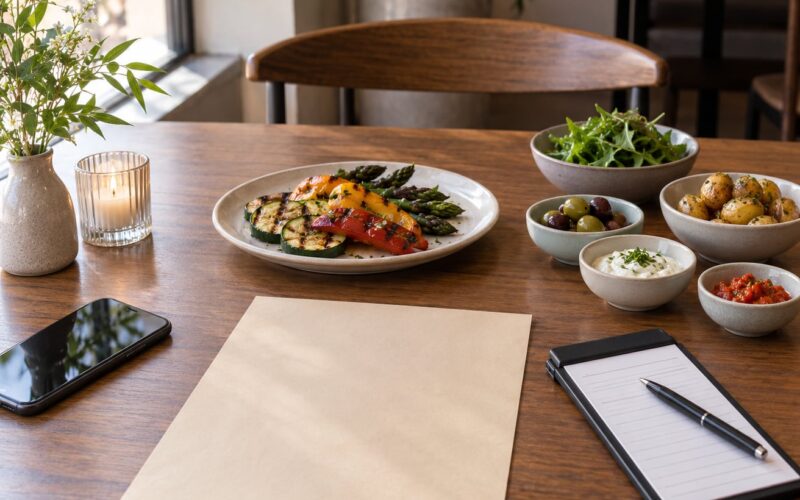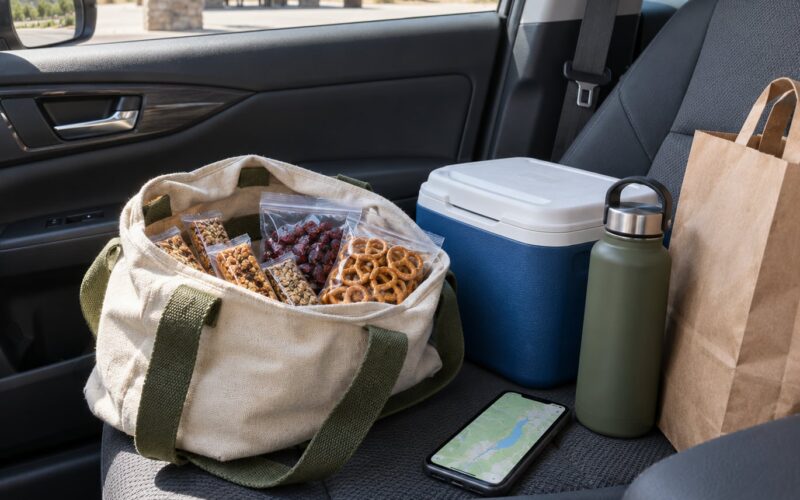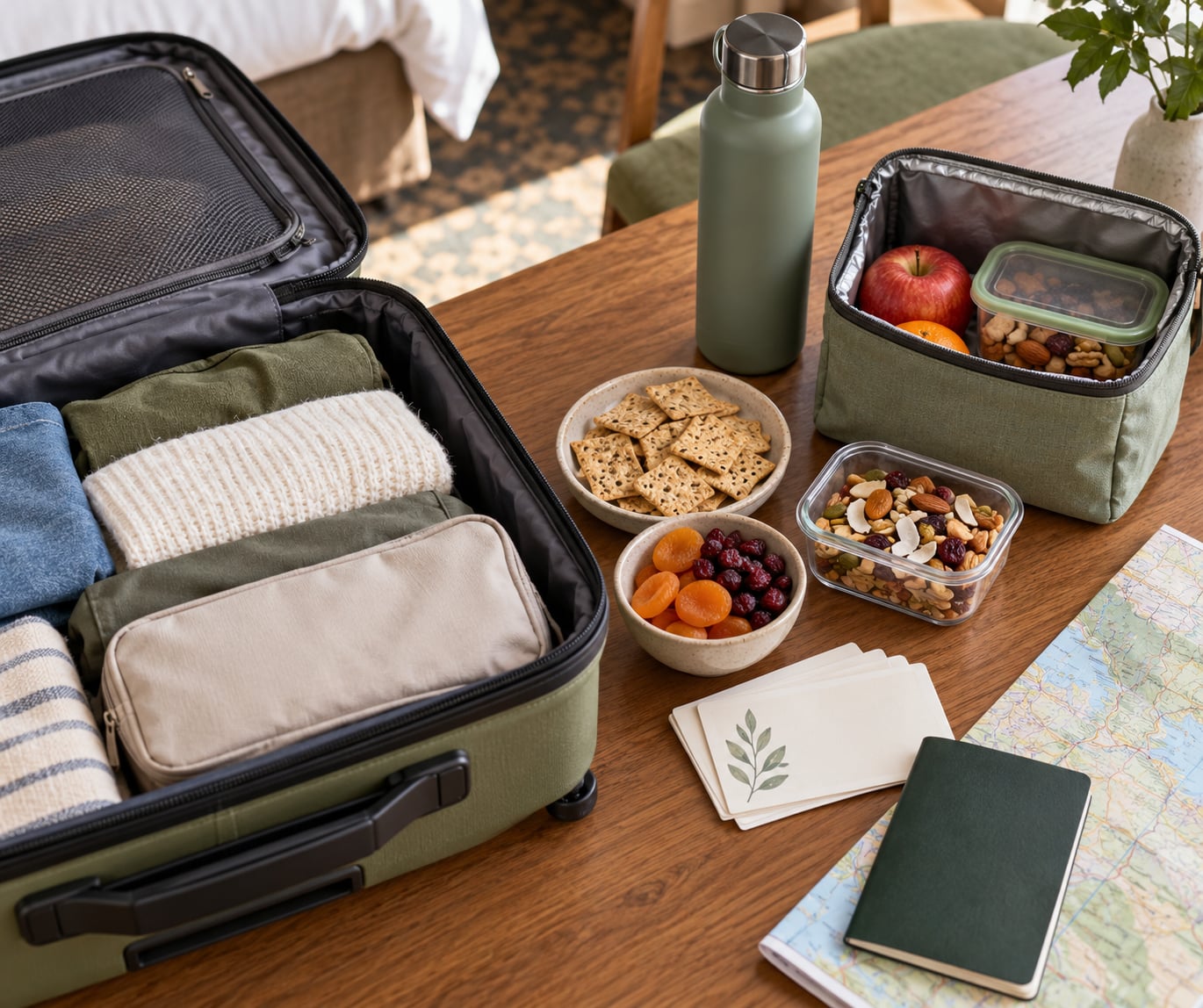
Yes, you can eat well while traveling with dietary restrictions, and the difference between a careful trip and a genuinely good one is about an hour of prep before you leave. Learning how to travel with dietary restrictions and still eat well comes down to three layers: a shelf-stable food kit that covers the gaps between restaurants, a clear way to tell staff what you need, and a backup plan for the moments nobody schedules. Start with the What You Need list, work through the six steps in order, and the whole thing stops feeling like a project.
Table of Contents
- What You Need
- A precise ingredient list, not a diet name
- Medical documents and prescriptions
- Per-stop research, done before departure
- A printed allergy card and a backup food kit
- Step-by-Step: How to Travel With Dietary Restrictions
- 1. Know exactly what you need to avoid
- 2. Research the destination and every route
- 3. Build a simple request and restaurant strategy
- 4. Pack practical food and safety supplies
- 5. Eat well during transit and busy travel days
- 6. Have a backup plan for difficult moments
- Common Mistakes
- Telling staff “I’m gluten-free” and hoping
- Trusting a menu label or a restaurant listing
- Packing for the strictest traveler in the group
- Leaving the food kit in checked luggage
- Forgetting that a layover is a meal
- Waiting to ask until after you order
- Expecting perfection in the wrong places
- A few habits that make the system easier
- Frequently Asked Questions
- Can I eat well while traveling with celiac disease?
- How do restaurants handle gluten-free or allergy requests?
- What should I pack in my carry-on for dietary restrictions?
- How can I find vegan or gluten-free food in a small town?
- What should I do if I cannot eat enough during a long trip?
- How do I explain dietary restrictions when speaking a different language?
What You Need
Most disappointing trips with a restricted diet come from missing information, not from missing food. Gather four things before you book anything: the exact ingredients you must avoid, the medical paperwork to back them up, a per-stop research list, and a bag of food that does not need a kitchen.
A precise ingredient list, not a diet name
Write down what you cannot eat as ingredients, in plain language. Celiac travelers do not just need “no gluten.” They need wheat, barley, rye, malt, brewer’s yeast, and most gravies thickened with flour, plus an honest note about cross-contact tolerance. A dairy allergy means milk, cheese, butter, cream, whey, and caseinate, and the person frying your onions at a diner deserves all five words, not the shorthand.
Sort your list into two tiers. Medical restrictions are ones where a mistake means illness, a reaction, or a flare-up. Preference restrictions are ones where a mistake is disappointing but harmless. Knowing which tier each item sits in changes how carefully you screen a kitchen, and it is the fastest way to get taken seriously as a customer instead of a fussy one.
Medical documents and prescriptions
Carry medications in your personal item, in the original labeled containers, with more than you think you need. That includes an epinephrine auto-injector if you use one, plus a second one if the trip is long. A doctor’s letter naming your condition, the medicines you carry, and the fact that they are medically necessary is worth carrying even when nobody asks, because it converts an airport security conversation into a paperwork conversation.
If you cross a border, write the drug names and doses in the local alphabet alongside the English. A pharmacist abroad cannot read “metoclopramide” in a script they cannot parse, and generic names differ by country. Check the entry rules for your destination before you pack, and check whether your insurance covers a pre-existing condition away from home, since many policies do not.
Per-stop research, done before departure
Do not assume a city with vegan restaurants has them everywhere, and do not assume a small town has none. Research each stop for three things: a grocery store or market that stocks something you can eat, one or two restaurants that can handle a medical restriction, and a backup of each. Note addresses and hours the night before, not the morning you are hungry.
Restaurant-finder apps such as Find Me Gluten Free and HappyCow are useful starting points for celiac and vegan travelers, and Google Maps reviews cover most everything else. Treat every listing as a lead rather than a guarantee and call ahead when the meal matters.
A printed allergy card and a backup food kit
Print a card in the local language and hand it to the server or chef. The template is short on purpose:
ALLERGY — please read before cooking. I am allergic to: __________ . It can cause a serious reaction, not just discomfort. Please confirm the dish and every ingredient used are free from it, and that it is not prepared on shared equipment. My diet is vegan / gluten-free / dairy-free. Thank you for telling me if you cannot be certain.
The line that changes behavior more than any other is asking a kitchen to be honest. Staff will often accommodate what they can control and say so plainly when they cannot, which is far more useful than a plate that seemed fine and was not.
Then pack food. Shelf-stable items travel well, do not need refrigeration, and survive a missed connection: nuts, dried fruit, protein or granola bars, meat sticks, rice cakes, crackers, applesauce pouches, roasted chickpeas, or the specific packaged snacks a forum told you are worth trusting. Keep them in a labeled container inside your personal item, not in checked luggage.
Step-by-Step: How to Travel With Dietary Restrictions
Work through these six steps in order and the trip takes care of itself. Each one removes a different category of surprise, and skipping the later steps is what turns a good plan into a bad afternoon.
1. Know exactly what you need to avoid
Before anything else, separate your restrictions into medical and preference tiers and write each one out in ingredients. Travelers with celiac disease need to know that hidden gluten is not only bread and pasta. It lives in soy sauce, gravy, malt drinks, some oats, breading, and the shared fryer at a busy diner.
Next, decide how strict you actually need to be about cross-contact, because pretending to be stricter than you are creates tension you will carry all trip. For severe allergy and celiac travelers, shared fryers, shared toasters, a scoop used for ice cream and fries, and a flour-dusted counter are real risks. For others, they are noise. Knowing where you sit on that line tells you exactly what to ask a kitchen.
2. Research the destination and every route
Research each stop separately, because a road trip through the Appalachian and Southern United States has entirely different food rules than a city with a dedicated gluten-free bakery scene. Smaller towns there run on skillets, shared fryers, gravies thickened with flour, and soda fountains. That can be wonderful regional food and a poor fit for celiac travel, and knowing it in advance saves you from ordering twice.
The upside is real. Cornbread, beans, greens, sweet potatoes, smoked ham, catfish, and late-summer tomatoes are all worth planning a stop around, and a diner that cooks to order will usually do a fresh side and a sauce on the side if you ask. Look for the places where food is cooked simply and separately rather than the places with the biggest menus.
Then research the transit food, which is where most trips actually break. Airport and station food is the weak link: fried, shared-fryer, and thinly labeled. Map out two airport options per hub, plus the grocery store or market near your gate, and note whether your airline offers a restricted meal you can request in advance.
For international routes, get a translation app working before you fly and save your allergy card offline. Bring more cards than stops; they get used up, lost, and stained faster than you expect.
3. Build a simple request and restaurant strategy
Write one short explanation and use it every time. Three sentences works: what you cannot eat, whether a mistake is medical, and what you need the kitchen to confirm. Speaking early, before the order, gets a better result than flagging it after the plate lands.
Ask two questions and keep the answers: can you tell me what is in the dish, and is it prepared on shared equipment? If the answer is vague, switch to a dish you can verify ingredient by ingredient. Simple, whole foods travel better through a kitchen than anything assembled from a dozen components, and that is not a compromise, it is the reliable order of operations.
Learn which restaurant types accommodate a restriction well. Delis and salad counters usually let you choose ingredients. Hotels and all-day cafes usually have a kitchen that can adjust. Independent Italian restaurants and small bakeries are usually the hardest. Ethnic restaurants are often the best case: a Thai kitchen, an Ethiopian kitchen, or a Korean barbecue generally knows its own dishes well enough to modify them.
Two habits help more than any app. Eat early or at off-peak hours, when the kitchen is calmer and the staff can pay attention. And pick your first dinner before you arrive, so the first evening of a new city is not also a research project.
4. Pack practical food and safety supplies
Pack items that need no preparation and no refrigeration, then add tools that make them usable: a fork that fits in a bag, a refillable water bottle, zip bags for portions, and a small insulated food bag with frozen ice packs for anything perishable. Keep perishables at or below 40°F (4°C) and discard anything that has sat warm for more than two hours, the same standard you would apply at home.
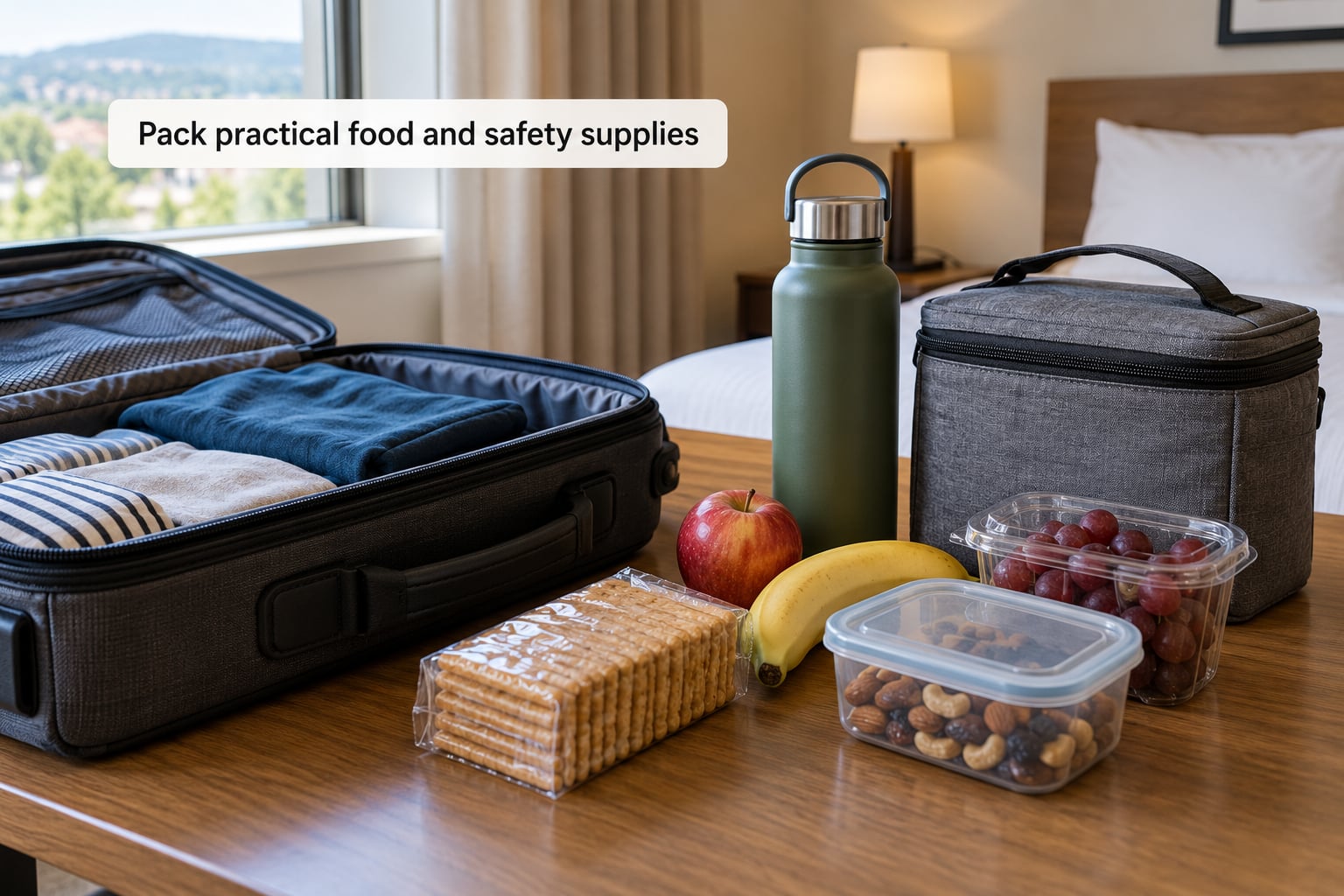
Bring one item per travel day plus two extra. That sounds like a lot until you divide it: two snacks a day plus a meal you eat at an airport is realistic, and it is far cheaper in effort than searching a food court at 11pm.
Do not overpack for conditions you do not have. A vegan traveler does not need a celiac kit, and a low-FODMAP traveler does not need to fear the shared fryer the way a severe allergy traveler does. Pack for your actual restriction, not for the worst case of somebody else’s.
5. Eat well during transit and busy travel days
Transit days fail because they compress three meals into one twelve-hour block. Counter it with a rhythm instead of a schedule: eat something every three to four hours, even if it is small, and you arrive at your destination hungry enough to enjoy dinner and not so depleted that any food looks like a good idea.
Solid foods pass airport security easily. Liquids do not: in the United States the rule allows containers of 3.4 ounces or less, fitting in one quart-sized bag, and the same shape applies at most international equivalents. Sauces, dressings, soups, and puddings in pouches fall under the liquid rule, so buy them after security instead. Ice packs need to be frozen solid at screening, and pills are not subject to the liquid rule, which is another reason medications go in your personal item rather than your checked bag.
Airline restricted meals are worth requesting. Common codes include vegan, vegetarian, gluten-free, kosher, Muslim, and diabetic meals, and requests usually need to go in 24 to 48 hours ahead through the airline’s special service request form. Still ask when the meal arrives, because travelers on celiac forums report in-flight gluten-free meals arriving contaminated or used on a shared surface. If the tray looks off, send it back and eat your backup snack.
For the airport itself, skip the fryer row. Look for grilled or steamed items, wraps with a salad base instead of a tortilla, fruit, yogurt, or packaged snacks from the specialty aisle, and eat at the gate before you board rather than racing for a table at the gate.
6. Have a backup plan for difficult moments
Every trip eventually hits one of these: a restaurant is closed, the kitchen cannot accommodate, a flight cancels at midnight, or a conversation about contamination is going badly. Have a decision tree before you need it, when you are still calm.
Walk through it in order. Was the food definitely unsafe, or uncertain? If you ate something questionable and you have a prescribed response plan, follow it and seek care. If nothing is wrong but the meal is not acceptable, stop eating and move to plan B: the grocery store, the market, the backup restaurant you identified, or your bag. If you cannot eat enough across a full day, eat the safe things you have and treat the grocery stop as the meal, not as a failure.
Have a card that names your condition, your emergency contact, and your insurer, plus the local emergency number for each country you visit. If you do react or flare while away, tell a clinician your condition and your food history plainly, and give them your allergy card. That five-minute handoff saves a lot of guessing.
Traveling with severe restrictions has an emotional side that rarely gets discussed. The loudest worry in celiac and solo-travel communities is not hunger, it is the not knowing: not knowing whether the kitchen is clean, not knowing whether you can eat tomorrow, not knowing if you will spend a whole day eating crackers. The food kit and the per-stop research are what quiet that, because they turn an open question into a plan.
Common Mistakes
Almost every avoidable travel mistake with a restricted diet comes from treating safety as the whole goal. These are the ones I would fix first, and the fix for each is short.
Telling staff “I’m gluten-free” and hoping
Saying the diet name alone gets you a reasonable plate. Naming the ingredients gets you a safe one. Replace the shorthand with three sentences: the exact ingredients you avoid, that it is medical, and what the kitchen needs to confirm.
Trusting a menu label or a restaurant listing
A “gluten-free” label on a bread basket in a shared kitchen is not a promise, and app listings are not verified. Treat both as leads. Read the ingredient list yourself, and call ahead on the days that matter.
Packing for the strictest traveler in the group
Family trips often turn into hauling four specialty kits for three different diets. Pack each person’s own restrictions and leave room in the group kit for things everyone can eat, which is usually more fruit, crackers, and canned goods than you think.
Leaving the food kit in checked luggage
A delayed bag means no snacks, no backup meal, and no medication. Personal item, always, with the medication, the allergy cards, and one full meal worth of food that you could eat if everything else went wrong.
Forgetting that a layover is a meal
Connections eat more trips than the destination does. Eat before boarding, carry two snacks, and treat a long layover as a chance to refill water and find real food rather than to sit and wait.
Waiting to ask until after you order
Kitchens handle modifications best before the ticket prints. Order first, flag your restriction second, and the ticket is already made. Tell the server first, order second.
Expecting perfection in the wrong places
Safe restaurants are often fewer, further apart, and pricier than chain restaurants, and that is the honest trade. Accepting that a trip is mostly safe and occasionally merely fine is what makes the safe parts worth it, rather than a source of constant low-grade disappointment.
A few habits that make the system easier
Keep the same routine in every city: eat at set times, confirm the first dinner before arrival, keep one emergency meal in your bag at all times, and rescreenshot restaurant details the night before. Travelers who get sick almost always skipped one of those four, usually the first meal of the day.
Frequently Asked Questions
Can I eat well while traveling with celiac disease?
Yes, with preparation. Celiac travel is mostly a cross-contact problem, not a menu problem, so the work is in the kitchen conversation and the backup snack bag rather than in finding specialty food. Research each stop, request a gluten-free airline meal anyway, and verify every plate before you eat it.
How do restaurants handle gluten-free or allergy requests?
Most kitchen staff can substitute ingredients when a request is made before the order is placed. They are less able to control shared fryers, shared toasters, and prep surfaces, and honest staff will say so. Ask two questions: what is in the dish, and whether it is prepared on shared equipment. A translated allergy card gets a more serious response than a verbal one.
What should I pack in my carry-on for dietary restrictions?
Pack shelf-stable items that need no cooking and no refrigeration: nuts, dried fruit, bars, crackers, rice cakes, applesauce pouches, and packaged snacks you already trust. Keep them in a labeled container in your personal item with your medications, allergy cards, a fork, and a refillable water bottle. Add a compact insulated bag and ice packs for anything perishable.
How can I find vegan or gluten-free food in a small town?
Skip the restaurant search for the first night and go to the grocery store or market instead, because self-catering gets you a guaranteed meal in any town. Then check for the one or two restaurants with a simple menu and a kitchen that cooks to order, and call ahead rather than arriving cold. Regional food travel works better with a plan and a snack bag than with optimism.
What should I do if I cannot eat enough during a long trip?
Eat the safe foods you have and treat a grocery stop as a real meal, not a failure. Prioritize protein and easy calories over variety, keep your water intake up, and use electrolyte packets on long transit days. If not eating enough is a symptom of an illness flare rather than a supply problem, follow your own medical plan and contact a clinician.
How do I explain dietary restrictions when speaking a different language?
Carry a printed allergy card translated into the local language and hand it to the server or chef rather than describing it aloud. Bring several copies, one per stop plus spares. Keep it short and specific, list the exact ingredients to avoid, and state that the restriction is medical and that you need the kitchen to confirm what is safe.
If you do only one thing, pack the food kit and write your ingredient list before you book the flights. Everything else on this page, including how to travel with dietary restrictions and still eat well across multiple countries, gets easier once those two pieces are in your bag. Check current security and airline rules yourself before each trip, and talk to your doctor or a registered dietitian about anything specific to your condition.