Greasy vegan buttercream is usually not a technique failure. It comes down to three things: too much solid fat relative to sugar, the wrong kind of plant fat, or liquid flavourings dumped in at once. Fix those and the frosting goes light, matte and silky instead of leaving a film on your tongue. This guide covers a reliable 50/50 vegan butter and shortening base, a fat comparison, and how to rescue a batch that has already gone slick.
One thing to clear up first, because most search results blur the two: greasy and split are different failures. Greasy is a mouthfeel and finish problem. Split is an emulsion failure where oily liquid pools out of the frosting. They need opposite rescues, so diagnosing correctly saves you from wrecking a batch that was only a little heavy on fat.
Table of Contents
- What You Need
- The fat matters more than anything else on the list
- Sugar, and why beet sugar gets blamed unfairly
- Liquid, and how much you actually need
- Equipment
- Step-by-Step: How to Make Vegan Buttercream That Is Not Greasy
- How to Choose a Fat That Will Not Make Vegan Buttercream Greasy
- Cream the Fat Until It Looks Pale and Airy
- Add Powdered Sugar Gradually
- Chill the Frosting Before Using It
- Common Mistakes
- How to fix a batch that has already turned greasy or split
- Frequently Asked Questions
- Why is my vegan buttercream greasy?
- Is vegan butter better than coconut oil for non-greasy buttercream?
- Can I make vegan buttercream without a stand mixer?
- How do I fix vegan buttercream that is already greasy?
- How long should vegan buttercream chill before frosting a cake?
- Can I use liquid plant milk in vegan buttercream?
- Conclusion
What You Need
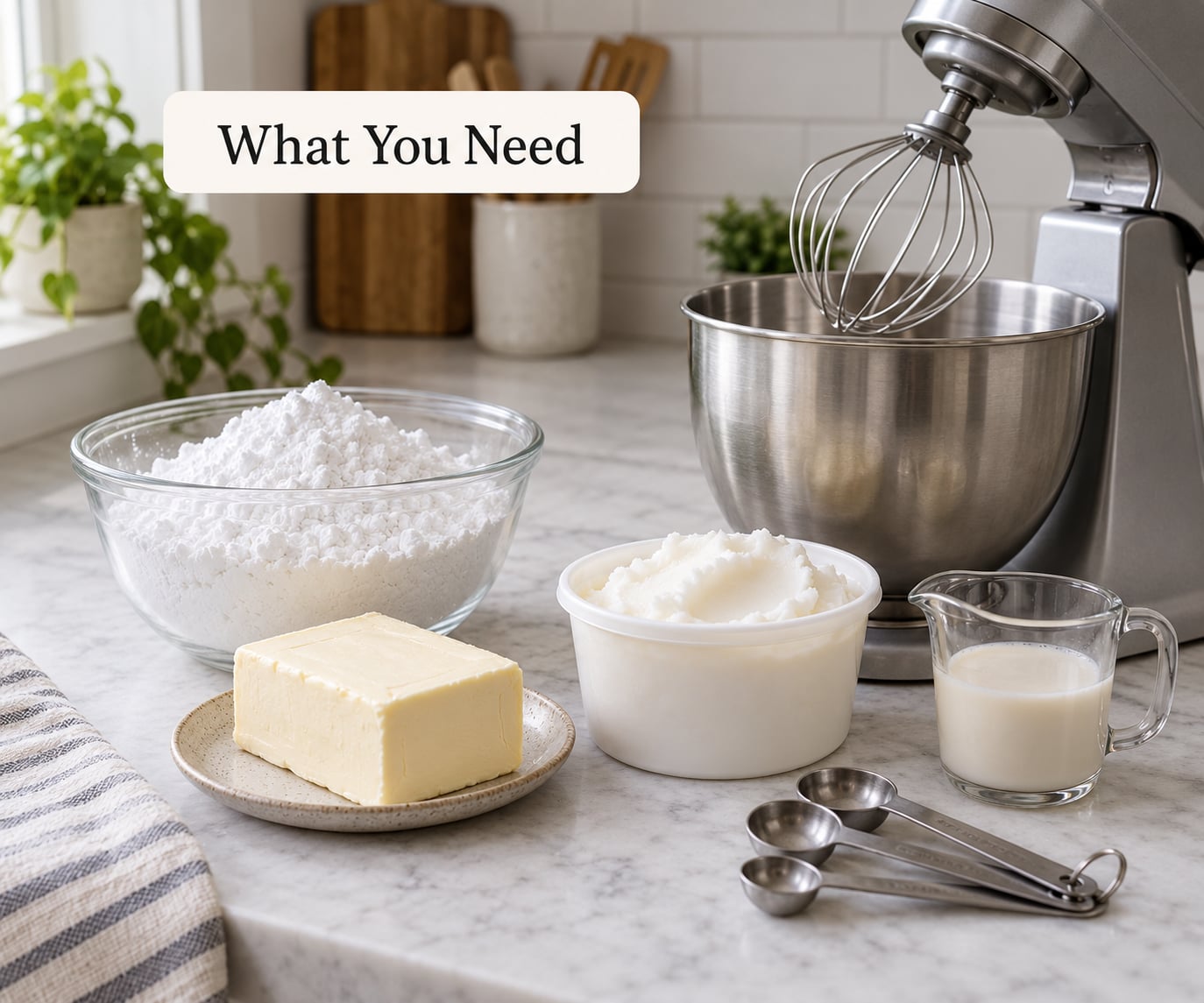
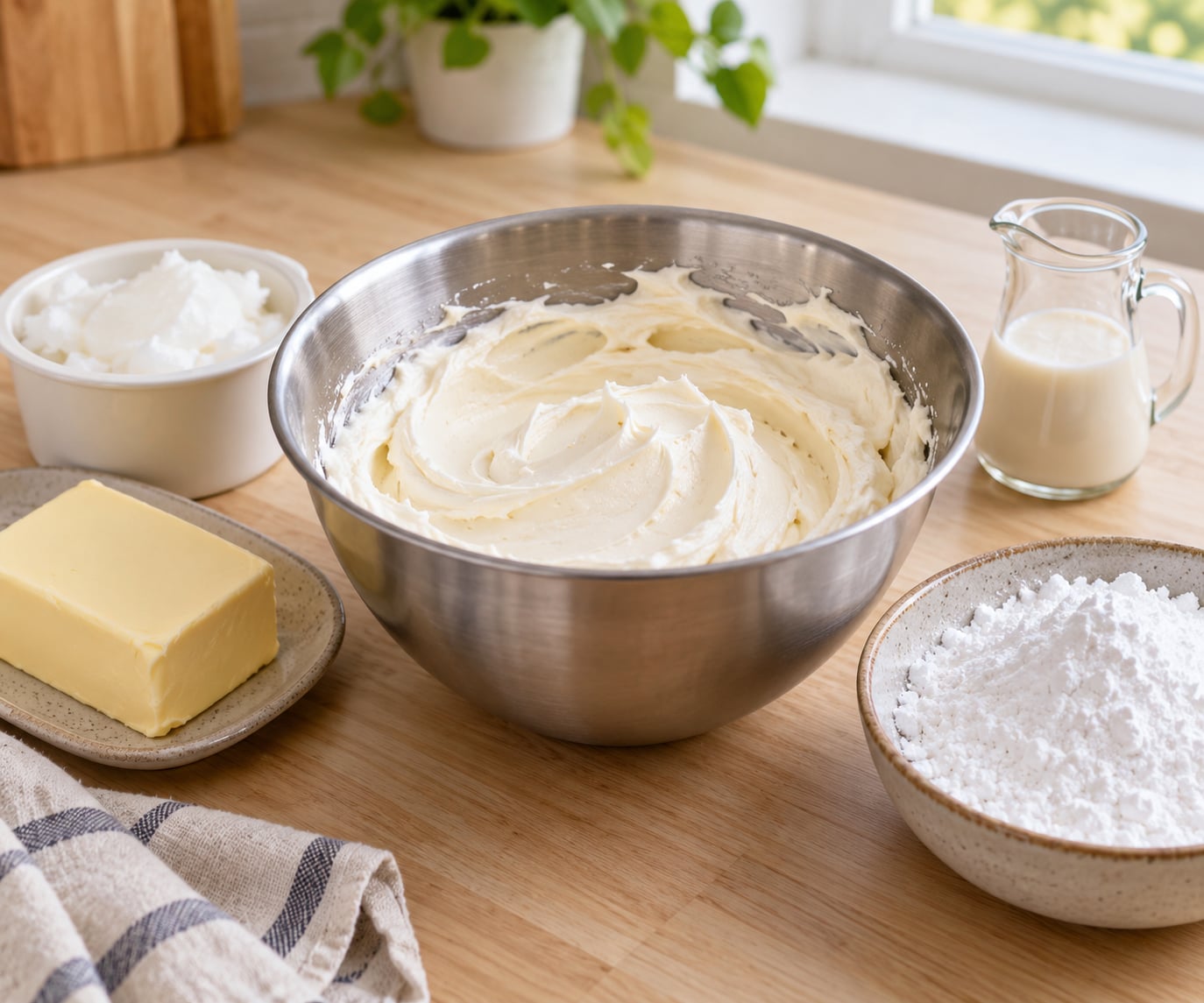
For the frosting in this guide you need 115 g (about 1/2 cup) of a vegan butter block, 115 g of unsalted vegetable shortening, 500 g (4 cups) of sifted powdered sugar, 2 teaspoons of vanilla extract, and 2 to 4 teaspoons of plant-based milk or water. That is a fat-to-sugar ratio of roughly 1 to 2.2 by weight, which is the number that keeps the finish matte rather than slick.
The fat matters more than anything else on the list
Use a hard vegan butter block, not a spread. In the US, Earth Balance butter sticks and Stork baking block are the two most commonly recommended for frosting. In the UK and EU, bakers point to Alsan and Flora plant butter. Add unsalted vegetable shortening such as Crisco for the second half of the fat; shortening carries almost no water, which is exactly what you want in an emulsion.
Skip margarine. It is softer, higher in water, and readers consistently describe it as tasting greasy, including the baker behind Homestead Herbs and Healing, who put it plainly in her vegan lemon and elderflower frosting: do not use margarine instead of vegan butter, it is softer and has a greasy flavour.
Skip coconut-oil butters too. Gretchen’s Vegan Bakery warns that they fall apart the moment they hit a meringue, and people who have tried it tend to end up with something closer to soft marshmallow fluff than frosting.
Sugar, and why beet sugar gets blamed unfairly
Buy pure cane powdered sugar and sift it. Beet-sugar icing sugar is fine to bake with, but its crystals are slightly harder, and many bakers read that grit as a failed batch. Sifting and a full 8 to 10 minutes of whipping soften the difference noticeably.
Liquid, and how much you actually need
Vanilla, plant milk and gel colouring all count as liquid. Water works and behaves most predictably. People posting in r/veganuk about splitting frosting land on the same fix: cut the volume of liquid flavourings, or change butter brand.
Equipment
A stand mixer with a paddle or flat beater is genuinely easier here, since you need sustained medium-high speed for a long cream. A hand mixer works, but expect 50 percent more time. A metal bowl set in a larger bowl of ice helps you control temperature if your kitchen runs warm.
Step-by-Step: How to Make Vegan Buttercream That Is Not Greasy
How to Choose a Fat That Will Not Make Vegan Buttercream Greasy
Match the fat to the job, and check two numbers on the label: total fat percentage and water content. Higher fat and lower water means a firmer, more emulsible, less greasy result. A hard block beats a soft spread every time, and shortening is the least greasy of all because it has essentially no water phase to break out.
| Fat | Water content | Grease risk | Best use |
|---|---|---|---|
| Unsalted vegetable shortening | Negligible | Lowest | Piping, tiered cakes, warm rooms |
| Vegan butter block (Earth Balance, Stork, Alsan, Flora) | Low | Low | Flavour base, everyday frosting |
| Vegan margarine (Vitalite) | Moderate to high | Moderate | Cakes, not frosting |
| Coconut-oil butter | Varies, waxy | High | Avoid for buttercream |
| Soft palm shortening (Spectrum) | Low, very soft | Moderate | Avoid if you are piping borders |
Two fat readers named most often in forums as working best are Violife and Earth Balance. The common complaint about the pricier sticks is simply cost; on r/AskBaking people are hunting for a cheaper dairy-free route because of what the good brands cost locally. A practical middle ground is to use the inexpensive block for flavour and lean on shortening for structure.
Cream the Fat Until It Looks Pale and Airy
Soften only what you need. Room temperature for plant butter is about 67F (19C), and the test is a clean dent when pressed that does not smear when you lift your thumb. Cold fat will not aerate and hot fat will not hold air, so both ends cost you volume, and a low-volume frosting feels heavier on the palate than it should.
Beat the butter and shortening together on medium-high for 3 to 5 minutes. You are looking for a paler colour and a visibly aerated texture. If it looks like wet sand after five minutes, it was too cold. If it looks glossy and loose, it was too warm; give it a few minutes in the fridge bowl and carry on.
Do not walk away during this stage. A fat whipped to soft peaks, then disturbed, will not re-aerate properly, and that uneven structure is one reason finished frosting can feel slick.
Add Powdered Sugar Gradually
Add the sifted powdered sugar in four batches, about 125 g at a time, at low speed until each batch disappears. Then go to medium for 2 minutes per addition. Dumping sugar in at once is what creates the dense, fudgy texture that readers often label as greasy even when the fat ratio is fine.
Powdered sugar is doing structural work here, not just sweetening. More sugar relative to fat means less free fat left to coat your palate. If your frosting still tastes heavy after the fourth addition, add another 50 to 100 g of sifted sugar rather than more liquid.
Add your vanilla, colouring and any plant milk in three or four separate pours, low speed, waiting 20 to 30 seconds between each. The frosting should be soft and glossy with a slight curl when you lift the beater. If it slumps flat, it needs another splash of liquid; if it stiffens past pipeable, add sugar, not milk.
Chill the Frosting Before Using It
Chilling firms the fat structure, which is why this is the fix for frosting that slides off the cake in warm weather. Refrigerate it for 30 to 60 minutes, or 20 minutes if your kitchen is cool. Cover the bowl so it does not pick up fridge smells or condensation.
Rewhipping straight from the fridge is the number one way people break an otherwise good batch. Cold plus condensation wrecks the emulsion, and the frosting goes greasy for the rest of its life. Bring it back to about 65F (18C) first, either by resting the covered bowl out for 20 minutes or by warming the outside of the bowl with a hairdryer, then whip on low for 2 minutes until it comes back together.
For the smoothest finish, pipe on a cold crumb coat, chill the cake 20 minutes, then pipe the final layer. Frosting applied to a warm cake melts into a slick film no matter how good your ratios were.
Common Mistakes
| Symptom | What is actually happening | The fix |
|---|---|---|
| Greasy, oily film on the lips | Too much fat relative to sugar, or a soft waxy fat | Add 50 to 100 g sifted sugar, or 2 to 3 more tablespoons of shortening |
| Waxy or crayon-like taste | Low-fat margarine or a coconut-oil butter | Next batch, switch to a hard block plus shortening |
| Oily liquid pooling in the bowl | Split emulsion, usually too much liquid or the wrong temperature | See the rescue steps below |
| Gritty or sandy | Beet sugar, or sugar added too fast | Whip 8 to 10 more minutes, then sift a 50 g top-up over the bowl |
| Slumping off the cake | Too soft, or the cake was warm | Chill 20 minutes, re-whip from cold slowly, frost a cold cake |
| Cannot hold a piped border | Soft palm shortening instead of hard shortening | Use a firmer all-vegetable shortening, or add more of it |
How to fix a batch that has already turned greasy or split
If the frosting is greasy but still thick, skip the rescue and just add sugar. Sift in 100 g at a time on low until the slick taste goes, usually after the first addition.
If oily liquid has separated out, work through this in order. First, put the bowl back on the mixer for 2 minutes at low speed and let it come together on its own. Next, add 2 to 3 more tablespoons of softened vegan butter or shortening and mix for another 2 minutes. Then add 2 to 3 tablespoons of sifted powdered sugar. Finally, trickle in 1 teaspoon of liquid and mix just until incorporated, then stop.
If it stays split, the fat is the problem rather than the liquid. Chill the bowl 15 minutes, add another 3 tablespoons of firm shortening, and whip on low. Bakers report that a failed batch often comes back within a few minutes of gentle heat and continued whipping, so do not throw it out on the first sign of trouble.
Two habits cause most broken batches. Liquid flavourings poured in on one side of the bowl, and a panic mix on high speed right after adding milk. Slow both down and the problem usually disappears.
Frequently Asked Questions
Why is my vegan buttercream greasy?
Greasy vegan buttercream comes from one of three causes: too much solid fat relative to sugar, a soft waxy fat such as margarine or coconut-oil butter, or liquid flavourings added all at once. Add more sifted powdered sugar to cut the fat ratio, switch to a hard vegan butter block plus vegetable shortening, and add any milk or vanilla in small separate pours.
Is vegan butter better than coconut oil for non-greasy buttercream?
Yes, a hard vegan butter block gives a far less greasy result than coconut-oil butter or vegan margarine. Coconut-oil butters are waxy and break down in the mix, while margarine is soft and high in water. For the lightest finish, use a block such as Earth Balance, Stork, Alsan or Flora and blend it 50/50 with unsalted vegetable shortening.
Can I make vegan buttercream without a stand mixer?
Yes, a hand mixer works fine, it just takes longer. Cream the fat for 5 to 7 minutes instead of 3 to 5, and add the powdered sugar in four small batches as you would with a stand mixer. A sturdy bowl and a little patience are all you need, though you will get less aeration so hold the liquid back and check the texture as you go.
How do I fix vegan buttercream that is already greasy?
If the frosting is thick but greasy, sift in 100 g more powdered sugar at a time on low speed until the slickness goes, which usually takes one addition. If it feels heavy rather than slick, add 2 to 3 tablespoons more vegetable shortening instead. Chilling the finished bowl for 30 minutes also firms the structure and clears up an oily-looking surface.
How long should vegan buttercream chill before frosting a cake?
Chill the finished frosting for 30 to 60 minutes before using it, and chill the cake layers completely, at least 20 minutes after a crumb coat. Chilling firms the fat structure so the frosting holds its shape in warm rooms. Bring the frosting back to about 65F (18C) before rewhipping, because whipping it straight from the fridge can split it.
Can I use liquid plant milk in vegan buttercream?
Yes, but add it slowly and in small amounts, no more than 4 teaspoons for the recipe above. Plant milk carries protein and sugar, so it can destabilise the emulsion faster than plain water, and any of it you add counts against your liquid total along with vanilla and gel colouring. Water is the most predictable option when a batch has split.
Conclusion
Start with the 50/50 block-and-shortening base, keep the powdered sugar additions slow and generous, and add every liquid in its own small pour. If a batch still feels slick, more sifted sugar fixes it faster than anything else. If it has split, whip low first and add fat before you add liquid.