
Most limp leafy greens are not spoiled, just thirsty. Learning how to revive wilted greens takes one of three methods: an ice-water bath of 15 to 30 minutes for recently wilted leaves, a lukewarm soak of 10 to 15 minutes for greens that have gone soft, or a quick blanch-and-shock when the greens are headed for a skillet, pot, or frittata anyway.
The whole trick is timing. A short bath brings back snap, and a long one turns the same leaves to mush. I learned that the hard way trying to rescue a head of romaine that had spent the afternoon in a warm car.
Table of Contents
- What You Need
- How to Revive Wilted Greens: 3 Step-by-Step Methods
- How to Revive Wilted Greens With an Ice-Water Bath
- How to Revive Wilted Greens With a Warm-Water Soak
- How to Revive Wilted Greens by Blanching and Shocking
- Common Mistakes
- Frequently Asked Questions
- Can you revive wilted leafy greens?
- How long should wilted greens soak in ice water?
- Does warm water make wilted greens crisp again?
- How do you know if wilted greens are still good to eat?
- Should you dry greens after reviving them?
- Conclusion
What You Need

None of this costs anything, and almost all of it is already in your kitchen. You need a bowl or the sink itself, cool water, a colander or salad spinner, and a clean kitchen towel. That is the whole kit for the cold and warm soaks.
For the blanch-and-shock method, add a pot or skillet, a slotted spoon, and a bowl of ice water big enough to hold the greens once they go in. A little salt for the blanching water and a squeeze of lemon or a splash of vinegar afterward are optional, but they help a plain pile of greens taste finished rather than merely rescued.
Ice matters more than you would think. A couple of cubes tossed into the soak keeps the water genuinely cold, and cold is what keeps delicate leaves from going soft while they drink. Keep a bag of greens in the fridge too, since you can never revive a slimy leaf.
How to Revive Wilted Greens: 3 Step-by-Step Methods
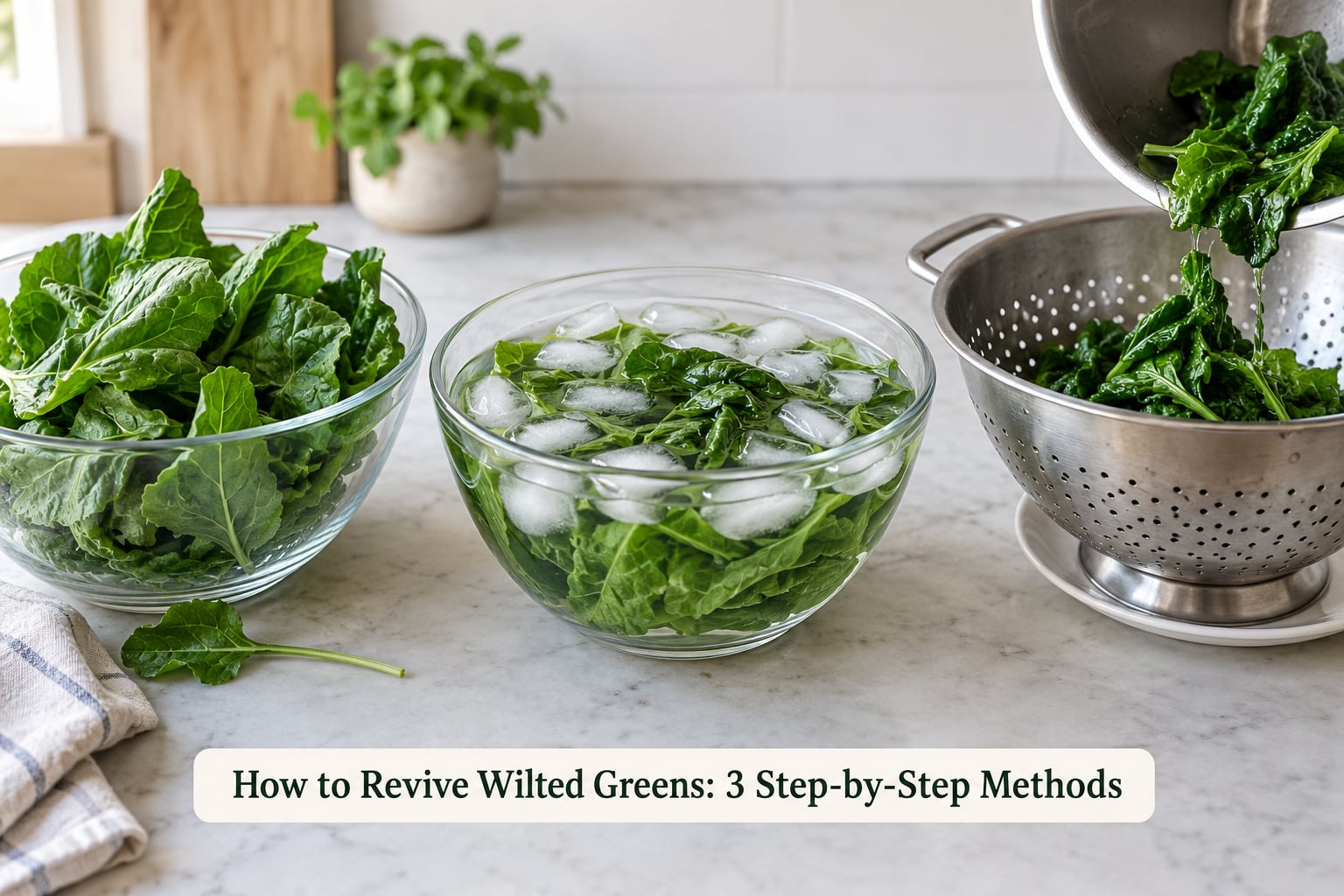
Start with the ice-water bath. It is the right answer for greens that wilted recently and still smell fresh, and it is the method that gets you a salad tonight. Move to warm water only when cold water leaves the leaves feeling soft and blistered rather than crisp. Use blanching when the greens have already lost their snappy bite or are going into something hot.
How to Revive Wilted Greens With an Ice-Water Bath
The short version: trim the damaged parts, submerge the leaves completely in cold or ice water for 15 to 30 minutes, swish gently, drain, and dry well. That is the method most people mean when they search for reviving wilted lettuce, and it works on more than lettuce.
Start by sorting. Pull off any leaves that are already slimy, browned at the edges, or dry and papery, and set them aside. Then inspect what is left. Merely wilted greens look dull and floppy but keep their color, their smell, and a soft-but-not-squeaky texture. Anything with white or gray fuzzy patches, a sour or fermented smell, or a wet film on the surface is spoiled rather than wilted, and no bath will fix that.
Why cool water works: leafy greens are mostly water, and the crispness you feel is internal water pressure pushing the cells outward. When a head of lettuce loses water faster than it can replace it, that pressure drops and the leaf goes limp. Soaking reverses the loss. Cool water keeps the change gradual so the cells refill without going soft, and it is why a fridge soak overnight, the trick that circulates most in food-waste communities, works as well as a quick bath.
Trim the base next. Cut about a half inch off the cut end of the stem, the way you trim a bouquet of flowers, and separate the leaves at the bottom. That stem end is often the first place a head goes soft, and cutting it opens the water path into the leaf. It is the step most short guides skip.
Then fill a large bowl with cold water, add a few ice cubes, and submerge the greens completely. Swish them gently with your hands for about 30 seconds so water and ice reach between the layers, and press any floating leaves under. Soak 15 to 30 minutes, checking at 10 minutes by lifting a leaf and bending it. It has come back when it snaps instead of folding.
Hold them under, don’t skim. If pieces float, push them down with a small plate or the back of a spoon. A head that stays half above the water revives unevenly, and the exposed part stays limp, which is the reason some people think the method failed.
Delicate herbs need far less time than sturdy greens. Cilantro and parsley are done in 5 to 10 minutes, and a full bunch soaking for 30 loses its perfume. Romaine, butterhead, and iceberg can take the full 30. Spinach and arugula sit in the middle at 10 to 15 minutes. Kale, collard greens, and Swiss chard are so tough that a 30-minute bath barely registers on them, which tells you something about what they need next.
Drain in a colander and get them genuinely dry, because wet leaves in a pile turn to mush in a few hours. Spin them in a salad spinner, or press them between two clean kitchen towels with a little weight on top, then use them right away. A damp towel, not plastic wrap, keeps them best in the fridge for a day or two, and a paper towel in the container catches the last of the moisture.
How to Revive Wilted Greens With a Warm-Water Soak
Warm water is faster, not different in kind. Lukewarm water between 105°F and 140°F (about 40°C to 60°C) softens the leaf tissue so cells take up water more quickly, and a 10- to 15-minute soak does the work that a cold bath takes half an hour to do. Use it for greens that are limp but not slimy, especially spinach, arugula, and celery.
Be conservative with the temperature. Water hot enough to steam is cooking, not reviving, and anything near boiling turns the leaves stringy and muddy, which is a flavor change you cannot undo. Warm tap water is often close enough; if you are unsure, use the warmest water that does not make you flinch.
Trim and sort the greens first, the same as before, then submerge them in the warm water and let them sit 10 to 15 minutes. A spoonful of sugar or a splash of vinegar does not speed anything up, and neither does adding salt, though a little salt in the water at the end seasons the leaves better than salting the soak.
Cool them before you eat them. Lift the greens straight into a bowl of ice water, leave them there a minute, then drain and dry. Skipping that cooling step leaves warm greens to keep cooking in the bowl, and they arrive at the table limp and darker than you wanted. Warm water is a speed trick for a short soak, not a replacement for the ice bath.
Cloudy water is not a bad sign. Some cloudiness is just spinach water and cell debris coming off the leaves, and it is why you should soak spinach separately rather than with a head of romaine. Brown-tinted or sour-smelling water is a different story: dump it and re-inspect the greens.
How to Revive Wilted Greens by Blanching and Shocking
When the greens are going into hot food anyway, reviving them for a salad is wasted effort. Blanching and shocking gives you the texture they will actually have in the dish, plus a bright color and a week of fridge life. It is the fastest of the three methods and the one that rescues the most damaged greens.
Heat a large pot of water to a rolling boil and salt it until it tastes like the sea, roughly a tablespoon per quart. Have your ice-water bowl waiting beside the stove. Drop the greens in, keep them moving, and start counting.
Timing by type, with a visual cue: baby spinach and arugula need 20 to 30 seconds, and they are done when the leaves darken and collapse but still hold their shape. Romaine and cabbage strips need about 1 minute. Bok choy and broccoli florets need 1 to 2 minutes. Kale, collard greens, and chard take 2 to 3 minutes. Thick collard stems can go a minute on their own after the leaves come out.
Lift them out and plunge them straight into the ice water. The shock stops the cooking instantly, locks in the color, and washes off excess salt. Leave them in the ice for a minute or two, then drain and dry the way you did after the cold bath. Your hands will be freezing, so have a second bowl ready.
From there it is a five-minute skillet: hot oil, garlic or onion, the greens, a pinch of salt, and a squeeze of lemon at the end. The same blanched greens go into soup at the last minute, fold into a frittata, or become the base of a wilted lettuce salad with warm bacon dressing, which is exactly the dish to make when a head of lettuce is already too soft to shred into a salad.
Common Mistakes
Soaking far too long is the number one way people ruin revived greens. Online advice ranges from 5 minutes to an hour with no explanation, and a head of romaine left in ice water for two hours comes out as a bag of soggy lettuce. Check at 10 minutes, pull at 15, and only go longer for kale or chard.
Water that is too warm cooks instead of revives, and the leaves never recover their texture. If the water is steaming or you can see movement on the surface, it is too hot for a soak. The warm-water method tops out around 140°F.
Skipping the dry step is what turns a success into mush. Moisture trapped between the leaves creates a warm, damp pocket where spoilage starts fast. Spin, press, or blot until the leaves squeak, and store them in a container lined with a paper towel rather than sealed in plastic with air still on them.
Overcrowding the blanching pot drops the water temperature fast, so the greens cook unevenly and the timing you read means nothing. Use a pot with room to move the greens around, and blanch in two batches rather than one crowded one.
Saving slimy or bad-smelling greens is the mistake with a health cost attached. No soaking method removes bacteria from decomposed leaves. Wilted is dull, floppy, and fresh-smelling; spoiled is slimy, browning, fuzzy, or sour. When the leaves are at the questionable stage, the safe move is the compost bin, not the salad bowl.
A quick note on the search noise: a wilting lettuce plant in a hydroponic tower or garden bed is a different problem with a different cause, usually roots or nutrients rather than a lack of water in the leaves. Nothing on this page applies to a growing plant.
Two habits cut the problem in half. Buy greens the day you plan to eat them, and treat the stalks as food instead of scraps, since revived celery, kale, and collard stems are worth cooking rather than discarding. Store greens in the crisper, away from fruit like apples and bananas, whose ethylene gas speeds up wilting in everything around it.
Frequently Asked Questions
Can you revive wilted leafy greens?
Yes, as long as the greens are wilted rather than spoiled. Submerging limp leaves in cold or ice water for 15 to 30 minutes lets the cells reabsorb the water they lost, which restores firmness and crunch. Head lettuce, spinach, arugula, kale, chard, and celery all respond well. Greens that are slimy, fuzzy, sour-smelling, or browning are decomposed and should be discarded no matter how they were stored.
How long should wilted greens soak in ice water?
Fifteen to thirty minutes is the working range. Delicate leaves like spinach, arugula, and fresh herbs need only 5 to 15 minutes, while romaine, butterhead, and iceberg hold up for the full 30. Check at the 10-minute mark by bending a leaf: if it snaps instead of folding, it is done. Leaving greens submerged much longer than 30 minutes is how you end up with soggy, limp leaves.
Does warm water make wilted greens crisp again?
Warm water works faster rather than differently. Water between 105u0026deg;F and 140u0026deg;F (40u0026deg;C to 60u0026deg;C) softens leaf tissue so the cells take up moisture more quickly, and a 10- to 15-minute soak does what a cold bath takes 30 minutes to do. Anything hotter starts cooking the leaves, and you should transfer the greens to ice water afterward to stop the cooking and cool them before eating.
How do you know if wilted greens are still good to eat?
Wilted greens are dull, floppy, and fresh-smelling, with a soft but clean texture. Spoiled greens are slimy or sticky, spotted with white or gray fuzzy mold, browning heavily at the edges, or sour and fermented to the nose. Time matters too: leafy greens are best used within a week of purchase, and a head that smells fine after a week and a half in the drawer is a gamble not worth taking.
Should you dry greens after reviving them?
Always. Moisture trapped between the leaves makes them turn to mush within hours and creates conditions that spoil them fast. Spin them in a salad spinner, or press them between two clean kitchen towels with a little weight on top, until the leaves squeak. For storage, wrap them in a damp paper towel inside a container or a perforated bag in the crisper, which keeps them crisp for another day or two.
Conclusion
Start with an ice-water bath for anything that wilted in the last day or two: trim the base, submerge completely for 15 to 30 minutes, and dry it properly. Reach for warm water when cold leaves the greens soft, and blanch when they are going into the pan. If the leaves are slimy, moldy, or unpleasant-smelling, skip the save and bin them, because how to revive wilted greens is about rescuing food, not hiding spoiled food.