To plan a week of vegan dinners on a budget, pick two or three cheap protein anchors, cook one big batch on prep day, and shop the store perimeter with canned, dried and frozen goods instead of the middle aisles. Seven dinners built that way run roughly 25 to 60 dollars for one or two people, or 70 to 100 dollars for a family of four, depending on your region and what you already have in the pantry.
Most people do not blow their grocery budget on expensive meat substitutes. They blow it on unplanned trips, spoiled produce, and the same four dinners repeated until someone complains. The fix is a written plan and a flexible template, not more recipes.
Below is the seven-step method I use. It takes about 30 minutes of planning on paper and 90 minutes of cooking on a Sunday, and it scales cleanly from a household of one to a household of four.
Table of Contents
- What You Need
- Step-by-Step: How to Plan a Week of Vegan Dinners on a Budget
- How to Plan a Week of Vegan Dinners on a Budget: Start With the Number
- Build a Flexible Dinner Template
- Plan Leftovers and Batch Components
- Make Your Shopping List by Grocery Store Section
- Choose Seven Low-Cost Dinner Meals
- Prep, Cook, and Store the Meals Safely
- Use Substitutions Without Breaking the Plan
- Common Mistakes
- Frequently Asked Questions
- How much should I budget for vegan dinners for one week?
- What are the cheapest vegan meals I can make at home?
- Can I meal prep vegan dinners for the whole week?
- How long can I store cooked vegan dinners safely?
- Are frozen vegetables and canned beans good for a budget meal plan?
- Conclusion
What You Need
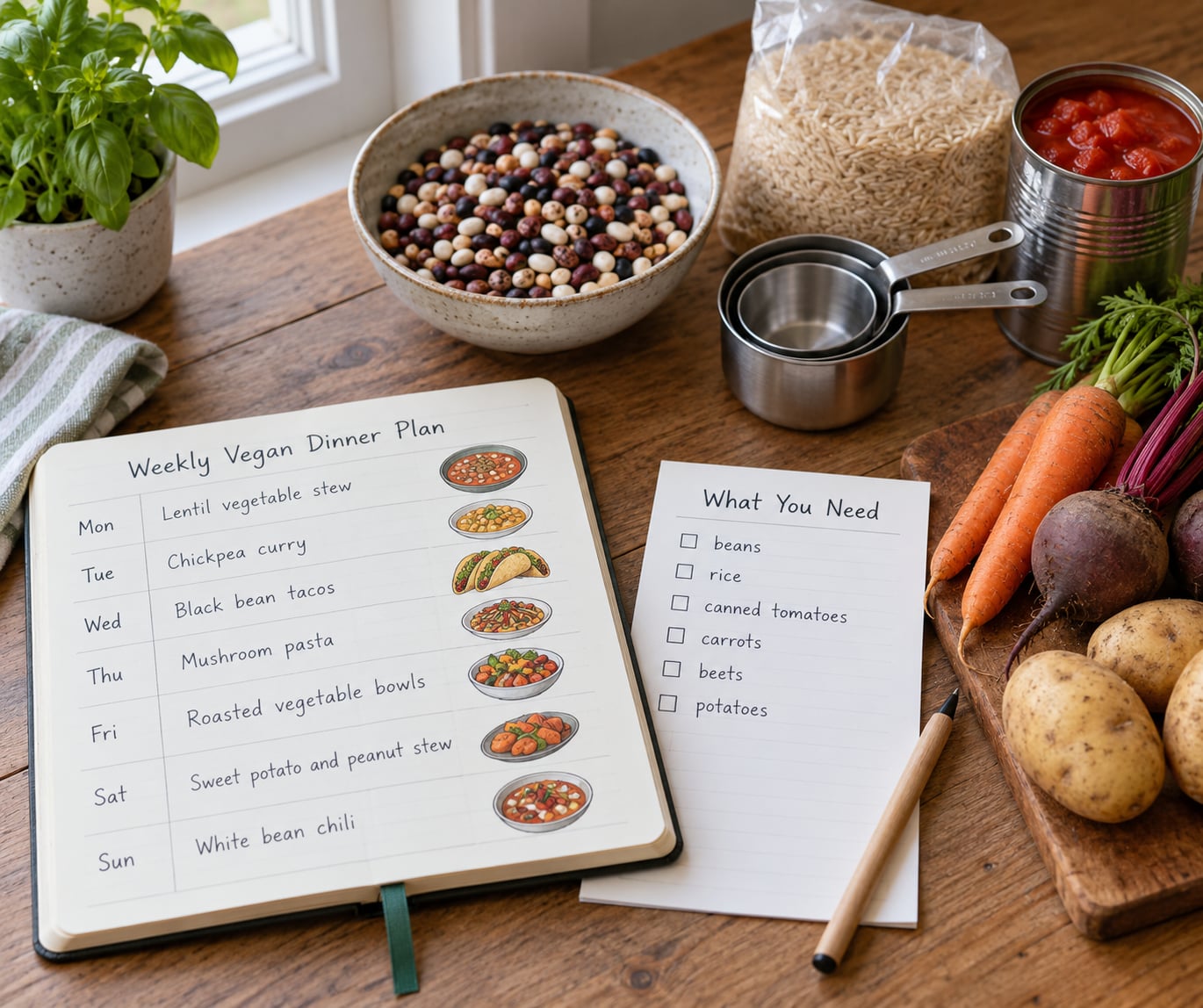
Before you shop, gather four things: a planning surface, a pantry audit, a number, and about two hours of Sunday cooking time. Anything less and you are improvising, which is exactly where the budget goes.
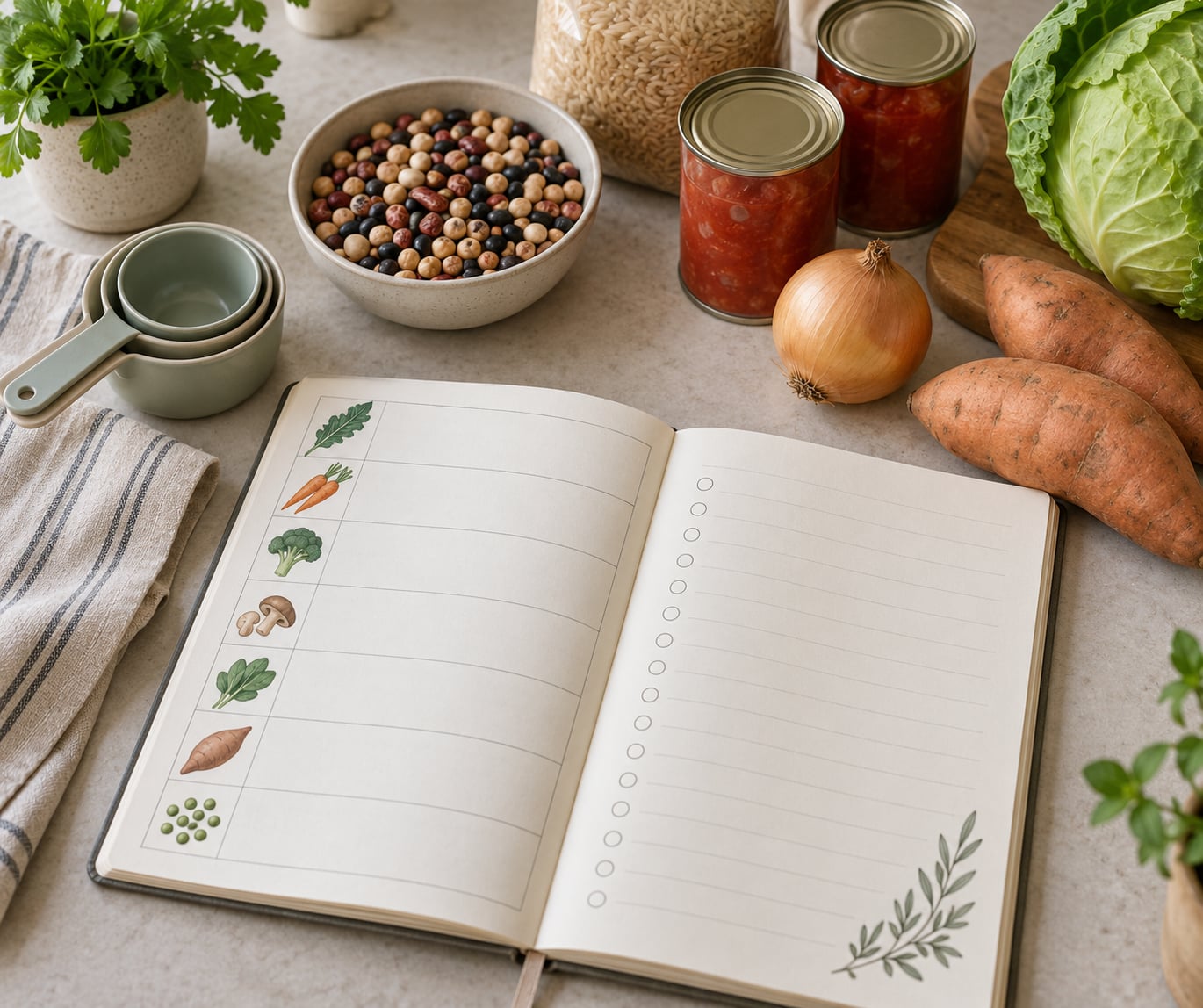
Planning tools. A notebook or printable weekly dinner planner, a grocery list app or plain sheet of paper, and a set of measuring cups. Write meals into the planner as named dishes, not as vague categories. “Bean chili Tuesday” is a plan. “Something with beans” is a wish.
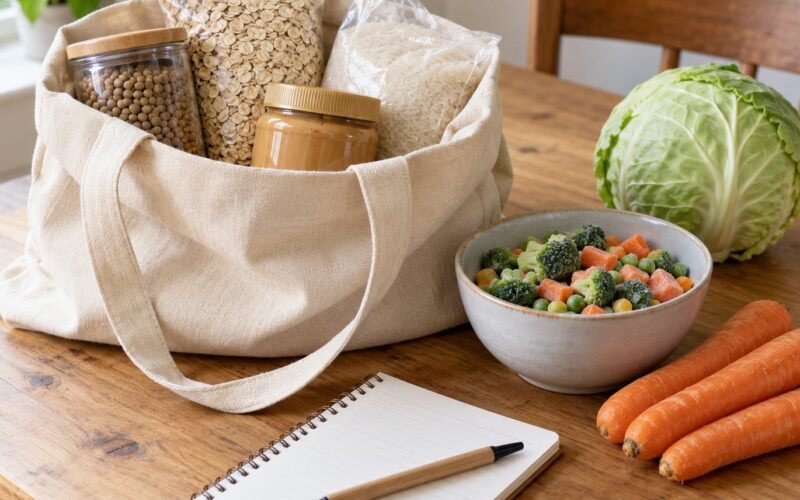
Pantry staples. Before buying anything, take stock of dried beans and lentils, rice or other cheap grains, canned tomatoes, canned beans, peanut butter, rolled oats, onions, garlic, potatoes, sweet potatoes, frozen vegetables, and a small spice shelf. Cumin, smoked paprika, chili powder, oregano, turmeric, and garlic powder turn the same bag of lentils into a completely different dinner than last week.
Store habits. Plan to shop the perimeter first and the middle aisles last. Buy a store-brand version of anything you use weekly after you have read the label twice and liked it. Check unit prices, not shelf prices: the bigger box is only cheaper per ounce if you will actually finish it.
Equipment. A pot that holds at least eight servings, a sheet pan for roasting vegetables, a couple of freezer containers or bags, and a slow cooker if you own one. A slow cooker is the single most useful tool for low-energy weeks because it does the soaking and the simmering while you do something else.
Step-by-Step: How to Plan a Week of Vegan Dinners on a Budget
How to Plan a Week of Vegan Dinners on a Budget: Start With the Number
Pick one number and write it down before you go shopping. Real-world reports from vegan and frugal cooking forums cluster around 25 to 30 dollars a week per adult in some regions and 40 to 60 dollars in higher-cost areas, with a few people reporting three adults sharing roughly 400 dollars a month. Treat those as rough ranges, not promises; food prices shift by county and by season.
Split that number in two. Pantry money covers dried beans, lentils, rice, oats, peanut butter, canned tomatoes, spices, and cooking oil. Fresh money covers vegetables, fruit, and anything perishable. Keeping them separate is what stops a well-meaning trip for a nice olive oil from eating the fresh budget.
Then hold back about 10 percent of the total for substitutions. You will forget the tahini, someone will eat the last of the rice, and a sale on bulk oats will tempt you. A small buffer means a missing ingredient does not collapse the week.
Build a Flexible Dinner Template
Stop planning seven recipes. Plan one template and vary its parts: a protein anchor, a starch, a vegetable, a sauce, and an optional topping. Two or three protein anchors plus two starches plus three sauces gives you dozens of combinations without a single new shopping list.
Your anchor list for the week can be short. Dried or canned beans and lentils, rice, cornmeal, tofu, and the vegetables you have already roasted all cost very little and cook in one pot. In Appalachian kitchens you might swap in field peas or split peas, which are cheap and forgiving of long simmering.
Think of the sauce as the variety machine. A single batch of tomato-onion sauce becomes bolognese on Monday, arrabbiata with roasted vegetables on Wednesday, chili on Friday, pizza sauce on Saturday, and a soup base on Sunday. Peanut sauce does the same job with tofu and noodles or rice. Coconut curry paste with lentils and potatoes does it again with almost no new ingredients.
Plan Leftovers and Batch Components
Batch cooking and meal prep are not the same thing. Batch cooking means making one large dish for several meals. Meal prep means portioning single servings into containers. The first one saves money; the second one saves time, and most people need both but only the first one to start.
Cook three components on prep day rather than seven complete meals. One big pot of rice or another grain, one tray of roasted vegetables, and one thick stew or curry gives you the raw material for most of the week. Chili is the dish forum cooks name most often for cook-once-eat-several reasons: it freezes well, it reheats well, and it gets better overnight.
Dried beans need overnight soaking and a long simmer, which is exactly why they belong on prep day rather than a weeknight. If you have no time for dried beans, canned beans rinsed and added at the end of a pot do the same job in ten minutes.
Make Your Shopping List by Grocery Store Section
Build the list in the order you will walk the store, because a list written by aisle order cuts impulse buying more than any other trick.
Start with produce and look at what is genuinely in season. Root vegetables, cabbage, onions, sweet potatoes, squash, and greens last well and take to roasting, simmering, and freezing. Buy frozen vegetables for the gaps. Frozen peas, corn, spinach, and green beans are picked and frozen at peak and cost less per serving than fresh that has to be eaten before it turns.
Then the dry aisle: a big bag of rice, lentils, and canned beans. Compare the unit price on the shelf tag, not the total. Canned tomatoes in bulk, peanut butter, oats, and a bag of cornmeal round out the affordable base.
Next, check the international aisle before you leave the store. Rice by the pound, dried beans by the pound, spices in bulk, and tinned vegetables are usually cheaper there than in the main grocery aisles. Finish with the refrigerated wall for tofu, and check labels carefully on store brands, since some inexpensive products in that aisle are not plant-based at all.
Choose Seven Low-Cost Dinner Meals
This sample week assumes two adults, some pantry staples on hand, and one batch session on Sunday. Each dinner lists what it does in the plan so you can see the system rather than just the meals.
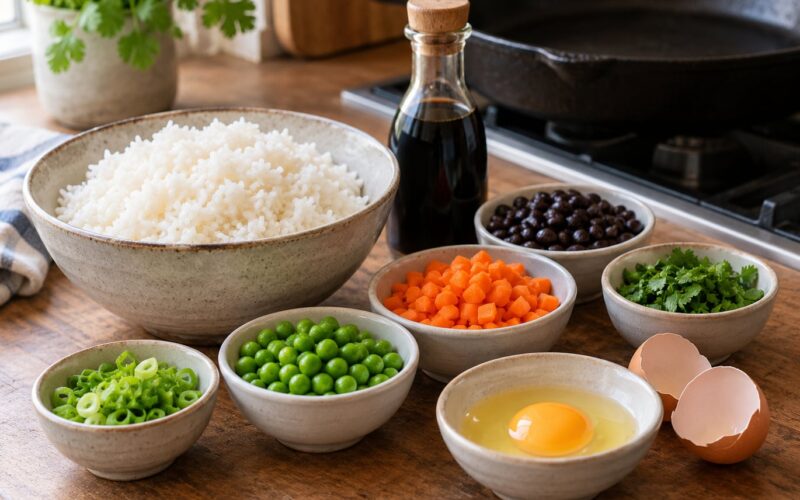
Monday, bean and rice bowls with roasted vegetables. This is the anchor meal. Uses the batch rice and the tray of roasted vegetables from Sunday, plus black beans heated with cumin. About 20 minutes on a weeknight, roughly 2 dollars a serving.
Tuesday, peanut noodle or rice bowls. Peanut butter, soy sauce, a splash of vinegar and some frozen snap peas make a sauce in three minutes. Different protein, different sauce, no new shopping. About 2 dollars a serving.
Wednesday, tomato sauce over pasta with wilted greens. Uses the Sunday sauce base, so this is the cheapest dinner of the week at about 1.50 dollars a serving. Add white beans if you want it more filling.
Thursday, lentil or chickpea curry with potatoes. Canned chickpeas, an onion, a can of light coconut milk, and curry powder or paste. Simmer it while you do something else. Roughly 2.50 dollars a serving.
Friday, chili built on the Sunday sauce. Kidney beans, the tomato base, and whatever seasoning you like. Make a double batch here and freeze the extra portions. About 2 dollars a serving.
Saturday, sheet-pan tofu and vegetables. Cubed tofu, potatoes, onion, and frozen broccoli or cauliflower roasted together on one pan. This is the fresh-feeling dinner that stops the week from tasting like one long pot of beans. About 3 dollars a serving.
Sunday, bean and vegetable soup from the freezer or the pantry. Use frozen stock from a prior batch, canned beans, canned tomatoes, and whatever vegetables are softening in the crisper. About 1.50 dollars a serving, and it takes 25 minutes.
The pattern matters more than the specific meals: two bean nights, one curry, one chili, one sheet-pan dinner, and two dinners built from the batch sauce and grains. No protein anchor repeats more than twice, and five of the seven dinners come out of work done on Sunday.
Prep, Cook, and Store the Meals Safely
Give yourself 90 uninterrupted minutes on Sunday. Cook the grain first since it takes the longest and needs to cool before it goes in the fridge, then start the beans or stew, then roast a sheet of vegetables while everything else simmers.
Portion with intention. A household of one should cook one pot and freeze all but two servings, because a two-serving pot left in the fridge for six days is how food waste starts. A household of four can cook a full pot and keep it, with two servings frozen as a reserve.
Cool cooked food in shallow containers and refrigerate it within two hours. Use refrigerated cooked vegan dinners within three to four days, which is the same window the USDA gives for cooked leftovers generally. Freeze anything beyond that, including cooked rice, stews, chilis, curries, and roasted vegetables. Soups and stews hold well frozen for two to three months; freeze rice in single portions rather than one big block.
Reheat rice and cooked vegetables until steaming hot all the way through, and reheat sauces and stews on the stove where you can stir them, since a microwave leaves cold spots in the middle of a pot.
Use Substitutions Without Breaking the Plan
Every plan breaks somewhere, so decide in advance which slot each ingredient can move to. Tofu out means more beans or lentils in the same dish, not a different recipe. No peanut butter means tahini, sunflower seed butter, or a lemon and garlic sauce with olive oil.
For schedule changes, keep two no-cook or near-no-cook dinners in reserve for nights when nobody wants to cook. A pantry shelf of canned beans, canned tomatoes, peanut butter, crackers or tortillas, and frozen corn can become a filling bowl in five minutes with no heat beyond a kettle.
For mixed households, build the base dish neutral and add strong flavor per plate. Chili, tacos, curry, and sheet-pan vegetables all work that way. For picky eaters, serve components separately on the same plate; most of the friction is about textures touching, not about new foods.
Common Mistakes
Fix the six mistakes that break these plans most often.
Buying the same ingredient in three forms. Fix: before the shop, cross off every item you already have in the pantry, including cans in the back of the cupboard.
Planning seven elaborate recipes. Fix: cap it at one new technique a week. Everything else should be a template meal you have cooked before.
Skipping pantry staples because the trip feels wasteful. Fix: buy dry beans and rice in the largest size you can finish in a month, and treat that trip as building inventory rather than as dinner shopping.
Storing everything in the fridge. Fix: decide on prep day which two dinners come out of the fridge and freeze the rest in single portions.
Buying out-of-season fresh produce. Fix: check what is in season in your region, then fill the rest of the vegetable slots with frozen bags.
Reaching for packaged vegan convenience foods in a pinch. Plant-based cheese, plant-based meat, and prepared dips cost several times more per serving than the beans, grains, and homemade versions they replace. Save them for a treat, not for Tuesday.
Frequently Asked Questions
How much should I budget for vegan dinners for one week?
Most households land between 25 and 60 dollars a week for one or two people, and 70 to 100 dollars for a family of four, though prices vary widely by region and season. Forum cooks report about 25 to 30 dollars a week in some areas and closer to 40 to 60 dollars in higher-cost regions. Build the number from your own receipts for two months, then hold back 10 percent for substitutions.
What are the cheapest vegan meals I can make at home?
Dried beans and lentils with rice, peanut butter noodles, tomato sauce over pasta with canned beans, and soups built from canned tomatoes and frozen vegetables are the least expensive options. Each runs about 1.50 to 2.50 dollars a serving when you buy dry legumes and store-brand grains. The savings come from the pantry base, not from any single recipe.
Can I meal prep vegan dinners for the whole week?
Yes, and it is easier than cooking seven separate meals. Cook one grain, one tray of roasted vegetables, and one stew or chili on prep day, then assemble dinners from those components during the week. Most people cook a full pot and keep two servings in the fridge while freezing single portions for later nights.
How long can I store cooked vegan dinners safely?
Use refrigerated cooked vegan dinners within three to four days, following USDA guidance for cooked leftovers. Freeze anything past that window. Soups, stews, chilis, and curries keep well frozen for two to three months, and cooked rice freezes best in single portions rather than one large block. Cool food in shallow containers and refrigerate within two hours.
Are frozen vegetables and canned beans good for a budget meal plan?
They are the backbone of most budget vegan weeks. Frozen vegetables are picked and frozen at peak, cost less per serving than fresh, and skip the spoilage that wastes produce. Canned beans give you a protein anchor in minutes with no soaking or long simmer. Rinse canned beans, buy no-salt-added versions when you can, and add your own seasoning.
One more note on numbers: every figure above is an approximate range based on US grocery pricing we checked in 2026, and regional prices differ. Track your own receipts for two weeks, and your real number will be more useful than any estimate.
Conclusion
Start tonight, not on Sunday. Open the pantry and write down what you actually have, pick one number for the week and split it into pantry and fresh, then choose two protein anchors and one batch dish. Once those three pieces are decided, seven varied dinners take about 20 minutes of planning, and the shopping trip becomes a list instead of a guess.