If you want to know how to reheat leftovers without a microwave, use your stovetop, oven, toaster oven, or air fryer and pick the method that matches the food. Dry-heat methods crisp pizza and fried food, while covered-pan methods steam casseroles, rice, and vegetables back to life. The whole thing takes 5 to 25 minutes with one pan and a lid.
Most of us reach for the microwave out of habit rather than because it works well. It heats the edges of a meal to scorching while the middle stays lukewarm, pulls water out of the food, and leaves proteins chewy and crusts limp. When that microwave finally quits on you, or when you are working from a hotel room or a rental kitchen with two burners, the fixes are simpler than most people expect.
I cook in a small Appalachian kitchen where the oven is the only thing that holds steady heat, so the pan-and-lid methods got worked out long before anything electric with a door. The same three approaches handle nearly everything that comes out of a leftover container.
Table of Contents
- What You Need
- How to Reheat Leftovers Without a Microwave: Step-by-Step
- 1. Choose the Right Reheating Method
- 2. Reheat Oven Leftovers
- 3. How to Reheat Leftovers on the Stovetop Without a Microwave
- 4. Reheat Vegetables, Biscuits, and Other Small Foods
- 5. Check That Leftovers Are Hot and Safe
- Common Mistakes
- Frequently Asked Questions
- What is the best way to reheat leftovers without a microwave?
- How long do you reheat leftovers on the stove?
- Can you reheat leftovers more than once?
- How do I keep leftovers moist when reheating?
- How hot should reheated leftovers be?
- Which leftovers should not be reheated?
What You Need
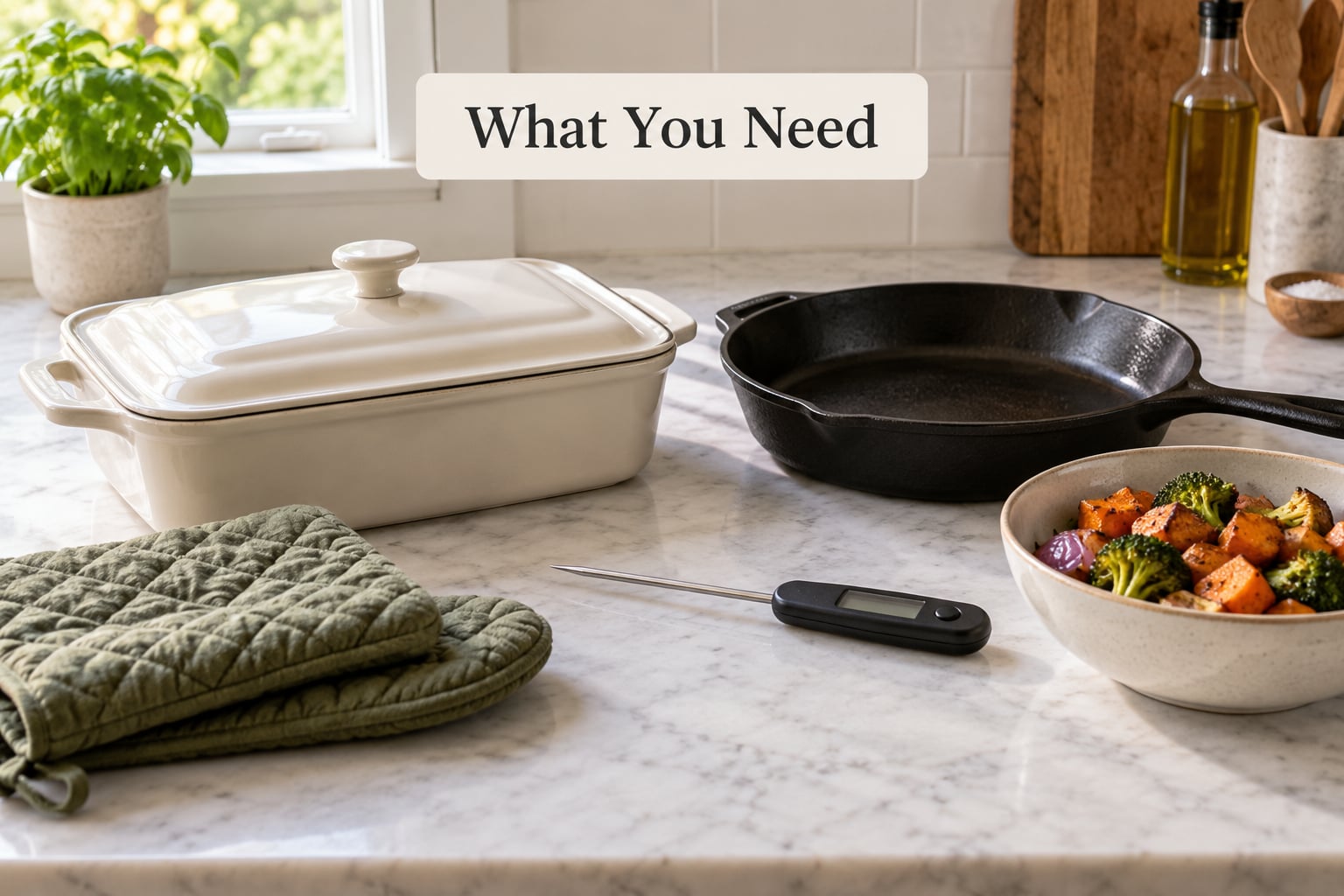
Nothing here is specialized. If you have a stove, an oven, and a couple of pans, you already own everything needed.
- An oven-safe dish with a lid, or a shallow dish plus a sheet of aluminum foil for covering
- A skillet with a tight-fitting lid — cast iron, cast aluminum, or nonstick all work
- A saucepan with a heat-safe plate and a metal ring (a mason jar lid ring is the classic tool) for stovetop steaming
- A steamer basket for frozen dumplings, vegetables, and reheated rice
- A rimmed baking sheet if you are warming a batch for several people
- An instant-read thermometer for checking thicker pieces of meat and casseroles
- Small amounts of water, broth, or oil to keep food from drying out
How to Reheat Leftovers Without a Microwave: Step-by-Step
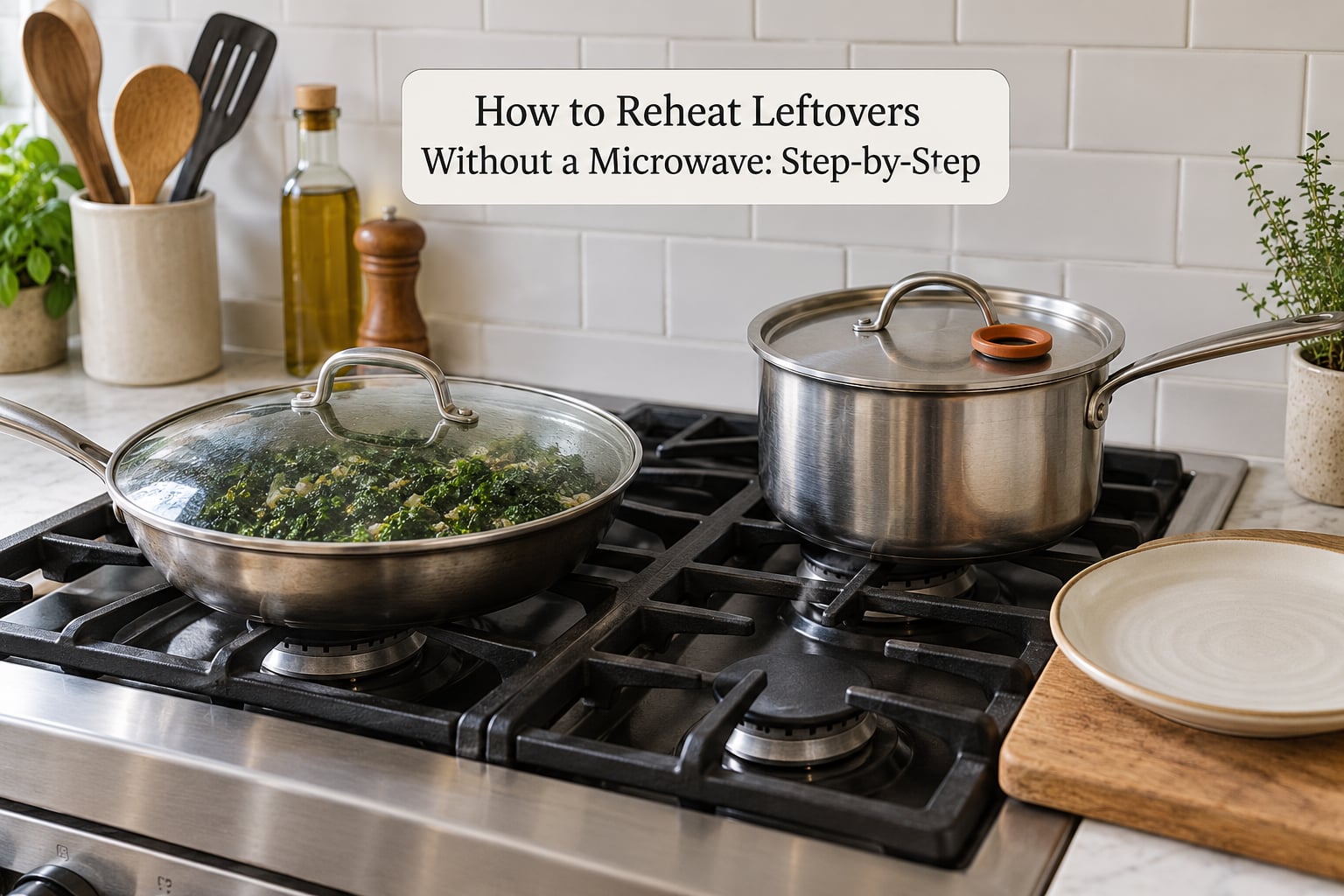
The sections below cover each method in detail. Knowing how to reheat leftovers without a microwave comes down to two things: choosing dry heat or moist heat to match the food, and giving it long enough to heat through rather than just brown the surface. Start with the cheat sheet if you know what food you are dealing with, or jump to the method that matches your kitchen.
1. Choose the Right Reheating Method
Match the method to the food, not the other way around. Dry heat (oven, toaster oven, air fryer, uncovered skillet) restores crispness, while a covered pan or a steamer returns moisture. Putting a saucy casserole under the broiler is how you get a crust that tastes scorched and a center that stays cold.
Here is the short version:
- Casseroles, gratins, curries, braised meat: covered skillet or low oven with a splash of broth
- Pizza, fried chicken, fries, roasted vegetables: hot oven, toaster oven, or air fryer, uncovered
- Rice, grains, mashed potatoes: covered skillet or steamer basket with a few drops of water
- Soups, sauces, pot liquor: saucepan on medium-low with frequent stirring
- Steak, chops, burgers: skillet with a thin film of oil, then a couple of minutes under the broiler
What liquid you add matters as much as the method. Water softens and steams, broth adds savory flavor back into braised food, and oil keeps lean meat from tightening and drying out.
| What you add | Use it for | How much |
|---|---|---|
| Water | Steaming vegetables, rice, and casseroles you want plain | A tablespoon to half a cup |
| Broth or stock | Reheating pot liquor, braised meat, soups, and rice dishes | Half a cup, or enough to come a quarter inch up the pan |
| Olive or canola oil | Re-searing steak, chops, burgers, and grilled chicken | A teaspoon or two, spread around the pan |
| Nothing | Pizza, fried food, and anything you want to stay crisp | None |
Here is how the same foods behave across appliances:
| Food | Stovetop | Oven | Toaster oven | Air fryer |
|---|---|---|---|---|
| Pizza slice | Skillet, medium, lid on, 4 to 6 min | 400°F, 8 to 10 min | 400°F, 4 to 6 min | 400°F, 2 to 4 min |
| Fried chicken or fries | Oil in a skillet, 6 to 10 min, turning | 350°F, 15 to 20 min | 350°F, 10 to 15 min | 350°F, 6 to 10 min |
| Rice or grains | Covered skillet with a splash of water, 4 to 6 min | 325°F, covered, 10 min | 325°F, covered, 8 min | Not recommended |
| Pasta in sauce | Saucepan with a splash of water, 5 min | 325°F, covered, 12 min | 325°F, covered, 10 min | Not recommended |
| Steak, chops, burgers | Skillet with oil, 3 to 5 min plus 2 min rest | 325°F, 8 to 12 min | 325°F, 6 to 9 min | 375°F, 6 to 9 min |
| Braised meat or pot liquor | Covered saucepan, medium-low, 15 to 25 min | 325°F, covered, 25 to 35 min | 325°F, covered, 20 to 30 min | Not recommended |
| Soup or sauce | Medium-low saucepan, stir every 2 min | 325°F, covered, 15 min | 325°F, covered, 12 min | Not recommended |
| Casserole or gratin | Covered skillet, 10 to 15 min | 325 to 350°F, covered, 20 to 25 min | 325°F, covered, 15 to 20 min | Not recommended |
Frozen leftovers need 2 to 3 extra minutes, and they heat far more evenly if you move them from the freezer to the refrigerator for 10 to 15 minutes before you start rather than going in straight from frozen.
2. Reheat Oven Leftovers
The oven is the forgiving option. Set it to 325°F for moist dishes or 350 to 400°F for anything you want crisp, and give it enough time to actually heat the food rather than just the dish.
Put the leftover food in an oven-safe dish. Add a quarter inch of broth or water if it is a casserole, rice dish, or braised meat, and stir it so the liquid spreads. Cover tightly with foil or a lid, set the dish in the center of the oven, and heat for 20 to 25 minutes for a full casserole, 10 to 15 minutes for a single serving.
Stir once at the halfway mark. That one step is the difference between food that is hot all the way through and food with a hot ring and a cold middle.
For crisp foods, leave the foil off. Pizza, fried chicken, and roasted vegetables go onto a baking sheet at 400°F, and they need almost no attention — 8 to 10 minutes, checked once, is enough. Toaster ovens hit the top and the bottom at the same time, which is why they beat a full oven for two or three slices.
3. How to Reheat Leftovers on the Stovetop Without a Microwave
Yes, you can reheat food on the stove, and for soups, stews, and saucy leftovers it is the fastest, steadiest method available.
For soup, chili, or pot liquor, pour it into a saucepan and set the heat to medium-low. Stir every two minutes with a wooden spoon, scraping the bottom, until it steams and you see a bubble breaking the surface. It should take 6 to 10 minutes from refrigerator temperature. Keep the heat low enough that it barely shivers — a hard boil will scorch the bottom of the pan and make the meat go tight.
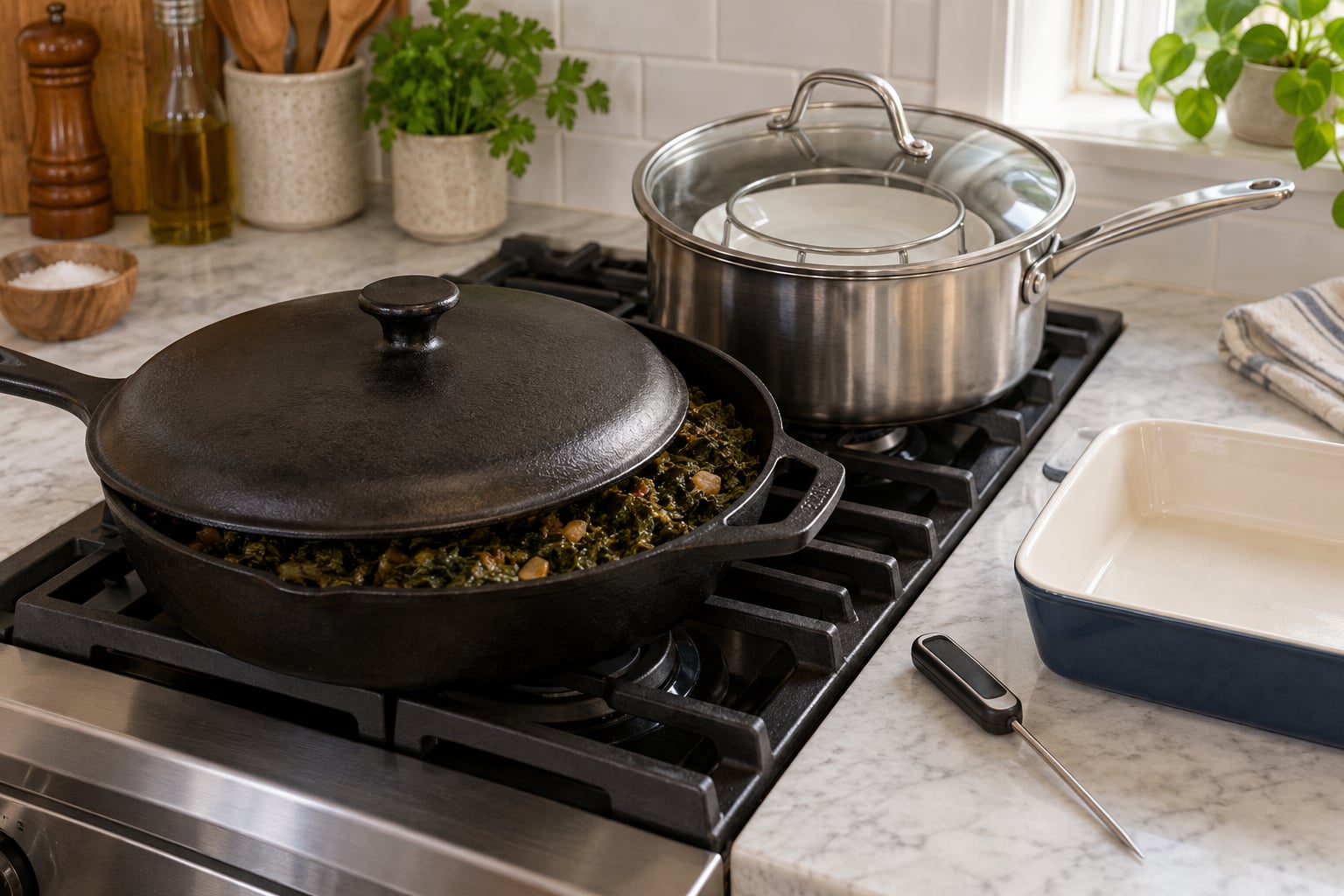
For rice, grains, or vegetables, the stovetop steam method is the one to remember. Put half an inch of water in a saucepan and bring it to a simmer. Set a heat-safe plate on top of the water, held up by a metal ring or the bottom of a jar. Pile the leftover rice, noodles, or vegetables onto the plate, put a tight-fitting lid over the pan, and turn the heat down to medium-low for 3 to 5 minutes. The trapped steam heats the food from above and leaves it moist instead of drying it out.
For a skillet, preheat a tablespoon of oil over medium heat, add the food, and turn it often. Splash in a quarter cup of broth when you add a lid, then cook 6 to 10 minutes for chicken or vegetables, 12 to 15 for a thick piece of fish or a pork chop. Cast iron holds heat and browns well; nonstick is gentler on delicate fish. Both beat the microwave.
4. Reheat Vegetables, Biscuits, and Other Small Foods
Small items go fast and need less moisture than big ones. Sliced carrots, roasted squash, and green beans do well in a skillet with a teaspoon of oil over medium-high heat — 5 to 7 minutes, shaking the pan every couple of minutes so nothing sticks.
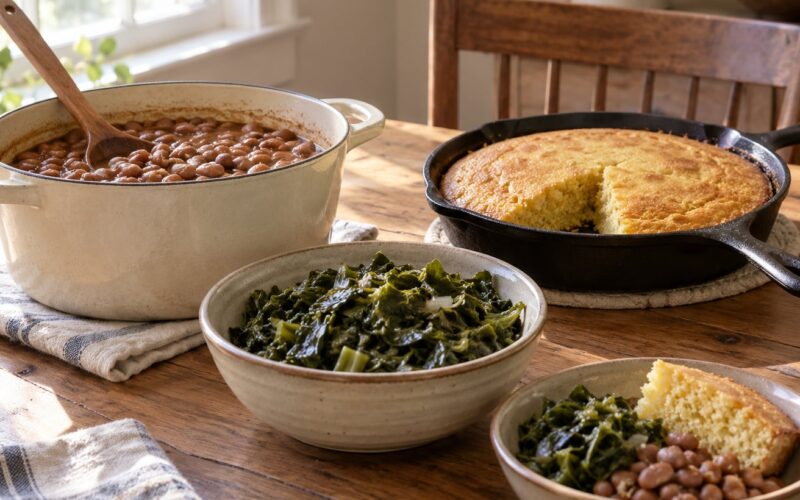
Leafy greens like collards, kale, and cooked cabbage only need a warm skillet with a couple of tablespoons of broth or the pot liquor they were cooked in. Five minutes over medium heat with the lid on brings them back without turning them to strings. If greens have already gone slimy in the container, skip reheating and start with fresh ones.
Biscuits and cornbread go back in a 350°F oven or toaster oven, wrapped in foil, for 5 to 8 minutes. The foil traps the steam the bread gives off as it warms, so the crumb stays tender instead of turning into a brick.
For anything else small — muffins, toast, tortillas — the oven at 350°F for 4 to 6 minutes does the job. A barely damp paper towel laid over bread before it goes in makes a visible difference.
5. Check That Leftovers Are Hot and Safe
Warm food is not the same as safely hot food. Stir and rotate larger portions halfway through, because heat enters from the outside in, and a plate can feel hot while the middle of it is still cool.
An instant-read thermometer settles it. Push the probe into the thickest part of the food and check the temperature. USDA guidance is to reheat leftovers until every part reaches 165°F (74°C), including casseroles and soups, so stir the dish and take a second reading from another spot.
For context on the numbers people see elsewhere: 160°F (71°C) is the safe minimum for ground meat, and 145°F (63°C) is the safe minimum for whole cuts of beef, pork, lamb, and fish. Those are cooking minimums, not reheating targets.
Two more rules worth keeping straight. Refrigerate or discard food that has sat out longer than two hours, and reheat leftovers only once — every trip through the danger zone adds risk. That single reheating pass is what makes learning how to reheat leftovers without a microwave worthwhile: one careful, even reheat is far safer than three quick ones.
Storage timing matters just as much. Cooked leftovers keep three to four days in the refrigerator, and three to four months in the freezer. Freeze the portions you will not eat inside that four-day window and you have a few weeks of meals waiting instead of a fridge full of containers you are guessing about.
Common Mistakes
Almost every disappointing reheated meal traces back to one of a handful of habits. Fix these six and the oven, skillet, or saucepan does the rest. Knowing how to reheat leftovers without a microwave is mostly about heat control and moisture — the tools matter far less than the temperature you run them at.
Reheating too hot. High heat cooks the outside of a piece of food long before the center catches up, which dries the edges and leaves the middle cool. Medium or medium-low heat, plus a lid, is almost always better. Turn the heat up only at the end, for a minute or two, when you want a crust.
Leaving the dish uncovered. Every bit of moisture that leaves food goes into the air instead of back into the food. Cover with a lid or foil, or add liquid to the pan before the food goes in.
Crowding the pan. Food packed shoulder to shoulder steams instead of heating, and steam is the enemy of anything crisp. Cook in batches. A crowded air fryer basket is the most common version of this mistake.
Skipping the halfway stir. Casseroles and one-pot meals heat in uneven rings. Stir or rotate the dish once, halfway through, and it evens out.
Reheating more than once. Every additional reheat cycle drops the temperature somewhere before it reaches 165°F again. Reheat once, eat it all, and freeze the rest instead.
Assuming everything should be reheated. Some food is better served cold or not at all. Raw salad vegetables turn limp and watery, and cream sauces can break when boiled hard. Cooked greens are fine as long as they did not already go slimy in the container. Honey and sugar left over from a hard-bake are an unnecessary risk for very little gain. Cooked rice that has been kept too long is a food-safety question, not a technique question — if there is any doubt about how long it has sat, throw it out.
One more thing people fight with: whether to add liquid. You are not obligated. Adding water or broth is a technique for dry food — baked goods, grains, vegetables, braised meat. Crispy food needs nothing at all, and a splash of water in the pan under pizza just makes the crust soggy.
Frequently Asked Questions
What is the best way to reheat leftovers without a microwave?
It depends on the food. Use a covered skillet or a low oven for casseroles, rice, vegetables, and braised meat, since a lid traps moisture. Use a hot oven, toaster oven, or air fryer uncovered for pizza, fried food, and anything you want crisp. Soups and sauces go in a saucepan over medium-low heat with stirring.
How long do you reheat leftovers on the stove?
Plan on 6 to 10 minutes for a saucepan of soup or pot liquor over medium-low heat, and 5 to 8 minutes for rice or vegetables in a covered skillet. A single piece of meat usually needs 3 to 5 minutes per side plus a rest. Check early rather than late, and stir or flip halfway through so the heat reaches the center.
Can you reheat leftovers more than once?
No. USDA guidance is to reheat leftovers only once. Each reheating adds another cycle of bacteria growth and cooling. If you will not finish a portion in one sitting, freeze it as soon as it is cool, and thaw it in the refrigerator rather than on the counter before reheating it thoroughly.
How do I keep leftovers moist when reheating?
Cover the dish with a lid or foil, and add liquid before heating. Half a cup of broth works for braised meat and rice dishes; a tablespoon of water is enough for vegetables; a teaspoon of oil keeps lean meat from drying out. Steam is the whole trick, and it only works when the moisture cannot escape.
How hot should reheated leftovers be?
Every part of the dish should reach 165°F (74°C), measured with an instant-read thermometer in the thickest part. Stir the dish first and check a second spot. For reference, 160°F (71°C) is the safe minimum for ground meat and 145°F (63°C) for whole cuts of beef, pork, lamb, and fish.
Which leftovers should not be reheated?
Skip raw salad vegetables, which turn limp and watery, and be careful with cream sauces, which can break if boiled hard. Cooked greens are fine unless they already went slimy in the container. Cooked rice of uncertain age is a safety question rather than a technique question, so discard it if you are not sure how long it has sat.
If you take one thing from this: put a splash of broth in a covered skillet, turn the heat to medium-low, and give it fifteen minutes. That single move fixes most leftovers people think they have ruined.