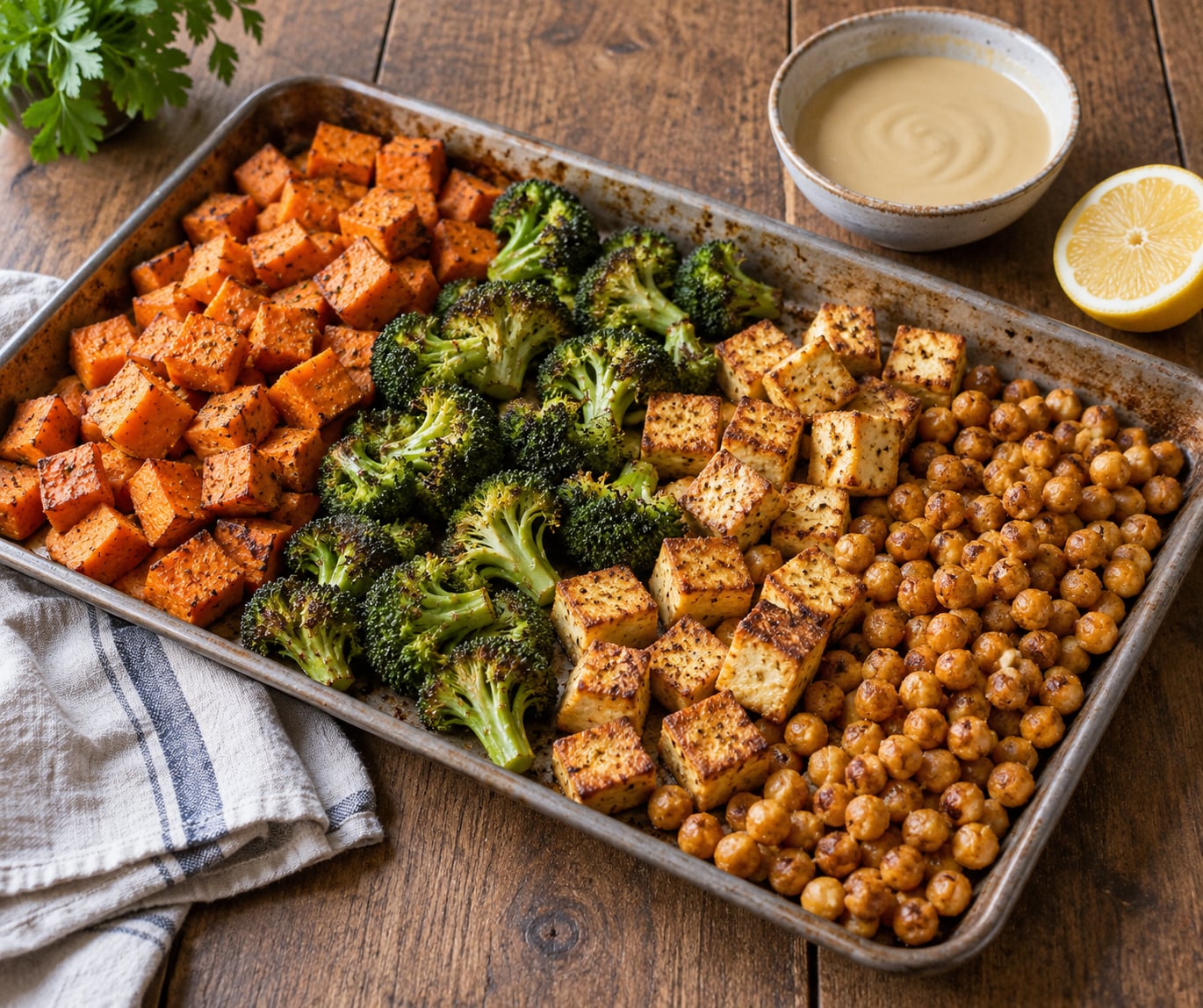
To make a sheet pan dinner that is plant based, pick two or three vegetables with different cook times, add a sturdy protein like tofu, tempeh, or chickpeas, toss everything in oil and seasoning, and roast it on one rimmed pan at 425°F until the edges brown. The whole thing takes about 40 minutes from cutting board to table, most of it in the oven, and leaves you exactly one pan to wash.
That single formula is the reason this style of cooking keeps showing up on weeknight calendars here in Appalachia, where dinners often run late and the sink is already full. You are not making one recipe. You are learning a method, then swapping what goes in it based on what is good that week.
What sheet pan means, technically: a rimmed baking sheet with low sides, not a flat cookie sheet with no edges. The rim keeps oil and juices from running onto the oven floor, and a cookie sheet in a hot oven is a real burn risk. If you own only cookie sheets, buy one rimmed pan before you start.
Table of Contents
- What You Need
- The four ingredient groups
- A four-serving formula to start with
- How to Make Sheet Pan Dinners Plant Based: Step-by-Step
- Step 1: Choose Vegetables and a Plant-Based Protein
- Step 2: Preheat the Oven and Prepare the Sheet Pan
- Step 3: Cut Everything to the Right Size
- Step 4: Arrange Ingredients Without Crowding
- Step 5: Roast, Stir, and Check for Doneness
- Step 6: Add Sauce and Serve or Store
- Reference: cook times at 425°F
- Common Mistakes and How to Fix Them
- Frequently Asked Questions
- Do I need to preheat the oven for a plant-based sheet pan dinner?
- How do I stop vegetables from getting soggy or burning?
- Can I make a sheet pan dinner with tofu or tempeh instead of chickpeas?
- What is the best way to reheat plant-based sheet pan leftovers?
- Can plant-based sheet pan dinners be gluten-free?
- How long do plant-based sheet pan dinners take to cook?
- Conclusion
What You Need
Six tools, and only one of them matters more than the rest: the pan. Everything else you almost certainly own.
| Tool | What it does | Notes |
|---|---|---|
| Rimmed baking sheet | Holds everything in one layer | An 18 by 13 inch pan fits about four servings. A half sheet pan works for two. |
| Large cutting board | Gives you room to cut uniform pieces | Pull it out before you start so you are not chopping over a pile of produce. |
| Chef’s knife | Cuts everything to size | A dull knife crushes tomatoes and mushrooms into mush. A sharp one keeps edges clean. |
| Two mixing bowls | Keep raw vegetables separate from seasoned protein | One for the starchy vegetables, one for everything else. |
| Tongs or a metal spatula | Turns and stirs mid-roast | A plastic spatula melts. Metal or wood is what you want in a 425°F oven. |
| Parchment paper or silicone mat | Optional liner for easier cleanup | Needed most for sticky things like tofu and sweet potato. See the note below. |
On liners: parchment paper is the safest pick in a home oven since it has a heat rating. A silicone mat is reusable and fine, but check that yours is rated for at least 425°F. Foil works too, though it reflects heat onto the food and slows browning, so leave the top open or tent it loosely.
The four ingredient groups
Every sheet pan dinner comes from the same four groups. Learn the groups and you can build a meal from whatever is left in the crisper drawer.
- Sturdy vegetables that take the longest: potatoes, sweet potatoes, carrots, beets, winter squash, cauliflower florets, broccoli florets, Brussels sprouts. Cut these into even chunks about the size of a walnut.
- Tender vegetables that cook faster: zucchini, bell peppers, red onion, summer squash, asparagus, green beans, mushrooms. Cut these slightly smaller or add them later.
- Plant-based protein with enough structure to survive the oven: extra firm tofu, tempeh, chickpeas, white beans, seitan, or shredded jackfruit.
- Sauce or seasoning to tie it together: olive oil and salt as the base, then garlic powder, smoked paprika, cumin, or chili powder, with a fresh sauce drizzled on at the end.
A four-serving formula to start with
For one 18 by 13 inch pan: about 12 ounces of pressed extra firm tofu or 1 cup of dried chickpeas, 4 cups of chopped sturdy vegetables, 2 cups of tender vegetables, 2 tablespoons of olive oil, 1 teaspoon of salt, and 1 teaspoon of whatever spice profile you are in the mood for. Add sauce at the table, not in the pan, and you have dinner for four with a sensible amount of work.
If you are cooking without oil, use 1 to 2 tablespoons of aquafaba, the starchy liquid in a can of chickpeas. It browns surprisingly well, and it keeps the seasoning clinging instead of washing off.
How to Make Sheet Pan Dinners Plant Based: Step-by-Step
Six steps, in this order. The order matters less than the discipline inside each one, but starting with the vegetables and ending with the sauce is what keeps the pan from steaming.
Step 1: Choose Vegetables and a Plant-Based Protein
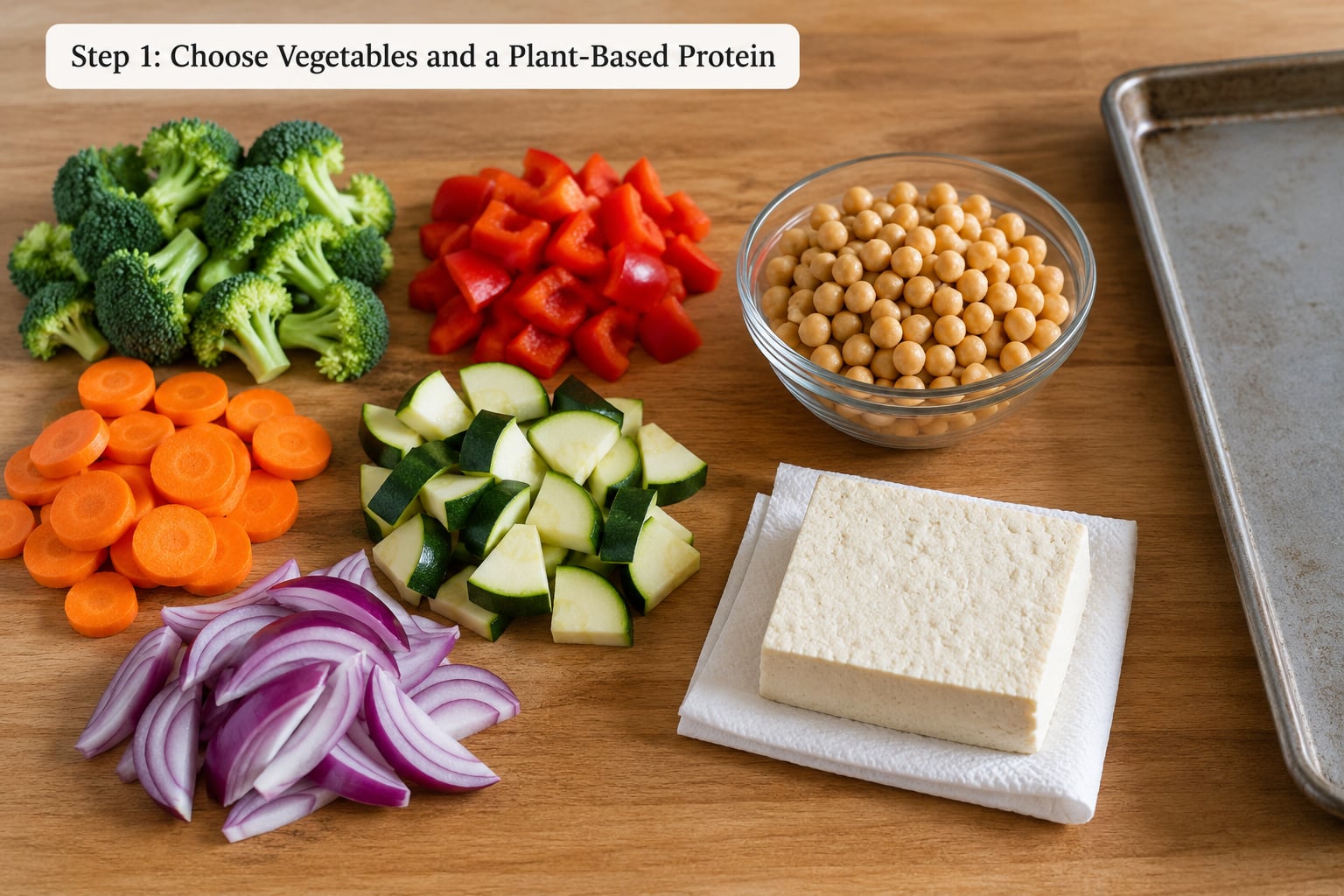
Select two or three vegetables with genuinely different cooking times, then add one protein. This is the step that makes the whole method work, and skipping it is why most disappointing sheet pan dinners happen.
The rule is simple: pair one sturdy vegetable with one tender vegetable, and you have a balanced pan. Add a third only if the first two cook within about 10 minutes of each other. Four vegetables is where crowding usually creeps in.
For protein, press your tofu while the oven heats. Wrap a block in a clean towel, set a heavy pan or a couple of canned goods on top, and leave it for 20 minutes. That press is what turns wet, floppy tofu into something with browned corners instead of steamed mush. No press needed for chickpeas, which you can just drain and dry on a towel.
Step 2: Preheat the Oven and Prepare the Sheet Pan
Preheat to 425°F and give it a full 15 minutes at that temperature. Starting with a cold oven is the most common reason vegetables steam instead of browning, because the pan and the food enter the heat together and nothing gets hot enough to caramelize.
While it heats, take the pan out. Pull the oven rack down about 2 inches from the element for more browning, and move the rack to the center if your oven heats unevenly. That is worth checking early rather than mid-cook.
425°F is the sweet spot for most vegetables. At 400°F, add about 10 minutes to the total roast. At 450°F, subtract 5 to 8 minutes and watch it more closely, especially with anything sugary like sweet potato or carrots. Convection ovens run about 25°F cooler than what the dial says, so drop the temperature to 400°F if you have one.
Line the pan only if you need to. Parchment or a silicone mat makes cleanup easier with tofu and chickpeas, but a bare well-seasoned metal pan gives you the best browning.
Step 3: Cut Everything to the Right Size
Cut the sturdy vegetables into even chunks about three-quarters of an inch, and cut the tender vegetables a little smaller, around a half inch. Uniform size is the whole point, because pieces that are wildly different in size either burn or stay raw in the same pan.
Larger cuts suit dense vegetables like potatoes and squash, which need the extra size to cook through before the outside chars. Smaller cuts suit anything that hits the pan hot, like mushrooms or zucchini. Cube the tofu rather than slicing it thin, and keep the pieces the same size as the potatoes so everything finishes together.
Season in two stages. Toss the vegetables with half the oil and salt, and let the protein take the rest. Dry tofu, meaning you skipped the press or used a soft block, needs to be torn or cubed with extra care because it will fall apart in the pan. Pressed extra firm or super firm tofu can be handled normally.
Note which items are quick cookers now, because you will need that list at the halfway stir.
Step 4: Arrange Ingredients Without Crowding
Spread everything in a single layer with a finger’s width of space between pieces. When the food touches, moisture gets trapped and the pan steams instead of roasting, which is the number one complaint I hear about sheet pan cooking.
Put the densest items, potatoes, squash, tofu, toward the outer edges of the pan, since that is where the heat is most consistent. Group vegetables that share a cook time so you can add and remove them in the same move.
Use the crowding test: if the ingredients cover more than about three-quarters of the pan’s surface, they are too close. Either use a second pan, which is a completely legitimate move, or cut the quantities down. Two roomy half pans beat one cramped full pan every time.
Step 5: Roast, Stir, and Check for Doneness
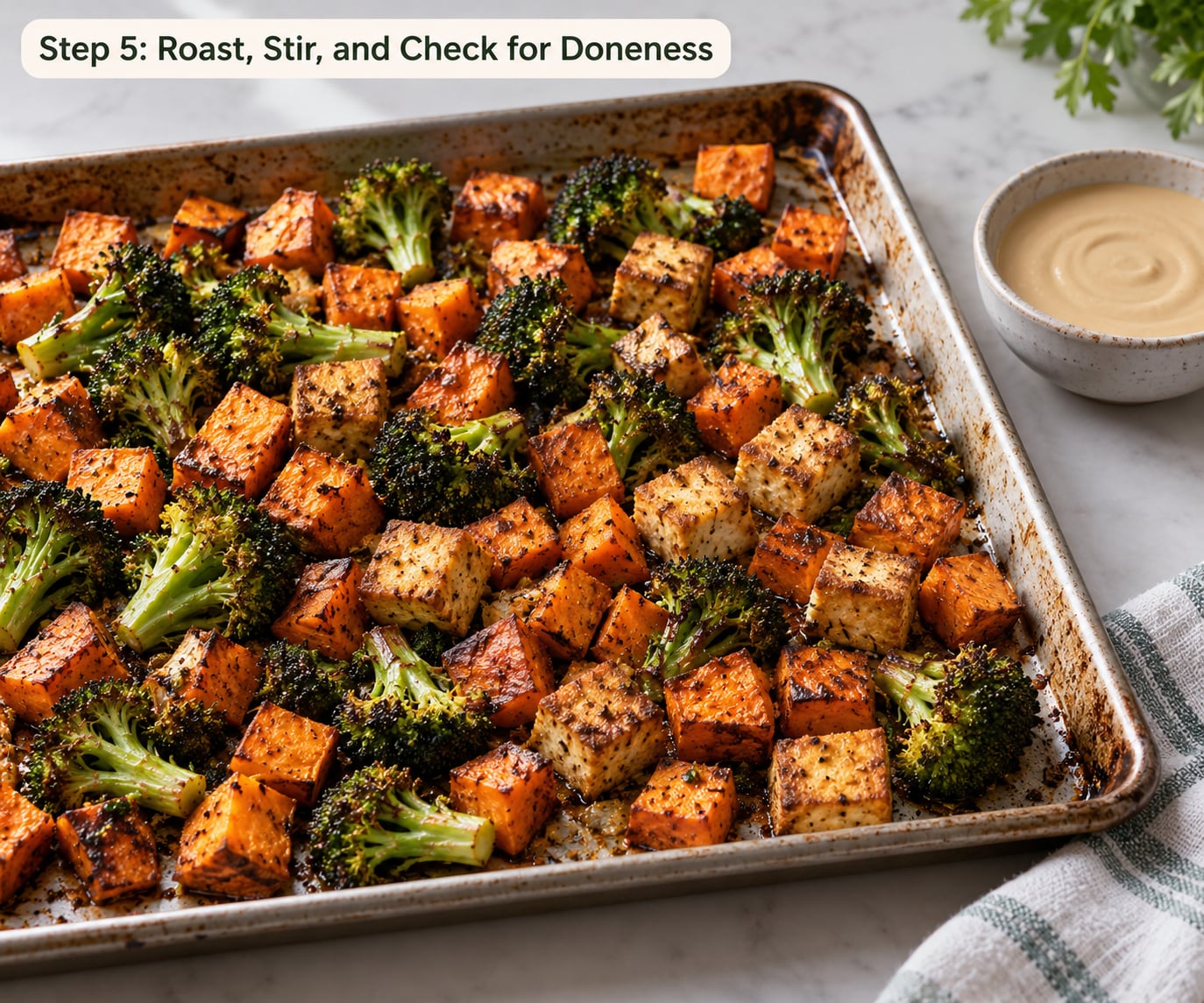
Roast at 425°F for 25 to 30 minutes for a standard four-serving pan, then pull it out and stir. Turning the pieces exposes new surfaces to the heat and fixes the uneven cooking that plagues single-pan dinners.
At the stir, add your quick-cooking vegetables and any protein that needs less time, then return the pan for 10 to 15 minutes more. Total time lands somewhere between 30 and 45 minutes depending on your slowest ingredient.
You will know it is done by sight and feel. Vegetables should have genuinely browned, almost charred, edges and a tender center, and a fork should slide into a potato or piece of squash with no resistance. Tofu should be golden and firm at the corners, still a little chewy in the middle. Tempeh should look browned and smell nutty, not pale. Chickpeas should be crisp on the outside and soft in the middle, which means dried ones rather than canned, since canned chickpeas are already hydrated and only need about 25 minutes.
If your vegetables are pale but tender, they steamed. Next time, spread them further apart or give the oven another five minutes at 450°F with the pan already hot.
Step 6: Add Sauce and Serve or Store
Add the sauce after roasting, not before. A tahini, yogurt, peanut, or miso sauce goes on at the table or drizzles over the hot pan at the end, and putting it in earlier is a reliable way to burn it into a bitter crust.
For serving, put the pan in the center of the table with a grain underneath if you want: brown rice, quinoa, farro, or mashed potatoes all work. A simple tahini sauce is three ingredients, tahini, lemon juice, and water, loosened until it drips off a spoon, with salt to taste. Add chopped parsley, cilantro, or scallions at the end for freshness.
For storage, move leftovers into containers within two hours of cooking and refrigerate them for up to three to four days. Keep the sauce in a separate jar so the vegetables do not go soft sitting in dressing, and leave the crispy chickpeas or tofu on top rather than mixed in, so you can re-crisp them later.
Reheat in a hot oven or toaster oven for 10 minutes rather than in the microwave, which steams the crust back to soft. If you are reheating cooked leftovers to a steaming temperature throughout, bring them to 165°F.
Reference: cook times at 425°F
Use this table to combine vegetables and protein that finish together. Times assume everything is cut to the sizes described above and goes in on a preheated pan.
| Ingredient | Cut | Time at 425°F | Doneness cue |
|---|---|---|---|
| Fingerling or baby potatoes | Halved | 30 to 35 min | Slippery skin, browned cut face |
| Sweet potato | Three-quarter inch cubes | 30 to 35 min | Caramelized edges, fork tender |
| Carrots, beets | Half inch coins or cubes | 30 to 35 min | Browned, tender at center |
| Cauliflower or broccoli florets | Two inch florets | 25 to 30 min | Deeply browned tips |
| Brussels sprouts | Halved | 25 to 30 min | Outer leaves crisp, core tender |
| Red onion | Thick wedges | 25 to 30 min | Soft with charred edges |
| Zucchini or summer squash | Half inch slices | 15 to 20 min | Browned, still slightly firm |
| Bell pepper | One inch strips | 15 to 20 min | Soft with blackened spots |
| Asparagus | Bunch halved | 12 to 15 min | Bright green, charred tips |
| Mushrooms | Halved | 15 to 20 min | Browned and shrunken |
| Pressed extra firm tofu | Three-quarter inch cubes | 30 to 35 min | Golden corners, firm texture |
| Tempeh | Half inch slices or strips | 25 to 30 min | Browned, nutty aroma |
| Dried chickpeas | Whole, soaked and drained | 30 to 35 min | Crisp outside, soft inside |
| Canned chickpeas | Whole, drained and dried | 20 to 25 min | Crisp outside, creamy inside |
| Seitan | Two inch strips | 20 to 25 min | Browned edges, chewy center |
The pairing logic is simple enough to remember. Chickpeas and seitan cook fast and pair with anything. Tofu and tempeh hold up to the heat and pair with sturdy vegetables. Thin vegetables like asparagus and zucchini belong with fast proteins, never with a potato that needs 35 minutes.
Common Mistakes and How to Fix Them
The pan is overcrowded. Touching pieces steam each other. Fix it by cutting the recipe in half and using two pans, or by reaching for a second pan, which is a legitimate technique and not a failure.
The pieces are different sizes. This is why one potato burns while the broccoli next to it is still raw. Cut everything to the same dimensions, and cut dense vegetables larger than delicate ones.
Everything went in at once. Asparagus sitting next to a whole sweet potato will be ash by the time the sweet potato is done. Add quick cookers at the halfway stir, and pull them out early if the protein is ready first.
Delicate vegetables are moved around too much. Once a vegetable is tender, further stirring turns it to mush. Stagger it in the pan and let it stay put.
Tofu or tempeh came out dry and tough. That means it cooked too long or the pan was too dry. Press tofu first, cube it, toss it in oil, and pull it when the corners are golden rather than waiting for extra browning.
The sauce thinned out or burned. Sauces with liquid in them belong after roasting. A thin sauce on the pan turns bitter in about ten minutes at this temperature.
Nothing browned, even though it was tender. The oven was probably not fully preheated, or the pan was crowded, or the vegetables were too wet. Pat produce dry, spread it out, and give the pan another five minutes with the oven already hot.
A few habits cover most of this. Cook on two pans instead of one crowded pan. Reheat leftovers in the oven, not the microwave, so the crust survives. And change what goes in the pan with the season, because the method is constant even as the vegetables are not. In spring that means asparagus and peas, in late summer zucchini and tomatoes, and in the cold months root vegetables and a heavier sauce like a curry-spiced yogurt drizzle.
Frequently Asked Questions
Do I need to preheat the oven for a plant-based sheet pan dinner?
Yes, and this matters more for plant-based cooking than most recipes admit. A cold oven means the pan and the food heat up together, so moisture escapes slowly and vegetables steam instead of browning. Give a 425°F oven a full 15 minutes. If you have convection, drop the temperature to 400°F since convection ovens run about 25 degrees cooler than the dial reads.
How do I stop vegetables from getting soggy or burning?
Sogginess comes from crowding and moisture, burning comes from a piece that is much smaller than its neighbors. Spread everything in one layer with a finger’s width of space, pat your vegetables dry, and cut them to consistent sizes. Add quick-cooking vegetables partway through instead of at the start, and use a second pan rather than piling higher on the first.
Can I make a sheet pan dinner with tofu or tempeh instead of chickpeas?
Yes, and most cooks land on tofu because it browns better and holds its shape. Press extra firm tofu in a towel under a heavy pan for 20 minutes, then cube it and toss with oil before it goes in the oven, which gives you 30 to 35 minutes at 425°F. Tempeh takes 25 to 30 minutes and benefits from a marinade, since its flavor is stronger and drier than tofu’s.
What is the best way to reheat plant-based sheet pan leftovers?
Use a hot oven or toaster oven at 400°F for about 10 minutes. Dry heat keeps the roasted edges crisp instead of softening them the way a microwave does. Store the sauce separately and keep any crispy chickpeas or tofu on top of the container so it does not steam itself soggy. Refrigerate within two hours and use within three to four days.
Can plant-based sheet pan dinners be gluten-free?
They usually are, because the core formula is vegetables, a plant protein, oil, and spices. Two things break gluten-free status: soy sauce, tamari, and many spice blends contain wheat, and seitan is made entirely from wheat gluten. Choose tamari over soy sauce, check labels on spice blends, and swap seitan for tofu, tempeh, or chickpeas. Corn tortillas and quinoa are safe easy sides.
How long do plant-based sheet pan dinners take to cook?
A standard four-serving pan takes 30 to 45 minutes total at 425°F, and almost all of that is oven time. Most sturdy vegetables need 30 to 35 minutes, tender vegetables 15 to 20, and pressed tofu 30 to 35. Prep is about 15 minutes, more if you are pressing tofu. At 400°F add roughly 10 minutes, and at 450°F subtract 5 to 8.
Conclusion
Every plant-based sheet pan dinner comes down to the same three parts: a sturdy vegetable, a tender vegetable, and a protein with structure, finished with a sauce you add at the end. Master that combination at 425°F with a single uncrowded layer, and the rest is substitution.
Start tonight by preheating the oven, then put whatever vegetables are close to turning and one protein on a single rimmed pan. Cut everything to the same size, spread it out, and let the oven do the rest for 30 minutes. Once you have done that twice, you will not need a recipe again.