To learn how to roast vegetables so they caramelize, dry the pieces, coat them lightly with oil, spread them in a single uncrowded layer, and roast at 425°F (220°C) until the edges are deeply browned and the centers are tender. That takes about 30 to 45 minutes for most vegetables, and it is beginner-friendly.
Most home roasts fail for one reason: water. Vegetable surfaces hold moisture from washing, from the vegetable itself, and from the oil. Water keeps the surface pinned near 212°F, so the oven behaves like a steamer instead of a browning chamber, and your vegetables come out pale grey and soft.
Everything below comes down to removing that water, giving hot air a path around each piece, and giving the browning enough time at high heat to happen. This guide covers what you need, the full method, and the fixes for the six most common failures.
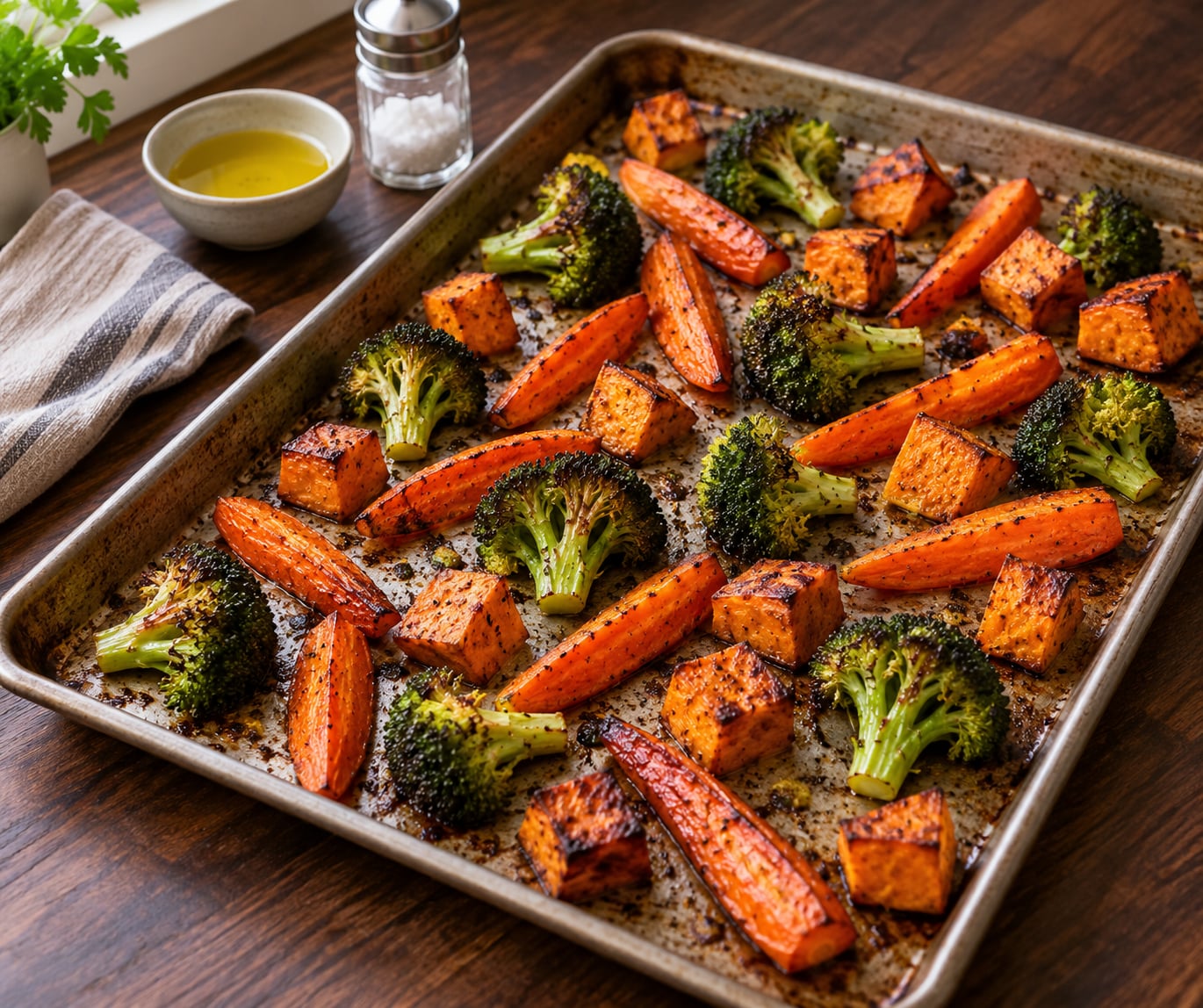
I cook this method with a half sheet pan, usually a mix of whatever is in the crisper: carrots, broccoli, sweet potato, onion. About 25 minutes of active work, then the oven does the rest.
Table of Contents
- What You Need
- Step-by-Step: How to Roast Vegetables So They Caramelize
- Choose vegetables with the right shape and moisture to caramelize
- Heat the oil and brown the vegetables in batches
- Roast until tender with deeply browned edges
- Common Mistakes
- Frequently Asked Questions
- What temperature is best for caramelizing roasted vegetables?
- Why are my roasted vegetables not getting brown?
- Should I cover vegetables while roasting them?
- How do I keep vegetables from burning before they become tender?
- Can I roast frozen vegetables until they caramelize?
- What vegetables brown best when roasted?
- Conclusion
What You Need
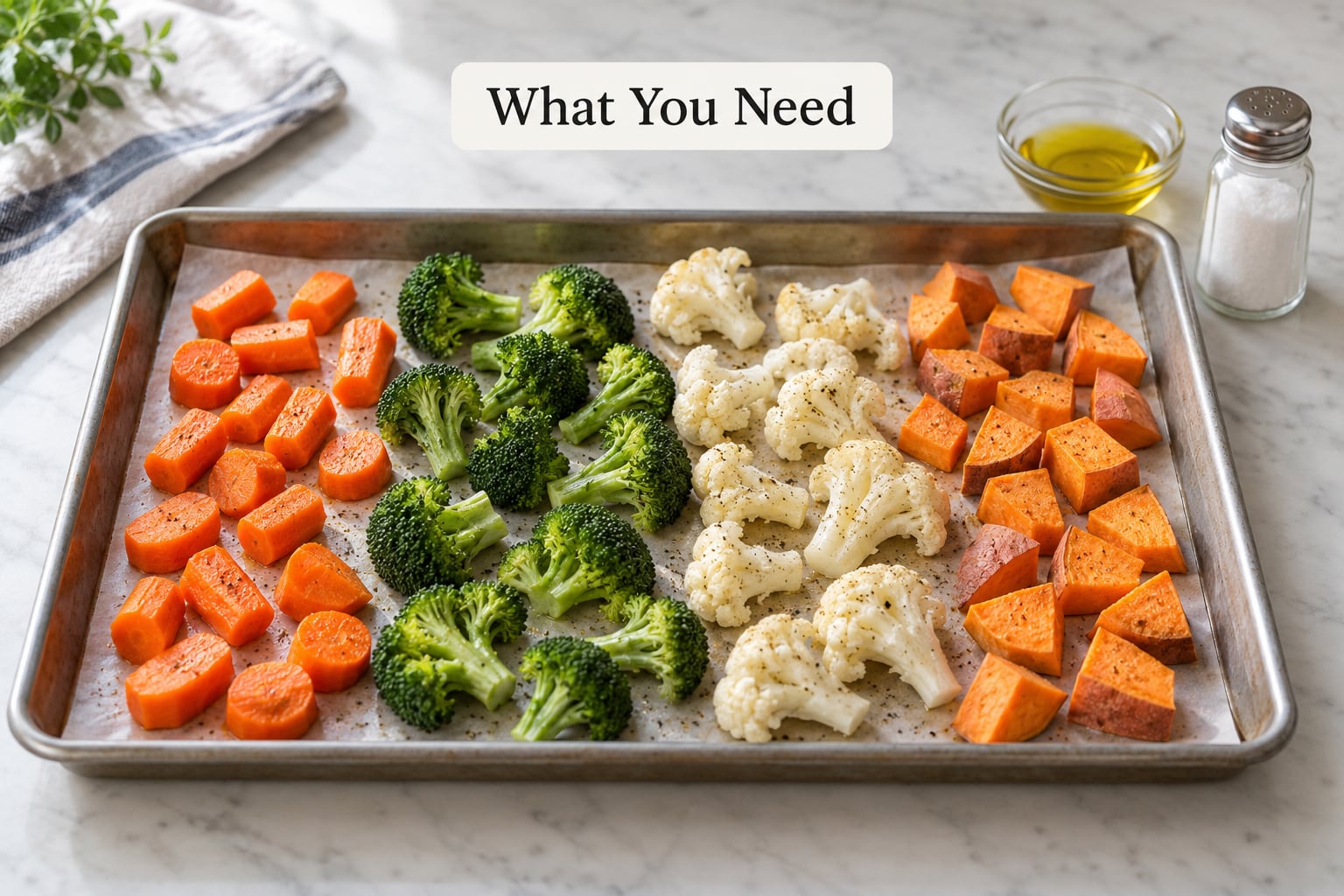
The equipment list is short because the method does the work, not the gear. You need a rimmed metal baking sheet, a high-heat oven, a neutral oil, coarse salt, and one more pan or a second rack if you are cooking more than a single layer’s worth.
- A rimmed baking sheet, half sheet size (13 by 18 inch) — the rim catches moisture and oil, and the flat surface gives even contact. A dark metal pan browns faster than a light one; a glass casserole needs a longer preheat and never gets quite as crisp.
- A second sheet pan — for when a single layer is not enough. Rotating two half sheets back to back beats cramming one full.
- Neutral high-heat oil — avocado, grapeseed, canola, or vegetable oil. Olive oil works too, and a peppery finishing oil drizzled after roasting adds a lot.
- Coarse kosher salt — it sticks to damp surfaces and draws moisture out before the pan even heats.
- A colander or a sheet of paper towels — for the drying step that most people skip.
- Optional — a wire rack set over a sheet pan so air circulates under the vegetables, and a pastry brush for oiling.
Pan surface matters more than most recipes admit, so here is the honest comparison. For deep browning on a standard night, a bare preheated metal pan wins.
| Surface | Browning | Sticking | Best for |
|---|---|---|---|
| Bare preheated metal pan | Best, direct contact with hot metal | Possible without enough oil | Maximum caramelization, easy cleanup with a splash of water |
| Parchment paper | Good, but the paper insulates slightly | Rarely sticks | Messy oils like olive oil or bacon fat, sweet glazes |
| Foil | Fair to good | Nothing sticks | Dense root vegetables you are covering for the first stage |
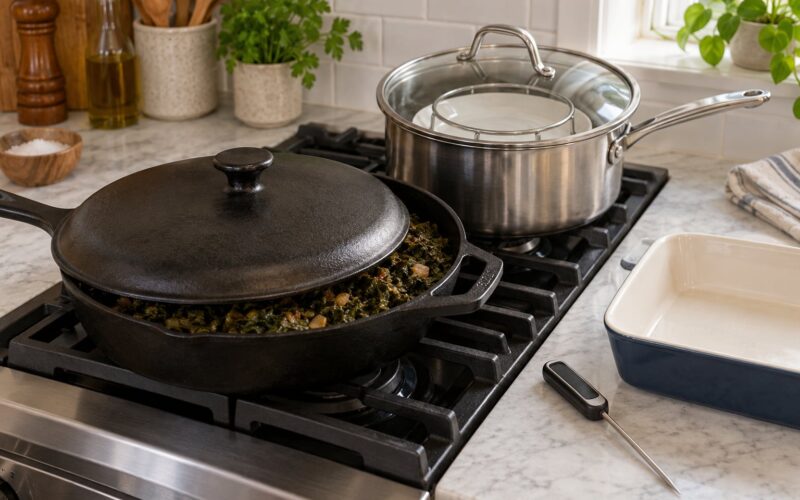
| Cast iron skillet | Excellent, holds heat and keeps cooking off the heat | Rarely sticks once hot | Small batches, stovetop roasting, big brassica pieces |
Cast iron is worth a mention because it holds heat better than any sheet pan. The reason is heat retention: a hot skillet keeps roasting after the flame is off, so the same 20 minutes produces more browning.
On sugar: skip it. Vegetables carry enough natural sugars to brown on their own, and added sugar or honey burns long before the vegetable is tender. If you glaze, do it in the last five minutes with a thin coat of balsamic or honey, and watch it closely.
Step-by-Step: How to Roast Vegetables So They Caramelize
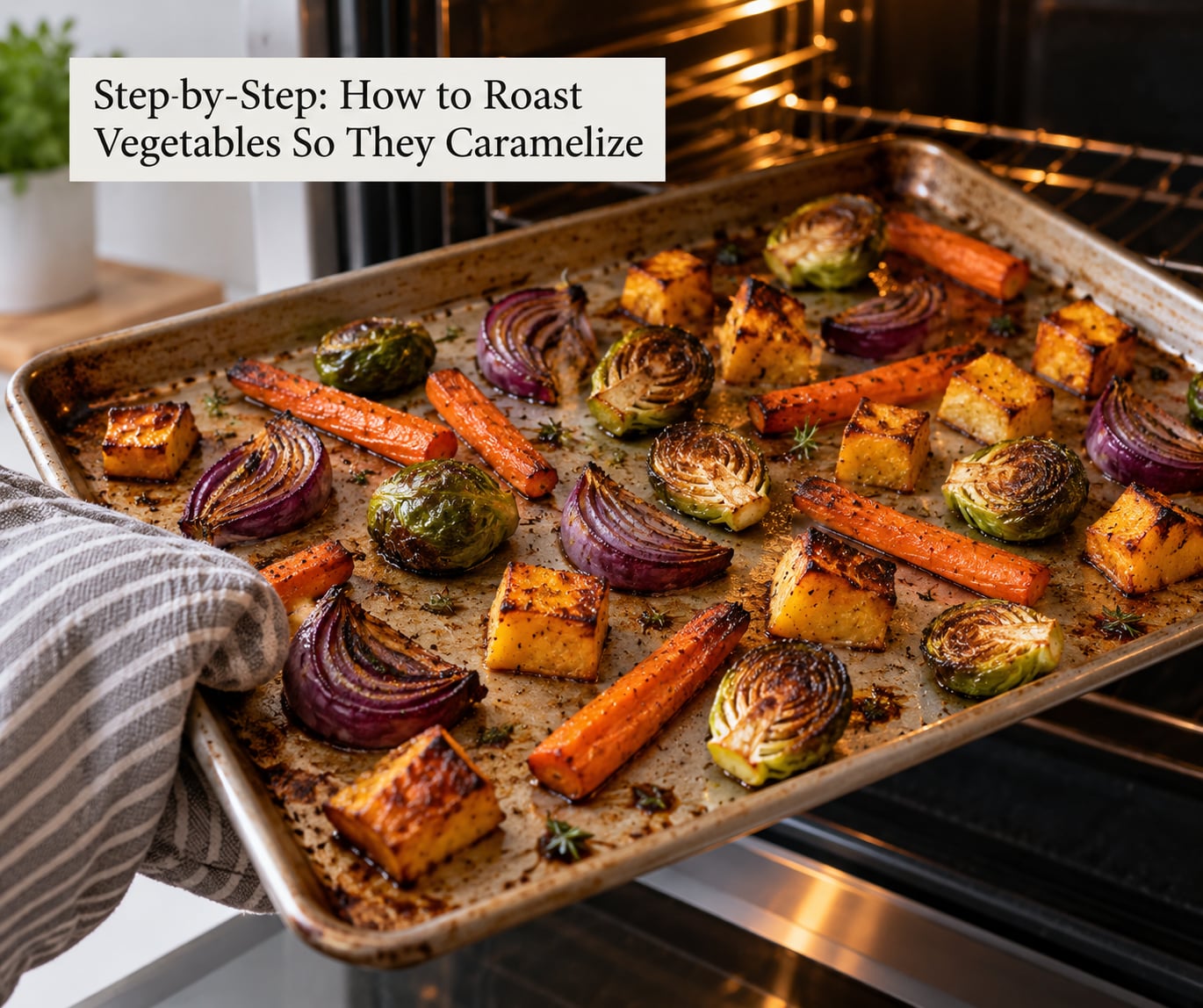
Here is the whole method in order. Total time is 30 to 45 minutes for most vegetables, and the active work is under ten minutes.
- Heat the oven to 425°F (220°C). For a convection oven, drop to 400°F (205°C) and shorten times by about a quarter, since moving air browns faster.
- Dry the vegetables. Wash, then dry thoroughly and let the pieces sit in a colander for 20 to 30 minutes if they are watery, such as broccoli, zucchini, mushrooms, or eggplant. Add a teaspoon or two of salt to the colander if you have time; the water that beads out is water that would have blocked browning.
- Cut to even sizes. Pieces within a half inch of each other finish together. Cut dense vegetables like sweet potato, beets, and winter squash into smaller chunks than quick ones like onion or pepper.
- Coat lightly with oil. Toss with 1 to 2 tablespoons of oil per pound plus salt. Enough to shine, not enough to pool. A puddle of oil at the bottom of the pan is what causes steaming and smoke.
- Preheat the pan. Slide the empty sheet pan into the hot oven for 5 minutes, then add the vegetables cut-side down in a single layer with space between pieces.
- Roast until deeply browned. Give the pan a shake at 20 minutes, then turn the pieces with a spatula or tongs and continue until tender and dark golden, 30 to 45 minutes total for most vegetables.
- Test and finish. A knife should slide into a thick piece with no resistance. Turn the oven off and let the pan sit inside for 5 to 10 minutes; residual heat keeps the browning going while the interior finishes.
- Season after roasting. A pinch of flaky salt, a squeeze of lemon, a drizzle of finishing oil, and fresh herbs go on off the heat.
Choose vegetables with the right shape and moisture to caramelize
Size and water content decide how a vegetable behaves in the oven. Dense, starchy, low-moisture vegetables such as carrots, sweet potato, beets, butternut squash, and russet potatoes caramelize best because their cut surfaces dry out fast and hold enough sugar to brown deeply.
Watery vegetables are the opposite problem. Zucchini, eggplant, mushrooms, tomatoes, and peppers release liquid as they cook, and that liquid fills the pan and turns the oven into a steamer. Two fixes work: salt and drain them in a colander for 30 minutes, or roast them on their own sheet at high heat and use a wire rack underneath so the liquid drips away instead of pooling.
Cut surface is the other variable. Cubes, wedges, and halved small vegetables present flat faces to the pan, and those flat faces are where browning happens. Thick cylinders, like whole Brussels sprouts or a whole head of cauliflower, brown mostly on the outside and steam in the middle, so halve them or cut them into smaller pieces.
| Vegetable group | Temperature | Time at that temperature | Prep note |
|---|---|---|---|
| Potatoes, sweet potatoes, butternut and acorn squash | 425°F (220°C) | 40 to 50 minutes, cut into 1 to 1.5 inch chunks | Cover with foil for the first 20 minutes, then uncover to brown |
| Carrots, beets, parsnips, rutabaga | 425°F (220°C) | 30 to 40 minutes, cut into even coins or chunks | Cook at 400°F (205°C) for 45 to 50 minutes if you want less charring |
| Broccoli, cauliflower, Brussels sprouts, cabbage | 450°F (230°C) | 25 to 35 minutes, florets cut-side down | These dry out fast, so watch the edges from minute 20 |
| Onion, fennel, peppers, tomatoes | 425°F (220°C) | 30 to 40 minutes, cut into thick wedges | Cut large; small pieces burn before the center softens |
| Zucchini, eggplant, mushrooms, summer squash | 450°F (230°C) | 20 to 25 minutes | Salt and drain 30 minutes first, or use a wire rack |
| Mixed roast, medium pieces | 450°F (230°C) | 35 to 40 minutes, turning twice | The fastest route to deep color if your pieces are uniform |
Rack position matters too. The middle rack gives the most even heat. If you have two sheets going in, put them on the upper and lower thirds, and swap them at the halfway point, because the top one browns faster.
Heat the oil and brown the vegetables in batches
The mistake here is crowding. Pieces touching each other trap steam between them, and that steam keeps both surfaces wet, so neither side browns. When the pan looks full and the vegetables form a shallow layer against each other, you get a pot roast instead of a roasted vegetable.
Rule of thumb: leave a finger’s width of metal visible between pieces, and keep everything in a single layer. If the vegetables will not fit that way, use a second pan and roast them one after the other, or roast in two pans at once on separate racks.
Preheating the pan is the part people skip. A cold sheet pan absorbs heat from the food the moment it lands, so the first ten minutes cook the vegetables from the inside rather than browning the outside. A preheated pan starts them searing immediately, which is when the Maillard browning and the deeper caramelization of their sugars begin.
For small batches, a cast iron skillet on the stovetop works as well as the oven and heats faster. Put the skillet on high heat, add oil, then add the vegetables in one layer and leave them alone for about 4 minutes before the first turn.
Roast until tender with deeply browned edges
Timing is a range, not a promise, because size, cut, pan temperature, and how full the pan is all move it. Start checking at 20 minutes for thin cuts and at 30 for chunks.
Turn the vegetables at the halfway point. This is not optional if you want even color: the pieces touching the pan brown from below while the exposed top browns from the hot air, and those two rates are never the same. Use a thin metal spatula, and wait until a crust has formed before flipping, or the pieces tear and stick.
Pull them when the centers yield to a knife tip and the flat faces are dark brown, not tan. Tan means the color is still coming, and residual heat will take it further while the pan sits in the turned-off oven. Pale beige means the pan was crowded or the pieces were wet, and more time will not fix it.
Watch for the two-stage method on hard roots. Beets, whole small potatoes, and dense winter squash benefit from 20 minutes covered with foil plus a couple of tablespoons of water, which lets the interior cook through without the outside scorching. Uncover for the remaining 20 to 30 minutes so the moisture evaporates and the color develops.
Common Mistakes
Nearly every disappointing pan traces back to one of six problems. Find the symptom, then fix that variable before changing anything else.
| What you see | Cause | Fix |
|---|---|---|
| Soggy, pale grey vegetables | Surface moisture plus crowding, so the pan steams | Dry the pieces, salt and drain for 30 minutes, use one layer with gaps, raise the heat to 450°F (230°C) |
| No browning at all, just soft edges | Oven not hot enough, or pan was cold when food went in | Preheat to 425°F (220°C) or higher and preheat the empty pan 5 minutes |
| Burnt edges, raw center | Uneven piece sizes, so thin parts overcook first | Cut everything to within a half inch, and move dense items to one side so they can come out early |
| Charred outside, dry inside | Too long at too high a heat for that vegetable | Drop to 400°F (205°C) for a longer cook, or add a splash of water and cover for the first stage |
| Sticking and tearing | Pan or parchment was cold, or pieces were moved too soon | Preheat the pan, use enough oil, and leave each piece alone until a crust forms |
| Bland flavor despite good color | Seasoning applied before roasting burned off | Salt before, then finish with flaky salt, lemon, fresh herbs, and a finishing oil off the heat |
A few habits from experienced home cooks are worth borrowing. Pre-salting and draining in a colander for about 30 minutes is the trick most recipes skip, and it works because you physically remove the water that would have blocked browning. Laying pieces cut-side down at the start maximizes the caramelized contact area, then flip at the halfway mark.
Batch roasting follows one rule: two uncrowded sheets beat one crowded sheet, every time. If you are cooking for a week of lunches, roast two trays on the upper and lower thirds and swap them halfway.
For the restaurant question, the answer is mechanical rather than secret. Restaurant pans run hotter, hold more space around each piece, get a drier surface, and get a finishing oil and flaky salt after the oven. That last step is the cheapest upgrade available to you.
Cook-time tiers help you plan one pan for a group. Quick vegetables like zucchini, mushrooms, and thin peppers need 20 to 25 minutes. Medium ones like broccoli, cauliflower, onion, and bell pepper need 30 to 35. Slow ones like potatoes, sweet potato, squash, and beets need 45 to 60. Stagger by adding the slow tier first, or by pulling the quick tier out early and returning the rest to a hot oven for 10 minutes.
Leftovers need a different finish so the crust survives. Reheat them uncovered on a hot pan in a hot oven for 8 to 10 minutes rather than in the microwave, which steams the crust soft. Same idea for reheating: dry heat, not a covered dish.
Frequently Asked Questions
What temperature is best for caramelizing roasted vegetables?
425°F (220°C) is the best all-around temperature for roasting vegetables so they caramelize. It browns fast without burning most pieces. Go to 450°F (230°C) for brassicas, peppers, and watery vegetables, and down to 400°F (205°C) for large dense roots that need a longer, gentler cook. Convection ovens run 25°F cooler.
Why are my roasted vegetables not getting brown?
Surface moisture and crowding cause nearly all of it. Water on the cut surface holds the temperature near 212°F, which steams instead of browns, and pieces touching each other trap that steam. Dry the vegetables, salt and drain watery ones for 30 minutes, spread everything in a single layer with gaps, and preheat the pan.
Should I cover vegetables while roasting them?
Only for dense root vegetables, and only for the first part of the cook. Cover beets, whole small potatoes, and winter squash with foil plus a couple of tablespoons of water for about 20 minutes so the centers cook through, then uncover so moisture evaporates and the surface browns. Covering everything, or covering for the whole cook, traps steam and prevents caramelization.
How do I keep vegetables from burning before they become tender?
Cut every piece to within a half inch of the same size, since thin slices finish long before dense chunks. Put the slowest vegetables in first or add them later, turn everything at the halfway point, and lower the heat to 400°F (205°C) for a longer cook. Pull pieces the moment a knife slides in without resistance, then use residual heat.
Can I roast frozen vegetables until they caramelize?
Yes, but spread them on the pan without thawing first and give them extra time, usually 5 to 10 minutes more. Frozen vegetables carry ice glaze that melts into a puddle of water, so space them out, do not stir them at the start, and roast at 450°F (230°C). Patting thawed vegetables dry before they go in gives noticeably better color.
What vegetables brown best when roasted?
Dense, starchy, lower-moisture vegetables brown best: carrots, beets, parsnips, sweet potato, butternut and acorn squash, and russet potatoes. Carrots and sweet potato are the usual test of a good method, since they brown heavily and go tender without turning to mush. Watery vegetables like zucchini and mushrooms brown poorly unless you salt and drain them first.
Conclusion
Start with the pan, not the recipe. Dry the vegetables thoroughly, spread them in a single layer with real space between pieces, and give the pan five minutes in a hot 425°F (220°C) oven before anything goes on it. Everything else, the oil, the salt, the turn at the halfway mark, is a refinement on those three decisions.