How to make crispy roasted potatoes with a crackly shell and a center that goes creamy when you cut it: parboil the chunks in salted water with a spoon of baking soda, shake them dry so the edges turn rough, coat them in fat, and roast them hot. Four parts, about an hour start to finish, and most of that hour is the oven doing the work while you do something else. Every 2026 I make these for a holiday table and I still find myself checking the pan twice.
Here is how to make crispy roasted potatoes in a nutshell:
- Parboil 2 to 3 pounds of potatoes cut into 1.5- to 2-inch chunks for 8 to 10 minutes in well-salted water with 1/2 teaspoon baking soda.
- Rough up the drained chunks by shaking them hard in a colander, then let them air dry for about 10 minutes.
- Coat with 3 to 4 tablespoons of oil or rendered fat and season generously with salt.
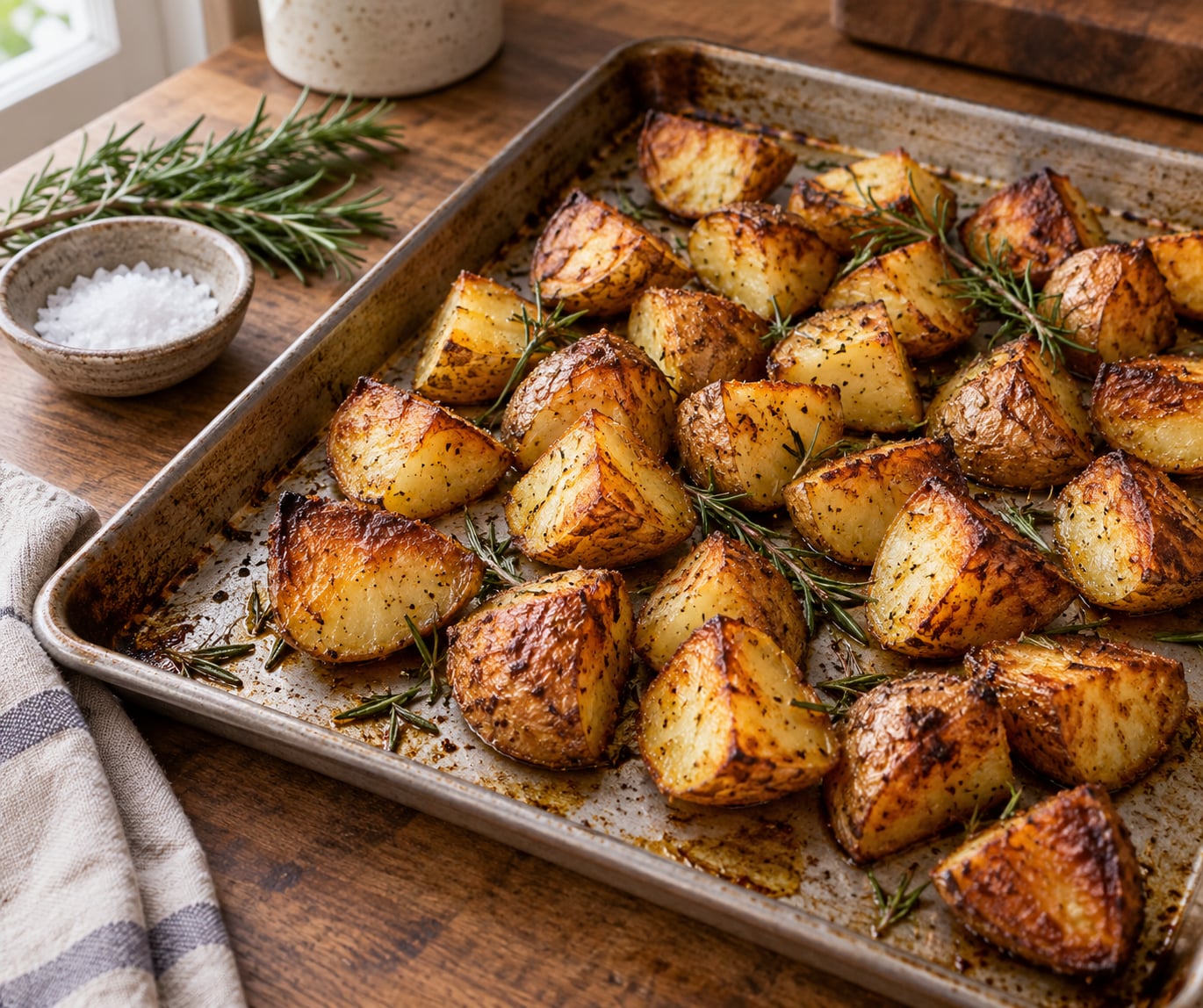
- Roast at 450F on a preheated rimmed sheet pan for 20 minutes, turn the chunks, then 20 to 30 minutes more until deeply golden.
Table of Contents
- What You Need
- Potatoes
- Everything else
- Which potato variety should you use?
- Which fat should you use?
- Coating alternatives beyond baking soda
- Step-by-Step
- 1. Heat the oven and prepare the baking sheet
- 2. Cut and parboil the potatoes
- 3. Toss with oil and seasonings
- 4. Roast until deeply golden and crisp
- Common Mistakes and Why Roast Potatoes Turn Soft
- Frequently Asked Questions
- What type of potatoes is best for crispy roasted potatoes?
- Do I need to parboil potatoes before roasting them?
- Why are my roasted potatoes not getting crispy?
- Should I oil the baking sheet or the potatoes?
- Can I make crispy roasted potatoes without a baking sheet?
- How do I store and reheat leftover roasted potatoes?
What You Need
The shopping list is short and none of it is unusual. What matters far more than the shopping list is choosing a floury potato and giving the pan room.
Potatoes
Buy 2 to 3 pounds of potatoes. Cut them into 1.5- to 2-inch chunks and try to keep the sizes close so everything finishes at the same time. Floury, high-starch potatoes brown better and turn creamier inside; waxy ones stay firm and can go rubbery before they crisp. Scrub the skins well and leave them on unless the batch is mostly large russets, where peeling gives you more rough surface to brown.
Starchy and floury is the engine behind crisp skin. Cooks on British cooking forums say the same thing in different words: waxy varieties will not crisp, and cutting the potatoes to make plenty of sharp edges is what gives you something to crunch on.
Everything else
You need a large pot for the parboil, a rimmed baking sheet (a rimmed half sheet, not a flat nonstick pan), and either a colander or the pot lid plus a bowl. For the fat, pick one high smoke point option. Seasoning is kosher salt in the water and on the potatoes, plus rosemary or thyme, optional smashed garlic cloves, and flaky salt for the finish.
Which potato variety should you use?
| Potato | Texture | Crisp potential | Peel? |
|---|---|---|---|
| Russet | Very starchy, dry, fluffy | Highest | Optional; peeling exposes more surface to rough up |
| Yukon Gold | Buttery and moist, medium starch | High | Leave on |
| Red, new or crescent | Waxy, holds shape | Moderate | Leave on, skin adds crispness |
| Fingerling | Small, waxy skin, firm center | Good on the edges, quick to dry out | Leave on |
Which fat should you use?
Use about 3 to 4 tablespoons for 2 to 3 pounds of potatoes, which is roughly a quarter cup. Smoke points are approximate, but the rule is simple: nothing that tastes burnt before the potatoes are done.
| Fat | Approx. smoke point | Flavor |
|---|---|---|
| Avocado oil | Around 480F | Neutral, safest at high heat |
| Clarified butter | Around 450F | Rich and nutty; whole butter burns, so clarify or mix with oil |
| Extra-virgin olive oil | Around 375 to 410F | Fruity and peppery; pour it on after the pan comes out of the oven |
| Duck fat | Around 395F | Rich, savory, very forgiving |
| Beef drippings | Around 400F | Deep and meaty |
| Rendered country ham fat | Around 390F | Smoky and salty, the Appalachian route |
Coating alternatives beyond baking soda
Baking soda in the water is the standard trick. A dry coating before the oven is the other one, and the four options are not interchangeable.
| Coating | Effect | Tradeoff |
|---|---|---|
| Baking soda in the parboil | Breaks down the outer pectin so the surface roughens and holds a starchy paste | Can taste soapy if you overdo it; never swap in baking powder |
| Semolina or coarse cornmeal | Adds a sandy, extra-crisp shell | Tastes grainy and can scorch; use a light hand |
| Cornstarch or flour | Dries the surface and crisps it in the oven | Turns pasty if it sits on the potatoes too long before roasting |
| Baking powder | Sometimes used in place of baking soda in the parboil water | Not a like-for-like swap; it changes the crust and can taste soapy at the same dose |
If baking soda worries you, a splash of vinegar in the parboil water does some of the same job without the alkaline bite, though you get a slightly less dramatic crust.
Step-by-Step
1. Heat the oven and prepare the baking sheet
Set the oven to 450F and give it a full 15 to 20 minutes to come to temperature. A cold oven is a slow oven, and potatoes that hit a lukewarm pan release water instead of browning.
While it heats, put your rimmed baking sheet in there so the metal is hot. A hot sheet gives the potatoes an instant sear on the bottom. If you want the hot-oil approach, pour a thin layer of oil into the hot sheet and add two or three smashed garlic cloves; they perfume the fat while the oven finishes preheating.
2. Cut and parboil the potatoes
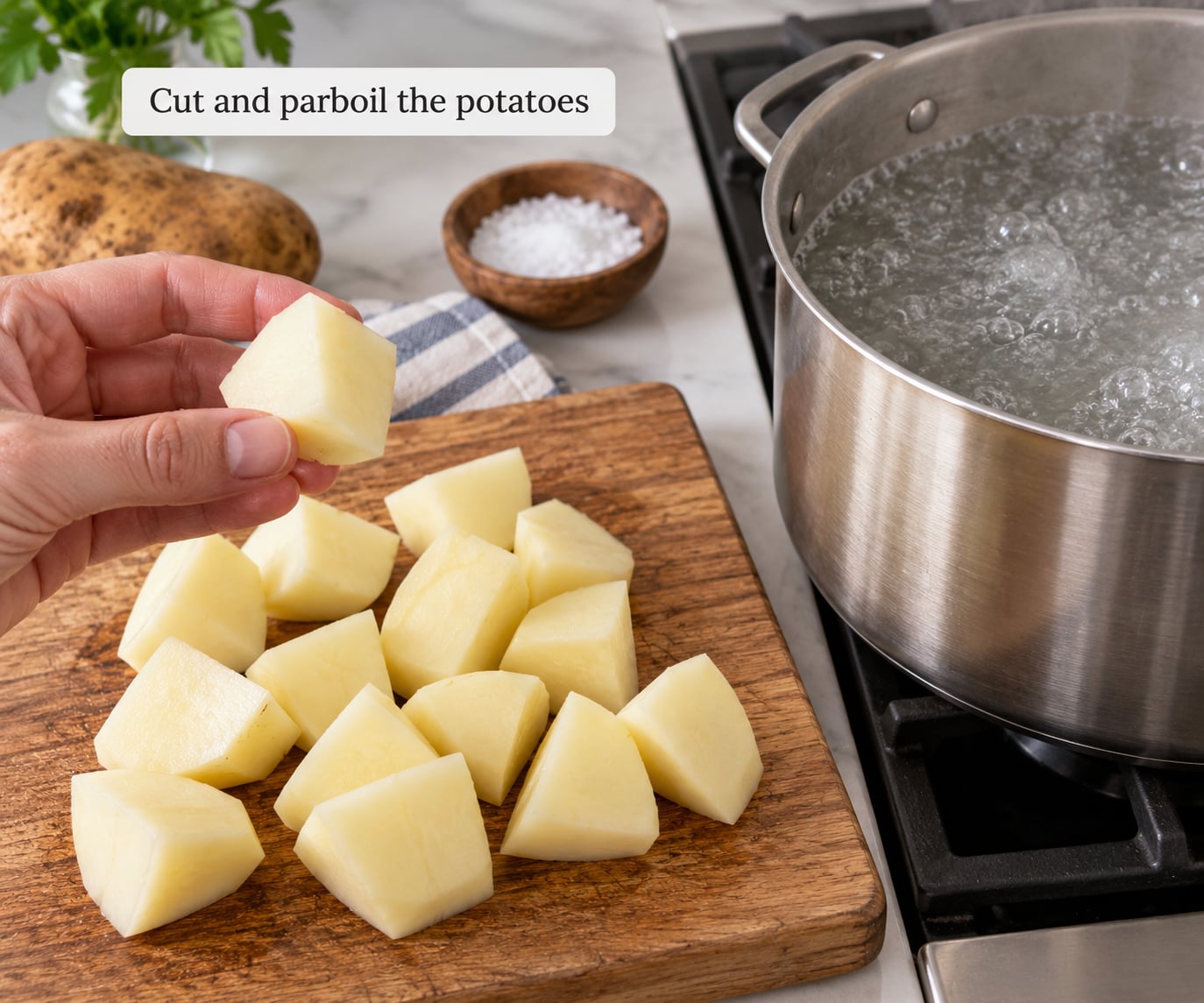
Cut the potatoes into 1.5- to 2-inch chunks. This is the sweet spot: bigger pieces give you a creamier center, smaller pieces give you more crisp surface but dry out faster, and mismatched sizes cook unevenly.
Bring a large pot of water to a boil and salt it heavily, about a tablespoon per quart, until it tastes like the sea. Add 1/2 teaspoon of baking soda for a pot of about a gallon. The alkaline water softens the pectin just under the skin, which is what lets the surface break apart into a rough, starchy paste later.
Add the potatoes and boil for 8 to 10 minutes, until a knife slides in with almost no resistance but the centers still hold their shape. Drain them well. Two warnings: the alkaline water foams up fast and can boil over, so lower the heat once it foams, and the potatoes are fragile at this point, so stir them gently or not at all.
Tip the drained chunks into a colander and shake hard for 15 to 20 seconds. Pieces colliding rough up the softened skin and create more area to brown. Then spread them on a towel or a rack and let them air dry for at least 10 minutes. Wet potatoes steam; dry potatoes roast. This is the step that most often gets skipped and later blamed on the oven.
3. Toss with oil and seasonings
Measure 3 to 4 tablespoons of your fat and pour it over the dry potatoes, then toss with your hands or a spatula until every surface looks coated and glossy. Season now with about 1 teaspoon of kosher salt per pound of potato, plus rosemary sprigs, thyme, or a spoon of the garlic oil.
Seasoning before roasting is not optional. Salt that goes on after cooking sits on the surface and does nothing for a bland interior, and a dish this simple tastes under-seasoned the moment the color starts to turn.
Put the potatoes on the hot sheet promptly, in a single layer with real space between the chunks. They should not be touching. If they are, they will cook in each other’s steam and go soft and pale at the edges. Use two pans rather than one crowded one. Once they are on the pan, get them into the oven within a minute or two, before the oil stops looking wet on the surface.
4. Roast until deeply golden and crisp
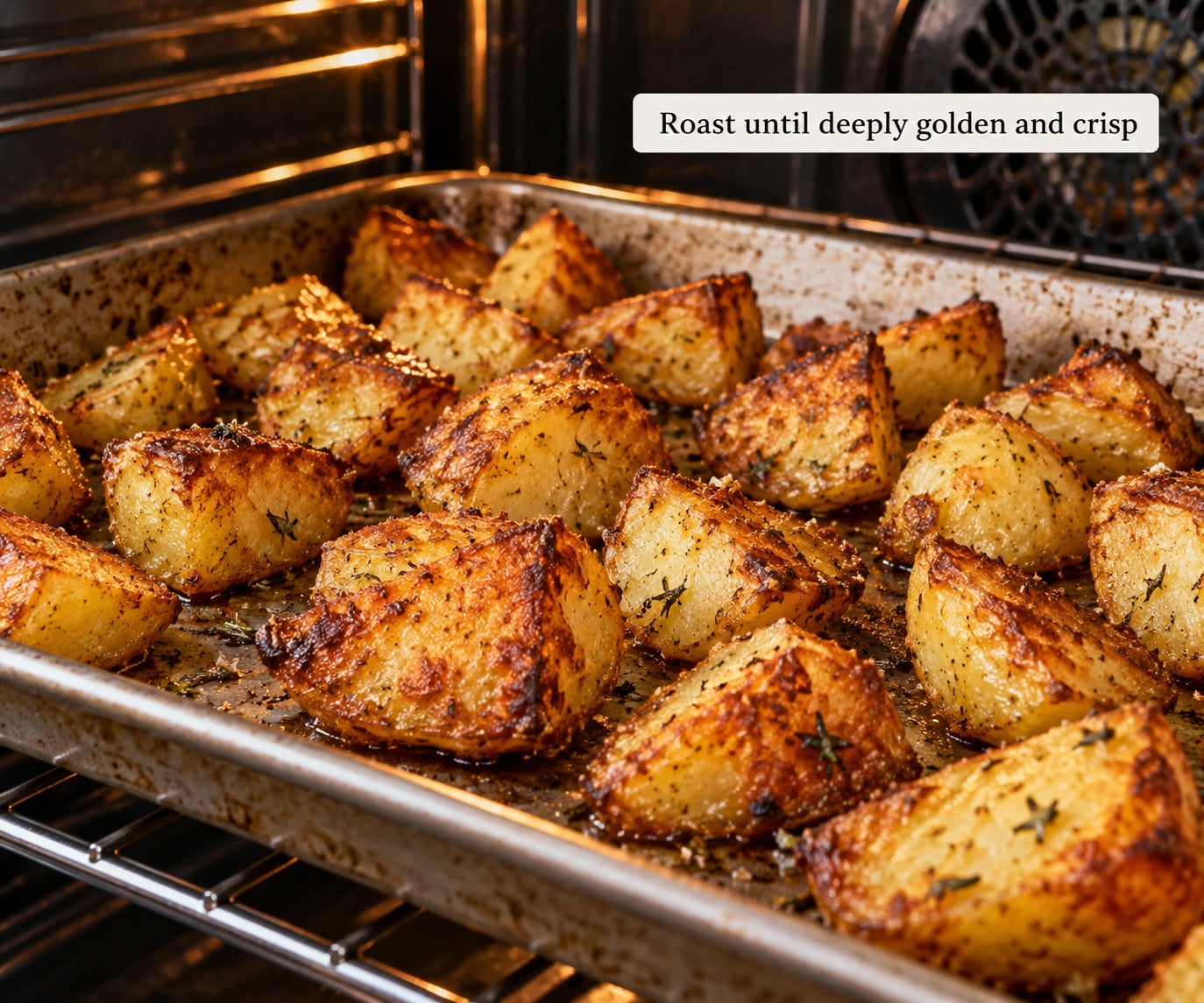
Roast at 450F for 20 minutes. Then pull the pan out, turn every chunk with tongs or a spatula so the cut faces go down, and roast for another 20 to 30 minutes.
Color is the doneness signal, not the clock. Pull them when the edges are deep golden brown and feel firm to the touch, and when a knife goes through the center with no resistance but the inside still looks creamy and slightly wet. If the outsides are coloring faster than the centers cook, tent the pan loosely with foil for the last stretch.
Turn the oven down to 425F or off, pull the pan, and scatter flaky salt and torn parsley over the potatoes while they are still hot. Salt added now sticks in the crevices where the crust is.
Total time usually lands between 40 and 50 minutes in the oven, plus about 15 minutes of prep. Fresh potatoes that have been sitting since spring and taste sweet when raw will brown faster, so watch them closely rather than trusting the timer.
Common Mistakes and Why Roast Potatoes Turn Soft
Almost every disappointing tray of potatoes traces back to one of a handful of mechanical problems, not to bad technique in the kitchen. Work down this table with your last batch and you will usually find the culprit in under a minute.
| What you see | Why it happens | The fix |
|---|---|---|
| Golden color but no crunch | Low oven temperature, or the pan was not hot when the potatoes went in | Roast at 450F on a preheated sheet |
| Soft and pale at the edges | Crowded pan; the chunks steam each other | One layer with space, use a second pan |
| Greasy, oily texture | Roasting too low, often at 350F, so the potatoes slowly bake in oil | Raise the heat and shorten the bake |
| No color at all | Potatoes went on wet from the colander | Air dry 10 minutes minimum before oiling |
| Bland inside | Seasoning applied only at the end | Salt the water and salt the potatoes before roasting |
| Falling apart in the pot | Overcooked in the alkaline water, or soda past the half teaspoon mark | Pull at 8 to 10 minutes, use 1/2 teaspoon |
| Burnt bottoms, raw middles | Sheet too close to the element or pieces cut wildly uneven | Middle rack, 1.5- to 2-inch cuts |
| Soggy leftovers | Reheated in the microwave | Spread on a sheet, blast at 450F for 7 to 10 minutes |
A couple of habits cover most of it. Give the potatoes room, and give them a dry surface to land on.
On making them ahead, parboil and dry the potatoes a few hours early or the night before and hold them in the refrigerator uncovered on a towel. Roast straight from the fridge, adding a few minutes to the total. Cooks across cooking forums describe par-cooking then finishing at high heat as the reliable route to a tray that holds up for a potluck.
One more: if you have a cast iron skillet, parboil as directed, then brown the chunks in 2 tablespoons of rendered country ham fat over medium-high heat for about 4 minutes a side, and finish them in a 425F oven for 20 minutes. That is the version we cook up here in the hills, and the salted pork fat does for the crust what plain oil cannot.
Frequently Asked Questions
What type of potatoes is best for crispy roasted potatoes?
Floury, high-starch potatoes such as russets brown the best and give you the creamiest centers. Yukon Golds are a close second and are more forgiving, while red and fingerling varieties are waxy and crisper only at the edges. Skip peeling on thin-skinned varieties, since the skin browns and cracks nicely.
Do I need to parboil potatoes before roasting them?
For the crispest results, yes. Eight to ten minutes in salted water cooks the centers so they finish tender, and it softens the skin so shaking the chunks roughens them. That rough, starchy surface is what browns in the oven. Roasting raw potatoes works, but the edges are usually less crackly and the centers take longer.
Why are my roasted potatoes not getting crispy?
Crowding is the number one cause: potatoes touching each other steam instead of roast. The others are a wet surface from the colander, an oven that was not fully preheated, a cold sheet pan, and roasting too low. Potatoes also need room to sit in a single layer, and they should be dry before the oil goes on.
Should I oil the baking sheet or the potatoes?
Oil the potatoes. About 3 to 4 tablespoons for 2 to 3 pounds, tossed so every cut face is coated, gives you an even crust. You can add a thin layer of oil to a hot sheet for extra crisping, but oiling only the pan leaves the undersides browning while the tops stay matte and pale.
Can I make crispy roasted potatoes without a baking sheet?
You can, but use a heavy rimmed pan or a cast iron skillet rather than a thin nonstick sheet, which overheats underneath and burns the bottoms. A rimmed half sheet is best because the rim catches drips and air circulates around the chunks. With a skillet, sear the parboiled potatoes in fat first, then finish in a 425F oven.
How do I store and reheat leftover roasted potatoes?
Cool them on a single layer, then refrigerate in an airtight container for up to three to four days. Reheat on a baking sheet at 450F for 7 to 10 minutes so the crust re-crisps. The microwave is the one thing to avoid: it steams the potatoes and leaves them soft and chewy for the rest of the day.
Start with a hot sheet, 1.5- to 2-inch chunks, and 1/2 teaspoon of baking soda in the parboil water. Give the chunks ten minutes to air dry, then coat them in fat and get them into a 450F oven in a single layer. Everything after that is just watching for the color.