The short answer is that you stop cooking two dinners. Build one plant-forward base — pasta, a burrito bowl, a loaded sweet potato, a pot of chili — then cook an optional protein separately so each person finishes their own plate. Most weeknights take 35 to 45 minutes from start to table.
Learning how to cook plant based meals for a family that eats meat is less about recipes and more about meal architecture. If you design the base so it satisfies the plant-based diner on its own, nobody has to negotiate at the table, and the meat eater is not eating a sacrifice dinner.
I run a mixed table, and the single biggest lesson after a few years of trial and error: the base does all the work. Get the base right and the protein question becomes a five-minute skillet on the back burner.
Below is the method, in the order I actually use it.
Table of Contents
- What You Need
- Step-by-Step: How to Cook Plant-Based Meals for a Family That Eats Meat
- Start With Familiar Meals
- Choose One Plant-Based Centerpiece
- Layer Savory Flavor Into Every Dish
- Make the Meal Flexible for Every Plate
- Batch, Store, and Reheat With Ease
- Common Mistakes
- Frequently Asked Questions
- How do I introduce plant-based meals to a family that eats meat?
- Do my family members need to eat the same food as the plant-based diner?
- What are the easiest meat replacements for tacos, pasta, and chili?
- How can I make plant-based meals taste as satisfying as meat-based meals?
- What should I serve with plant-based meals for family members who still eat meat?
- How do I store and reheat plant-based leftovers safely?
- Conclusion
What You Need
You do not need a specialty store or a pile of substitutes. You need about a dozen things you will use twice a week, plus one extra pan.
Pantry staples
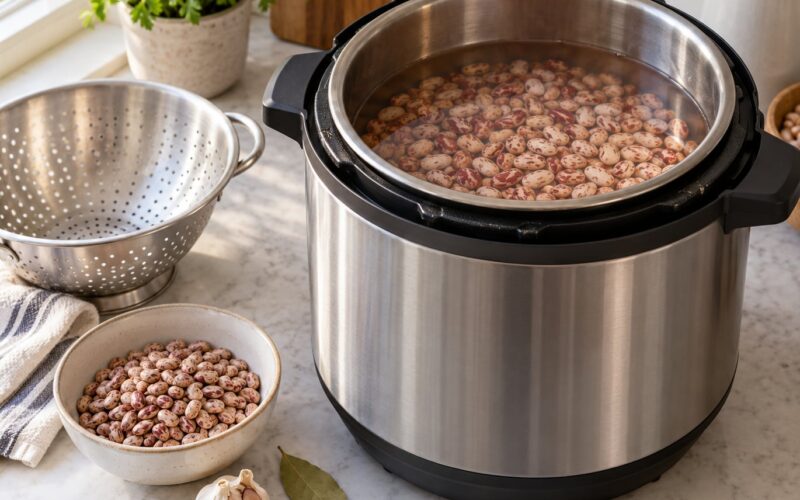
- Canned beans and lentils — pinto, black, chickpeas, cannellini, red lentils
- Long-grain rice, small pasta, and a rolled-oat or quick grain for weeknight speed
- Canned tomatoes, tomato paste, and one jar of good salsa
- Onions, garlic, and jars of chili powder, cumin, smoked paprika, and Italian seasoning
- Tamari or low-sodium soy sauce, miso paste, and a wedge of lemon or a jar of vinegar
- Nutritional yeast, peanut butter, and tahini for sauces that carry a lot of flavor cheaply
- Tofu or tempeh, frozen for searing
- A bag of frozen corn, peas, or chopped greens so a vegetable is always available
Tools
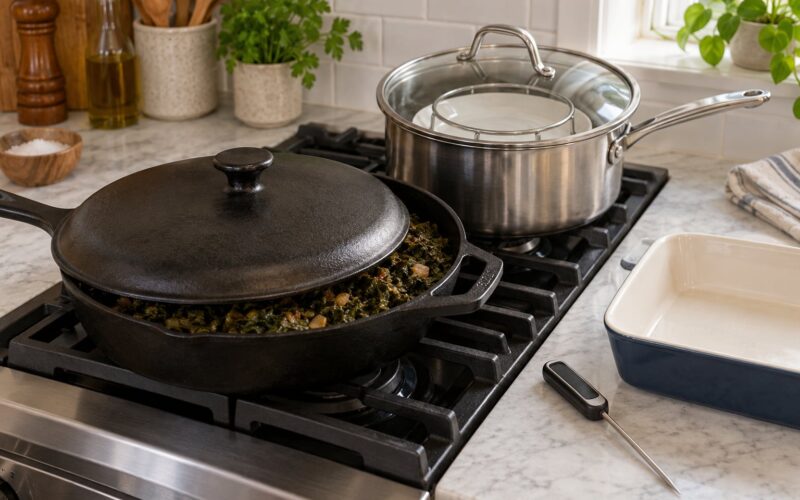
- A wide skillet with a lid for building a base
- A second skillet or small saute pan for the optional protein
- Two sheet pans for roasting vegetables at high heat — browning is what creates flavor, and a crowded pan steams instead
- A blender or immersion blender for sauces and soups
- A cutting board you can use for vegetables, plus a separate one (or wash yours well) if you handle raw meat
One habit matters more than any of the gear: decide each week which two dinners will be plant-based and put them on the calendar in the same place you write everything else. A plan that lives in your head does not happen.
Step-by-Step: How to Cook Plant-Based Meals for a Family That Eats Meat
Five steps, in this order, every time. Most of the work is in steps one and two.
Start With Familiar Meals
Cook dishes the table already eats and simply change the centerpiece. Tacos stay tacos. Pasta stays pasta. Sheet-pan vegetables at 425°F stay sheet-pan vegetables. Chili stays chili.
This is the approach that works because it removes two variables at once. The flavor profile is familiar and the format is familiar, so the only new thing at the table is one swap. Introducing a whole new cuisine and a meat-free centerpiece at the same time gives people two reasons to say no.
Formats that convert easily: pasta and noodles, tacos and nachos, chili and soup, loaded baked potatoes, stir-fries, quesadillas, curry with rice, and burgers.
Choose One Plant-Based Centerpiece
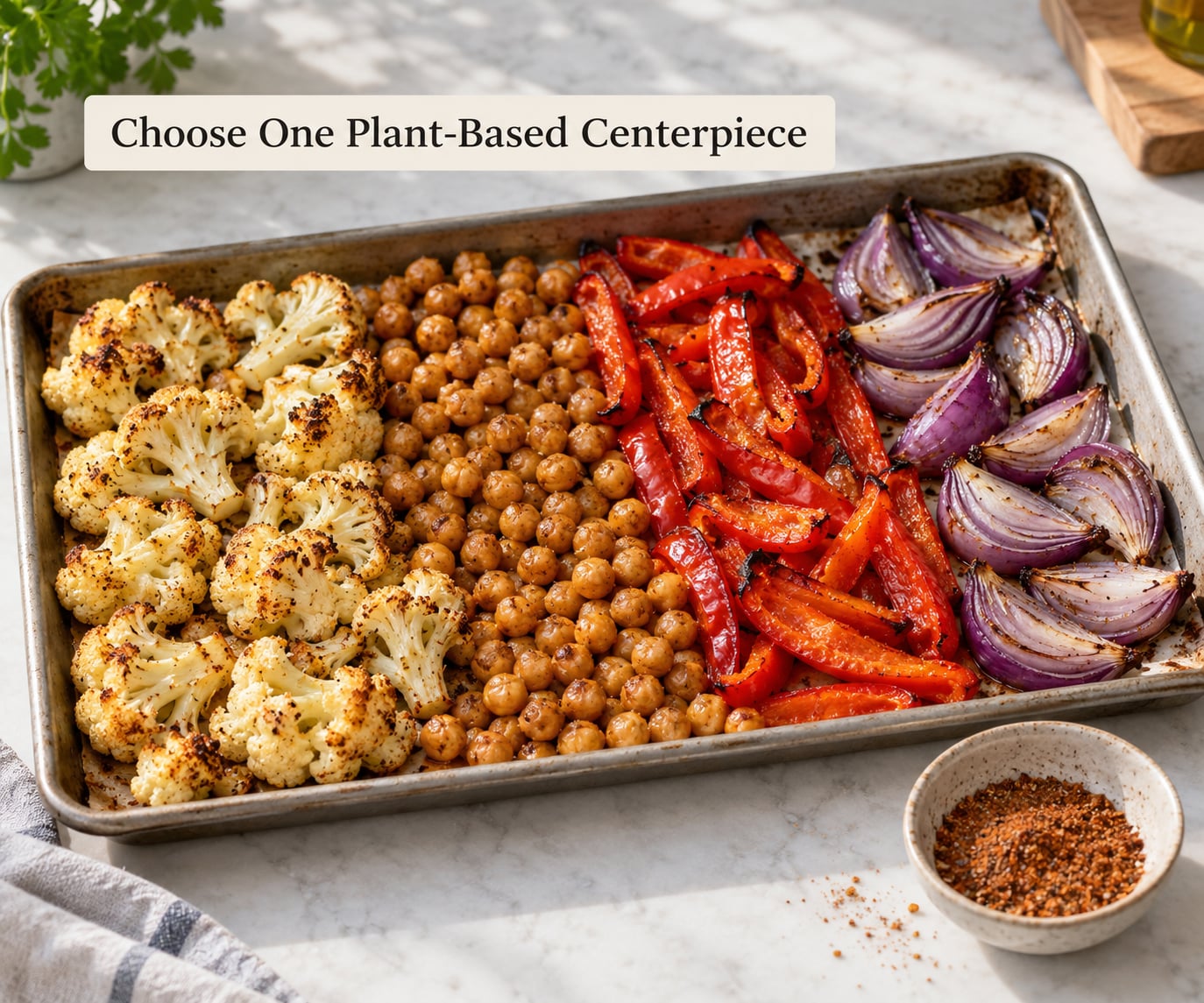
Pick one anchor and build the rest around it. Options fall into a few groups.
- Beans and lentils — brown them in a hot pan with aromatics, then simmer in liquid until creamy. Red lentils cook in about 15 minutes with no soaking.
- Tofu and tempeh — press tofu 20 minutes if you can, tear rather than cube for more surface, toss in cornstarch, and pan-sear until the edges are genuinely crisp. Texture is the dealbreaker more than taste.
- Mushrooms — cremini or oyster mushrooms, cooked in a very hot pan with almost no oil at first, then finished with butter or olive oil. They release water and then brown; patience is the technique.
- Roasted vegetables — cauliflower, sweet potato, squash, broccoli. 425°F, cut small, tossed in oil, not crowded.
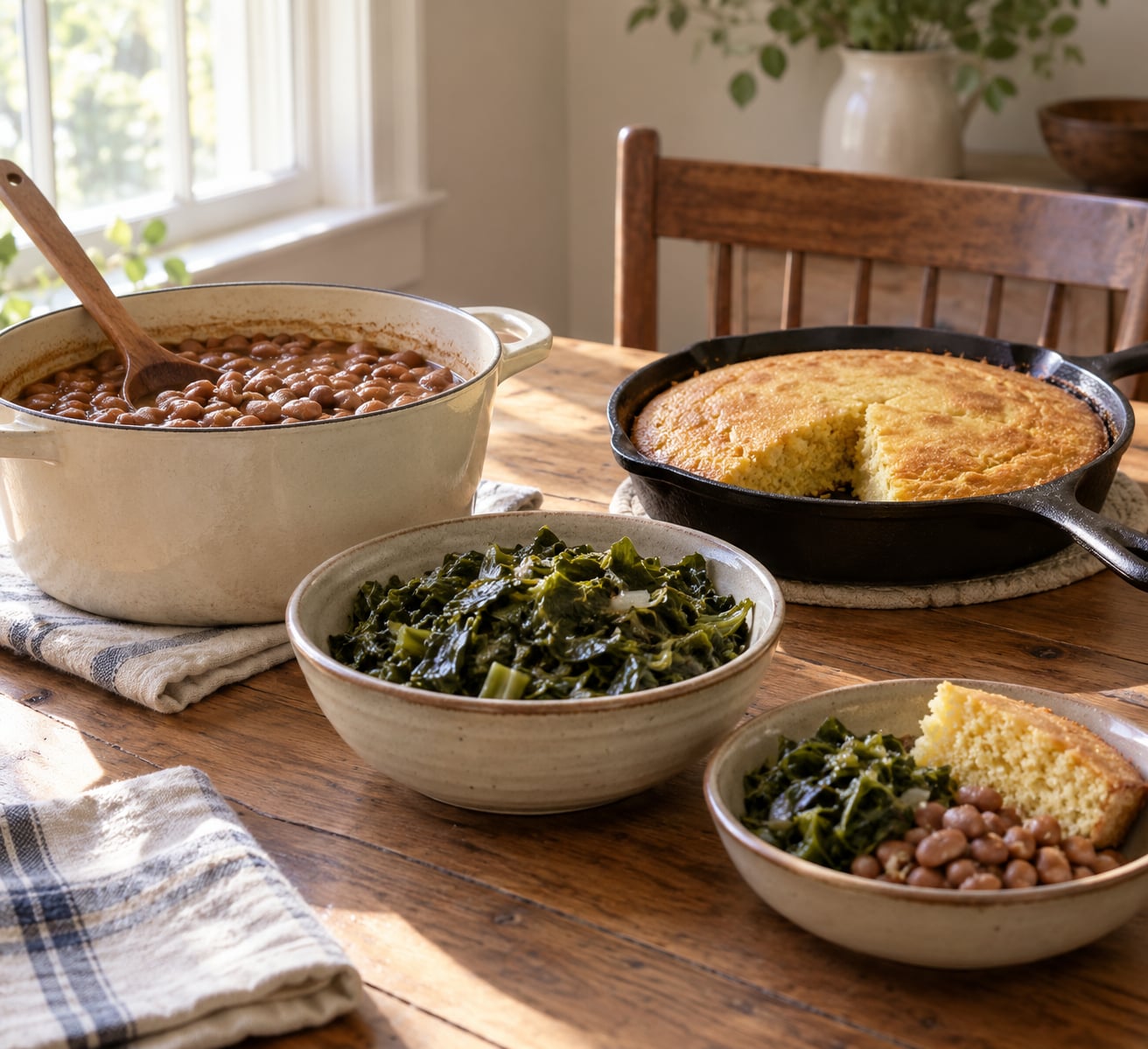
- Whole grains — rice, quinoa, farro. A grain base plus a legume topping makes a bowl that fills people up.
One centerpiece is enough. Two plant-based anchors in one meal usually reads as a pile of side dishes.
Layer Savory Flavor Into Every Dish
The reason most first attempts disappoint is not the swap, it is the missing savoriness. Build it in layers.
- Aromatics first. Onion, garlic, celery, or scallions cooked in oil until soft, 3 to 5 minutes. Do not skip this.
- Brown something. Give the mushrooms, tofu, or chopped beans real contact with a hot pan. Color is flavor.
- Use umami builders. Tomato paste cooked into the aromatics for a minute, a spoonful of miso off the heat, tamari, nutritional yeast, dried mushrooms, or a splash of soy-based Worcestershire.
- Add acid at the end. Vinegar, lemon, or pickled onions. Food that tastes flat usually needs salt or acid, not more meat substitute.
- Finish with fresh herbs. Cilantro, parsley, scallions, or dill. Cheap, fast, and it changes the whole plate.
- Serve a real sauce. Peanut sauce, tahini-lemon, salsa, a yogurt or sour cream drizzle, or chimichurri. People eat what they can add themselves.
The mistake of swapping meat without also upgrading the sauce is why so many dinners land flat. Treat the sauce as the centerpiece, not a side.
Make the Meal Flexible for Every Plate
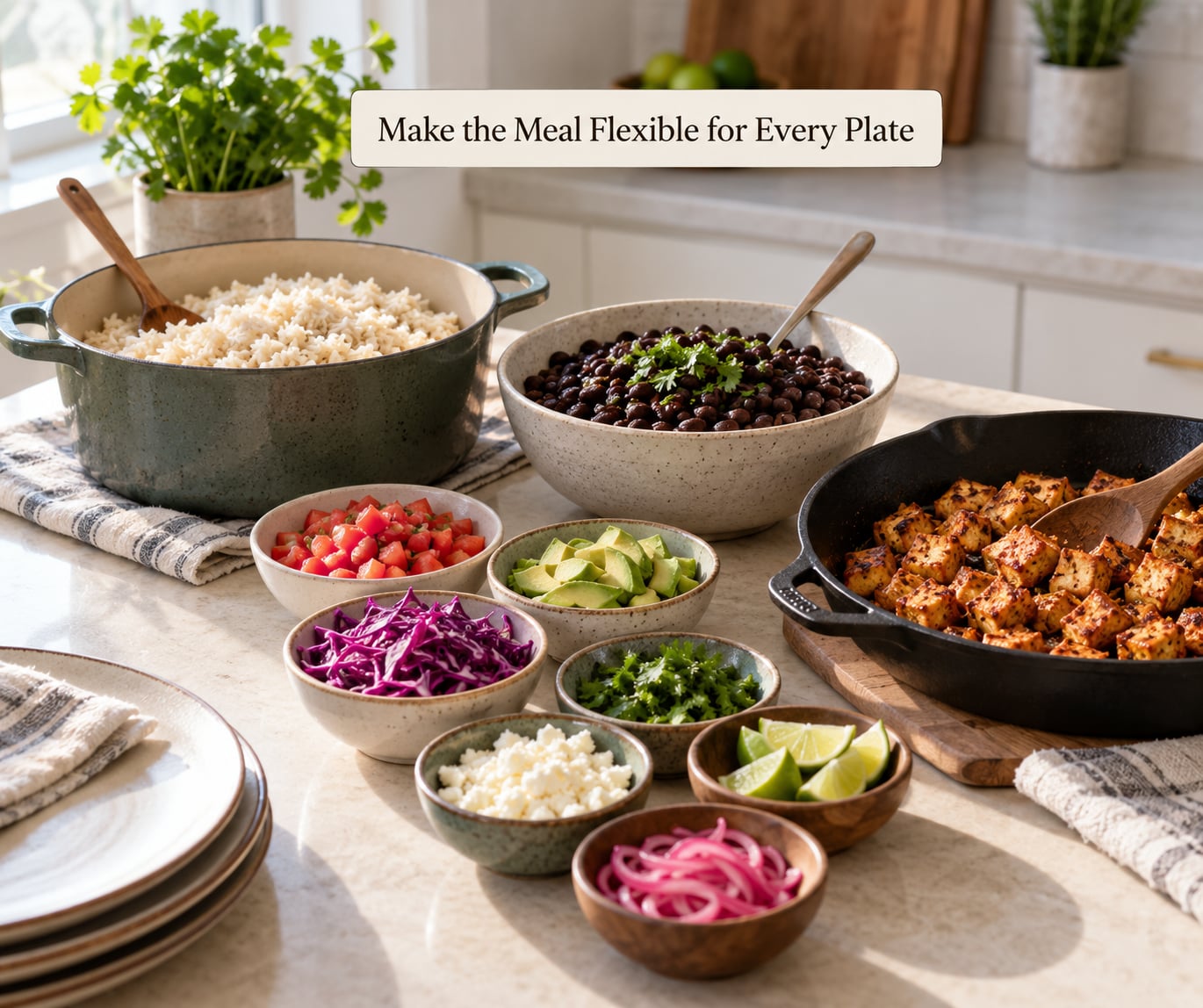
Put everything in separate dishes on the counter and let people build. This is the part that saves mixed-diet households, and it is the reason cooking two dinners stops being necessary.
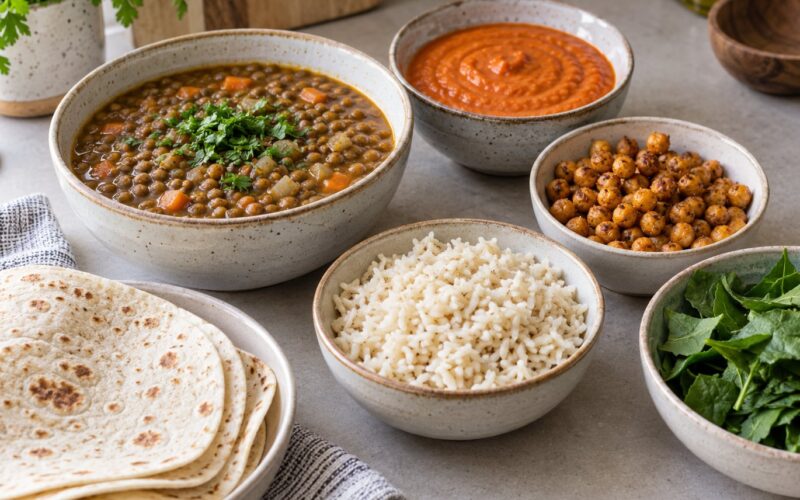
Build the base to satisfy the most restrictive diner first. Then list what can be added: grilled chicken, browned ground beef, cooked sausage, shredded pork, eggs, shredded cheese, sour cream. Those add-ons come from the same base, so total cooking time barely moves.
For food safety, keep raw and cooked items separate. If you season raw chicken or pork in the same bowl where you seasoned the vegetables, that bowl needs a thorough wash before it touches anything else. Cook poultry to 165°F, ground meat to 160°F, and whole cuts and fish to 145°F, verified with a thermometer rather than a guess.
Name what is what. If you swap a meat product in and the table is not told, the meal reads as a bait-and-switch, and that grievance outlives any flavor win.
Batch, Store, and Reheat With Ease
Cooked plant-based bases freeze well, and this is what makes a busy week survivable.
Refrigerate cooked food within two hours and use it within three to four days. Cool it in shallow containers rather than one deep bowl, so it chills fast and reheats evenly.
Freeze bases in single portions — a cup of chili, a scoop of curry, two servings of pasta sauce. Grains freeze acceptably but lose some bite; beans and sauces are the better candidates. Leave a quarter inch of headspace, label with the date, and expect about three months of quality in the freezer.
Reheat to 165°F. For rice and small grains, sprinkle a splash of water and cover, which steams the grains back into a softer texture instead of drying them out. Soups and curries take a splash of water or broth and a low burner.
Cooked beans keep three or four days in the fridge and do very well frozen. Cooked tofu reheats best in a dry or lightly oiled pan rather than a microwave, where it turns rubbery.
Common Mistakes
Almost every failure in mixed-diet cooking traces back to one of these.
Swapping the meat without adding flavor. Fix: treat the sauce and the browning as the point of the dish. Two tablespoons of tomato paste and five minutes of honest browning will do more than any packaged substitute.
Making the meal too complicated. Fix: keep the base to five or six ingredients. On a Wednesday you want a meal you can assemble, not a project.
Relying on one substitute. Fix: rotate. Tofu one night, beans the next, mushrooms the third. Variety also covers the protein types and nutrients that a single ingredient will not.
Ignoring texture. Fix: crisp something. Seared tofu, toasted nuts, fried onions, crunchy breadcrumbs, raw cabbage. A plate with no crunch reads as a plate of nothing.
Serving a mountain of vegetables and calling it dinner. Fix: make the centerpiece the largest, warmest item on the plate, and put the vegetables alongside it. Portions should look like the familiar meal they replace.
Mixing raw and cooked foods. Fix: separate boards and bowls, wash hands and surfaces between tasks, and refrigerate perishable leftovers within two hours. Cooked plant-based food spoils quietly and quickly.
Going all-in too fast. Fix: two plant-based dinners a week, held for four weeks, before you consider adding a third. Motivation dips around week three and a plan that needs five wins will collapse before it starts.
Two habits help more than anything else. Use leftovers on purpose — a night of chili becomes a night of loaded baked potatoes, and the second dinner costs you almost nothing. And let participation be voluntary: someone who adds meat to their own bowl counts, and so does someone who tries a bite and says no next week.
Frequently Asked Questions
How do I introduce plant-based meals to a family that eats meat?
Start with two nights a week and pick meals the table already enjoys, like pasta, tacos, chili, or loaded potatoes. Change only the centerpiece, keep the flavor profile identical, and tell people what you changed rather than serving a swap without warning. Repeat those two dinners for a month before adding a third.
Do my family members need to eat the same food as the plant-based diner?
No, and that is the whole point. Cook one plant-forward base and serve the optional protein — chicken, beef, pork, eggs, cheese — on the side so each person builds their own plate. The base satisfies the plant-based eater completely, so nobody is left with a side dish while the rest of the table eats a real meal.
What are the easiest meat replacements for tacos, pasta, and chili?
For tacos, seasoned black or pinto beans plus a thickening pinch of cornmeal or a spoon of the salsa. For pasta, a jar of good tomato sauce finished with miso and nutritional yeast, or lentils in a cream sauce. For chili, dark beans or plant mince with extra cumin and smoked paprika. All three need more seasoning than the meat version.
How can I make plant-based meals taste as satisfying as meat-based meals?
Browning, umami, acid, and texture do the work. Cook aromatics properly, sear mushrooms or tofu hard enough to color, add tomato paste, miso, tamari, or nutritional yeast, then finish with vinegar or lemon and something crisp. Satiety comes from a real centerpiece plus a grain, not from pretending the centerpiece is meat.
What should I serve with plant-based meals for family members who still eat meat?
Serve an add-on protein you cooked in a second pan: a quick skillet of chicken or ground beef with the same seasonings as the base, or shredded pork and cabbage for tacos. Because the base is already cooked, this adds roughly five minutes, not a second dinner. Put it in its own dish and let people serve themselves.
How do I store and reheat plant-based leftovers safely?
Refrigerate cooked food within two hours in shallow containers and eat it within three to four days. Freeze bases such as chili, curry, and bean sauces in single portions for about three months. Reheat everything to 165 F; cover grains with a splash of water, and warm tofu in a dry pan instead of a microwave.
Conclusion
How to cook plant based meals for a family that eats meat comes down to one repeatable structure: a familiar dish, one well-seasoned plant-based centerpiece, everything else served in separate dishes so each person finishes their own plate.
Start with a meal your family already requests. Make the base well enough that you would happily eat it yourself, put the optional protein in a second pan, and hold the line at two plant-based nights a week for a month. That is a manageable first dinner, and the leftovers do half the work of the next one.