Eating seasonally in winter means cooking with what your region actually has from December through February: roots, hardy greens, brassicas, winter squash, sweet potatoes, onions and garlic, stored apples, citrus, dried beans and grains, plus everything you preserved from summer. Winter is the season most people quit seasonal eating, and it is also the season where it saves the most money and requires the least work. Here’s how to make it fit your kitchen.
The trick is that winter has three supply channels instead of one. Fresh from a high tunnel or a Southern field, cold and dry storage for crops built to outlast winter, and your own pantry shelf full of what you put up in July. Plan across all three and the grocery list stops being a problem.
One honest note before we start. Plenty of people push back hard on the whole premise — that there is no such thing as a winter food, and that supermarkets stocking tomatoes in January ruins the argument. They’re not entirely wrong. Aisle produce tells you nothing about season. Judge seasonality by what your local growers are actually harvesting and storing, not by what the chain grocery carries.
Table of Contents
- What Does Eating Seasonally in Winter Mean?
- Which Foods Are Best to Eat in Winter?
- Storage roots and tubers
- Brassicas and hardy greens
- Alliums
- Fruit and citrus
- Herbs that survive
- Legumes, grains and pantry staples
- The Appalachian winter table
- How Do You Build a Winter Seasonal Shopping List?
- How to eat seasonally in winter, step by step
- How Do You Store Winter Produce at Home?
- Keep potatoes cool, dark and ventilated
- Cure winter squash before you store it
- Store sweet potatoes warm, never cold
- Keep cabbage, rutabaga and turnips cold and humid
- Keep greens alive, not just cold
- Apples need their own corner
- What Can You Make With Winter Produce?
- How Can You Eat Seasonally in Winter on a Budget?
- How Can You Stay Seasonal When Local Produce Is Limited?
- Frequently Asked Questions
- What are some good seasonal foods to eat in winter?
- What single food can you survive on the longest?
- How do you eat healthy during winter?
- Do farmers markets stay open in winter?
- Is buying frozen vegetables as good as buying seasonal fresh?
- How do you keep winter vegetables from tasting boring?
- Conclusion
What Does Eating Seasonally in Winter Mean?
Winter seasonal eating is not the same as eating raw, unprepared food. It means your menu leans on three groups: crops harvested fresh right now, crops cured and in storage, and shelf-stable food you preserved from the summer harvest.
The crops designed to survive dormancy — potatoes, winter squash, sweet potatoes, rutabaga, cabbage, onions — are cheap in the cold months because they were built to keep without anyone’s help. Everything you can live on for weeks comes out of that group.
Which Foods Are Best to Eat in Winter?
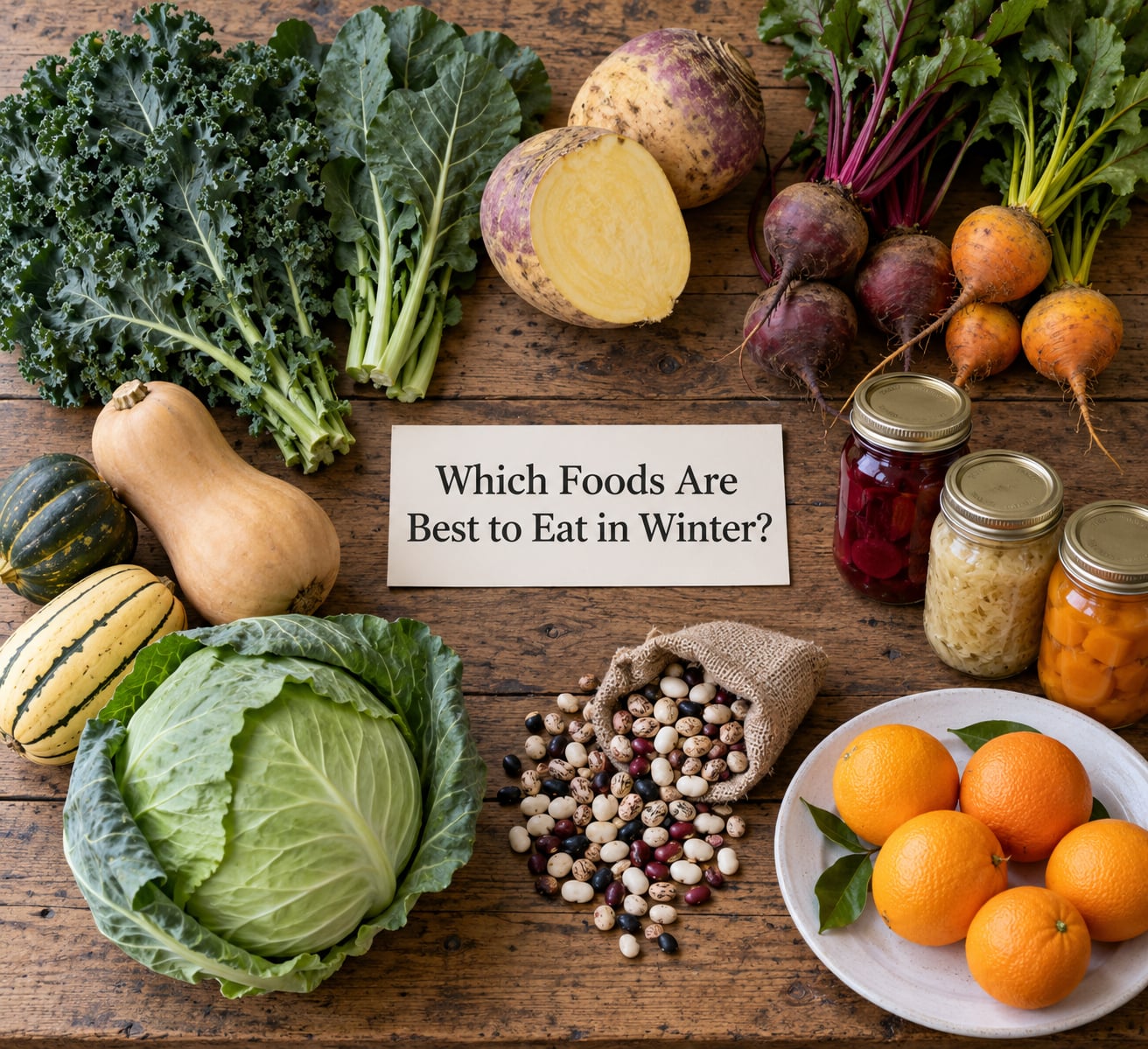
Start with what the cold months actually give you, then shop the list by category so nothing goes to waste in the back of the fridge.
Storage roots and tubers
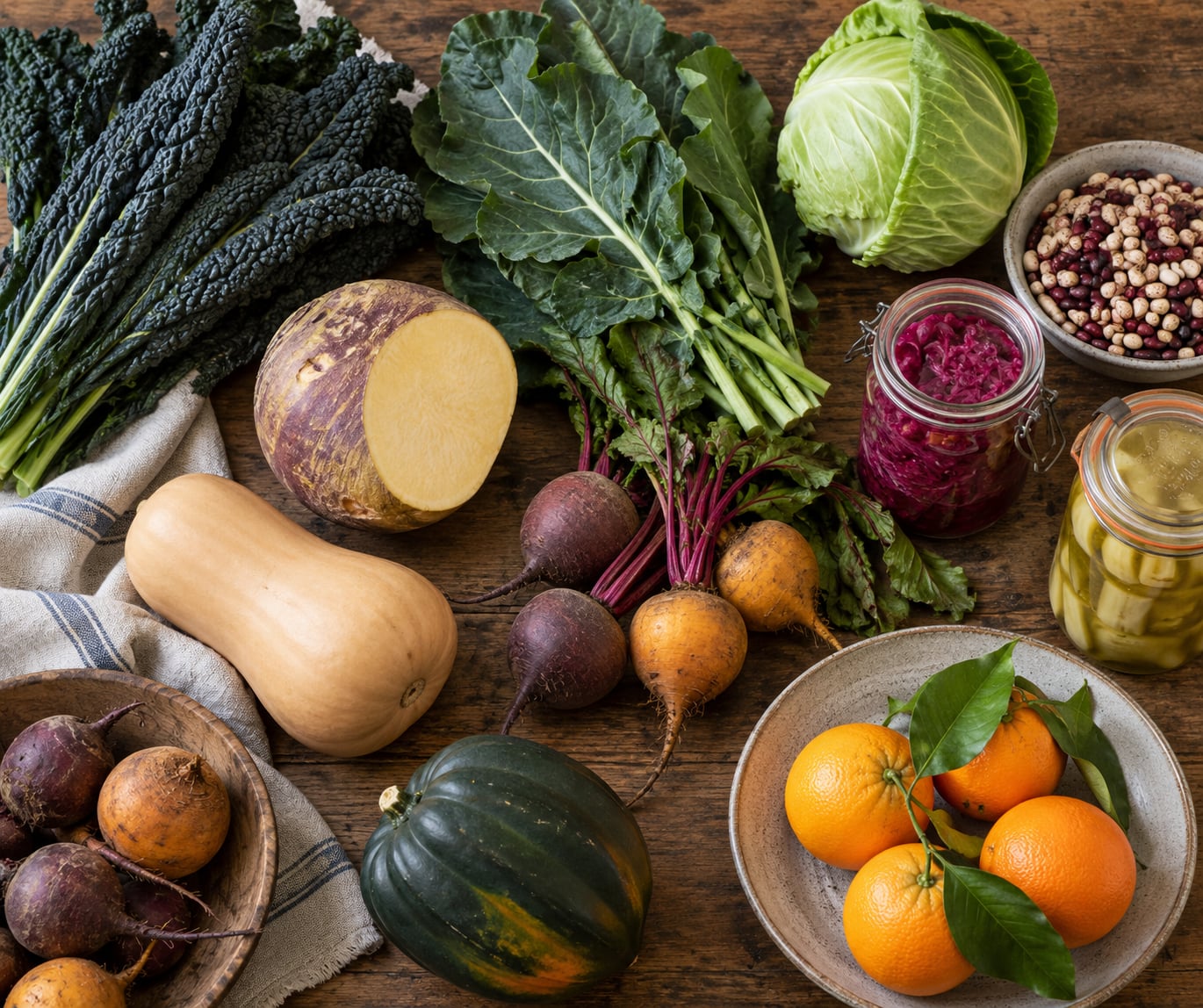
Potatoes, sweet potatoes, rutabaga, turnips, parsnips, celery root, carrots, beets, radishes and all the winter squash — butternut, acorn, delicata, spaghetti, hubbard and kabocha. These are the backbone of a winter kitchen. They roast, simmer, mash and hold together in soups without breaking apart.
Brassicas and hardy greens
Cabbage, kale, collard greens, turnip greens, mustard greens, chard, Brussels sprouts, broccoli and kohlrabi. Kale and collards are the ones that actually keep through a hard freeze — sweetness improves after a frost because the plant converts starches to sugars. In the South, turnip and mustard greens come in right around New Year and stay good through February.
Alliums
Yellow and red onions, sweet onions, garlic, leeks and scallions. Sweet onions are scarce mid-winter, so plan around yellow or red. Garlic that was properly cured in July keeps into spring if the humidity stays low.
Fruit and citrus
Grapefruit and oranges are at their best in cold months, and cold weather makes citrus sweeter and less tart. Apples and pears come in from controlled storage, persimmons arrive in late fall and hang on, and lemons are the one citrus you can count on year-round. Kiwifruit and frozen berries round out the fruit side when you need something sweet.
Herbs that survive
Fresh herbs are mostly gone. Rosemary, thyme, sage, chives and parsley are the holdouts, and many Southern growers keep cuttings alive in unheated tunnels through February. Dry herbs do not lose much potency, so use the shelf in the cold months and save the fresh stuff for spring.
Legumes, grains and pantry staples
Dried beans, peas, cornmeal, brown rice, barley, millet, rolled oats, flour, cornmeal and sorghum. These carry the protein and the calories for very little money, and they store forever in a cool dry pantry.
The Appalachian winter table
Appalachian and Southern kitchens treat winter differently than northern ones. Hog meat salted in late autumn, beans pressure-cooked with a ham hock, greens cooked down with rendered fat, cornbread and spoonbread, buckwheat and cornmeals, apple cider, sorghum and buckwheat honey, and whatever the foragers brought in — pokeweed greens after the first frost, wintercress, ramps when the ground warms in February. Chestnuts and pawpaw show up too, in short weeks.
The cold-weather Gulf and Atlantic coasts do the opposite: oysters, clams, scallops and sea trout are at peak in December and January when shellfish harvest is legally allowed after being closed all fall.
How Do You Build a Winter Seasonal Shopping List?
How to eat seasonally in winter, step by step
Step 1: Find out who is still harvesting. Most farmers markets go dark or run a reduced winter schedule, and the growers who keep going are usually the ones with high tunnels, greenhouses or storage crops. Email your market manager or farm stand directly in November and ask what will be there in January. You will get an honest list, and you will be one of the customers who shows up.
Step 2: Plan the month around what peaks. Citrus in December and January. Stored sweet potatoes and winter squash all through. Oysters on the Gulf coast the moment they reopen. Southern greens peak after the first hard freeze rather than before it, so a January farm list is not a failure.
Step 3: Buy the durable stuff in volume. Potatoes, onions, sweet potatoes, cabbage and squash keep for weeks. Buy them when you see them, store them properly, and stop re-buying them every Sunday. A 25-pound bag of onions and a sack of sweet potatoes covers more winter meals than a weekly basket ever does.
Step 4: Leave room to swap. Rutabaga and turnip substitute for each other in every recipe that matters. Kale stands in for collards. Parsnip and rutabaga both fill a mashed root dish. When the thing you wanted isn’t there, cook the thing that is instead of giving up on the meal.
How Do You Store Winter Produce at Home?
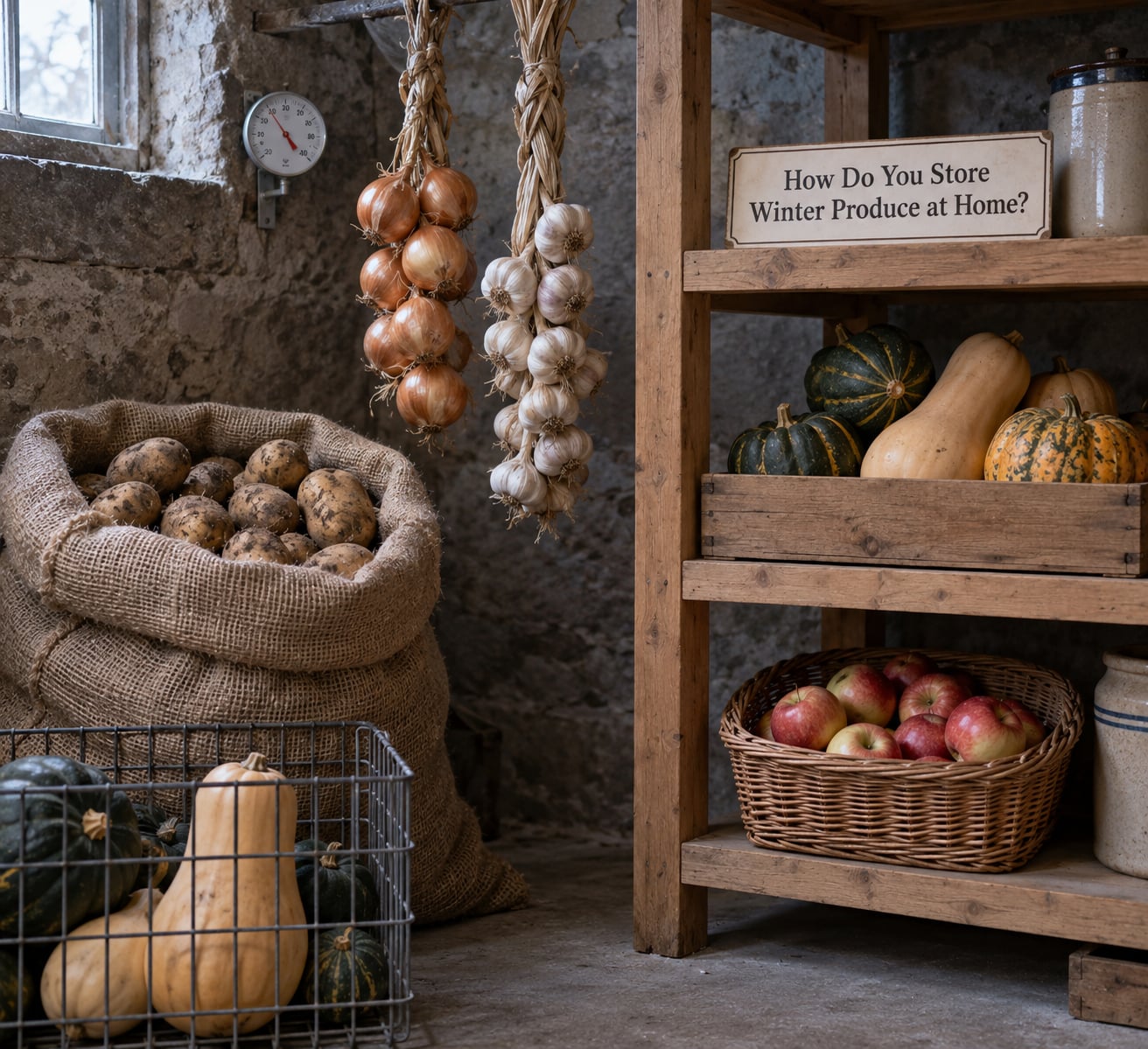
Storage is the whole game. Half the winter crops people waste were stored badly, not bought badly.
Keep potatoes cool, dark and ventilated
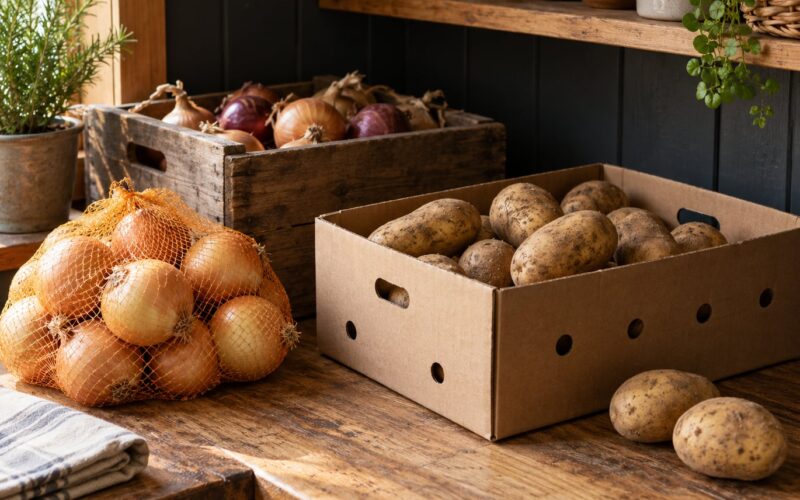
Aim for 45 to 50 F in a pantry or closet, not the refrigerator. Cold sweetens them into sugar and turns them mushy when cooked. Keep them in the dark or they go green and bitter, and keep them away from onions, which release moisture that spoils them faster. Stored correctly they last two to four months.
Cure winter squash before you store it
Leave squash in a warm dry spot around 70 to 80 F for about ten days until the skin hardens and dents don’t spring back. Then move it to a cool room around 50 to 60 F with good airflow. Properly cured, butternut and acorn squash keep three to six months. Inspect monthly and toss anything with a soft spot or moldy rind.
Store sweet potatoes warm, never cold
They want 55 to 60 F and air moving around them. Refrigeration ruins them — the sugars convert and the texture goes watery. Expect two to three months in a cool room.
Keep cabbage, rutabaga and turnips cold and humid
A whole cabbage is one of the best-keeping winter vegetables you can buy. Hold it in the crisper or a cold shed near freezing and it stays usable for weeks. Rutabaga and turnips want the refrigerator, out of any plastic bag that traps moisture, and realistically give you four to six weeks.
Keep greens alive, not just cold
Kale, collards and chard keep a week or two if you wash them, dry them completely and store them in a bag with a dry paper towel. Chard gets bitter quickly — cook it within a week. Trim parsley stems and stand the bunch in a jar of water in the fridge for up to two weeks.
Apples need their own corner
Store them around 32 to 40 F at high humidity, separate from potatoes, because apples release ethylene gas that makes everything near them ripen and spoil. Check weekly and pull any soft one immediately, since rot spreads to its neighbors.
What Can You Make With Winter Produce?
Winter cooking is mostly about making the same handful of crops taste like different meals. That’s the real objection people raise in cooking forums — not availability, but boredom — and it’s solvable by changing the method instead of the ingredient.
- Soups and stews. Pureed white bean and kale soup, rutabaga and apple soup, chicken or white bean gumbo with greens. Cabbage can go in a pot with plenty of time and a little acid.
- Roasted roots. Chopped rutabaga, parsnip, carrot and sweet potato at 425 F until the edges caramelize. High heat is what turns rutabaga from a punishment into a treat.
- Braises and one-pot meals. Pork shoulder or beef shank with cabbage and vinegar, beans with greens and a smoked ham hock, chicken with dumplings made from leftover cornbread.
- Citrus. Segment grapefruit and oranges with shaved fennel, olive oil and black pepper. Make a bright vinaigrette from lemon juice and olive oil to wake up any potato or bean dish.
- Greens beyond boiled. Massaged kale salad with lemon and tahini, braised collards with a spoonful of vinegar, mustard greens with hot pepper flakes and cornmeal.
- Baked goods. Buckwheat and cornmeal breads, an apple or citrus cake, oatmeal with grated apple and toasted nuts. Cornmeal and buckwheat are naturally gluten-free if you use a flour blend that includes xanthan or psyllium.
- Preserved foods. Fermented cabbage (kraut, curtido), pickled turnips and daikon, canned tomatoes from August, frozen berries, dried beans and hominy.
When you cook meat or fish, follow the USDA numbers: 165 F for poultry, 160 F for ground meat, 145 F for whole cuts and fish, with a three-minute rest. Frozen vegetables go straight from freezer to pan, no thawing needed.
Plant-based and gluten-free versions are mostly a matter of what you swap, not how you cook. Beans, lentils and tofu replace meat; cornmeal, buckwheat, rice flour and gluten-free oats replace wheat; olive oil, butter or coconut fat all replace animal fat.
How Can You Eat Seasonally in Winter on a Budget?
Winter is the cheapest time of year to eat well, mostly because the crops that are in season are the ones that keep. What fails you is the imported summer stuff showing up at full price.
- Learn the four cheapest winter categories. Potatoes, cabbage, onions, dried beans and winter squash are almost always the low-cost end of the produce aisle in cold months. Build meals around them first.
- Buy whole and over-weight produce. A big cabbage costs less per pound than precut slaw, and you can make slaw yourself in four minutes. Same for squash, turnips and sweet potatoes.
- Use every part. Onion tops and celery leaves go into stock. Beet greens and turnip tops sauté with garlic like any other green. Broccoli stems peel and slice into slaw or soup. Wilted greens and tired citrus go into a soup or a vinaigrette instead of the trash.
- Cook once, eat three times. A pot of beans or a batch of soup on Sunday turns into midweek dinners with almost no new shopping. Root vegetables reheat better than almost anything else in the kitchen.
- Let beans and grains do the protein work. A cup of cooked beans with a grain and a roasted vegetable is a complete meal at a cost that beats almost any meat dinner.
- Buy frozen, without guilt. Frozen peas, beans, sweet corn and berries are picked ripe and frozen at peak. Use them in the months when fresh versions are a long truck ride away.
How Can You Stay Seasonal When Local Produce Is Limited?
Regional reality matters here. In the Deep South and along the Gulf Coast, you have greens, sweet potatoes, onions and citrus all winter, and often a winter market that keeps running. In Maine or northern Minnesota, the growing season is truly over and the honest answer is storage crops, pantry food and frozen things.
South of roughly the 35th parallel, high tunnels and unheated greenhouses extend the season considerably. Talk to growers about them, because that is where your fresh winter greens are actually coming from. A winter CSA or a buying club keeps farms paid when there is no market.
When fresh isn’t available, rank substitutes by how close they are to the real thing:
- Grown locally and stored by a grower. Locally cured sweet potatoes, cider, or a grower storing your squash for pickup in January. Closest to the real thing, and it keeps money on a farm.
- Frozen. Flash-frozen at peak ripeness and often more nutritious than fresh that’s been in a truck for two weeks. Best for berries, peas, corn, green beans and greens destined for cooked dishes.
- Canned. Beans, tomatoes, peppers, beets and winter squash. Long shelf life, and canning safety matters — low-acid vegetables need a pressure canner, never just boiling water and a lid.
- Fermented or pickled. Probiotic and long-lasting. Sauerkraut and curtido work as a winter cabbage answer, and they get better in the fridge.
- Long-distance fresh. It’s fine for citrus, which holds quality well, and for the occasional tomato you want. Just don’t build a January menu around it.
Checking labels helps more than most people expect. Look for a pack date on frozen goods, a harvest or pack year on canned goods, and on fresh produce check whether the grower or packing point is somewhere within a few hundred miles.
Frequently Asked Questions
What are some good seasonal foods to eat in winter?
Root vegetables, hardy greens and stored staples do the heavy lifting: potatoes, sweet potatoes, rutabaga, parsnips, beets and carrots; kale, collards and cabbage; winter squash; plus onions, garlic, citrus, stored apples, dried beans and cornmeal. Winter squash supplies slow-burning complex carbohydrates, kale and citrus bring vitamin C, and beans provide protein for pennies. Pick three crops you like and build a month of meals around them.
What single food can you survive on the longest?
The potato. Stored at 45 to 50 F in the dark with air moving past it, a good crop holds two to four months, and it carries carbohydrate, potassium and vitamin C per calorie better than most shelf-stable staples. Hard-stored winter squash is a close second at three to six months once cured. Neither is a complete diet on its own, but either will carry you through a stretch when the market is closed.
How do you eat healthy during winter?
Eat seasonally in winter by centering your plate on vegetables that are actually available plus a few stable sources of protein and fat. Aim for a vegetable at every meal, most of them roots, greens or squash, then add beans, lentils, eggs, fish or meat. Citrus and brassicas cover vitamin C during the months you get almost no fresh produce. Warm, slow-cooked meals made from scratch also cost less than takeout, which matters if you are eating this way for your budget.
Do farmers markets stay open in winter?
Most close or run a shortened schedule between December and February. In the South, some keep going because greens, sweet potatoes, onions and citrus are still coming out of the ground, and growers with high tunnels often sell year-round. In northern states, expect the market to dark. Ask your market manager in November what is available in January, join a winter CSA if one runs, and go direct to farms with storage crops so they have somewhere to send the harvest.
Is buying frozen vegetables as good as buying seasonal fresh?
For cooked vegetables, usually yes. Frozen produce is picked ripe and frozen within hours, so it often holds more nutrients and flavor than fresh that has traveled for two weeks. The exception is texture: frozen does not work for anything served raw. Buy frozen berries for baking and smoothies, and frozen peas, beans and corn for winter stews and side dishes, where they land right in the seasonal gap.
How do you keep winter vegetables from tasting boring?
Change the method, not the ingredient. Rutabaga that is boiled tastes like nothing, but the same cubes roasted at high heat until the edges caramelize taste sweet and nutty. Massage raw kale with salt and lemon dressing instead of boiling it. Add vinegar to braised cabbage and greens, brown butter and sage to winter squash, and citrus zest to any root dish. Most winter vegetables improve with fat, salt and acid rather than more time.
Conclusion
Winter seasonal eating works when you stop waiting for the produce section to look like July and start treating it like what it is: storage crops, hardy greens, citrus, dried beans and your own pantry. The crops that are cheapest in December are the ones that were built to last, which means the season that looks emptiest is also the most forgiving one to plan for.
Start with one thing. Pick a rutabaga or a bag of sweet potatoes this week, learn how to store it properly, and build one meal around it before the weekend. Do that three weeks running and you will have a winter kitchen without ever needing a plan on paper.